
Selecting a competition cheerleader costume requires balancing visual impact, athletic performance, and safety regulations. Unlike casual wear or sideline apparel, a competitive uniform functions as high-performance athletic gear. To ensure your team is prepared for the mat, you must prioritize advanced fabric technologies, robust construction methods, and complete alignment with governing rulebooks.
Why Competition Demands Dictate Costume Design
Competitive cheerleading is an intense, high-impact sport combining gymnastics, acrobatics, and dance. Unlike sideline cheerleading, which focuses on crowd leading, competitive routines are highly compressed, athletic performances lasting approximately two and a half minutes. During this brief window, athletes execute explosive tumbling, high-velocity basket tosses, complex partner stunts, and synchronized jumps. Every movement requires absolute physical freedom; any restriction from the uniform can compromise performance or lead to injury.
Furthermore, the visual element of competitive cheerleading is heavily scrutinized by judging panels. Routines are scored on precision, synchronization, and overall visual impact. A uniform must not only allow the athlete to perform at their peak but must also create clean, cohesive lines when the team moves in unison. Ill-fitting or poorly designed garments can bunch up, shift out of place, or distract the judges, ultimately impacting the team’s execution score. Consequently, selecting a competition cheerleader costume requires a deep understanding of how design choices translate to athletic performance on the mat.
Products mentioned in this guide
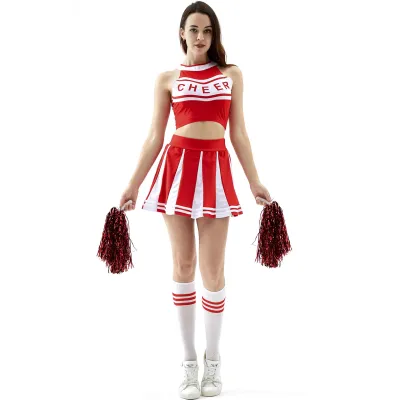
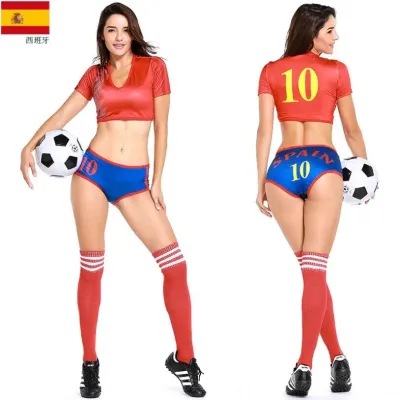
Prices are valid at publication and may change. Please refer to the product page for the latest price.
Fabric Technologies for High-Intensity Routines
The foundation of any high-quality competition cheerleader costume is the fabric. Because cheerleaders must perform deep splits, high kicks, and overhead lifts, the material must offer exceptional elasticity. Look for garments constructed from high-performance four-way stretch fabrics, typically composed of a premium polyester and elastane blend. Unlike two-way stretch fabrics that only stretch in one direction, four-way stretch materials expand both horizontally and vertically. This multi-directional elasticity ensures that the uniform moves like a second skin, preventing resistance during extreme ranges of motion and returning to its original shape without sagging.

In tropical climates like Singapore, where humidity levels are consistently high, moisture management is another critical factor. High-energy routines generate significant sweat, which can make low-grade fabrics heavy, cold, and uncomfortable. Advanced moisture-wicking technology is essential. These fabrics utilize specialized capillary fibers that pull sweat away from the skin and disperse it across the outer surface of the garment for rapid evaporation. This process keeps the athlete dry, regulates body temperature, and prevents the fabric from clinging to the skin, which can restrict movement and cause discomfort.
Durability is equally vital when evaluating fabric quality. During stunts and pyramids, bases and flyers are in constant physical contact, leading to friction against skin, shoes, and safety mats. Cheap materials are highly susceptible to pilling, snagging, and tearing under these conditions. To ensure the uniform survives the competitive season, verify that the fabric has a high density and is rated for high-abrasion resistance. Look for double-knit constructions or specialized performance synthetics that maintain their structural integrity and vibrant colors even after repeated contact with abrasive surfaces.
Construction and Safety Features for Stunts and Tumbling
While fabric provides the necessary flexibility, the construction of the garment determines its safety and longevity. When evaluating a cheerleader costume, pay close attention to the stitching. Standard seams can easily burst under the high-tension forces of tumbling and stunting. Look for uniforms joined with flatlock or reinforced coverstitch seams. Flatlock stitching involves sewing two pieces of fabric flat against each other, eliminating the bulky inner seam allowance found in standard garments. This not only significantly reduces the risk of seam blowouts but also prevents skin chafing and irritation during repetitive, high-friction movements.
Modesty and security are critical safety considerations for any routine involving inversions, tosses, and high kicks. A competition costume must feature integrated liners, built-in sports bra support, and secure under-briefs. These components must be constructed from breathable, opaque fabrics that stay firmly in place without riding up. High-quality uniforms often utilize silicone grip bands along the inner hem of skirts and briefs to prevent shifting during dynamic movements, ensuring the athlete remains covered and can focus entirely on their performance.
Embellishments such as rhinestones, sequins, and metallic foils add essential visual flair, but they also introduce safety risks if poorly executed. Loose embellishments that shed during a routine can fall onto the safety mats, creating a major slipping hazard for subsequent tumbling passes. Before purchasing, verify how these details are attached. High-quality manufacturers use heat-set hotfix rhinestones or secure embroidery rather than cheap adhesives that degrade quickly. Inspect the interior of the garment to ensure that any backing material used for embroidery or embellishments is soft and covered, preventing it from scratching the athlete’s skin during intense physical exertion.
Navigating Competition Rules and Uniform Compliance
Before finalizing any design or purchase, it is imperative to consult the specific rulebook of your competition’s governing body. In Singapore, events typically align with international standards, such as those set by the International Cheer Union (ICU) or local organizers like the Cheerleading Association (Singapore) (CAS). These organizations enforce strict rules regarding uniform design, and non-compliance can result in severe point deductions or disqualification.
One of the most common regulatory areas involves midriff coverage. Depending on the division (such as youth, junior, or senior) and the specific category (all-girl vs. coed), rules may strictly prohibit bare midriffs, requiring full-torso coverage. If crop tops are permitted, there are often precise limits on how much skin can be exposed when the athlete is standing at attention. Skirt lengths are also regulated; they must fully cover the modesty briefs and remain at an appropriate length during movement to maintain a professional, athletic appearance.
Additionally, safety rules strictly limit the use of hard or sharp elements. Costumes must not feature exposed metal zippers, sharp plastic components, or loose hanging accessories that could catch on a teammate’s hair, clothing, or fingers during a stunt. Team uniformity is another strict requirement; every athlete on the mat must wear identical uniforms in terms of color, design, and logo placement, with exceptions only made for designated coed bases where pants are substituted for skirts. Always have your design approved by your coaching staff and double-check it against the latest official rulebook before placing a production order.
Achieving the Right Fit and Team Uniformity
Achieving a uniform fit across a diverse team of athletes with different body types is one of the most challenging aspects of purchasing cheerleading gear. While off-the-rack sizing is often more budget-friendly, it rarely accommodates the unique proportions of every team member. Custom-tailored uniforms offer the best fit but require a higher financial investment. If custom ordering is not feasible, look for manufacturers that offer a wide range of size charts with detailed measurements for bust, waist, hips, and girth, and plan for professional alterations.
When conducting fittings, do not rely solely on static measurements. An athlete standing still may feel comfortable in a uniform that restricts them the moment they move. Implement a dynamic movement test during the fitting process. Have each athlete perform a series of high kicks, jumps, overhead arm extensions, and deep squats while wearing the sample uniform. Observe if the top rides up excessively, if the skirt restricts leg movement, or if the fabric pinches around the shoulders and underarms.
For youth or junior teams, fitting is further complicated by natural growth spurts over the course of a multi-month competitive season. To manage this, look for uniforms designed with adjustable features, such as adjustable waistbands, or styles that incorporate stretch panels in key growth areas. When ordering, it is often wise to select a slightly larger size with a generous seam allowance, allowing a local professional tailor to make minor adjustments closer to the competition date without compromising the uniform’s structural integrity.
Practice vs. Competition Gear: Cross-Scenario Compatibility
A common question among team managers and parents is whether a single uniform can be used for both daily practices and official competitions. While this may seem like a practical way to manage budgets, it is generally not recommended. Practice gear and competition gear serve entirely different purposes and operate under different wear-and-tear conditions.
Practice gear is designed for maximum durability, breathability, and ease of maintenance. It typically consists of simple training tees, sports bras, and athletic shorts that can withstand daily washing cycles and heavy mat friction. Competition gear, on the other hand, is a significant financial investment designed for high visual impact and strict rule compliance. The specialized fabrics, delicate metallic foils, and hand-placed rhinestones used in competition costumes are not built for the daily grind of multi-hour practices. Using competition uniforms for regular training will rapidly degrade the materials, cause rhinestones to fall off, and risk tearing or staining the garment before the team ever steps onto the competition floor. Keep your competition gear reserved strictly for dress rehearsals and event days to preserve its pristine appearance and structural safety.
Frequently Asked Questions (FAQ)
How do I safely wash a cheerleader costume with rhinestones?
Always check the manufacturer’s care label first. Generally, turn the garment inside out to protect the embellishments. Hand wash or use a gentle machine cycle with cold water and mild detergent. Avoid fabric softeners and bleach. Never tumble dry or iron, as high heat melts the adhesives holding the rhinestones; instead, lay the costume flat or hang it to air dry in a well-ventilated space.
What should I do if the costume feels too tight during stunt practice?
First, evaluate if the tightness restricts breathing, circulation, or the full range of motion required for stunts. If the restriction is minor, check the inner seams to see if a professional tailor can safely let out the fabric. If the fit is significantly incorrect, contact your uniform supplier immediately for a replacement size. Ensure all fit issues are resolved weeks before the competition to allow athletes to adjust to their gear.
Community discussion
Share your experience or ask a question. Comments are reviewed before publication.