
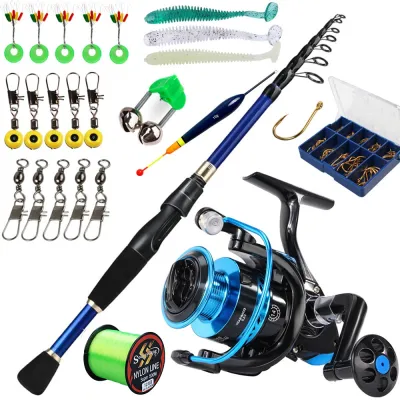
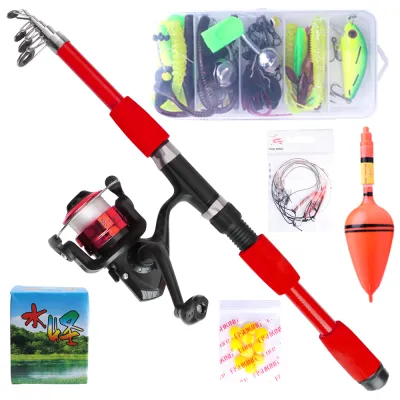
A complete fishing rod full set should include a matched rod, a compatible reel, a suitable line, and essential terminal tackle like hooks, sinkers, floats, and swivels. For beginners in Singapore looking to start fishing along the coastlines of East Coast Park or local reservoirs, purchasing a pre-assembled package is the most straightforward entry point. By choosing a comprehensive fishing rod full set, you avoid the confusion of matching technical specifications across individual components, allowing you to focus on learning basic casting and rigging techniques. However, the exact inclusions can vary significantly between brands, making it crucial to understand what should be in the box and how to evaluate its quality before making your first cast.
What to Expect: Core Components of a Standard Fishing Rod Full Set
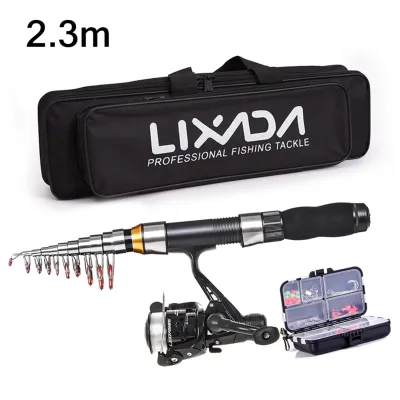
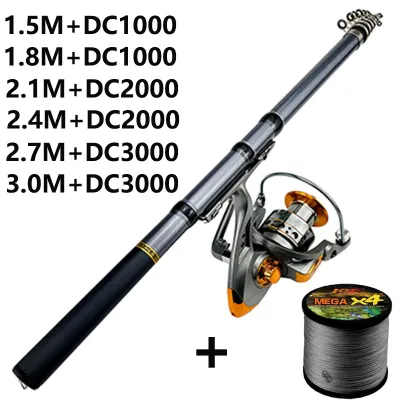
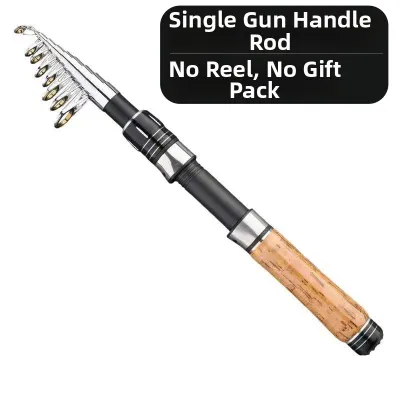
When purchasing a beginner-focused fishing rod full set, the core of the package is the rod blank itself. This is the long, flexible pole that provides the leverage needed to cast your line and fight a fish. In a standard starter bundle, the rod is typically divided into two or more sections to facilitate easy transport on public transit or in a compact car boot.
Mounted directly onto the rod is the fishing reel, which holds, retrieves, and releases the line. For entry-level packages, manufacturers almost always pair the rod with a spinning reel, as its open-face design is highly forgiving and minimises the risk of line tangles, commonly known as “bird’s nests.”
Products mentioned in this guide
Prices are valid at publication and may change. Please refer to the product page for the latest price.
The third primary component is the fishing line, which may arrive pre-spooled onto the reel or as a separate spool in the box. Monofilament line is the standard choice in these sets due to its stretch, buoyancy, and ease of knot tying, which helps absorb the shock of sudden tugs from active fish.
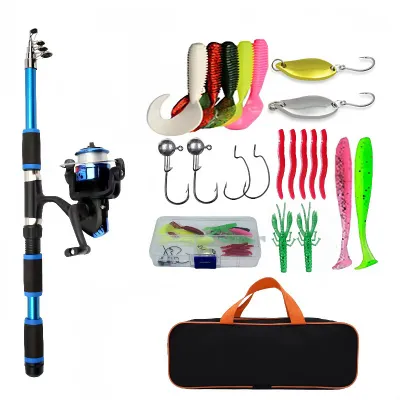
Beyond these three major pieces, a functional set must include terminal tackle—the items attached to the very end of your line. At a minimum, you should expect to find a selection of hooks in various sizes, split-shot sinkers or weights to pull your bait down to the target depth, and swivels to prevent the line from twisting as your bait rotates in the water.
Many sets also package bobbers or floats, which keep your bait suspended at a specific depth and provide a clear visual cue when a fish bites. Some manufacturers sweeten the deal by including artificial lures, such as soft plastic worms or small metal spoons, to give you immediate options for active fishing styles.
To keep these small items organized, look for packages that include a compact, multi-compartment utility tackle box. Some premium starter sets also bundle a protective rod carrying bag or a simple line clipper, though the presence of these utility accessories varies widely depending on the brand and price point.
Before clicking purchase or heading to the cashier, always review the detailed parts list on the product packaging or online listing. It is not uncommon for budget sets to omit the fishing line or include only a single hook, which would require an immediate trip to a local tackle shop before you can head to the water.
How to Inspect Quality: Evaluating the Rod, Reel, and Tackle
Unboxing a new fishing set is an exciting moment, but taking a few minutes to systematically inspect the build quality of each component is essential. Mass-produced entry-level gear can occasionally suffer from manufacturing defects or transit damage that, if left unnoticed, might lead to a snapped rod or a seized reel during your first hookup. By performing a physical and visual assessment at home, you can identify potential weak points and address them before you find yourself at a remote fishing spot.

You do not need professional testing equipment to evaluate your gear; instead, rely on simple tactile and visual checks to ensure everything operates smoothly. Pay close attention to how parts connect, the finish of the materials, and the mechanical feedback of moving components to ensure you have a reliable setup.
Assessing the Rod Blank, Guides, and Reel Seat
Begin your inspection with the rod blank, which is the structural backbone of your setup. Beginner sets typically use either solid fiberglass or a graphite/carbon composite blend. Fiberglass rods are heavier but incredibly durable, able to withstand accidental drops and high-angle bends without breaking, whereas graphite composites offer a much lighter feel and higher sensitivity to subtle nibbles at the cost of being more brittle.
Next, examine the line guides, which are the metal loops running along the length of the rod. Run your finger carefully along the inner ceramic inserts of each guide to check for hairline cracks, chips, or rough edges. A damaged insert acts like a miniature saw blade, rapidly fraying your fishing line under tension and causing it to snap unexpectedly.
Ensure that the guide frames are perfectly aligned in a straight line down the rod blank and that the thread wraps holding them in place are completely coated in smooth, hardened epoxy. Any loose threads or wobbly guides indicate poor quality control and will degrade quickly under the stress of casting.
Move down to the reel seat, the mechanism that clamps the reel foot to the rod handle. Thread the locking nut up and down the track to verify that the plastic or metal threads are clean, smooth, and do not skip or strip when tightened. A loose reel seat can cause the reel to wobble or detach entirely while you are reeling in a fish, which can ruin a day on the water.
Finally, conduct a physical check of the blank’s integrity by running your hand gently along the entire length of the rod. Feel for any uneven bumps, splinters, or deep scratches in the protective clear coat, and gently flex the rod to ensure it bends in a smooth, continuous arc without any creaking or popping sounds.
Verifying the Reel, Line, and Terminal Tackle
The reel is the most mechanically complex part of your set, making a thorough functional check vital. Turn the handle slowly to assess the smoothness of the internal gears; there should be no catching, grinding sensations, or loud metal noises. A high-quality entry-level reel should rotate freely with minimal effort and stop instantly when you engage the anti-reverse switch.
Next, test the drag system, which is usually adjusted by a dial on the front of the spool. Tighten the dial slightly and pull some line off the reel by hand to ensure it releases smoothly and consistently without jerking, then loosen it to verify that the transition is gradual rather than an all-or-nothing release.
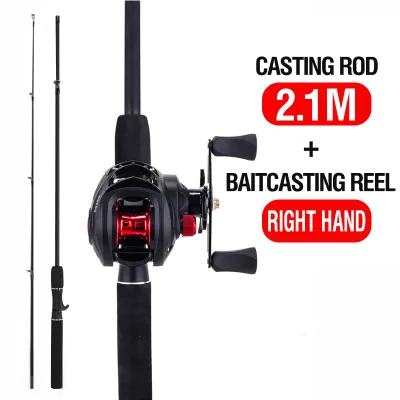
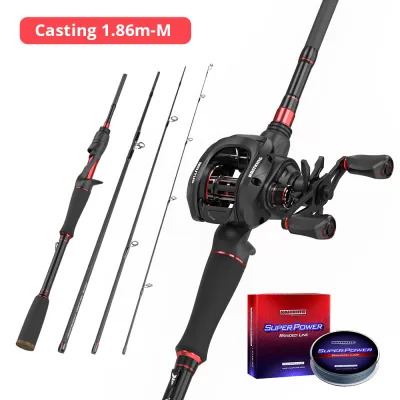
Spinning reels are the industry standard for beginner packages because their fixed-spool design prevents the severe line overruns common with baitcasting reels. Confirm that the bail arm—the metal wire that flips open and closed—snaps back into position firmly and cleanly when you turn the reel handle or flip it manually.
If your set comes with pre-spooled fishing line, pull several metres off the spool to inspect its condition. Check the packaging for the labeled breaking strength, which is typically measured in pounds (e.g., 8lb or 12lb test) or kilograms, and look for visible abrasions, kinks, or severe coiling memory. If the line is stiff and retains a tight, spring-like shape, it may be old stock and should be replaced to prevent casting issues.
Finish by examining the included terminal tackle. Run your fingernail lightly over the points of the hooks to verify they are sharp enough to catch; dull hooks will slide out of a fish’s mouth instead of setting securely. Inspect any brass or steel swivels and sinkers to ensure they are free of immediate surface rust and that the metal castings do not have sharp flash edges that could cut your line.
How to Match the Set to Your Target Environment and Species
A common mistake among beginners is assuming that any fishing rod full set can be used anywhere for any fish. In reality, fishing gear is highly specialized, and matching your equipment to your specific target environment and species is crucial for both success and gear longevity. In Singapore, this distinction is particularly sharp when choosing between freshwater reservoir fishing and saltwater coastal angling.
The most critical environmental dividing line is salinity. Saltwater is highly corrosive and will rapidly destroy gear designed purely for freshwater use, causing bearings to seize and guides to rust within weeks. If you plan to fish at spots like Changi Beach, West Coast Park, or the Southern Islands, you must verify that the reel features corrosion-resistant components, such as anodized aluminium or sealed stainless steel bearings, whereas freshwater sets are perfectly adequate for Bedok Reservoir or local payponds.
You must also align the power of your rod and the capacity of your reel with the size of your target species. Rod power ranges from ultra-light to extra-heavy; a medium-light or medium-power rod is highly versatile for beginners, as it can handle small peacock bass in reservoirs as well as moderate-sized snapper or grouper at coastal spots without being too stiff to enjoy the fight.
Consider your physical fishing location as it dictates the optimal rod length. If you are casting from a high jetty, boardwalk, or sandy shoreline, a longer rod of 2.1 to 2.4 metres (7 to 8 feet) provides the necessary casting distance to reach deeper water. Conversely, if you are fishing from a kayak, boat, or under heavy overhanging trees along a reservoir bank, a shorter rod of 1.5 to 1.8 metres (5 to 6 feet) offers far better maneuverability.
Finally, pay attention to the rod’s action, which describes where the rod bends along its length. A moderate or medium-fast action rod bends starting from the middle or top third, providing a forgiving flex that helps beginners cast further with less effort while still offering enough backbone to set the hook securely when a fish strikes.
Safety should also guide your gear selection and trip planning. Before heading out to any coastal or reservoir location, check the local weather forecast and lightning warning systems, as Singapore’s tropical climate can produce sudden, severe thunderstorms. Ensure you wear appropriate non-slip footwear when fishing from rocky breakwaters, and always respect local fishing boundaries and zoning regulations.
Step-by-Step: Verifying and Assembling Your Gear Out of the Box
Once you have verified the quality of your new fishing rod full set, the next step is correct assembly. Rushing this process can lead to misaligned guides, damaged line, or even a broken rod tip before you even reach the water. Follow this structured sequence to get your gear ready safely and efficiently.
Step 1: Inventory Check. Lay out every single item from the package on a clean, flat surface. Compare the physical parts against the manufacturer’s packing list to ensure you have all the necessary components, including any small washers, reel handles, and terminal tackle pieces.
Step 2: Rod Assembly. For multi-piece rods, gently insert the male ferrule (the connection point) of the upper section into the female ferrule of the lower section. Align the line guides perfectly by sighting down the rod from the butt to the tip, and push the sections together firmly with a slight twisting motion; never force or slam them together, as this can crack the graphite or fiberglass.
Step 3: Reel Mounting. Back off the locking hood on the rod’s reel seat until the opening is wide enough to accommodate the reel’s mounting foot. Insert one end of the foot into the fixed hood, slide the adjustable hood over the opposite end, and hand-tighten the locking nut until the reel is firmly secured without over-tightening, which can strip the threads.
Step 4: Threading the Line. Open the bail arm of your spinning reel first—this is a critical step, as failing to do so will prevent the line from spooling off the reel when casting. Take the end of the line and thread it sequentially through each guide, starting from the largest guide near the reel and working your way up to the tiny tip-top guide, ensuring the line does not wrap around the rod blank between guides.
Safety and Stop Conditions: If at any point during assembly you notice that a rod section does not fit securely, the reel seat threads are stripped, or the drag system is completely locked up, stop immediately. Do not attempt to force the components together or use tools like pliers to tighten plastic parts, as this will void your warranty and likely break the gear; instead, contact the manufacturer or retailer for assistance.
Frequently Asked Questions (FAQ)
Is a pre-packaged full set better than buying components separately?
For beginners, a pre-packaged fishing rod full set offers unmatched convenience and value, as manufacturers carefully select components that are balanced in terms of weight, line rating, and action. This eliminates the guesswork of matching a reel to a rod and typically costs significantly less than purchasing each item individually, with entry-level sets in Singapore generally ranging from S$50 to S$150. However, as you gain experience and develop specific targeting techniques, you may eventually transition to buying components separately to customize gear ratios, rod sensitivity, and specialized lines for advanced fishing scenarios.
Can I use a freshwater fishing set in saltwater?
While you can physically cast a freshwater set into the sea, doing so is highly discouraged because freshwater reels lack the specialized seals and corrosion-resistant alloys required to withstand saltwater. If you do use a freshwater set in a marine environment, you must perform immediate post-trip maintenance to prevent permanent damage. This involves thoroughly rinsing the entire rod, reel, and line under a gentle stream of fresh tap water immediately after your session, wiping it dry, and applying a light coat of marine-grade reel oil to the moving parts to stave off rust and seizing.
Community discussion
Share your experience or ask a question. Comments are reviewed before publication.