
Navigating Singapore’s Park Connector Network (PCN) requires a bicycle setup that balances convenience, stability, and adaptability. Whether you are commuting to work through scenic green corridors or embarking on a weekend leisure ride, carrying your essentials comfortably is key. A front bicycle bag, mounted directly to your handlebars or head tube, keeps your phone, wallet, keys, and snacks within arm’s reach while keeping your back free from sweaty backpacks.
To find the ideal front bicycle bag for PCN cycling, you must evaluate several critical factors: the bag’s capacity relative to your riding style, the compatibility of its mounting system with your bike’s cockpit, its level of weather protection against sudden tropical downpours, and its overall impact on steering stability. By focusing on these practical dimensions, you can select a bag that enhances your ride without compromising your bicycle’s handling or safety.
Defining Your PCN Riding Style and Capacity Needs
Your riding habits on the park connectors dictate the size and style of the front bag you need. Daily commuters and recreational riders have distinct carrying requirements, and choosing a bag that matches your specific routine prevents you from carrying unnecessary bulk or running out of storage space.
Products mentioned in this guide
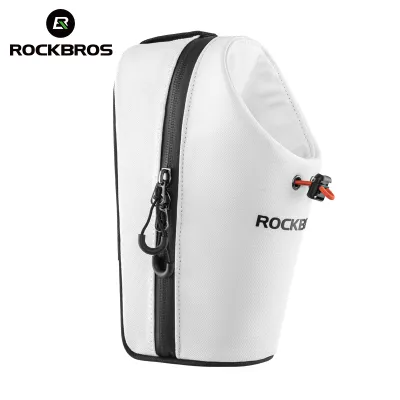
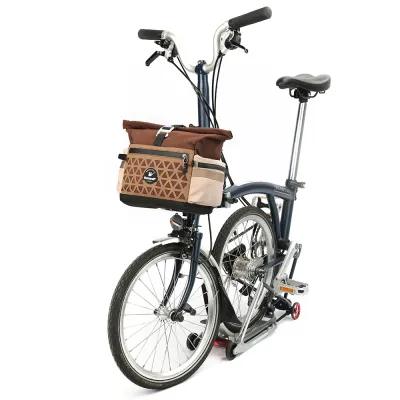
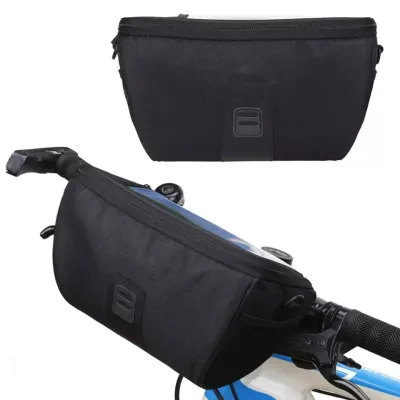
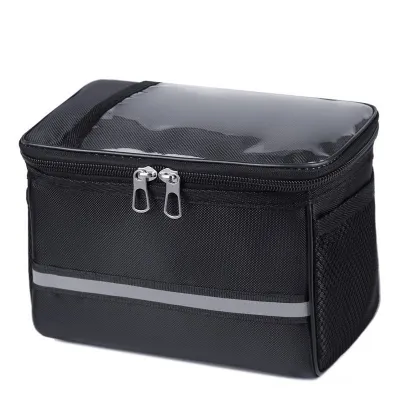
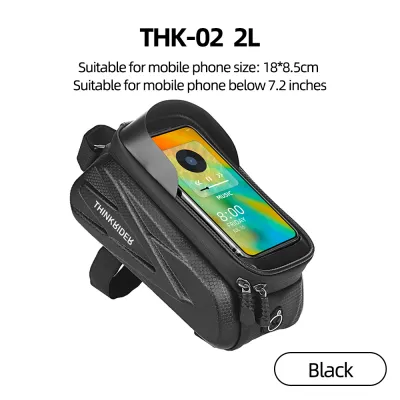
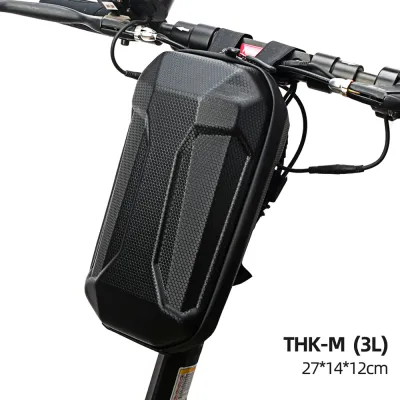
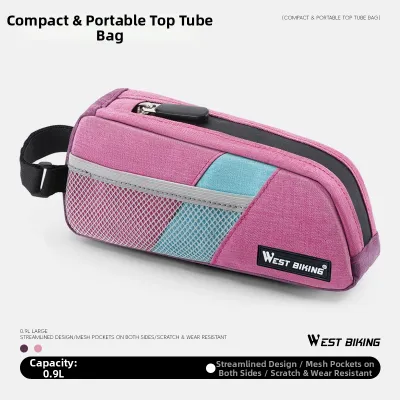
Prices are valid at publication and may change. Please refer to the product page for the latest price.
For daily commuters, the priority is organizing work essentials and personal items. A typical commute might require space for a smartphone, office access cards, a wallet, a compact light jacket or windbreaker for air-conditioned offices, and perhaps a small lunch container. A structured bag with internal dividers helps keep these items organized and prevents your keys from scratching your phone screen during transit.
Recreational riders, on the other hand, often prioritize gear accessibility and flexible storage. If you enjoy long weekend rides along the Eastern Coastal Loop or the Round Island Route, your bag needs to accommodate energy bars, a compact multi-tool, a spare inner tube, a mini pump, and perhaps a lightweight camera. These items do not necessarily require rigid internal organization, but they do benefit from a bag that can expand or compress based on how much gear you carry on a given day.
When selecting a bag, consider how its physical profile affects your riding experience. A front bag with a wide or tall profile can catch the wind, creating aerodynamic drag that makes pedaling into headwinds more tiring. More importantly, an oversized bag can interfere with your knees when you stand up on the pedals to climb a steep bridge or accelerate. Look for a bag that tucks neatly in front of your handlebars, keeping its width within the span of your brake levers to maintain a streamlined profile.
Rather than focusing on strict liter capacities, categorize your needs by load type. A compact bag is excellent for short, fast rides where you only need to carry bare essentials. A mid-sized bag offers the versatility needed for most PCN users, bridging the gap between a quick evening spin and a full-day weekend excursion. For those who carry bulky items like change of clothes or laptop accessories, a larger, structured bag or a modular system is more appropriate, provided your bike’s steering can handle the weight.
Evaluating Front Mounting Systems and Handlebar Clearance
The method used to attach a front bag to your bicycle determines how stable the bag remains over bumps and how easy it is to install or remove. Different mounting systems suit different bicycle frames, handlebar shapes, and rider preferences.

Strap-on mounting systems are the most common and versatile option. These bags use adjustable hook-and-loop straps or rubberized straps to wrap directly around the handlebar and, in many cases, a third strap around the head tube or stem to prevent swaying. Strap-on bags are lightweight, highly adaptable, and can be easily swapped between different bicycles. However, they can sometimes compress your brake hoses or gear cables, which may affect shifting precision or braking performance over time.
Bracket-mounted systems utilize a rigid plastic or metal bracket that clamps semi-permanently to your handlebars. The bag then clicks into this bracket using a quick-release mechanism. This setup keeps the bag suspended away from the handlebar, completely clearing your cables and preventing paint rub on your bike’s frame. While bracket systems are incredibly stable and allow you to mount or remove the bag in seconds, they add permanent weight and hardware to your cockpit, and they tend to be more expensive, ranging from S$40 to over S$120 depending on the brand and locking mechanism.
Harness systems consist of a rigid or semi-rigid harness that remains strapped to the handlebars, into which you slide a separate dry bag. This modular approach is highly popular for bikepacking and long-distance touring because it allows you to leave the harness on the bike and take only the dry bag into your tent or accommodation. For casual PCN riding, however, a harness system can be overly complex and bulky, making a simple integrated bag a more practical choice.
Before purchasing any front bag, perform physical checks on your bicycle’s cockpit. Measure your handlebar diameter at the clamping area—standard modern sizes are typically 31.8mm, while older or folding bikes might use 25.4mm. Check the routing of your brake hoses and gear cables; ensure there is enough space for the bag to sit without kinking or pinching these lines. Additionally, verify that the bag does not block your front safety light or GPS computer mount. If clearance is tight, you may need to install an out-front mount extension or relocate your front light to the fork crown. Always consult the bag manufacturer’s fitment guide to confirm compatibility with your specific handlebar shape, especially if you ride a road bike with drop handlebars or a folding bike with a unique stem design.
Weather Protection and Material Durability Checks
Singapore’s tropical climate brings sudden, intense rain showers that can catch cyclists unprepared. Protecting your electronic devices, spare clothing, and paper documents from moisture is a primary consideration when choosing a front bicycle bag.
To assess a bag’s weather protection, start by checking the product labels for material specifications. Look for fabrics with water-resistant coatings, such as polyurethane (PU) or thermoplastic polyurethane (TPU) laminated nylon or polyester. These materials prevent water from penetrating the fabric itself. Additionally, high-denier fabrics (such as 500D or 1000D Cordura) offer excellent abrasion resistance, ensuring the bag can withstand rubbing against cables, frame tubes, or the occasional scrape against a park barrier.
The closure system of the bag plays a massive role in keeping water out. Roll-top closures are highly effective because they roll down tightly and secure with buckles, leaving no gaps or teeth for water to penetrate. If you prefer a bag with a zippered opening for quicker access, look for sealed, water-resistant zippers. These zippers feature a rubberized coating over the zipper teeth to repel water, though they can be stiffer to operate than standard zippers.
It is important to understand the distinction between water-resistant and fully waterproof constructions. A water-resistant bag is typically stitched together; while the fabric itself repels water, heavy rain can eventually seep through the needle holes in the seams. Many water-resistant bags include a separate, high-visibility rain cover that you can pull over the bag during a downpour. In contrast, a fully waterproof bag features welded seams—where the fabric panels are joined using high-frequency radio waves or heat—creating a completely seamless, airtight barrier. If you regularly carry sensitive electronics like a laptop or tablet on your commute, investing in a fully waterproof bag with welded seams is highly recommended.
Accessibility, Organization, and On-the-Go Convenience
A great front bicycle bag should make your ride smoother by allowing you to access your belongings quickly and safely, whether you are stopped at a traffic light or taking a quick water break along the PCN.
Top-loading designs are generally the most convenient for on-the-go access. These bags feature a lid or flap that opens upward, allowing you to look directly down into the main compartment without items falling out. Some top-loading bags use magnetic closures or simple elastic loops that can be opened and closed with one hand while riding slowly on a clear path. Front-opening or clamshell zippered designs offer a more structured, suitcase-style opening, which is excellent for organizing flat items like notebooks or tablets, but they require you to stop and support the bag to prevent contents from spilling out when opened.
External storage features add significant convenience. Look for bags with external mesh side pockets, which are perfect for holding items you need to grab frequently, such as a small bottle of hand sanitizer, a pack of tissues, or energy gels. Some bags feature an elastic bungee cord network on the top lid, allowing you to quickly lash down a wet rain jacket or a damp towel without taking up valuable space inside the bag.
Internal organization helps prevent the “black hole” effect, where small items settle to the bottom of a deep bag. Look for models with dedicated internal zippered pockets, key clips, and pen slots. A light-colored interior lining (such as bright orange or yellow) is also a highly useful feature, as it reflects light and makes it much easier to locate dark-colored items like keys or a black wallet in low-light conditions.
Finally, test the usability of the bag’s hardware. Zippers, buckles, and snaps should be robust and easy to operate. If you ride with cycling gloves, look for zippers with large, easy-to-grab pull tabs or cord loops. Buckles should snap together securely with a clear tactile click, ensuring your bag remains closed even when riding over bumpy wooden boardwalks or uneven pavement transitions on the PCN.
Safety, Visibility, and Cross-Scenario Compatibility
Your front bicycle bag sits at the very front of your vehicle, making it an excellent platform for enhancing your visibility and safety on shared paths.
Look for bags that incorporate reflective elements into their design. This can include reflective piping along the seams, reflective logos, or large high-visibility panels. These elements catch the headlights of oncoming traffic or the lights of other cyclists, making you significantly more visible during early morning commutes or night rides along the PCN.
A dedicated attachment point for a safety light is another essential feature. Many front bags feature a fabric loop, webbing strap, or “daisy chain” on the front panel specifically designed for clipping on a standard LED safety light. Because a large front bag can easily block a light mounted directly to your handlebars, having a secure mounting point on the bag itself ensures your front light remains visible and positioned at an effective height.
If you use your bicycle for both weekday commuting and weekend recreation, look for a bag that offers cross-scenario compatibility. A bag that can be quickly detached and carried with an included shoulder strap or handle is incredibly convenient for commuting, allowing you to transition seamlessly from riding to walking into an office or cafe. Some bags also feature expandable volume, allowing you to keep the bag compact and streamlined during your daily commute, then expand it to carry extra gear for longer weekend adventures.
Finally, pay close attention to weight distribution. Placing heavy items in a front bag raises your bicycle’s center of gravity and increases steering inertia, which can make the steering feel heavy or sluggish. To maintain stable and predictable handling, always pack your heaviest items—such as a heavy U-lock, tools, or a spare battery pack—at the very bottom of the bag and as close to the head tube as possible. Keep lighter items, like clothing or snacks, near the top. This packing strategy minimizes the leverage the weight has on your steering, ensuring a safe and comfortable ride across all PCN routes.
Frequently Asked Questions (FAQ)
Will a front bicycle bag affect my bike's handling on park connectors?
Yes, adding weight to your handlebars or front fork will alter your bicycle’s steering dynamics. A heavy front bag increases steering inertia, which can make the steering feel slower to respond or cause the front wheel to flop to one side when the bike is parked. To maintain stable handling on the PCN, place your heaviest items at the bottom of the bag and as close to the steering axis as possible. Always check the manufacturer’s specified maximum weight limit—which typically ranges from 2kg to 5kg depending on the mounting system—and avoid overloading the bag to ensure safe, predictable steering.
Can I use a front bag if my bike has a front suspension fork?
Yes, you can use a front bag on a bike with a front suspension fork, but you must carefully check for tire clearance. When your suspension fork compresses to absorb bumps, curbs, or tree roots on the PCN, the distance between your handlebars and the front tire decreases. If your front bag hangs too low, the tire can rub against the bottom of the bag during compression, which can damage the bag or lead to a sudden, dangerous stop. To prevent this, measure the clearance between the bottom of the bag and the top of the tire when the suspension is fully compressed, and consult the bag manufacturer’s fitment guide to ensure compatibility with suspension forks.
Community discussion
Share your experience or ask a question. Comments are reviewed before publication.