
Selecting a front-mounted bicycle child seat in Singapore requires balancing your child’s safety, your bicycle’s frame compatibility, and the unique demands of local riding environments. Unlike rear-mounted options, a front-mounted seat positions your child between your arms, offering an intimate riding experience where you can easily communicate, monitor their comfort, and share the view. However, because this setup directly alters your bicycle’s steering dynamics and occupies your physical pedaling space, making an informed choice is essential for a safe and stable ride.
To find the right model, you must systematically evaluate safety certifications, structural mounting limits, and ergonomic fit. This guide outlines the essential verification steps, compatibility checks, and environmental considerations to help you select a reliable front-mounted seat and enjoy safe journeys along Singapore’s cycling paths.
Verifying Safety Standards and Structural Features
Before purchasing any front-mounted child seat, your primary task is to verify its structural integrity and safety compliance. Do not rely on marketing claims or aesthetic appeal; instead, inspect the product chassis, packaging, or manufacturer specifications for recognized international safety standards. Look for certifications such as the European standard EN 14344 or the American ASTM F1625. These standards guarantee that the seat has undergone rigorous testing for impact resistance, structural durability, non-toxic materials, and secure attachment mechanisms.
Products mentioned in this guide
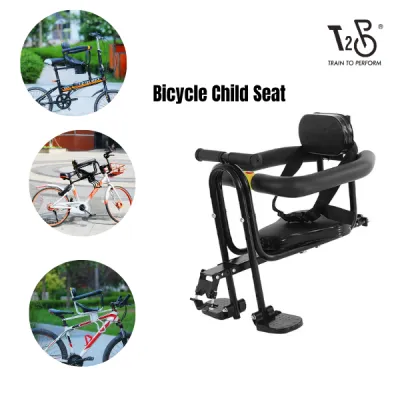
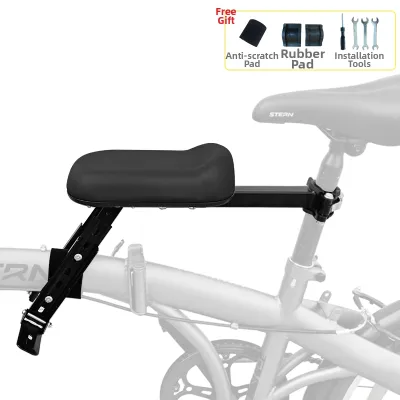
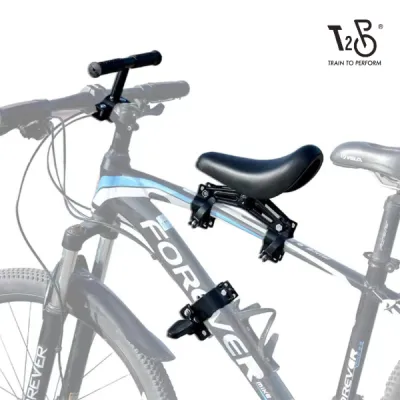
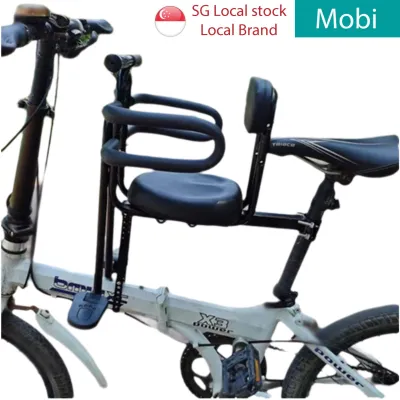
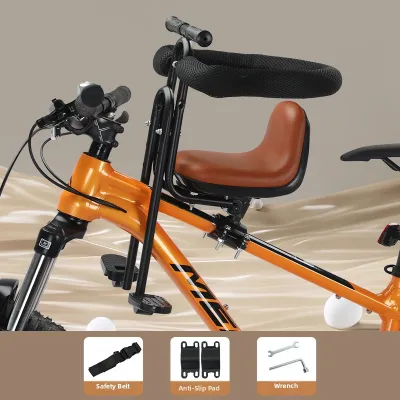
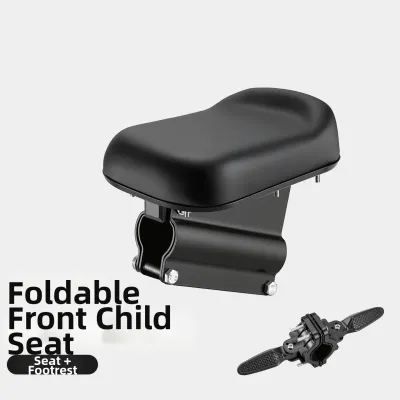
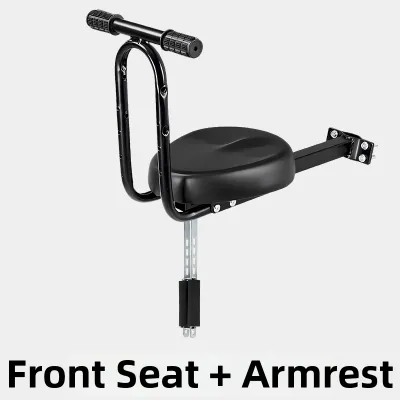
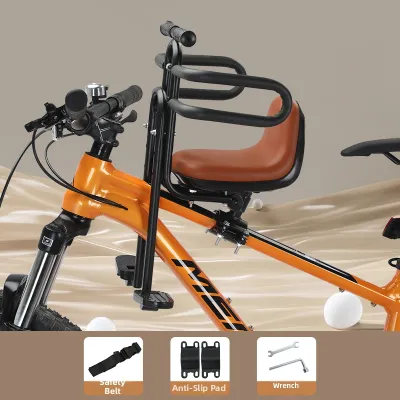
Prices are valid at publication and may change. Please refer to the product page for the latest price.
A robust restraint system is the foundation of passenger safety. Prioritize seats equipped with an adjustable 5-point harness that secures the child over the shoulders, around the waist, and between the legs. When examining the harness, test the buckle mechanism yourself. It must feature a child-proof release system—typically requiring two independent, simultaneous physical actions to open—ensuring that your child cannot accidentally unclip themselves mid-ride.
Lower limb protection is equally critical to prevent painful injuries. Ensure the seat features integrated, deep-dish footrests that completely shield your child’s feet from the spinning spokes of the front wheel. These footrests must include adjustable, durable foot straps to keep small feet securely anchored. Additionally, look for integrated side guards or high plastic walls that prevent lateral leg movement toward the front fork assembly.
Finally, always adhere strictly to the manufacturer’s documented weight and height limits rather than relying on general age recommendations. Children grow at highly variable rates, and exceeding the structural weight limit of a front-mounted seat—which typically ranges from 15kg to 18kg depending on the model—can compromise the mounting bracket and severely degrade your bicycle’s handling. Locate the physical safety label printed on the seat body to confirm these limits before installation.
Checking Bicycle Compatibility and Mounting Systems
Front-mounted child seats are not universally compatible with all bicycle designs. The mounting mechanism must align perfectly with your bike’s frame geometry and material limits to prevent structural damage or steering failure. Most front seats utilize one of two primary mounting systems: a bracket clamped directly to the handlebar stem or head tube, or a support bar suspended between the seat post and the head tube.

Stem and Head Tube Mounts
Stem-mounted brackets require a specific amount of vertical clearance on your bicycle’s steerer tube. Measure the available space below your handlebar stem; many brackets require at least 20mm to 50mm of exposed, cylindrical metal spacer space to clamp securely. If your bicycle has a threadless (A-head) headset, ensure the clamp diameter matches your steerer tube specifications. For threaded quill stems, verify that the bracket does not interfere with the stem’s insertion depth or rotation.
Frame Material and Component Warnings
Never install a clamping bracket directly onto a carbon fiber steerer tube or carbon fiber frame tubes. Carbon fiber is highly sensitive to localized clamping forces and can crush or crack under the pressure required to secure a child seat bracket. Additionally, avoid mounting front seats on bicycles equipped with front suspension forks unless the seat manufacturer explicitly certifies compatibility, as the dynamic movement of the suspension can alter the seat’s angle and stress the mounting points.
Carefully trace your bicycle’s gear and brake cables before purchasing. If your cables run externally along the head tube or top tube, a mounting bracket or support bar may pinch them, restricting your ability to brake or shift gears smoothly. Consult both your bicycle manufacturer’s user manual and the child seat manufacturer’s compatibility charts to verify that the installation will not interfere with any control lines.
Steering Dynamics and Handlebar Clearance
Adding 10kg to 15kg of active weight directly over your front wheel fundamentally alters how your bicycle handles. The steering will feel significantly heavier, and the front wheel will have a natural tendency to flop or turn sharply when you are stationary or moving at low speeds. To maintain control, you may need to install wider handlebars to gain mechanical leverage, or adjust your stem angle to bring your hands into a more stable, upright riding position.
Evaluating Comfort, Harness, and Adjustability
A comfortable child is a cooperative passenger. Because riding on public paths involves vibrations and bumps, the seat’s physical design must support your child’s posture while accommodating their rapid growth. Evaluate the quality of the seat’s padding; it should be firm enough to absorb road vibrations but soft enough to prevent pressure points during longer rides.
In humid tropical environments, breathability is paramount. Look for seats featuring perforated backrests, ventilation channels, or open-mesh padding that allows air to circulate freely behind your child’s back. Ensure that any fabric liners or foam pads are easily removable and machine-washable, as sweat, sunscreen, and spilled snacks will accumulate quickly and require regular cleaning to prevent mold and odors.
As your child grows, the seat must adapt to maintain a safe fit. The shoulder straps should offer multiple height adjustment slots so they always pull from slightly above the shoulder line, preventing the straps from slipping off the shoulders. Similarly, the footrests must feature a multi-position click-in adjustment system to ensure your child’s knees are never bent at an uncomfortable, cramped angle.
Because young children frequently fall asleep during rides, consider how the seat supports a resting posture. Front-mounted seats position the child upright, which can cause their head to slump forward when they doze off. Some models address this by incorporating a padded handlebar bumper or a gentle recline mechanism. If your chosen seat does not recline, look for compatible, wrap-around neck pillows designed specifically for bicycle child seats.
Do not forget your own comfort and ergonomics as the rider. A front-mounted seat occupies the space directly in front of your chest, which often forces you to pedal with your knees flared outward. Before committing to a seat, measure the distance between your saddle and the handlebars. You may need to slide your saddle backward or raise your handlebars to maintain a natural pedaling motion and prevent knee or hip strain over longer distances.
Adapting to Singapore's Climate and Cycling Routes
Operating a bicycle with a front-mounted child seat in Singapore requires specific adaptations to the local climate, infrastructure, and traffic regulations. The intense tropical sun and sudden downpours demand proactive gear choices and route planning to keep your passenger safe and comfortable.
Heat, Sun, and Rain Management
To protect your child from high UV exposure, look for front seats that support detachable sunshades or canopies. If a canopy is not available, ensure your child wears a wide-brimmed hat that fits comfortably beneath their helmet, and apply child-safe sunscreen before every outing. Always carry a fitted, waterproof rain cover designed for your specific seat model. If you are caught in a sudden tropical thunderstorm or if lightning warnings are active, immediately suspend your ride and seek shelter under an HDB void deck, MRT station, or park shelter.
Navigating the Park Connector Network (PCN)
Singapore’s extensive Park Connector Network (PCN) and shared paths are excellent resources for family cycling, but they require strict adherence to safety etiquette. When carrying a child, your total bicycle weight is significantly higher, which increases your stopping distance. Maintain a conservative speed well below the legal limit on shared paths. Use your bicycle bell politely and early when approaching pedestrians from behind, and always yield the right-of-way at designated pedestrian crossings and intersections.
Public Transit and Multi-Modal Commuting
If you plan to combine cycling with public transport, you must navigate Land Transport Authority (LTA) regulations. While folding bicycles are permitted on MRT trains and buses within specific size limits (120cm x 70cm x 40cm), non-folding bicycles are generally restricted to trains during designated hours. Adding a bulky, non-folding front-mounted child seat can make your bicycle exceed these allowable dimensions or make it highly difficult to maneuver through station fare gates and crowded train carriages. Always measure your fully assembled bicycle with the seat attached to ensure compliance before attempting a multi-modal journey.
Building Your Shortlist and Pre-Ride Inspection
When you are ready to purchase, source your front-mounted child seat from authorized local bicycle shops or verified official brand stores on online marketplaces. Purchasing through official channels guarantees that you receive a genuine product that has not been subject to safety recalls, and ensures access to valid manufacturer warranties, replacement parts, and professional installation advice.
Once the seat is installed, establish a strict pre-ride inspection routine to ensure mechanical safety before every single journey. Use the following checklist to verify your equipment:
- Bracket Tightness: Check that the mounting bracket bolts are torqued securely to the manufacturer's specifications and show no signs of slipping or loosening.
- Quick-Release Engagement: If your seat features a quick-release removal system, physically pull upward on the seat to confirm the locking pin is fully engaged and clicked into place.
- Harness and Buckle Integrity: Inspect the harness straps for any signs of fraying or UV degradation, and click the buckle to ensure it locks firmly.
- Tire Pressure: The added weight of a child seat and passenger increases the load on your tires. Check your tire pressure and inflate them toward the higher end of the manufacturer's recommended PSI range to prevent pinch flats and maintain stable handling.
Before placing your child in the seat for the first time, conduct a low-speed test ride in a safe, traffic-free area, such as an empty void deck or a quiet estate park. Load the seat with a weight equivalent to your child (such as a backpack filled with books) to practice mounting, dismounting, turning, and executing controlled emergency stops. This practice run allows you to adapt to the altered center of gravity and steering response without risking your child’s safety.
Finally, remember that safety gear is non-negotiable. The adult rider must always wear a properly fitted bicycle helmet, and the child passenger must wear a certified, lightweight, child-sized helmet that fits snugly on their head without tilting backward, ensuring full protection for their forehead.
Frequently Asked Questions (FAQ)
At what age and weight can a child start using a front-mounted seat?
Children can typically begin riding in a front-mounted seat once they can sit upright completely unassisted and support the weight of their own head while wearing a helmet, which usually occurs between 9 and 12 months of age. However, age is only a general guideline. You must strictly verify that your child meets the manufacturer’s minimum weight and physical development criteria printed on the product label before their first ride.
Can I install a front-mounted child seat on a folding bicycle?
Many folding bicycles feature unique frame geometries, long handlebar stems, smaller wheels, and central folding hinges that are not designed to support the clamping forces or weight distribution of a standard front-mounted seat. Installing a seat on a folding bike can compromise the frame’s structural integrity or interfere with the folding mechanism. Always consult the seat manufacturer’s explicit compatibility list for folding models, and never modify the bicycle frame or stem to force a fit.
Are front-mounted seats safer than rear-mounted seats?
Neither mounting position is universally safer; each offers distinct handling and safety trade-offs. Front-mounted seats place the child’s weight near the bicycle’s center of gravity, making communication easy and keeping the child visible to the rider, though they can restrict the rider’s leg movement and steering responsiveness. Rear-mounted seats generally accommodate higher weight limits and do not interfere with pedaling, but they make it harder to monitor the child during the ride. Safety ultimately depends on correct installation, adherence to weight limits, and the rider’s ability to handle the specific bicycle setup.
Community discussion
Share your experience or ask a question. Comments are reviewed before publication.