
Finding the right kids pull up bar for a Singapore Housing & Development Board (HDB) flat requires balancing the physical dimensions of your door frame with the ergonomic needs of a growing child. Standard HDB bedroom door frames typically feature an inner width ranging from 75 cm to 85 cm, while bathroom doors are often narrower, measuring between 60 cm and 70 cm. To ensure a secure fit, you need an adjustable bar with a telescopic range of 60 cm to 100 cm, paired with a child-friendly bar diameter of 25 mm to 28 mm to allow smaller hands to maintain a secure, full-wrap grip.
Because HDB door frame materials and dimensions vary significantly based on the block’s construction year and subsequent home renovations, there is no single “universal” size. Selecting the wrong equipment or mounting it on an unverified surface poses a severe safety risk, as a bar failure can lead to dangerous falls. Before buying any home gym equipment, parents must assess their specific door frame construction, verify weight limits, and prioritize safety protocols over convenience.
Measuring Your HDB Door Frame for a Secure Fit
To guarantee a secure installation that does not damage your home, you must measure your specific HDB door frame with precision rather than relying on standard assumptions. Older HDB flats built in the 1980s or 1990s often feature heavy timber or metal frames, whereas newer Build-To-Order (BTO) flats frequently utilize lightweight composite materials or hollow-core doors. These variations mean that a mounting mechanism that works perfectly in one flat could crack the door frame or slip entirely in another.
Products mentioned in this guide
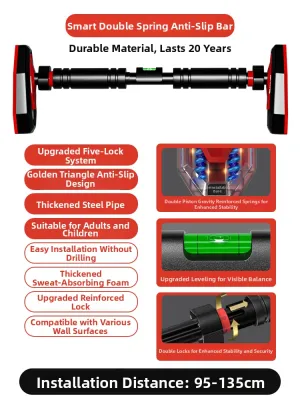
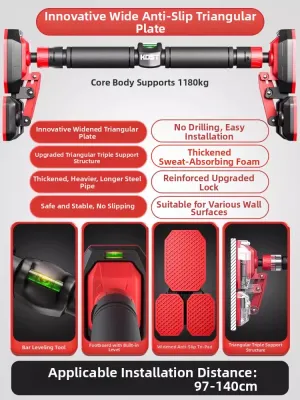
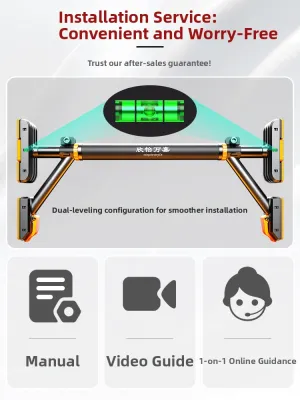
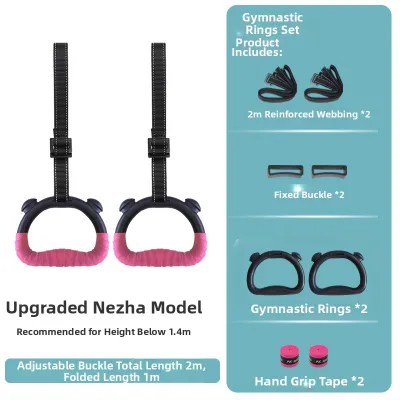
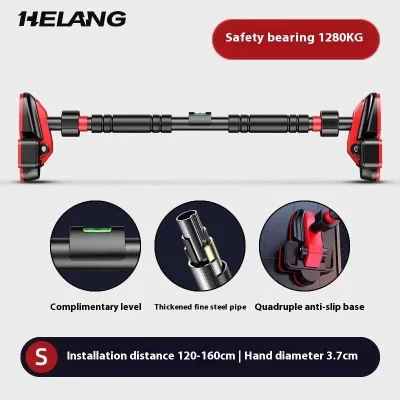
![[SG Ready Stock] Pull Up Bar Portable home Chin Up Fitness Equipment Pull-Up Bar for Children No Drilling Load Bearing 400KG](https://img.lazcdn.com/g/p/2ee2852587e8c2747318dfb0c8f3f895.png_400x400q80.png_.webp)
Prices are valid at publication and may change. Please refer to the product page for the latest price.
Start by measuring the precise inner width of the door frame at the exact height where you plan to install the bar. This is the critical dimension for telescopic or tension-based bars, which must extend to press firmly against both sides of the frame. If you are considering a leverage-style bar that hangs over the top of the frame, you must also measure the outer width of the frame, the depth of the wall, and the thickness of the top trim (architrave).
Next, physically inspect the door frame material. Knock on the frame and the door itself to determine if they are solid wood, hollow-core wood, or metal. You must also check for the presence of any protruding decorative trim, or architrave, that could prevent a bar from seating flush against the wall. Write these measurements down in centimeters and note the frame material before you begin shopping, as this profile will immediately eliminate incompatible products.
Ideal Dimensions and Grip Sizes for a Kids Pull Up Bar
Selecting a kids pull up bar involves checking two primary dimensions: the adjustable length of the bar and the outer diameter of the grip. While adult bars focus primarily on high weight capacities and wider spans, children’s equipment must prioritize physical accessibility and grip safety. Matching these specifications to your child’s current development stage prevents physical strain and lowers the risk of accidental slips.

Adjustable Length vs. Door Width
When evaluating adjustable pull-up bars, always check the manufacturer’s specified minimum and maximum extension limits. A bar is at its strongest when its internal threading has maximum overlap; extending a telescopic bar to its absolute limit reduces its structural integrity and increases the risk of the bar bending or collapsing under dynamic loads.
For an HDB door frame measuring 80 cm wide, select a bar with an adjustable range of 60 cm to 100 cm rather than one that tops out at exactly 80 cm. This ensures a generous safety margin, keeping the internal screw threads deeply engaged within the outer steel sleeve. Never use a bar if your door width falls within the outer 10% of the bar’s maximum extension range unless the manufacturer explicitly certifies its safety at that length.
Bar Diameter for Smaller Hands
Standard adult pull-up bars typically feature a grip diameter of 30 mm to 35 mm, which is far too thick for a child’s hand. For children, the ideal bar diameter ranges from 25 mm to 28 mm, allowing their fingers to wrap fully around the bar and make contact with the palm.
A full-wrap grip is essential because it engages the forearm muscles correctly and prevents the hand from slipping when the child hangs or swings. If a bar is too thick, the child is forced to use an open “pinch” grip, which causes rapid muscle fatigue and increases the likelihood of a sudden drop. When browsing products, look for models specifically designed for youth athletics, or check the product specifications for the exact outer diameter of the foam or rubber grip.
Evaluating Installation Types for HDB Doors
Different pull-up bars utilize distinct mounting mechanisms, each presenting unique compatibility issues and structural risks when installed on typical HDB door frames. Understanding these engineering differences allows you to choose a model that remains secure without causing expensive property damage or safety hazards.
Telescopic (Tension) Bars
Telescopic bars operate via internal threading that expands the bar outward, utilizing rubber friction pads to grip the inner surfaces of the door frame. While these are highly popular due to their easy, drill-free installation, they exert immense outward lateral pressure to stay in place.
In many modern Singapore flats, bedroom and bathroom doors are constructed from hollow-core wood or lightweight composite materials that cannot withstand this outward force. Tightening a tension bar sufficiently to hold a child’s weight can easily crush, warp, or crack these delicate frames, while under-tightening leads to the bar slipping during use. Only install telescopic bars on verified solid wood or metal frames, and always check the manufacturer’s torque or tightening indicators before every use.
Leverage (Doorway) Mounts
Leverage-style pull-up bars do not require permanent installation; instead, they use a cantilever design that hooks over the top of the door frame’s architrave while resting plastic pads against the front wall. This design distributes the user’s weight across the wall and the top trim, making it highly stable on the correct frame.
However, many HDB door frames feature flush designs, minimal trim, or decorative plaster architraves that cannot support weight. If your HDB door frame lacks a sturdy, protruding wooden lip of at least 1.5 cm to 2 cm in depth, a leverage bar cannot hook securely and will slip off immediately when loaded. Furthermore, lightweight decorative trims can easily splinter or pull away from the concrete wall under leverage, making this style highly dangerous unless you have verified the structural solidity of your top door trim.
Essential Safety Checks and Height Setup for Kids
No piece of fitness equipment can replace active parental supervision, proper training, and sound physical judgment. Because children are still developing their motor skills and grip strength, you must establish clear safety boundaries and setup rules before allowing them to use a kids pull up bar. Always check the applied product’s label and the treated door frame’s manufacturer instructions before beginning installation.
Height Setup
The bar must be positioned at a height where the child can easily reach it while standing flat-footed or on a low, stable step stool. Avoid placing the bar so high that the child must jump aggressively to grab it, as missed attempts can lead to awkward falls and wrist injuries. When the child is hanging with their arms fully extended, their feet should ideally be able to touch the ground with bent knees, or rest on a thick, high-density foam gymnastics mat. This setup ensures that if their grip fails, they experience a controlled, low-impact landing rather than a hard drop.
Pre-Use Testing
Before every play or exercise session, an adult must physically test the bar. Apply heavy downward and lateral force using your own body weight (provided it does not exceed the bar’s maximum load rating) to verify that the mounting has not loosened. If you detect any sliding, rotation, or creaking sounds from the door frame, immediately stop use and re-secure the mount.
Routine Maintenance
Establish a weekly schedule to inspect the installation area. Check the tightness of telescopic threads, examine the rubber friction pads for wear or dust buildup, and inspect the door frame for any hairline cracks, paint peeling, or compression marks. If the frame shows signs of bowing or structural distress, remove the bar permanently and consider a freestanding gym tower instead.
Common Sizing and Fit Mistakes to Avoid
Avoiding common pitfalls during selection and installation prevents both physical injuries and costly home repairs.
- Assuming Uniform HDB Dimensions: Buying a fixed-length bar or assuming all HDB doors are identical often leads to purchasing a bar that is too short to mount securely or too long to fit into the recess.
- Ignoring Dynamic Weight Capacity: A child’s static body weight is much lower than the dynamic force they exert while swinging or pulling up. Always select a bar with a maximum weight capacity that exceeds your child's weight by at least double, and verify that the door frame itself can support this load.
- Mounting on Weak Structures: Installing a tension bar on sliding door tracks, aluminum bathroom frames, or hollow-core doors is a recipe for structural failure. These frames are designed solely to guide lightweight doors, not to bear lateral or vertical loads.
- Excessive Installation Height: Placing the bar near the top of a tall frame forces a child to drop from a significant height, which can cause joint strain or lead to slips on landing. Keep the bar at an accessible, age-appropriate height.
Frequently Asked Questions (FAQ)
Can a tension pull-up bar damage HDB hollow doors?
Yes, tension-based pull-up bars can easily damage hollow-core or lightweight composite HDB doors. Because these bars rely on high outward lateral pressure to remain secure, they can crush the thin outer veneer, warp the frame, or cause deep structural cracks. If your HDB flat features hollow-core doors, avoid tension bars entirely. Instead, look for freestanding kids’ gym towers or wall-mounted pull-up bars anchored securely into solid concrete or brick walls.
What is the safest height to install a pull-up bar for a child?
The safest height is one that allows your child to grip the bar comfortably while standing flat-footed or on a low, stable step, with their elbows slightly bent. When hanging with completely straight arms, their feet should remain close to the floor or rest on a thick safety mat. This configuration prevents dangerous high-altitude drops and allows the child to safely dismount at any moment by simply standing up.
Community discussion
Share your experience or ask a question. Comments are reviewed before publication.