
Finding the right multi-purpose ball pump for your home in Singapore depends on balancing the variety of sports gear in your household with the level of convenience you desire. An effective home inflation setup must handle everything from basketballs and footballs to bicycle tires and inflatable pool toys without damaging delicate valves. Rather than searching for a single universal winner, the key is selecting a pump type that matches your physical space, frequency of use, and technical requirements.
Investing in a reliable pump also helps protect your financial investment in sports equipment. High-quality match balls and recreational gear perform best and last longest when maintained at their optimal pressures. Under-inflated or over-inflated balls wear out prematurely, meaning a small upfront investment in a versatile pump with an accurate gauge can save you significant replacement costs over time.
Identifying Your Household Inflation Needs
To choose the most practical pump, start by cataloging every inflatable item currently in your home. Standard sports balls, such as basketballs, footballs, netballs, and volleyballs, almost universally rely on a standard inflation needle (often referred to as a sports needle). However, the pressure requirements and valve depths can vary slightly between brands, meaning a pump with a flexible hose connection is often safer than a rigid direct-connection pump.
Products mentioned in this guide
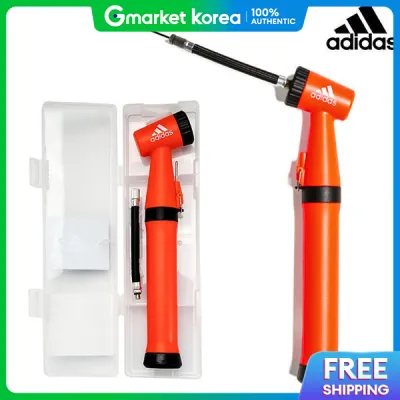
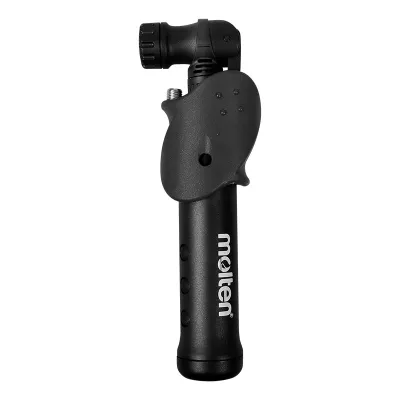
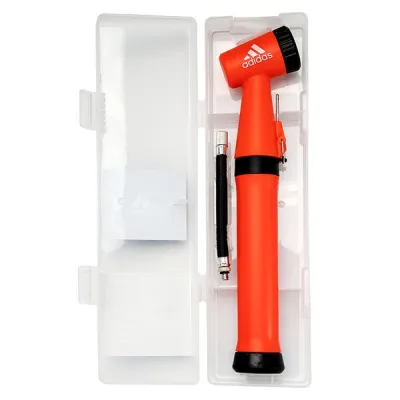
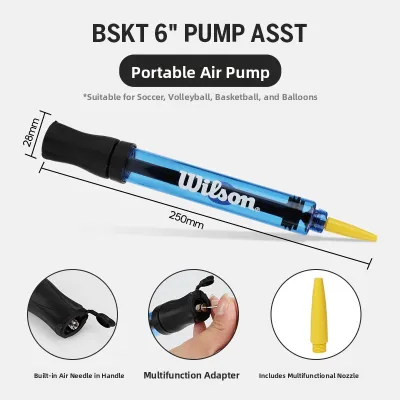
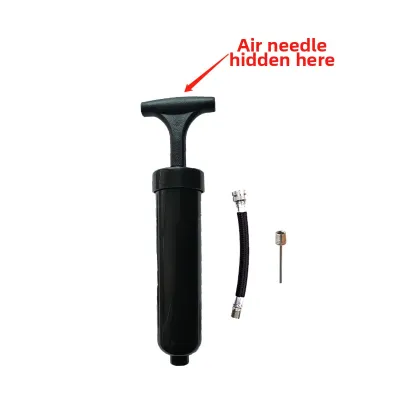

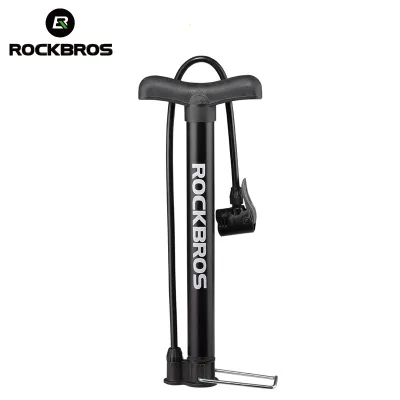
Prices are valid at publication and may change. Please refer to the product page for the latest price.
Beyond standard sports balls, many Singaporean households also store secondary recreational gear. This includes bicycles, kick scooters, yoga balls, and seasonal inflatable pool toys or air mattresses. Bicycle tires typically use either Schrader valves (the wider valve type also found on car tires) or Presta valves (the narrower, threaded valves common on road bikes). Yoga balls and pool toys, on the other hand, require wide, tapered plastic nozzles rather than thin metal needles.
Next, estimate your typical inflation frequency and volume. If your household only needs to top up a couple of basketballs once a month, a compact manual hand pump is highly efficient and easy to store in a small drawer. Conversely, if you have multiple active children playing different sports weekly, or if you frequently need to inflate large pool floats, a high-volume floor pump or a portable electric pump will save significant time and physical effort.
Key Features to Look for in a Multi-Purpose Pump
A truly versatile household pump must come equipped with a robust selection of attachments. Look for packages that include multiple metal sports needles, as these are easily misplaced or bent during active use. Additionally, ensure the pump includes a brass or durable plastic adapter for converting Schrader connections to Presta, alongside at least two sizes of tapered plastic nozzles for recreational inflatables.

A built-in pressure gauge is one of the most critical features for protecting your sports equipment. Sports balls are highly sensitive to pressure variations; inflating a soccer ball or basketball purely by feel often leads to over-inflation, which stretches the outer casing and weakens the seams. A clear, readable gauge allows you to monitor the exact pressure in real-time, ensuring you stay within the manufacturer’s recommended limits.
When evaluating manual pumps, the internal mechanism dictates how quickly you can inflate an item. Single-action pumps only push air into the ball when you compress the handle, whereas dual-action pumps deliver air on both the push and pull strokes. Dual-action designs effectively cut your pumping time in half, making them an excellent choice for hand-held manual models where physical fatigue can become a factor.
Finally, pay close attention to the physical construction of the pump. A flexible hose extension between the pump body and the needle is highly recommended because it absorbs the natural rocking motion of your hands during pumping. Without a flexible hose, a rigid pump can easily bend the needle or, worse, tear the ball’s internal rubber valve. Ergonomic handles with non-slip grips also improve comfort, especially when operating high-pressure floor models.
The material of the pump cylinder also plays a role in long-term durability. Aluminum or steel barrels offer excellent structural integrity and resist denting, which is ideal if the pump is stored in a shared family utility closet. Plastic barrels are lighter and more affordable, but they can flex under high pressure and may degrade faster if exposed to high heat or humidity over several years.
Comparing Manual and Electric Pump Types
Manual dual-action hand pumps are the traditional choice for sports bags and quick home touch-ups. Their primary advantages are their lightweight construction, compact size, and independence from electrical power sources. Because they do not rely on batteries, they are always ready for use, even after sitting in a storage cabinet for months. However, they require consistent physical effort and are less suited for high-volume inflatables like large pool toys or bicycle tires.
Standard single-action floor pumps, often called track pumps, offer excellent stability and high air volume per stroke. These pumps feature a wide base plate that you step on with both feet, allowing you to use your body weight to push a large piston downward. This design makes inflating high-pressure bicycle tires or larger sports balls incredibly fast and physically easy. The main trade-off is their physical size; they require dedicated storage space in a utility closet or bomb shelter.
Portable electric pumps have grown significantly in popularity for modern Singaporean homes. These compact, battery-powered devices allow you to set a target pressure (PSI) on a digital screen, attach the hose, and let the motor do the work until it automatically shuts off. This hands-free operation eliminates the risk of over-inflation and requires zero physical effort. However, they are heavier, noisier, and require regular battery maintenance to ensure they do not lose charge when needed.
Compact mini-pumps are small, lightweight manual pumps designed primarily for emergency use on the go. While they can inflate a sports ball in a pinch, their small chamber volume means you must pump hundreds of times to achieve the desired pressure. For primary home use, a mini-pump is generally inefficient and should only be considered as a secondary backup tool to keep in a sports backpack.
When choosing between these types, consider your home’s storage constraints. In typical Singaporean apartments where space is optimized, a compact manual pump or a small electric pump fits easily into a utility drawer. A large floor pump, while highly efficient, requires a dedicated corner in a household shelter or balcony, so weigh the convenience of fast inflation against the physical footprint of the tool.
Matching Pressure Limits and Valve Compatibility
Safe inflation begins with locating the manufacturer’s recommended pressure limits, which are almost always embossed directly onto the surface of the ball, usually right next to the inflation valve. These recommendations are typically listed in pounds per square inch (PSI) or bar. For example, a standard size 5 football typically requires between 8 and 12 PSI, while a basketball usually requires 7 to 9 PSI.
Understanding how to read your pump’s gauge is essential for matching these specifications. Analog gauges feature a physical dial with concentric scales for PSI and bar, while digital gauges display clear numerical values. When using an analog gauge, ensure the scale is fine enough to read low pressures accurately, as sports balls operate at much lower pressures than bicycle tires (which can exceed 80 PSI).
Over-inflation poses a serious risk to the structural integrity of your sports gear. When a ball is over-inflated, the internal bladder expands beyond its designed limits, putting immense pressure on the outer panels and stitching. This can cause the ball to warp, lose its spherical shape, or even burst along the seams. Conversely, under-inflation leads to a sluggish bounce, poor flight characteristics, and increased wear on the outer material as it folds excessively during play.
Environmental factors in Singapore, such as transitioning from an air-conditioned indoor room to a hot outdoor court, can also affect air pressure. Air contracts in cooler temperatures and expands when exposed to heat. If you inflate a ball to its maximum limit in a cool room, the pressure may rise slightly when you take it outside into the midday heat, so it is often wise to inflate to the middle of the recommended range to allow for these natural fluctuations.
To prevent damage, establish clear stopping conditions during every inflation session. Never rely solely on squeezing the ball with your hands to judge fullness, as modern synthetic leathers can feel stiff even when under-inflated. Always use the gauge reading as your primary guide, and stop pumping immediately once the needle or digital readout reaches the lower end of the manufacturer’s recommended range.
Purchasing Checks and Basic Pump Maintenance
Before purchasing a pump from an online marketplace or local sports retailer, carefully verify the package contents. Ensure that the listing explicitly includes the specific adapters you need for your household gear, such as spare metal needles and plastic nozzles. Many budget-friendly options may look versatile in photos but only ship with a single needle, forcing you to buy additional accessories separately.
When browsing online reviews, look past the overall star rating and focus on feedback regarding gauge accuracy and seal durability. Users will often report if the pressure gauge consistently misreads pressure or if the hose connection leaks air during high-pressure tasks. A pump with a leaky seal will require significantly more effort to inflate items and may fail entirely within a few months of use.
In Singapore, manual ball pumps typically range from S$10 to S$25, while robust floor pumps cost between S$20 and S$45. Portable electric pumps generally range from S$30 to S$70 depending on battery capacity and digital features. Avoid overpaying for professional-grade high-pressure pumps designed for competitive cycling unless you genuinely need to inflate tires past 100 PSI; a mid-range multi-purpose pump offers the best value for standard household needs.
Proper maintenance will significantly extend the lifespan of your pump and protect your sports equipment. Always store your inflation needles in a dedicated compartment or case to prevent them from bending or snapping. Periodically inspect the pump shaft for dust or debris, and apply a tiny drop of silicone lubricant to the piston shaft if the pumping action begins to feel rough or squeaky, following the manufacturer’s specific care instructions.
Additionally, always moisten the inflation needle with a drop of water or silicone oil before inserting it into the ball’s valve. Inserting a dry needle can friction-damage the delicate rubber valve, leading to slow, permanent air leaks. Taking this simple precautionary step every time you inflate a ball will keep the valve supple and airtight for years of active play.
Frequently Asked Questions (FAQ)
Can I use a standard bicycle pump to inflate sports balls?
Yes, you can use a standard bicycle pump to inflate sports balls, provided you have the correct adapter. Most bicycle pumps feature a pump head designed for Schrader or Presta valves, which cannot insert directly into a sports ball. By threading a standard metal inflation needle into the pump’s valve connection, you can easily inflate basketballs, footballs, and volleyballs. However, because bicycle floor pumps move a large volume of air quickly, you must pump slowly and monitor the pressure gauge carefully to avoid accidentally over-inflating and bursting the ball.
Why does my ball lose air quickly after pumping?
A ball that loses air rapidly after inflation usually suffers from a damaged valve or a puncture in the internal bladder. Inserting a dry, bent, or dirty needle can easily scratch or tear the delicate rubber valve inside the ball, creating a permanent pathway for air to escape. To diagnose the issue, apply a small amount of soapy water over the valve opening; if bubbles begin to form, the valve is leaking. In some cases, inserting a needle lubricated with a drop of glycerin or soapy water can help reseal a dry valve, but if the internal bladder is punctured, the ball will need to be replaced.
Community discussion
Share your experience or ask a question. Comments are reviewed before publication.