
Finding relief from patellar tendonitis—often referred to as jumper’s knee—requires a targeted approach to joint support, especially when navigating the humid, high-impact running routes of Singapore. A reliable patellar knee strap works by applying focused pressure to the patellar tendon, effectively altering the angle at which the tendon interacts with the kneecap to distribute mechanical stress more evenly. To choose the right strap, you must look beyond generic marketing claims and evaluate specific design elements: the type of compression pad, the breathability of the materials under tropical conditions, and the security of the fastening system. By matching these technical features to your specific sport and biomechanical needs, you can manage discomfort safely while maintaining your training schedule.
Key Features to Look for in a Patellar Knee Strap
When evaluating different knee straps, understanding the distinction between tubular sleeves and adjustable strap designs is essential. Tubular sleeves provide general warmth and mild compression over a larger area, which is excellent for overall joint awareness and mild swelling. However, they often lack the ability to isolate pressure directly on the patellar tendon. Adjustable strap designs, conversely, feature a narrow band that wraps specifically below the kneecap. This allows you to customize the tension and deliver highly concentrated compression directly to the affected tendon without restricting the movement of the surrounding muscles or the joint itself.
The core of any patellar strap is its pressure pad, which directly contacts the tendon. Common materials include medical-grade silicone gel, molded ethylene-vinyl acetate (EVA) foam, and adjustable air bladders. Silicone gel pads conform closely to the unique anatomy of your infrapatellar notch, offering a firm yet comfortable point of contact that absorbs impact. EVA foam provides a stiffer, more structured support that does not compress easily under heavy loads, making it highly durable for high-intensity sports. Air bladders offer customizable pressure via inflation but require careful handling to prevent punctures and leaks over time.
Products mentioned in this guide
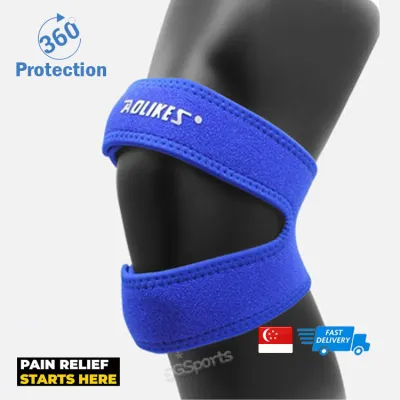
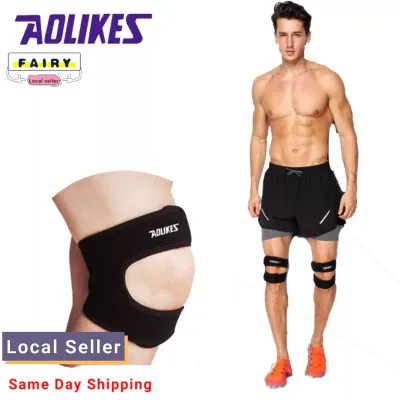
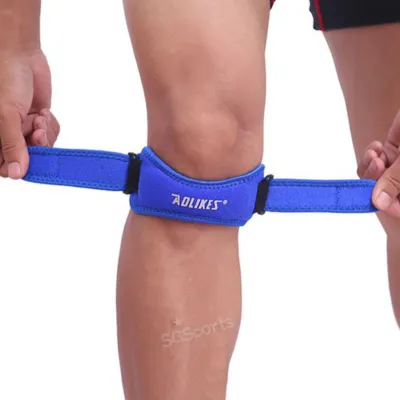
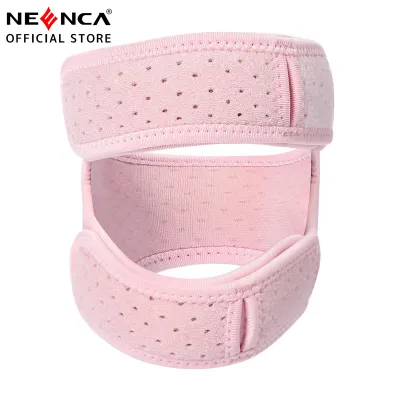
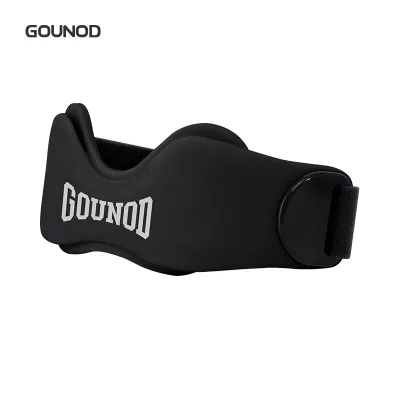
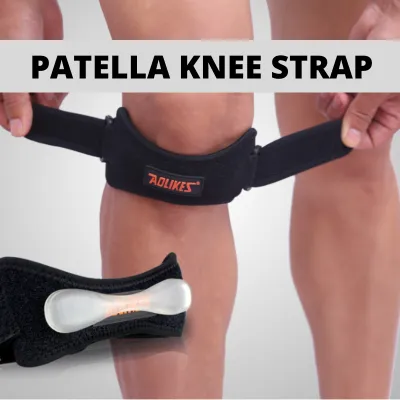
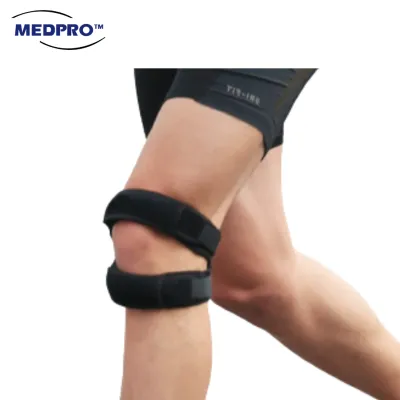
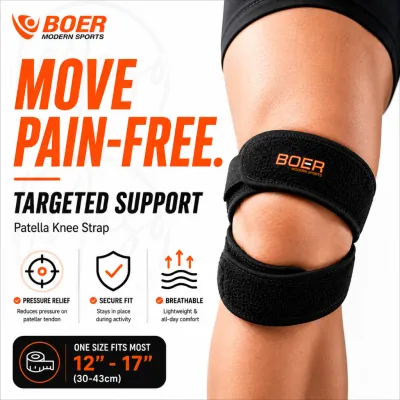
Prices are valid at publication and may change. Please refer to the product page for the latest price.
In Singapore’s hot and humid climate, sweat accumulation is a major challenge for sports gear. A strap that slips down your shin during a run is useless. Look for high-retention hook-and-loop fasteners that maintain their grip even when wet. Additionally, premium straps incorporate internal silicone wave patterns or textured rubberized grips along the inner lining. These elements create friction against the skin, keeping the strap securely anchored in place without requiring you to overtighten the band to the point of restricting circulation.
Matching the Strap to Your Sport and Activity Level
Distance runners and cyclists subject their knees to thousands of repetitive flexion and extension cycles. For these activities, a heavy, bulky brace can cause severe chafing behind the knee and trap excessive heat. The ideal choice is a lightweight, low-profile single strap made from moisture-wicking, perforated neoprene or advanced knit fabrics. This design minimizes skin irritation, allows heat to dissipate quickly, and fits comfortably under running shorts or cycling gear without interfering with your stride.

Court sports demand sudden deceleration, rapid lateral cuts, and explosive vertical jumps, placing immense multi-directional stress on the patellar tendon. A standard single strap may shift or fail to provide sufficient stabilization during these intense lateral forces. Athletes in these sports often benefit from wider bands or dual-strap configurations that secure both above and below the kneecap. This dual-point stabilization helps track the patella properly within the femoral groove during rapid changes of direction.
On active recovery days, light mobility work, or low-impact training sessions, your goal shifts from high-impact shock absorption to gentle support and joint warmth. For these scenarios, highly adjustable, soft-knit straps are preferred. These options prioritize long-term wearing comfort and breathability over rigid compression. They allow you to keep the joint warm and supported during extended periods of light movement without placing excessive, localized pressure on the tendon when it is trying to heal.
How to Evaluate Brand Reliability and Product Claims
When shopping for sports supports, it is easy to be swayed by bold claims of instant pain relief. To verify these assertions, check if the brand’s products are registered with recognized medical device regulatory authorities, such as Singapore’s Health Sciences Authority as Class A medical devices, or equivalent international bodies. Brands that collaborate with orthopedic associations, sports medicine clinics, or professional physiotherapists generally design their products based on anatomical research rather than aesthetic trends.
A reliable manufacturer stands behind the durability of its products. Examine the brand’s warranty terms and return policies before purchasing. High-quality sports braces often come with warranties covering manufacturing defects, stitching failures, or premature loss of hook-and-loop adhesion. Furthermore, check if the brand offers replacement parts, such as extra compression pads or interchangeable straps. This availability indicates a commitment to product longevity, ensuring you do not have to discard the entire brace if a single component wears out.
Customer feedback can provide valuable insights into how a strap performs in real-world conditions. Look for verified reviews from runners and athletes who share your specific physical profile or sport. Pay close attention to comments regarding how well the strap retains its elasticity after multiple washes, whether the fasteners degrade over time, and if users experience skin chafing during long workouts. Avoid brands that rely solely on generic, overly positive testimonials, and look for detailed accounts of long-term durability and comfort.
Sizing, Fitting, and Wear Guidelines for Maximum Relief
Proper fit is critical for both safety and effectiveness. Never guess your size or rely on general clothing sizes. Use a flexible measuring tape to measure the circumference of your leg directly below the kneecap, right over the patellar tendon. Ensure your leg is fully extended but relaxed during measurement. Compare this figure against the manufacturer’s specific sizing chart, as sizing standards can vary significantly between European, American, and Asian brands.
A common mistake is placing the strap too high or too low. The pressure pad must sit squarely on the soft tissue of the patellar tendon, which is located in the gap between the bottom of your kneecap and the bony bump at the top of your shinbone. Placing the strap directly on the kneecap can increase joint pressure and worsen pain, while placing it too low on the shinbone renders the compression ineffective.
Once positioned, tighten the strap to secure it, but avoid over-tightening. A good rule of thumb is the two-finger rule: you should be able to slide two fingers flat underneath the strap with some resistance. If your skin bulges around the edges, if you feel a throbbing sensation, or if your lower leg begins to feel cold or tingle, the strap is too tight. It should feel snug and supportive, providing a clear sensation of upward pressure on the kneecap without restricting your natural range of motion or blood flow.
Where to Buy and Verify Authenticity in Singapore
To ensure you are purchasing a genuine, high-quality product, buy from authorized physical retail channels in Singapore. These include specialized sports pharmacies, orthopedic clinics, and established sporting goods stores located in major shopping districts. Purchasing in person allows you to examine the material quality, test the elasticity of the strap, and sometimes consult with trained retail staff or in-house physiotherapists who can assist with initial fitting.
If you prefer the convenience of online shopping, always purchase from official brand flagship stores hosted on reputable e-commerce platforms. Look for platform-verified badges that guarantee product authenticity and offer clear return policies. Avoid third-party resellers who cannot provide proof of authorization from the manufacturer, as counterfeit sports braces are common in online marketplaces.
Counterfeit straps often use substandard materials that degrade quickly, lose their elasticity, or cause severe skin allergies due to cheap chemical dyes. Be wary of unusually low prices—if a premium orthopedic strap typically retailing for S$30 to S$50 is listed for under S$10, it is highly likely to be a counterfeit. Other red flags include poor-quality packaging with spelling errors, loose or uneven stitching, and the absence of official holographic authenticity tags or serial numbers on the box.
When to Stop Using a Knee Strap and Seek Professional Help
While a patellar strap is a valuable tool for managing mild tendon discomfort, it must be used with caution. Stop using the strap immediately if you experience any signs of restricted blood circulation or nerve compression, such as tingling, numbness, or a cold sensation in your foot. Severe skin irritation, redness, or blisters caused by friction or material allergies also require you to remove the strap and allow the skin to heal completely.
A knee strap is designed to support a recovering tendon, not to mask severe structural damage. If you experience sharp, shooting pain, sudden joint locking, visible swelling around the kneecap, or a feeling that your knee is giving way or unstable, stop using the strap. These symptoms often indicate more serious joint issues, such as ligament tears or meniscus damage, which a simple compression strap cannot address.
Equipment can never replace professional medical judgment or proper physical rehabilitation. If your knee pain persists for more than a few weeks despite using a strap and reducing your training intensity, schedule an appointment with a qualified physiotherapist or sports doctor. They can provide an accurate clinical diagnosis, identify underlying biomechanical imbalances—such as weak glutes or tight quadriceps—and design a comprehensive rehabilitation plan to address the root cause of your pain.
Frequently Asked Questions (FAQ)
Can I wear a patellar knee strap all day?
No, you should not wear a patellar knee strap continuously throughout the day. These straps are designed specifically to provide targeted compression during active movement and physical exercise. Wearing a strap for prolonged periods, especially during rest, sleep, or long hours of sitting, can restrict local blood circulation and lead to skin irritation. Furthermore, relying on a brace constantly can cause your surrounding stabilizing muscles to become inactive and weaken over time, creating a dependency that hinders your long-term recovery. Remove the strap as soon as you finish your workout or sports activity.
Should I wear the strap on both knees if only one hurts?
You should only wear the patellar strap on the knee that is currently experiencing symptoms. Bracing is a reactive measure designed to manage localized tendon stress, not a preventative tool for healthy joints. Wearing a strap on a pain-free knee can unnecessarily alter your natural running or jumping gait, potentially causing biomechanical compensation issues that lead to strain in your hips, ankles, or the opposite leg. Focus on supporting the symptomatic side while monitoring your overall movement patterns, and consult a sports professional if you begin to experience bilateral discomfort.
Community discussion
Share your experience or ask a question. Comments are reviewed before publication.