
Selecting a scuba submersible pressure gauge (SPG) is one of the most critical safety decisions for any recreational diver. Whether you are prepping for a weekend trip to Batam or Bintan, or planning a local dive to explore the marine life at Pulau Hantu, your SPG serves as your primary lifeline underwater. It provides the real-time data you need to manage your breathing gas supply safely. However, equipment alone cannot replace proper training, dive planning, and sound underwater judgment. Before every dive, you must perform a thorough pre-dive buddy check to ensure your entire regulator system is functioning correctly. When choosing a personal SPG, prioritizing mechanical reliability, clear readability in varying water conditions, and seamless compatibility with your regulator is key to a safe dive.
Understanding Pressure Scales and Maximum Ratings
In Singapore and throughout most of Southeast Asia, the metric scale—measured in bar—is the standard for monitoring cylinder pressure. However, if you plan to travel internationally to destinations like North America, you will frequently encounter the imperial scale, which is measured in pounds per square inch (psi). Dual-scale dials display both bar and psi on a single face. While dual-scale gauges offer versatility for international travelers, the extra markings can make the dial face look cluttered and slightly harder to read at a glance.
You must match your gauge’s maximum pressure rating to the working pressure of the cylinders you intend to use. A standard aluminum cylinder (such as an AL80) typically has a working pressure of 200 bar (approximately 3,000 psi). High-pressure steel cylinders, however, can be filled up to 300 bar (approximately 4,350 psi). Verify that your SPG is rated to handle the maximum possible fill pressure of your cylinder. Using a gauge rated for 200 bar on a 300 bar cylinder is a serious safety hazard that can result in immediate equipment failure.
Products mentioned in this guide
![[Perfeclan] Diving Pressure Gauge Diving Pressure Tester 0-400 Bar Dive Accessory](https://img.lazcdn.com/g/p/c4f12d7ca9d4cd973aea06d36858eafd.jpg_400x400q80.jpg_.webp)
Prices are valid at publication and may change. Please refer to the product page for the latest price.
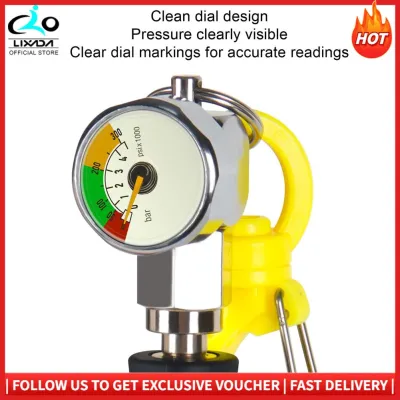
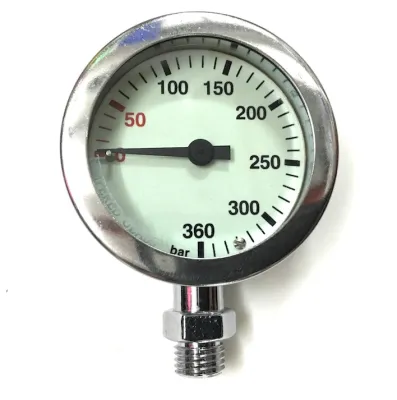
Recreational SPGs feature a highly visible, color-coded reserve zone, which is typically highlighted in red starting at 50 bar (500 psi). This reserve zone is a standardized visual cue designed to help you establish a safe margin for your ascent. Entering this red zone is not an invitation to continue exploring; rather, it indicates that you should already be completing your safety stop and preparing to surface with a comfortable breathing gas reserve.
Dial Size, Readability, and Luminescence
Readability is a vital safety factor, especially when diving in the silty, lower-visibility waters occasionally found around Singapore’s southern islands, or during night dives in Bintan. When evaluating gauge faces, you must choose between a standalone SPG and a multi-gauge console setup. Standalone gauges typically feature a larger dial (around 2 inches or 52mm in diameter) that is highly streamlined and easy to read. Consoles group the SPG with a depth gauge or a compass, which keeps your instruments together but results in smaller, more compact dials that can be harder to read in low light.

To ensure you can monitor your air supply in all conditions, look for an SPG with high-contrast, bold black numerals on a white or high-visibility yellow background. Photoluminescent (glow-in-the-dark) backing is essential for deep, overcast, or night dives. You can easily activate this luminescent backing before giant-striding into the water by shining your dive torch directly onto the gauge face for a few seconds.
The material and shape of the gauge face also impact visibility. Angled or slightly domed tempered glass faces are highly superior to flat plastic lenses. Domed glass helps reduce glare from the tropical sun when you are checking your pressure at the surface, and it significantly improves viewing angles underwater. This allows you to read your gauge clearly without needing to hold it perfectly flat and direct in front of your mask.
Housing, Protective Boots, and Durability
The warm, highly saline waters of the Indo-Pacific are incredibly demanding on scuba equipment. To ensure long-term durability, pay close attention to the construction materials of the gauge housing. High-quality SPGs feature double-chrome-plated brass or solid stainless steel casings. Brass is exceptionally resistant to saltwater corrosion and provides the structural strength required to contain high-pressure air safely.
An external protective boot made of durable elastomer or rubber is a crucial accessory for recreational diving. This boot acts as a physical shock absorber, protecting the metal housing and the glass lens from impacts against boat ladders, rocky shorelines, or heavy tank racks. Many protective boots also feature molded eyelets, allowing you to attach a bolt snap or clip to keep the gauge securely pinned to your buoyancy compensator device (BCD).
Preserving your gauge’s durability relies heavily on consistent post-dive care. After every dive day, rinse your entire regulator system—including the SPG—thoroughly in clean, fresh water while the system is still pressurized, which prevents water from creeping past the high-pressure swivel. Allow the gauge to dry completely in a shaded, well-ventilated area. You should never leave your dive gear exposed to direct, intense tropical sunlight, as prolonged UV exposure degrades the protective rubber boot and can cause the luminescent dial face to fade or yellow over time. Always consult the manufacturer’s care instructions for specific maintenance guidelines.
Hose Connections and Mounting Configurations
Your SPG must integrate seamlessly with your existing regulator first stage and your preferred gear routing style. High-pressure (HP) hoses for recreational diving typically measure around 32 inches (80 cm) in length. This standard length allows you to route the hose under your left arm and secure it to your left hip D-ring using a bolt snap, keeping your profile streamlined and preventing the gauge from dragging across fragile coral reefs.
Before purchasing a new SPG or replacement hose, you must verify the thread compatibility with your regulator’s first stage. Virtually all modern recreational first stages utilize a standard 7/16″ UNF thread for their high-pressure ports. If you are using specialized, older, or vintage regulator models, double-check the manufacturer’s specifications to ensure a proper fit.
Some divers prefer using quick-disconnect (QD) fittings on their HP hoses, which allow the SPG to be detached from the regulator assembly for safe storage during transit. While convenient, keep in mind that QD fittings introduce additional O-rings and connection points, which represent potential failure points. If you prioritize maximum streamlined simplicity, a standard, fixed HP hose connection is generally the most reliable choice.
Specs That Matter Less for Recreational Divers
When shopping at local dive centers in Singapore, it is easy to become overwhelmed by premium technical specifications. For standard recreational diving—which is strictly limited to a maximum depth of 40 meters (130 feet)—extreme technical depth ratings or heavy-duty titanium housings are unnecessary additions that inflate the cost without offering practical benefits. Standard mechanical SPGs generally range from S$80 to S$200, and a mid-range brass model is more than adequate for recreational needs.
Additionally, bulky triple-consoles that feature redundant mechanical depth gauges are largely unnecessary if you already use a primary, wrist-mounted dive computer. Modern dive computers provide highly accurate, real-time depth and decompression tracking. Carrying a large, heavy console simply adds unnecessary bulk and drag to your gear configuration.
Finally, unless you frequently dive in freezing, sub-surface alpine environments, you do not need to pay a premium for specialized cold-water or ice-rated SPGs. For the warm, tropical reef environments of Southeast Asia, a standard, well-maintained recreational gauge will perform flawlessly without the added weight or cost of specialized cold-water environmental seals.
Frequently Asked Questions (FAQ)
Can I use a 300 bar gauge on a 200 bar cylinder?
Yes, using a 300 bar rated gauge on a standard 200 bar cylinder is entirely safe and very common. Because the gauge is built to withstand higher pressures, operating it at a lower pressure puts less mechanical stress on the internal Bourdon tube. The only minor trade-off is visual precision: because the 300 bar scale covers a wider range of pressure on the same size dial, the spacing between individual bar markings is slightly tighter, which can make reading exact, fine increments slightly more difficult than on a dedicated 200 bar dial.
How do I know if my pressure gauge is failing or needs replacement?
You should inspect your SPG regularly for several key warning signs of failure. If the needle sticks, jumps erratically, or does not return to exactly zero when the system is completely depressurized, the internal mechanism is likely damaged. Internal fogging, condensation, or water droplets behind the glass lens indicate that the high-pressure spool O-rings or the main housing seal have failed. Finally, if you notice a significant discrepancy of more than 10 bar (150 psi) between your analog SPG and a transmitter-linked dive computer, stop using the gauge immediately and take it to a certified technician for professional servicing or replacement.
Community discussion
Share your experience or ask a question. Comments are reviewed before publication.