
To practice football quietly in a Singapore HDB or condo, you need a specialized low-rebound, high-density foam ball or a soft-touch micro-cell training ball. These “silent” footballs are designed to absorb impact energy rather than bounce sharply off hard surfaces, significantly reducing the noise that travels through shared walls and floors. However, choosing the right ball requires checking its material density, weight, and rebound characteristics to ensure it matches your indoor space and training goals.
Understanding "Silent" Claims and Apartment Acoustics
Living in high-density housing in Singapore means sharing walls and floors with neighbours who are highly sensitive to impact sounds. When evaluating a “silent football,” it is crucial to understand that “silent” is a relative term rather than an absolute guarantee. In acoustics, sound is categorized into two main types: airborne noise and structure-borne noise. Airborne noise is the sound that travels through the air, such as the whistle of a kicked ball or the light slap of a foot making contact with a synthetic surface. Structure-borne noise, on the other hand, occurs when an object physically strikes a building element—like a concrete floor slab or a brick wall—causing vibrations to travel directly through the building’s framework.
Standard pressurized match balls are designed for maximum energy transfer and high rebound, which translates to loud, sharp impacts that easily penetrate concrete floors as structure-borne vibrations. Specialized silent footballs address this by using high-density foam or hollowed-out micro-cell structures. These materials deform easily upon impact, absorbing the kinetic energy and converting it into minimal, low-frequency sound. While this design dramatically muffles the airborne “pop” of a kick, it cannot completely eliminate the physical thud of a heavy ball hitting a hard floor. Understanding this distinction helps you set realistic expectations: a silent ball is a tool to minimize disturbance, but it must still be paired with careful training habits.
Products mentioned in this guide
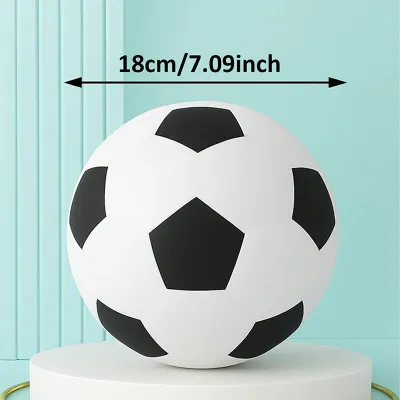
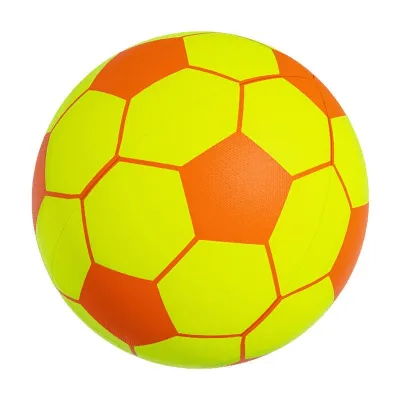
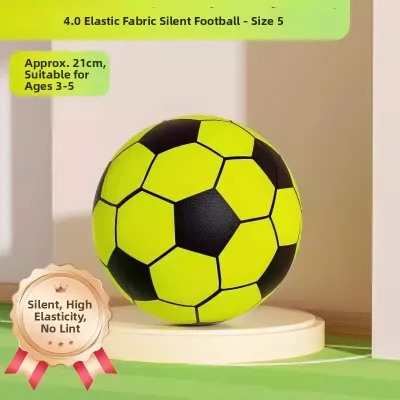
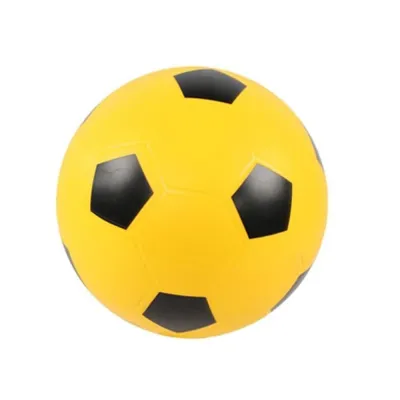
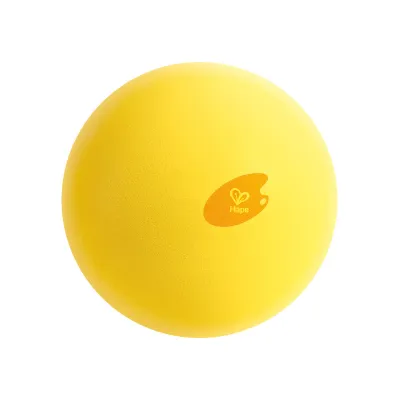
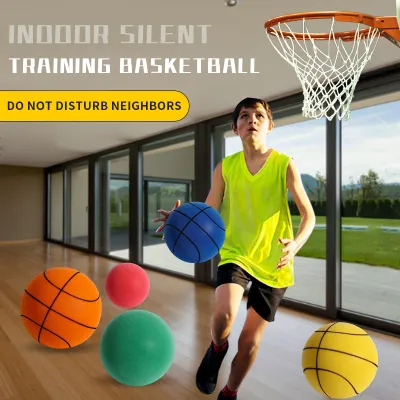
Prices are valid at publication and may change. Please refer to the product page for the latest price.
What to Check Before Buying an Indoor Football
When browsing online marketplaces or local sports stores, you will encounter various products marketed as indoor or quiet balls. To find a model that genuinely works in a confined apartment, you should verify several key specifications and physical traits before making a purchase. While basic foam balls can be found on online marketplaces for under S$20, investing in a durable, high-density training ball is essential for realistic practice.

Material and Density: Look closely at the product specifications for materials like high-density polyurethane (PU) foam, ethylene-vinyl acetate (EVA) foam, or soft-touch micro-cell structures. High-density foam balls are typically solid or semi-solid, offering a weight that mimics a real ball while remaining soft enough to squeeze. Avoid cheap, lightweight sponge balls, as they lack the weight necessary for realistic footwork and will drift unpredictably with the slightest breeze.
Size and Weight: Standard match balls are Size 5, which can feel incredibly bulky and destructive in a typical living room or hallway. For indoor practice, consider sizing down to a Size 3 or Size 4 ball. A smaller ball requires more precise footwork, which actually enhances your technical development, while its lower mass reduces the kinetic energy transferred during accidental impacts with furniture or walls.
Surface Texture and Floor Safety: Inspect the outer skin of the ball. Some foam balls have a smooth, coated “skin” that provides excellent grip on tiled or vinyl floors, while others have a textured, matte finish. Ensure the material is non-abrasive. Hard, textured rubber or low-grade plastics can leave unsightly scuff marks on laminate or vinyl flooring, which can be difficult to clean.
Rebound Characteristics: Check the manufacturer’s description for terms like “low-rebound,” “zero-bounce,” or “controlled-rebound.” A ball with high elasticity will bounce uncontrollably off furniture and walls, increasing the risk of breaking household items. A true silent training ball should drop to the floor with a dull thud and minimal bounce, keeping the play concentrated at your feet.
Adapting Your Training Drills for Confined Spaces
Using a silent football requires a shift in your training mindset. Because these balls do not behave exactly like pressurized leather match balls, you must adapt your drills to focus on technical precision rather than power.
Close Control and Dribbling: Confined spaces are ideal for developing elite ball control. Focus on tight-space drills such as sole rolls, inside-outside cuts, toe taps, and L-drags. The low-rebound nature of a foam silent football is highly advantageous here, as it stays close to your feet and allows for rapid, repetitive touches without rolling away under furniture.
Juggling and First Touch: Juggling a foam ball feels different because the weight distribution is uniform throughout the ball, unlike a traditional ball with an internal bladder and outer panels. Use the silent ball to practice soft-touch reception. Work on cushioning the ball with your thigh, chest, or the top of your foot, focusing on absorbing the ball’s momentum so it drops dead to the floor.
Passing and Shooting: High-velocity strikes are highly discouraged indoors, as they generate significant structure-borne noise and risk damaging your home. Instead, practice short, controlled passing against a padded surface, such as a sofa cushion or a wall lined with a yoga mat. Focus on the mechanics of your passing technique—keeping your ankle locked and using the inside of your foot—rather than the force of the pass.
Agility and Fitness: You can integrate the silent football into low-impact agility routines. Set up small markers or cones in a short line and practice weaving through them at a controlled pace. This keeps your heart rate up and sharpens your coordination without requiring any high-impact movements that might disturb the neighbours below.
Setting Up a Safe and Quiet Practice Zone
Even the quietest ball can cause a disturbance if your practice environment is not properly prepared. Setting up a dedicated, vibration-dampening zone is essential for maintaining peace in your building.
Floor Padding: The most effective way to block structure-borne noise is to place a barrier between your feet, the ball, and the floor. Lay down thick yoga mats, interlocking EVA foam gym tiles, or a heavy, high-pile rug over your practice area. This padding absorbs the impact of both the ball and your footsteps, preventing vibrations from traveling down into the concrete slab.
Space Management: Before you begin, clear a dedicated space of at least two by two meters. Move fragile items, glass coffee tables, floor lamps, and low-hanging decorations out of the way. Ensure there is a clear path free of tripping hazards, and close any nearby cabinet doors or glass partitions to prevent accidental damage from a stray touch.
Time and Intensity Etiquette: Be mindful of your building’s quiet hours. Schedule your indoor practice sessions during active daytime hours, such as late morning or late afternoon. Avoid practicing early in the morning, late at night, or during typical afternoon nap times when neighbours are more likely to be resting or working from home in quiet environments.
Stopping Conditions: Always monitor your environment and your equipment. Stop your session immediately if you notice any scuff marks on your flooring, hear loud, echoing thuds against the walls, or if the ball begins to crack or shed foam particles. If you feel physical discomfort in your joints from the altered weight and feel of the foam ball, pause and adjust your technique.
Frequently Asked Questions (FAQ)
Can a silent football completely eliminate noise in an HDB?
No, a silent football cannot completely eliminate noise in a high-density concrete building like an HDB flat. While the specialized foam material significantly muffles the airborne sound of kicks and bounces, the physical impact of your feet moving across the floor and the ball striking surfaces still creates structure-borne vibrations. To minimize this, you must combine the use of a silent ball with thick floor padding, such as gym mats, and focus strictly on low-impact, controlled technical drills.
Will a silent football damage my laminate or vinyl flooring?
A high-quality foam or soft-touch synthetic football is highly unlikely to damage laminate or vinyl flooring on its own. However, dust, dirt, or tiny grit particles trapped on the floor or the surface of the ball can act like sandpaper under the pressure of quick footwork, leading to micro-scratches over time. To protect your floors, always sweep or vacuum the practice area before starting, wipe down the ball regularly, and consider practicing on a protective mat or rug.
Community discussion
Share your experience or ask a question. Comments are reviewed before publication.