
Quick Answer: Fitting a Stepping Machine in an HDB Flat
Finding home fitness equipment that fits seamlessly into a Singapore HDB flat requires balancing workout efficiency with spatial constraints. The most suitable stepping machines for compact apartments are mini steppers and foldable vertical stepping machines. A standard mini stepper occupies a static footprint of less than 0.2 square metres, making it easy to store under a bed, inside a wardrobe, or within a household shelter. Foldable vertical models offer a more comprehensive workout but require careful consideration of vertical storage space and ceiling clearance. Ultimately, the right choice depends on your specific floor layout, ceiling height, and how easily you can transition the machine from storage to active use without disrupting your living area.
How to Measure Your Space for a Stepping Machine
Before purchasing any fitness equipment, accurate measurements of your designated workout and storage areas are essential to avoid layout conflicts. Begin by measuring the static floor footprint, which is the physical length and width of the stepping machine when it is completely stationary. Mark this area on your floor using masking tape to visualize how much walking space remains in your living room or bedroom.

Next, you must calculate the required vertical clearance. Unlike treadmills, stepping machines elevate your body significantly during use. To determine your safe ceiling height, add your personal height to the maximum pedal height of the machine at its highest step point, then add an extra safety margin of at least 20 centimetres. This calculation is particularly important in HDB flats, where standard ceiling heights typically range between 2.6 and 2.8 metres. If you are tall or planning to use a vertical climber style of stepping machine, failing to account for this vertical rise could result in head clearance issues.
Products mentioned in this guide
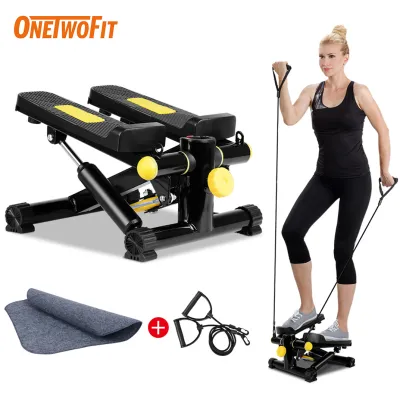
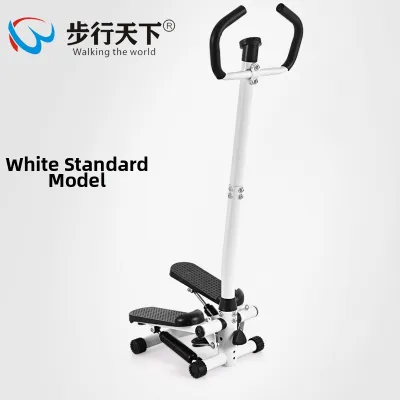
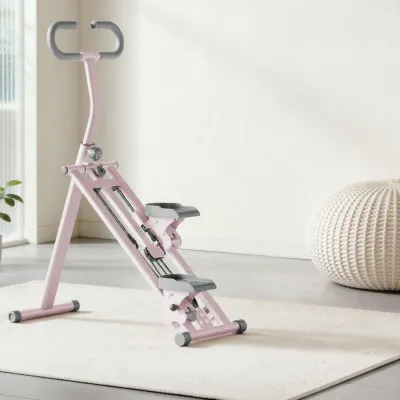
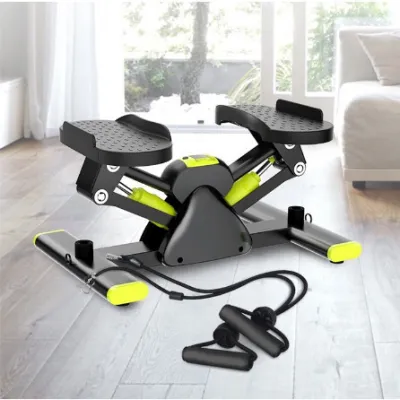
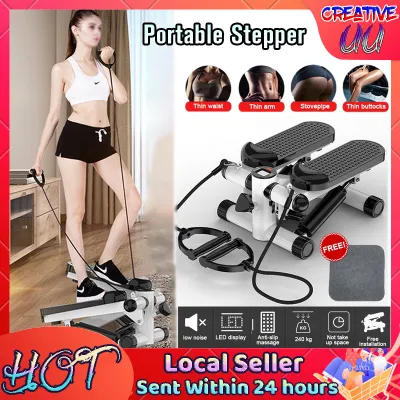
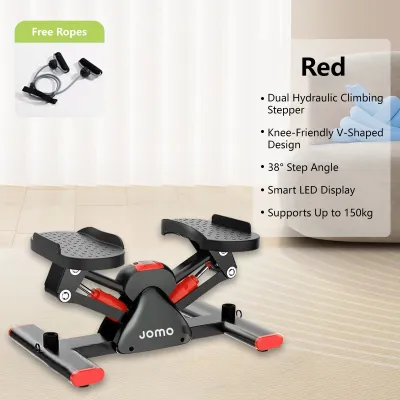
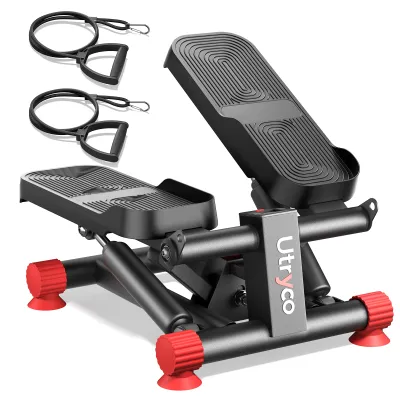
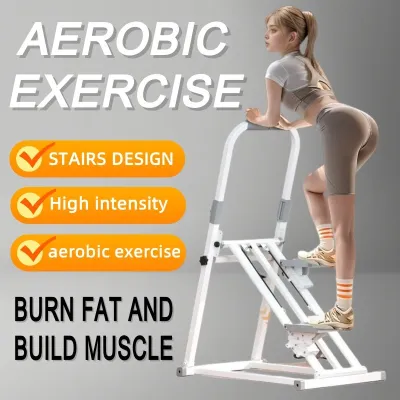
Prices are valid at publication and may change. Please refer to the product page for the latest price.
Finally, do not overlook the delivery pathway. Measure the width of your apartment’s main entrance, the metal gate clearance, and the interior corridor widths. If you live on a higher floor, verify the internal dimensions and door width of your passenger lift. Even if a machine fits well inside your living room, it must first be able to navigate these common property access points during delivery.
Space-Saving Stepping Machine Designs to Consider
When shopping for a compact stepping machine, you will generally choose between two primary structural designs: foldable frames and fixed compact bases. Foldable frames feature hinges and locking pins that allow the handlebars and console to fold down flat against the base. While these models offer excellent stability and hand support during workouts, you must regularly inspect the folding joints and locking mechanisms for wear and tear to ensure long-term structural integrity.
In contrast, fixed compact bases—commonly known as mini steppers—do not have tall frames or handlebars. They rely on a heavy-duty steel base and hydraulic cylinders to provide resistance. Because they lack a vertical frame, they are highly durable and require virtually zero setup time. However, some users may find the lack of physical handlebars challenging for balance, especially during longer exercise sessions. To bridge this gap, some compact models feature detachable or adjustable handlebars. These hybrid designs allow you to attach the handles for a stable workout and remove them completely when you need to slide the base under low-clearance furniture.
The ultimate trade-off lies between the ultra-compact mini stepper and the full-size compact stepper. Mini steppers are unmatched for space savings but offer a shorter range of motion and limited resistance adjustments. Full-size compact steppers provide a deeper step, higher cardiovascular demand, and greater stability for intense workouts, but they occupy a permanent footprint that cannot be easily hidden away in a standard HDB flat.
Essential Dimensions and Clearance for Safe Use
Safe operation of a stepping machine requires planning for dynamic clearance, which is the space needed around the machine while you are actively exercising. You should maintain a clear zone of at least 50 to 60 centimetres on all sides of the machine. This buffer zone ensures your arms can swing naturally without hitting nearby walls or furniture, and it provides a safe landing area should you lose your balance and need to step off the machine quickly.
Stability is directly linked to the machine’s base dimensions and the user’s weight. Always verify the manufacturer’s specified maximum user weight and compare it against the machine’s overall weight. A stepping machine that is too light may rock or slide across typical HDB flooring, such as vinyl, laminate, or homogeneous tiles, during vigorous exercise. Choosing a model with a wider base stabilizer bar or adjustable leveling feet helps distribute your weight evenly and keeps the machine firmly planted.
Additionally, pay close attention to ventilation and heat dissipation. The hydraulic cylinders on mini steppers and the magnetic flywheels on larger compact machines generate significant heat during operation. If you plan to exercise in an enclosed space, such as a household shelter or a small study room, ensure there is adequate airflow around the resistance mechanisms. Operating these machines in tight, unventilated corners can cause the hydraulic fluid to overheat, leading to a temporary drop in resistance or premature wear of the internal seals.
Smart Placement and Storage Tips for Small Apartments
Integrating fitness equipment into a small apartment requires creative spatial planning. One effective strategy is utilizing transitional or dead spaces. The corner of a living room, the space adjacent to a TV console, or the area behind an inward-opening bedroom door can serve as excellent permanent or semi-permanent spots for your stepping machine. This keeps the equipment accessible while keeping the main walking paths clear.
To make daily setup effortless, consider using heavy-duty equipment mats or furniture sliders. Placing your stepping machine on a dedicated mat with a low-friction underside allows you to easily slide a 15-kilogram to 25-kilogram machine from its storage corner to the center of the room for your workout, and then slide it back when finished. This simple addition prevents physical strain and protects your flooring from drag marks.
For storage of foldable units or mini steppers, look for under-utilised horizontal and vertical spaces. A mini stepper can easily slide under a sofa or bed frame, provided you have at least 20 to 25 centimetres of vertical clearance. If horizontal floor space is completely unavailable, store your foldable stepping machine upright inside a built-in wardrobe or stand it securely in your household shelter, securing it with a safety strap to prevent it from tipping over.
Common Space and Sizing Mistakes to Avoid
One of the most frequent errors home gym buyers make is confusing the static storage footprint with the dynamic operational footprint. A stepping machine might fold down to a remarkably slim profile, but when you unfold it and begin stepping, the pedals extend outward and your body sways. Always base your space planning on the maximum dimensions of the machine in its fully extended, active state.
Another common mistake is overlooking building access points. Buyers often focus entirely on their apartment’s interior space while forgetting about the journey from the delivery truck to the front door. Narrow HDB lift lobbies, low-clearance corridors, or tight turns near your metal gate can prevent a pre-assembled delivery from reaching your unit. Always check the shipping box dimensions against these external pathways before placing your order.
Finally, never underestimate the importance of a completely level surface. Many apartment floors, particularly in older estates or near balcony drainage slopes, are not completely flat. Operating a stepping machine on an uneven surface causes uneven load distribution on the frame and hydraulic cylinders. This not only increases noise and vibration but also accelerates mechanical wear and poses a safety hazard by making the machine unstable during use.
Frequently Asked Questions (FAQ)
Can I use a stepping machine on an HDB balcony?
You can use a stepping machine on an HDB balcony only if the area is fully sheltered from rain and direct sunlight. Singapore’s high humidity and ambient moisture can quickly rust steel frames, degrade electronic consoles, and cause hydraulic fluid to break down. Additionally, you must ensure the balcony floor is completely level and structurally sound. To protect your equipment, it is highly recommended to store the stepping machine indoors and only bring it out to the balcony during your workout sessions.
Do mini steppers provide the same workout as full-size models?
Mini steppers offer a highly effective low-to-moderate intensity cardiovascular workout, but they do not fully replicate the experience of full-size models. Due to their compact size, mini steppers have a shorter range of motion and a shallower step depth, which limits maximum lower-body muscle engagement. They also lack the heavy-duty stability and advanced resistance adjustments found on larger machines. However, for general fitness, active desk setups, and space-constrained apartments, they provide an excellent balance of utility and convenience.
How do I protect my HDB floor from damage?
To protect your HDB floor from scratches, dents, and black scuff marks, always place a high-density PVC or rubber equipment mat underneath your stepping machine. The mat should be thick enough to absorb the vibrations and rhythmic impact generated during your workout. This physical barrier not only protects sensitive flooring materials like vinyl, laminate, or parquet but also significantly dampens noise transmission to your downstairs neighbours, ensuring you comply with local community living considerations.
Community discussion
Share your experience or ask a question. Comments are reviewed before publication.