
Selecting the right table tennis net directly impacts the accuracy of your game, whether you are playing a casual match in a high-rise apartment or training for a local tournament. To ensure consistent ball bounces and reliable play, look for a net that meets the International Table Tennis Federation (ITTF) standard height of 15.25 cm (6 inches). Prioritize synthetic fabrics like nylon or polyester, which resist humidity and stretching far better than traditional cotton. For stability, choose heavy-duty metal clamp-on or screw-on posts rather than lightweight plastic alternatives, and ensure the assembly allows you to adjust and lock the tension securely.
Net Height and Tension: How They Affect Your Game
The physical dimensions of a table tennis net are not just arbitrary numbers; they dictate the trajectory of every serve, loop, and block. According to official ITTF standards, the top of the net must sit exactly 15.25 cm (6 inches) above the playing surface across its entire 1.83-meter width. Even a slight deviation of a few millimeters can turn a legal, grazing shot into a missed point or allow an illegal low shot to pass over. Serious players verify this height using a specialized net gauge—a small, lightweight metal or plastic tool placed on the table to check the gap beneath the top band.
Tension is the secondary element that ensures fair play. A loose, sagging net absorbs the energy of the ball, resulting in dead, unpredictable bounces that disrupt the flow of a rally. When a net is pulled to its proper tension, a ball striking the top edge should deflect consistently rather than getting caught in a soft pocket.
Products mentioned in this guide

![[Butterfly] Table Tennis Net Set (Blue) (SG Distributor)](https://img.lazcdn.com/g/p/69ccd79b2b35947d09099ad7f5655e98.jpg_400x400q80.jpg_.webp)

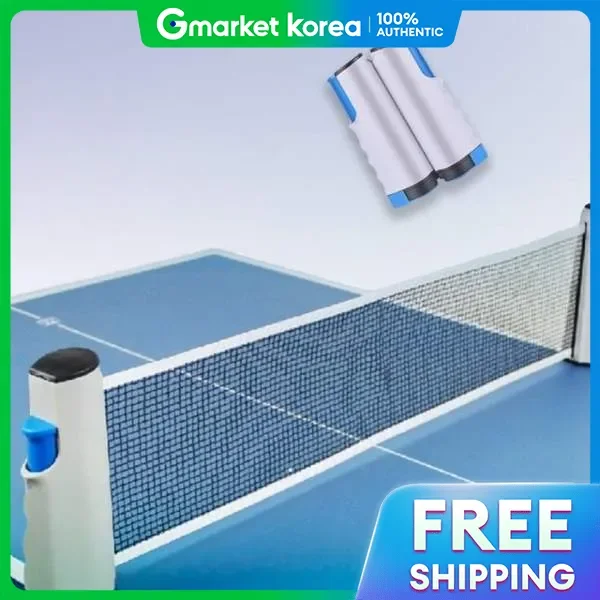
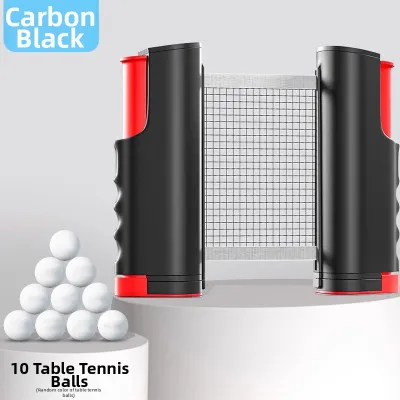
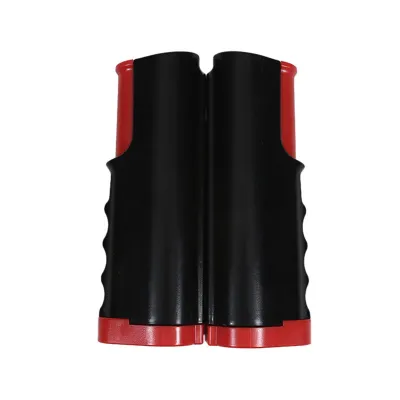
![[TABLE TENNIS NET RETRACTABLE] PING PONG NETS PINGPONG BALL ADJUSTABLE NETTING](https://img.lazcdn.com/g/p/cc8654cd3111a62238fa46d3753e52ce.jpg_400x400q80.jpg_.webp)

Prices are valid at publication and may change. Please refer to the product page for the latest price.
While a minute, microscopic sag at the absolute center of the net is physically inevitable due to gravity, any visible drooping is unacceptable for competitive play. High-quality net systems address this by incorporating a tension adjustment mechanism, typically a cord running through the top sleeve of the net that hooks onto the posts.
How a net system maintains this tension over time depends heavily on its design. Simple sleeve-style nets, which slide over the posts like a sock, rely entirely on the elasticity of the fabric and tend to lose tension rapidly. In contrast, cord-through designs allow you to fine-tune the tautness using a chain, peg, or screw dial on the post, ensuring the net remains rigid throughout long training sessions.
Net and Post Materials: Decoding Durability
The materials used in your net and post assembly determine how well the setup survives repeated tensioning and environmental exposure. In Singapore’s tropical climate, where indoor humidity is consistently high and outdoor balconies experience intense heat and rain, material choice is the single most important factor for longevity.

Traditional cotton nets are highly susceptible to moisture absorption. In humid conditions, cotton fibers expand and relax, causing the net to sag and requiring constant manual tightening. Modern synthetic blends, such as nylon and polyester, are far superior for both indoor and outdoor setups. These synthetic materials do not absorb moisture, hold their shape under high tension, and dry rapidly if exposed to spills or rain.
The construction of the top band is another critical area to examine. Look for a net with a reinforced, heavy-duty white tape band along the top edge. This band must house a strong internal tension cord—often made of nylon or thin steel cable—which distributes the pulling force evenly across the fabric and prevents the top line from bowing downward.
For the posts and bases, heavy-duty steel or aluminum is the gold standard. These metals provide the structural rigidity needed to withstand high tension without bending or shifting. Lightweight plastic posts are common in budget recreational sets, but they are highly prone to warping, cracking, or snapping under the constant lateral pull of a taut net.
If you plan to use the net in a garage, patio, or any non-climate-controlled space, pay close attention to the hardware coatings. Ensure all metal components feature a rust-proof powder coating, anodized finish, or are constructed from stainless steel to prevent corrosion from moisture and sweat.
Mounting Types: Clamp-On vs. Screw-On Explained
The way a net attaches to your table affects both the stability of your setup and how easily you can store the equipment when it is not in use.
Screw-On (Permanent) Nets Screw-on net systems are designed for dedicated game rooms, schools, and sports clubs where the table remains permanently assembled. These brackets are bolted or screwed directly into the metal frame or underside of the table. They offer the absolute highest level of stability and can support extreme tension without budging. However, they are not suitable for multi-purpose tables, as removing them requires tools and leaves visible mounting marks.
Clamp-On (Portable/Retractable) Nets Clamp-on systems are highly versatile and ideal for multi-use spaces, such as dining tables or folding table tennis tables. These mechanisms generally fall into two categories: spring-loaded clamps, which squeeze onto the table edge like a giant clothespin, and screw-clamp systems, which use a threaded bolt and a padded pressure plate to grip the table. They can be installed and removed in seconds without any tools.
Weighing the Trade-offs While clamp-on nets offer unmatched convenience and protect your table surface with rubber padding, they cannot match the long-term tension stability of a screw-on system. Over time, spring-loaded clamps may lose their grip and slip inward under high tension, while screw-clamps require periodic tightening to prevent wobbling.
Table Thickness Compatibility Before purchasing any clamp-on net, always measure the thickness of your table’s playing top and the depth of its under-table frame. Standard table tennis tables range from 12 mm to 25 mm in thickness, but dining tables can be much thicker. Ensure the clamp’s maximum jaw opening is wide enough to fit securely over both the table surface and any supporting side rails without slipping or scratching the finish.
Which Specs Actually Matter for Your Setup?
To get the best value for your money, match the specifications of the net to your specific playing environment and skill level.
Casual and Family Play If your primary goal is weekend recreation with family, convenience is key. Look for a portable, retractable synthetic net with spring-loaded clamps. These sets typically cost between S$15 and S$30. While they do not offer precision ITTF tension, they protect your dining table from scratches and can be packed away in a drawer instantly.
Serious Practice and Club Use For competitive players or those training for local leagues, compromise is not an option. Invest in a heavy-duty steel screw-clamp net system that strictly adheres to ITTF dimensions. Look for micro-adjustable height screws at the base of the posts and a precise ball-chain tensioning system. These professional setups generally range from S$50 to S$100 or more, providing the robust, unyielding support required for intense training.
Outdoor and Garage Environments For tables set up on balconies, patios, or in garages, skip cotton nets entirely. Prioritize UV-resistant synthetic nets (nylon or treated polyester) paired with weather-resistant, powder-coated aluminum or stainless steel posts. Ensure the tension cord is also made of synthetic material or rust-proof wire to prevent rot.
What to Ignore Do not pay a premium for aesthetic gimmicks. Large, brightly colored brand logos printed directly onto the net mesh do not improve performance and can actually distract your eyes during fast rallies. Similarly, excessively thick mesh strings do not contribute to better play; as long as the net is made of high-quality synthetic fibers and has a robust top band, standard mesh thickness is perfectly adequate.
Frequently Asked Questions (FAQ)
Does the middle of the table tennis net need to touch the table?
No, the middle of the net must never touch or rest on the playing surface. A properly tensioned table tennis net should remain suspended at a uniform height of 15.25 cm across the entire width of the table. While a tiny, microscopic sag of less than a millimeter may occur naturally due to gravity, any noticeable drooping that causes the bottom of the net to drag on the table indicates insufficient tension or a worn-out net that needs replacement.
Is a retractable net good for serious practice?
Retractable nets are not suitable for serious practice or competitive training. Although they are incredibly convenient for quick setups on non-standard tables, their spring-loaded roll-up mechanisms cannot generate or maintain the high tension required for true ITTF standards. The lack of rigid metal posts also makes them prone to wobbling when struck by a fast ball. For serious practice, always use a traditional net system with solid metal posts and an adjustable tension cord.
Community discussion
Share your experience or ask a question. Comments are reviewed before publication.