
Selecting a table tennis paddle is one of the most critical decisions a player can make, directly impacting stroke mechanics, physical comfort, and long-term skill development. The ideal paddle is not simply the most expensive or the fastest option on the market; rather, it is the one that aligns with your current technical ability, physical strength, and tactical approach. Understanding how different table tennis accessories, blades, and rubbers interact will help you make an informed choice that supports your growth.
Assess Your Skill Level and Playing Style
Before exploring specific equipment specifications, you must objectively evaluate your current skill level. Players generally fall into three distinct categories based on their stroke consistency, footwork, and tactical awareness.
Beginners focus primarily on developing basic stroke mechanics and consistent ball contact. They often lack refined footwork and tactical depth, meaning they require equipment that maximizes control and offers a forgiving sweet spot to keep rallies alive.
Products mentioned in this guide
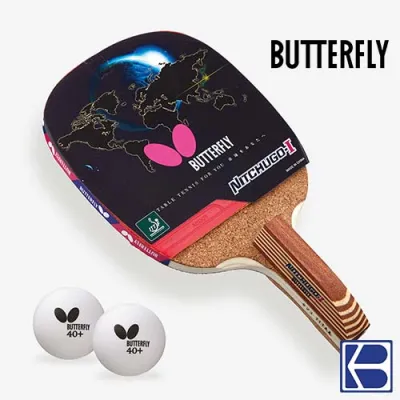
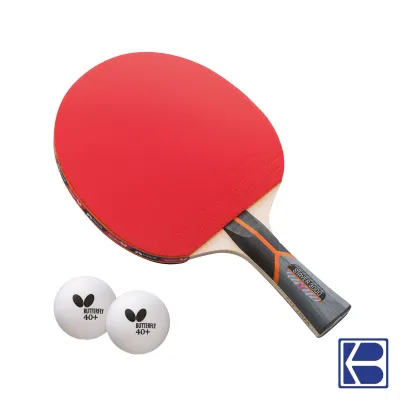
Prices are valid at publication and may change. Please refer to the product page for the latest price.
Intermediate players have established consistent strokes, can execute basic topspin and backspin, and are beginning to develop lateral footwork. They need a paddle that transitions with them, offering a balanced blend of speed and spin to explore different tactical strategies.
Advanced players possess highly developed stroke mechanics, rapid footwork, and clear tactical awareness. They can manipulate spin at high speeds and require specialized equipment tailored to their precise style.
Your equipment must also match your primary playing style, which typically falls into one of three tactical categories.
- Defensive (Chopping/Blocking): Players who prioritize control, spin reversal, and variation to force opponent errors.
- All-Round (Balanced): Players who transition fluidly between defense and offense, requiring a versatile setup.
- Offensive/Attacking (Looping/Smashing): Players who use aggressive topspin, speed, and power to win points actively.
Choosing equipment designed for a more advanced level or a different playing style carries significant risks. For example, using advanced high-tension rubbers too early reduces dwell time, making it incredibly difficult for beginners to control the ball. This mismatch often leads to poor habits, such as shortening strokes or hesitating during contact, which ultimately stunts skill development and causes unnecessary frustration.
Match Blade Composition and Table Tennis Accessories to Your Tactics
The blade is the structural core of the paddle, dictating its baseline speed, stiffness, and vibration feedback. When browsing table tennis accessories, you will find that blades are broadly categorized into all-wood designs and composite designs that incorporate carbon fiber, arylate, or glass fiber layers.

All-wood blades typically feature five or seven plies of wood. They are highly recommended for developing players because they absorb energy and provide clear tactile feedback, allowing the hand to “feel” the ball upon impact. This sensory feedback is crucial for learning how to adjust stroke angles and gauge ball speed.
Carbon and composite blades introduce synthetic layers to increase stiffness and expand the sweet spot—the area of the blade face that produces a uniform bounce. These blades are significantly faster and are preferred by advanced offensive players who execute powerful loops and smashes from mid-to-far distance.
Blade thickness and ply count directly influence performance. Thicker blades (typically above 6.0mm) and higher ply counts generally increase stiffness and speed, while thinner blades offer more flexibility and control.
Rather than relying on vague marketing terms like “ultra-fast” or “maximum power,” players should consult manufacturer specifications. Look for standardized speed and control ratings, which are usually presented on a scale of 1 to 10 or 1 to 100, to make objective comparisons.
Select Rubber Types for Spin and Speed Control
Rubbers are the direct point of contact with the ball, determining the spin profile and speed dynamics of your shots. The primary rubber types include inverted, short pips, long pips, and anti-spin.
Inverted rubbers are the most common, featuring a smooth outer surface that maximizes friction. This design allows players to generate heavy topspin and backspin, making it the standard choice for all-round and offensive players.
Pips-out rubbers reverse this structure, placing the textured pimples on the outside. Short pips reduce the paddle’s sensitivity to incoming spin while allowing for flat, fast counter-attacks, whereas long pips bend upon contact to reverse the opponent’s spin, a common tactic for defensive choppers.
Anti-spin rubbers are smooth but have a low-friction surface and a dead sponge, designed to neutralize incoming spin and slow down the game.
The underlying sponge layer acts as the engine of the rubber. Sponge thickness (measured in millimeters) and hardness (measured in degrees) dictate dwell time—the duration the ball remains on the paddle. Thicker, harder sponges (2.0mm and above) provide maximum speed and spin but require high swing speeds and precise technique. Thinner, softer sponges (1.5mm to 1.8mm) offer more control and a higher safety margin for defensive and developing players.
It is vital to recognize that rubber performance degrades over time due to exposure to air, dust, and physical wear. Players should perform regular visual and tactile inspections, checking for a loss of surface tackiness, smooth patches in the center contact zone, or crumbling edges.
Choose Between Pre-Assembled and Custom Setups
When purchasing a paddle, players face a choice between pre-assembled (ready-made) options and custom-assembled setups.
Pre-assembled paddles come with the rubbers permanently glued to the blade by the manufacturer. These are highly cost-effective, immediately usable out of the box, and perfect for beginners and casual players who do not yet require specialized performance characteristics.
Custom setups require purchasing the blade and rubbers separately, which are then glued together using specialized water-based table tennis glue. This path is ideal for intermediate and advanced players, allowing them to pair a specific blade with different rubbers on the forehand and backhand to match their unique playing style.
Beyond materials, physical ergonomics play a major role in paddle selection. The handle shape must feel secure in your hand, with the most common options being:
- Flared: Wider at the base, which prevents the paddle from slipping out of the hand and is highly popular for forehand-dominant players.
- Straight: Uniform width from top to bottom, preferred by players who frequently flip their paddle during play to use different rubbers.
- Anatomical: Contoured to fit the shape of the palm, offering a very secure, filled grip.
Weight distribution also varies; some setups are head-heavy to generate more momentum on loops, while others are balanced toward the handle for quicker transitions over the table.
Test and Validate Your Paddle Before Committing
Before finalizing a purchase, validating the equipment through physical play is highly recommended to ensure it matches your physical mechanics.
Practical testing methods include borrowing paddles from club mates, trying out demo setups at local sports retailers in Singapore, or visiting community clubs (CCs) where active players gather.
During a test session, perform specific validation checks:
- Assess how comfortable the handle feels during extended play.
- Execute basic forehand and backhand drives to see if the ball lands consistently.
- Verify if you can generate spin on serves without excessive physical strain.
Establish clear stop conditions. If a paddle causes immediate wrist discomfort, feels excessively head-heavy, or results in a complete loss of control during basic rallies, it is too stiff, heavy, or fast for your current mechanics. In such cases, step back and select a lighter blade or a thinner, more forgiving rubber.
Frequently Asked Questions (FAQ)
How often should I replace my table tennis rubber?
Evaluate rubber lifespan based on physical condition rather than a strict calendar schedule. Look for visual and tactile signs of wear, such as a dull appearance, loss of grip when rubbing a ball across the surface, or chipping along the edges. The actual lifespan depends heavily on your total play hours, the intensity of your strokes, and environmental factors like high humidity and dust exposure, which can accelerate rubber degradation. Active club players typically replace their rubbers every 4 to 6 months, while casual players may only need a replacement once a year.
Does a heavier paddle generate more power?
While a heavier paddle can transfer more kinetic energy to the ball, this physical advantage only holds true if you can maintain your swing speed. A heavier setup requires greater forearm and wrist strength to accelerate properly. If the paddle is too heavy, it will slow down your reaction times, hinder your recovery between shots, and increase the risk of shoulder or wrist fatigue. Finding a balanced weight that allows for quick, effortless wrist movements is far more beneficial for long-term performance than choosing a heavy paddle solely for raw power.
Community discussion
Share your experience or ask a question. Comments are reviewed before publication.