
Finding the right table tennis paddle is not about buying the most expensive or fastest model on the market. Instead, it is about selecting a tool that acts as an extension of your physical movements and tactical choices. The perfect paddle matches your specific playing style, whether you prefer to dictate the game with aggressive topspin attacks, neutralize opponents with patient defensive chops, or control the pace with versatile, all-round placements.
If you use a paddle that is too fast for your current skill level or misaligned with your tactical approach, your technique can suffer. An overly aggressive carbon blade can cause a control-oriented player to overshoot the table, while a highly flexible defensive blade might leave an attacking player without the power needed to finish points. By analyzing your style and understanding how blade materials and rubber types interact, you can make an informed decision that elevates your game.
Identify Your Table Tennis Playing Style
Before diving into technical specifications, you must evaluate how you behave during a match. Your preferred court positioning, shot selection, and overall risk tolerance define your playing style. Observing these patterns during competitive rallies will help you classify your approach into one of three primary categories.
Products mentioned in this guide
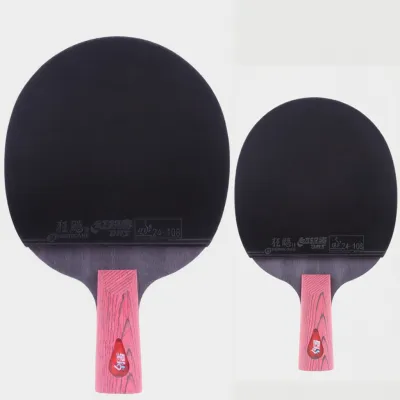
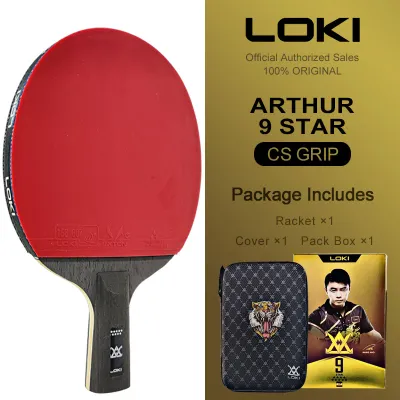
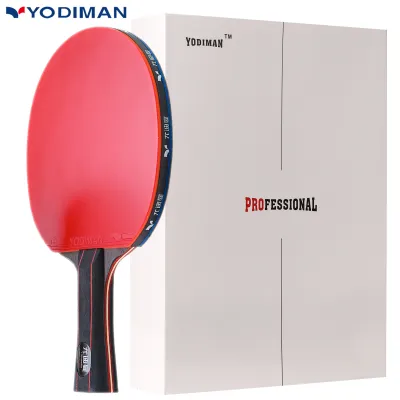
Prices are valid at publication and may change. Please refer to the product page for the latest price.
Offensive/Attacker Profile
If you find yourself constantly looking for opportunities to attack, you likely fit the offensive profile. Attackers prefer to dictate the pace of the rally, staying close to the table or at a mid-distance to execute fast drives, heavy topspin loops, and decisive smashes. Your risk tolerance is high, and you prefer to win points through sheer speed and spin rather than waiting for your opponent to make a mistake.
Defensive/Defender Profile
Defenders prioritize control, patience, and spin variation. If your instinct is to step back from the table, absorb heavy attacks, and return the ball with deep backspin chops, you are a defensive player. This style relies on forcing errors from the opponent by changing the spin rotation and keeping the ball low and deep. Your strategy centers on consistency and physical endurance.
All-Round/Control Profile
The all-round style is characterized by tactical flexibility and balance. If you enjoy mixing quick blocks with sudden counter-attacks, prioritizing precise ball placement and consistency over raw power, you belong in this category. All-round players adapt to their opponent’s weaknesses, shifting seamlessly between defensive safety and offensive pressure depending on the situation.
Match Table Tennis Paddle Characteristics to Your Diagnosed Style
Once you have identified your playing style, you can translate those tactical preferences into specific equipment choices. A table tennis paddle consists of two main components: the wooden blade and the rubber sheets applied to each side. Each component plays a distinct role in determining the speed, spin, and control of your shots.

Blade Selection for Speed and Control
The blade is the core of your paddle, and its composition directly influences how energy is transferred from your arm to the ball. Blades are typically made of multiple wood plies, sometimes reinforced with synthetic fibers like carbon or arylate.
Offensive Setup
Aggressive players require blades that maximize rebound speed and power. Stiffer blades, often featuring layers of carbon fiber interlaid with hard woods like koto or walnut, are ideal for this style. Carbon layers reduce the natural flex of the blade, resulting in a larger sweet spot and a faster transfer of energy. This stiffness ensures that your smashes and loops travel with maximum velocity, though it reduces the time the ball remains on the paddle.
Defensive Setup
Defenders need maximum dwell time—the brief moment the ball makes contact with the paddle. Flexible, all-wood blades consisting of softer plies like limba or ayous are preferred for defensive play. The natural flex of a five-ply all-wood blade absorbs the kinetic energy of incoming attacks, giving you the feel and control required to execute precise chops and blocks.
All-Round Setup
For a balanced approach, look for medium-stiffness blades. These are typically five-ply all-wood construction or feature very thin, soft composite layers. They offer enough flex to generate high levels of spin and maintain control, while still providing sufficient stiffness to execute finishing shots when an attacking opportunity arises.
Rubber Selection for Spin and Power
The rubber sheets glued to your blade dictate how the paddle interacts with the ball’s spin and determines the launch angle of your shots. Rubbers consist of a top sheet and an underlying sponge, both of which vary in thickness and hardness.
Offensive Setup
To maximize spin and speed, offensive players should opt for high-tension, inverted (smooth) rubbers paired with thick sponges. A sponge thickness of 2.0mm or “max” (usually 2.1mm to 2.3mm) allows the ball to sink deeply into the rubber, generating immense topspin and catapulting the ball forward with high speed. Harder sponges provide more direct power but require precise technique to control.
Defensive Setup
Defensive players often utilize specialized rubbers to neutralize or reverse their opponent’s spin. Long pimples (pips-out) or anti-spin rubbers are common choices for the backhand side of defensive paddles. These rubbers reverse incoming topspin into backspin, disrupting the opponent’s rhythm. When paired with a thin sponge (1.0mm to 1.5mm) or no sponge at all (known as OX), they provide unparalleled control for close-to-table blocking or far-table chopping.
All-Round Setup
An all-round player benefits most from classic inverted rubbers with medium sponge thickness, typically between 1.5mm and 1.9mm. This configuration offers a highly forgiving sweet spot, allowing you to generate sufficient spin for loops while retaining the control needed for precise pushes, blocks, and placement shots.
Factor in Your Skill Level and Grip Preference
While matching your paddle to your playing style is crucial, you must also consider your current technical proficiency and how you physically hold the racket. Choosing equipment that exceeds your skill level can severely hinder your development.
Adjusting for Skill Level
Your technical foundation determines how much speed and spin you can safely manage without sacrificing consistency.
Beginners
If you are still mastering basic strokes like the forehand drive and backhand push, avoid custom-built, high-speed paddles. Instead, start with a pre-assembled, control-oriented paddle. These paddles feature slower wood blades and thin, forgiving rubbers that help you build muscle memory and focus on correct stroke mechanics without the ball flying off the table.
Intermediate Players
As your strokes become more consistent, transition to a custom setup by purchasing the blade and rubbers separately. At this stage, select balanced, all-round components. A medium-speed blade paired with versatile, medium-thickness rubbers allows you to experiment with different spin techniques while refining your tactical play.
Advanced Players
Advanced players who have mastered their stroke mechanics can handle high-speed, high-spin professional gear. These setups require precise timing, rapid footwork, and excellent physical conditioning. Using professional-grade carbon blades and hard, high-tension rubbers without the proper technique will lead to frequent unforced errors.
Choosing the Right Handle Shape
The handle shape of your paddle affects your wrist mobility, grip security, and overall comfort during long training sessions.
Flared (FL)
The flared handle is the most popular choice worldwide. It is thinner near the top and flares out toward the bottom. This design prevents the paddle from slipping out of your hand during powerful swings, allowing you to maintain a relaxed grip without squeezing too tightly. It is highly suited for players who maintain a consistent grip throughout a match.
Straight (ST)
A straight handle has a uniform width from top to bottom. This shape is favored by players who like to adjust their grip slightly between forehand and backhand shots, or by defensive players who flip (twiddle) their paddle during rallies to alternate between different rubber types.
Anatomic (AN)
The anatomic handle features a wave-like shape that conforms to the natural contours of your palm. It provides a very secure, filled-in feel, making it highly comfortable for players with larger hands who prefer a locked-in grip.
Penhold (PEN)
For players who use the traditional penhold grip—holding the racket like a pen—specialized penhold handles are shorter and slightly thicker. This design maximizes wrist flexibility, which is essential for executing quick over-the-table attacks and dominant forehand loops.
Pre-Purchase Checklist and Maintenance Considerations
Before finalizing your purchase, run through a few practical checks to ensure the paddle matches your physical needs and that you are prepared to maintain it.
Weight and Balance Verification
The total weight of a shakehand paddle typically ranges from 150 grams to 190 grams. A head-heavy paddle provides more momentum for offensive loops but can strain your wrist over time. A handle-heavy paddle offers quicker maneuverability for close-to-table blocking. Ensure the weight matches your physical comfort level to prevent injury.
Reading Specifications
When comparing blades and rubbers, rely on manufacturer-provided ratings for speed, spin, and control rather than subjective marketing descriptions. Keep in mind that these rating scales are relative to each brand, so comparing specifications within the same manufacturer’s lineup is usually the most accurate approach.
Basic Maintenance
Table tennis rubbers are highly sensitive to dust, oils, and environmental conditions. In humid climates like Singapore, moisture can quickly degrade the grip of your rubber. To preserve its performance, clean the rubber surface after every session using a dedicated rubber cleaner or a damp sponge with distilled water. Once dry, apply adhesive protective sheets and store your paddle in a padded, airtight case away from direct sunlight and extreme heat.
Frequently Asked Questions (FAQ)
Is a pre-assembled paddle good enough for intermediate players?
While high-quality pre-assembled paddles exist, they generally have a performance ceiling. As an intermediate player, you will benefit far more from transitioning to a custom setup. Customizing allows you to select a specific blade stiffness and rubber thickness that directly align with your developing technique, helping you transition smoothly from basic strokes to advanced spin play.
How often should I replace my table tennis rubbers?
The lifespan of your rubbers depends on your playing frequency and maintenance habits. As a general rule, recreational club players who train two to three times a week should replace their rubbers every six to twelve months. Look for visible signs of wear, such as a faded or cloudy surface, smooth spots in the sweet spot, or chipping edges, which indicate a loss of grip and elasticity.
Community discussion
Share your experience or ask a question. Comments are reviewed before publication.