
Selecting a table tennis racket for regular practice requires shifting focus from casual play to equipment that supports skill development. Unlike recreational paddles, a practice-oriented racket must offer a reliable balance of control, durability, and spin to help you refine your techniques consistently. This guide breaks down the essential components, setup choices, and evaluation criteria to help you find a racket that matches your current skill level and practice intensity.
When you practice regularly, your equipment acts as an extension of your hand. A racket that is too fast will cause your shots to fly off the table, leading you to shorten your strokes and develop bad habits. Conversely, a racket that is too slow or lacks grip will prevent you from learning how to generate spin. By choosing a setup designed for structured practice, you ensure that every hour spent at the table contributes to muscle memory, stroke consistency, and technical growth.
Understanding Your Practice Goals and Skill Level
Before looking at specific racket models, you must evaluate your current skill level and what you hope to achieve during your practice sessions. Beginners, intermediate players, and advanced athletes have vastly different equipment requirements. Matching your racket to your developmental stage is the most critical decision you will make, as the wrong setup can severely hinder your progress.
Products mentioned in this guide
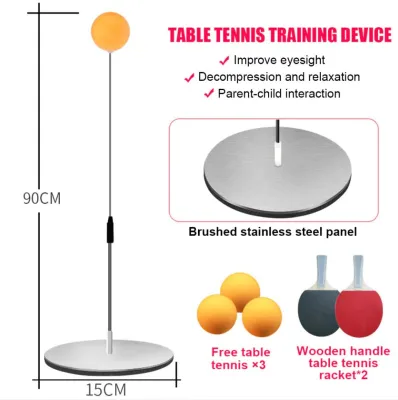

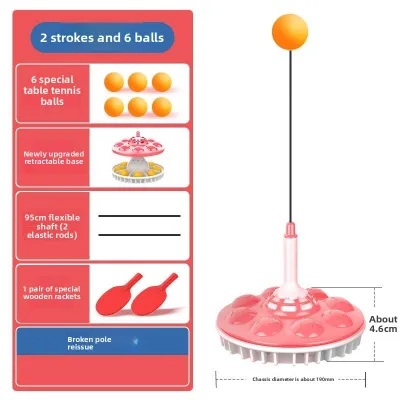
Prices are valid at publication and may change. Please refer to the product page for the latest price.
For beginners, the primary goal of regular practice is to master basic stroke mechanics, such as the forehand drive, backhand drive, push, and basic serve. At this stage, you need maximum control and tactile feedback. A slower, highly controllable racket forces you to use your entire body—including your legs, hips, and core—to generate power, rather than relying solely on the springiness of the racket. This foundational physical training is essential for long-term improvement.
Intermediate players who practice regularly are usually transitioning from simple rallies to active point-play. If you are at this stage, your practice sessions likely focus on footwork drills, loop-to-loop rallies, spin variation, and opening attacks against backspin. Your equipment needs to offer a balanced mix of speed and spin. You require a setup that can generate high levels of spin when brushed correctly, yet still retains enough control to block aggressive shots from your practice partners.
Your playstyle also dictates your equipment choices. Table tennis styles generally fall into three categories: defensive, all-round, and offensive. Defensive players focus on control, chopping far from the table, and forcing opponent errors. All-round players mix defensive blocks with controlled attacks, requiring highly versatile gear. Offensive players rely on speed, heavy topspin loops, and powerful smashes. For most players engaged in regular practice, an all-round (ALL or ALL+) setup is highly recommended, as it allows you to explore all aspects of the game before committing to a specialized style.
Finally, consider your practice environment. If you train in a dedicated, air-conditioned table tennis club, your equipment is less exposed to environmental variables. However, if you practice in community centers, school halls, or outdoor sheltered areas, factors like high humidity and dust can drastically affect rubber performance. High humidity makes rubber surfaces slippery, reducing spin and control. Understanding where you will play helps you choose materials that can withstand your specific training conditions.
Core Components: Blade, Rubber, and Sponge
To make an informed purchase, you must understand the anatomy of a table tennis racket. A complete racket consists of three primary components: the wooden blade, the sponge layer, and the top sheet of rubber. Each of these components plays a distinct role in how the racket behaves when making contact with the ball.

The blade is the wooden core of the racket and serves as the foundation for control and feel. Blades are typically constructed from multiple layers of wood, known as plies, which are glued together under high pressure. A standard practice blade usually features five or seven plies. Five-ply all-wood blades are highly recommended for regular practice because they are flexible and absorb energy, providing excellent tactile feedback. This vibration tells your hand exactly where and how the ball made contact, which is crucial for developing touch. Some modern blades incorporate composite materials like carbon fiber, which stiffens the blade, increases speed, and enlarges the sweet spot. However, carbon blades reduce dwell time—the split second the ball clings to the racket—making them harder to control for developing players.
Different wood types used in the plies also alter the blade’s characteristics. Limba is a common outer ply wood known for its soft feel and excellent spin generation, making it a favorite for looping styles. Koto is harder and faster, providing a crisper feel that suits direct, driving styles. Ayous is frequently used for the inner core plies to provide structural stability and a solid, predictable bounce. When selecting a practice blade, look for all-wood compositions utilizing softer outer plies to maximize your control and feedback.
The rubber top sheet is responsible for generating spin and grip. Rubbers are classified into inverted (smooth) and pimpled varieties. Inverted rubbers are the standard choice for regular practice because they offer the most versatile performance, allowing you to execute topspin, backspin, and flat hits with ease. Within inverted rubbers, you will find tacky (sticky) and grippy (non-tacky) surfaces. Tacky rubbers, traditional in Chinese styles, excel at creating heavy spin on short serves and pushes but require active, physical strokes to generate speed. Grippy rubbers, common in European and Japanese designs, rely on mechanical grip and are generally more forgiving, making them excellent for learning active looping and blocking.
The sponge layer sits between the blade and the rubber top sheet, acting as the engine of the racket. Sponge thickness and density (hardness) greatly influence speed and control. Thinner sponges, ranging from 1.5mm to 1.8mm, offer high control and allow you to feel the wood blade clearly, making them ideal for beginners. Medium sponges, between 1.8mm and 2.0mm, offer the best balance for regular practice, providing enough speed for offensive play without sacrificing control. Sponges thicker than 2.1mm (often labeled as “Max”) are highly springy and designed for advanced, high-speed play. Sponge hardness is measured in degrees; softer sponges (30 to 40 degrees) are more forgiving and offer a higher throw angle, while harder sponges (45 degrees and above) require fast arm speed and precise timing to compress the sponge and unlock its spin potential.
Pre-Assembled vs. Custom Rackets: Which Path to Take
When purchasing a racket for regular practice, you face a major decision: buy a pre-assembled racket off the shelf or build a custom setup by purchasing the blade and rubbers separately. Both paths have distinct advantages and trade-offs depending on your budget, commitment level, and skill.
Pre-assembled rackets are convenient, cost-effective, and ready to use immediately. For absolute beginners or those testing their commitment to regular practice, a high-quality pre-assembled racket from a reputable table tennis brand is an excellent starting point. These rackets are designed to be balanced and forgiving. However, they have significant limitations. The glue used in pre-assembled rackets is permanent, meaning you cannot replace the rubbers once they wear out. Additionally, the wood quality is generally lower, and the rubbers are often less responsive than their standalone counterparts.
Custom rackets involve selecting a blade and two separate rubber sheets (one for the forehand, one for the backhand), which are then glued together using specialized water-based table tennis glue. The primary advantage of a custom setup is longevity and adaptability. When your rubbers wear out from intense practice, you can peel them off and glue on new ones while keeping your blade for years. Furthermore, custom setups allow you to tailor the racket to your exact needs—for example, pairing a highly controllable all-wood blade with a slightly faster forehand rubber and a high-control backhand rubber.
You should consider transitioning to a custom setup when you can consistently execute basic rallies, find that your pre-assembled racket is no longer producing the spin or speed you need, or when your practice frequency increases to several times a week. A custom setup represents a higher initial investment but offers far better value over time.
In terms of cost, pre-assembled practice rackets typically range from S$30 to S$60. An entry-level custom setup, consisting of a reliable five-ply all-wood blade and two budget-friendly practice rubbers, generally costs between S$80 and S$150. High-end custom setups designed for competitive athletes can easily exceed S$250 to S$400. For regular practice and skill development, a mid-range custom setup in the S$100 to S$150 range offers the absolute best balance of performance, durability, and long-term value.
In-Store and Online Evaluation Checklist
Whether you are shopping at a local specialty sports store or browsing an online marketplace, you need a systematic way to evaluate a racket before purchasing. Relying solely on marketing descriptions can lead to a mismatched setup.
First, perform a physical check of the handle and grip. The handle must feel comfortable in your hand, as any discomfort or sharp edges can cause blisters or hand fatigue during extended practice sessions. Hold the racket in your standard grip and check the area where the blade meets the handle (the wings). If this area feels sharp against your thumb or index finger, you may need to lightly sand the edges down after purchase. Additionally, check the overall weight and balance. A complete shakehand racket should ideally weigh between 160g and 190g. A racket that is too head-heavy can strain your wrist, while one that is too light may lack stability against fast incoming balls.
Next, verify the specifications rather than trusting generic performance ratings. Many recreational brands print arbitrary ratings like “Speed: 100, Spin: 100, Control: 100” on their packaging, which are meaningless. Instead, look for concrete specifications: the number of wood plies, the presence of composite materials, the sponge thickness in millimeters, and the sponge hardness. Ensure the rubbers carry the International Table Tennis Federation (ITTF) approval logo, which guarantees the rubber meets quality standards and is legal for official play.
When purchasing online, take steps to ensure authenticity. Counterfeit table tennis equipment is common on unauthorized online marketplaces. Buy only from reputable specialty retailers or official brand stores. Look for security features, such as scratch-off authenticity codes on the packaging, which you can verify on the manufacturer’s official website. Finally, check the retailer’s return policy. Keep in mind that custom-assembled rackets, where the store glues and cuts the rubbers to your chosen blade, are typically non-refundable unless there is a clear manufacturing defect.
Prolonging Racket Lifespan Through Proper Care
A high-quality practice racket is an investment, and proper maintenance is essential to preserve its playing characteristics. Dust, sweat, dirt, and air exposure are the primary enemies of table tennis rubber, causing them to lose grip and degrade rapidly.
To maintain your rubber’s performance, establish a simple cleaning routine after every practice session. Wipe the rubber surfaces using a specialized table tennis rubber cleaning spray or foam and a soft, non-abrasive sponge. If you do not have specialized cleaner, a few drops of distilled water wiped gently with a lint-free microfiber cloth will suffice. Avoid using tap water, as the minerals can leave a residue on the rubber. Never use household detergents, glass cleaners, or alcohol, as these chemicals will dry out and permanently ruin the rubber compound.
Proper storage is equally critical. Once the rubbers are completely dry after cleaning, apply protective sheets to the surface. For non-tacky rubbers, static-cling or adhesive protective sheets work best, while non-adhesive plastic sheets are ideal for tacky rubbers. These sheets prevent air and dust from oxidizing the rubber surface. Always store your racket inside a padded, zippered racket case. Keep the case in a cool, dry place away from direct sunlight and extreme heat, such as inside a parked car, as high temperatures can melt the sponge glue, warp the wooden blade, and dry out the rubber.
Over time, even with perfect care, rubbers will eventually degrade and need replacement. You can identify worn-out rubber by looking for visual and tactile signs. Visually, the rubber will look faded, show a distinct dark circle in the center where most balls are struck, or have crumbling edges. Tactically, the surface will feel smooth and slippery rather than grippy. If you drag a table tennis ball across the rubber surface and it slides without resistance, the rubber has lost its friction and must be replaced to maintain consistent practice conditions.
Frequently Asked Questions (FAQ)
How often should I replace the rubber on my practice racket?
The replacement frequency depends on your practice hours, intensity, and maintenance habits. If you practice regularly, about two to three times a week (totaling roughly six hours of play), your rubbers will typically maintain their optimal playing characteristics for four to six months. If you practice daily or with high intensity, you may need to replace them every two to three months. Beyond playing hours, environmental exposure plays a role; rubbers left unprotected in hot or humid conditions will degrade much faster. Regularly test the grip of your rubber by sliding a ball across the surface; if it lacks resistance, it is time for a replacement.
Does the handle shape matter for regular practice?
Yes, the handle shape significantly affects your grip stability, comfort, and wrist mobility during practice. The three most common handle shapes for the shakehand grip are flared (FL), straight (ST), and anatomical (AN). The flared handle is the most popular choice because it is wider at the bottom, preventing the racket from slipping out of your hand during powerful swings. A straight handle has a uniform width, allowing you to easily adjust your grip angle between forehand and backhand shots, which is favored by defensive players and active blockers. Anatomical handles curve to fit the natural shape of your palm, providing a very secure grip but limiting hand adjustments. For most players starting regular practice, a flared handle offers the safest and most comfortable starting point.
Community discussion
Share your experience or ask a question. Comments are reviewed before publication.