
Finding a single air pump that can seamlessly transition from inflating a high-pressure road bicycle tire to a delicate sports ball and then a massive, high-volume pool float is a common challenge for active households. The ideal solution depends on understanding that no single pump mechanism is naturally perfect for every task. To achieve true multi-purpose utility, you must select a pump that either features dual-mode functionality—combining high-pressure and high-volume outputs—or choose a versatile electric inflator equipped with precise pressure controls and a comprehensive adapter kit. By matching the pump’s specifications to the specific inflation demands of your gear, you can avoid the clutter of owning multiple single-use tools while ensuring your equipment is inflated safely and efficiently.
Understanding Air Volume and Pressure Requirements
To understand why a single pump must work hard to accommodate sports balls, bicycle tires, and pool floats, it is necessary to look at the physics of inflation. Air inflation involves two primary metrics: pressure, measured in pounds per square inch (PSI) or bar, and volume, measured in liters per minute (L/min) or cubic feet per minute (CFM). These two metrics represent entirely different mechanical demands. High-pressure, low-volume items require a pump that can push air against significant resistance, whereas low-pressure, high-volume items require a rapid flow of air with very little resistance.
Bicycle tires, particularly road bike tires, require high pressure—often ranging from 80 to over 100 PSI—but contain a relatively small volume of air. Sports balls, such as basketballs, footballs, and soccer balls, require moderate pressure, typically between 8 and 15 PSI, and also hold a low volume of air. Conversely, pool floats, air mattresses, and inflatable kayaks require massive volumes of air to fill their large chambers, but they operate at extremely low pressures, often under 1 PSI.
Products mentioned in this guide
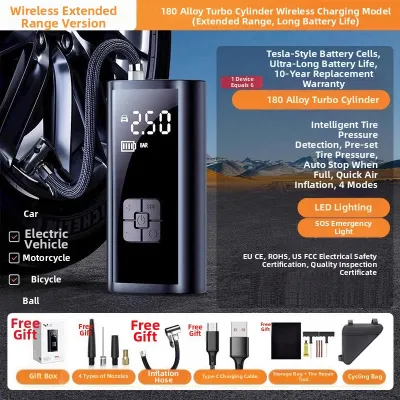
Prices are valid at publication and may change. Please refer to the product page for the latest price.
If you attempt to inflate a high-volume pool float using a standard high-pressure bicycle pump, the process will be incredibly slow and physically exhausting. The small cylinder of a bicycle pump displaces only a tiny amount of air with each stroke, meaning it could take hundreds of strokes to fill a single pool toy. Conversely, if you try to inflate a bicycle tire with a high-volume utility pump designed for pool floats, the pump’s motor will likely stall or overheat. These high-volume pumps lack the mechanical leverage or motor power required to force air into a chamber that is already under high pressure.
In addition to pressure and volume differences, you must navigate several distinct valve types. Bicycle tires typically use either a wide Schrader valve (the same type found on car tires) or a slender Presta valve (common on high-performance road bikes). Sports balls require a narrow, metallic inflation needle that inserts into a self-sealing rubber bladder. Pool floats and inflatable recreation gear generally rely on wide plastic pinch valves or larger Boston valves, which allow rapid air entry and exit. A truly versatile pump must not only bridge the gap between pressure and volume but also accommodate all of these connection types securely.
Key Features for True Multi-Purpose Versatility
When searching for a single pump to manage all your household inflation needs, several hardware features are essential to ensure safety, efficiency, and compatibility. The first and most obvious requirement is a comprehensive, high-quality adapter kit. Look for pumps that include dedicated brass ball needles, Presta-to-Schrader brass adapters, and a variety of tapered plastic nozzles for pinch valves. Brass adapters are highly recommended over cheap plastic alternatives, as they resist thread stripping and provide a more airtight seal during high-pressure operation.

A reliable pressure gauge is another critical feature, particularly when inflating items with strict pressure limits like sports balls and bicycle tires. Over-inflating a basketball can warp its shape or rupture its inner bladder, while over-inflating a bicycle tire can lead to a dangerous blowout. Gauges are available in both analog and digital formats. Digital gauges are often preferred for multi-purpose pumps because they frequently feature backlit screens, clear decimal readouts, and auto-shutoff functions that stop the pump automatically once a pre-set pressure is reached. If you choose an analog gauge, ensure the face is large enough to read clearly and features a dual-scale display showing both PSI and bar.
You must also weigh the benefits of manual mechanisms against rechargeable electric motors. Manual pumps, such as dual-chamber floor pumps, rely entirely on physical effort but offer unmatched reliability, as they never run out of battery power or require an electrical outlet. Rechargeable electric inflators, powered by lithium-ion batteries, offer extreme convenience and portability, allowing you to inflate tires and balls at the beach, park, or roadside without physical exertion. However, electric models require careful battery management and are subject to operational limits.
For electric pumps, thermal management and duty cycles are critical specifications to verify. The electric motors inside compact inflators generate significant heat, especially when running continuously to fill high-volume items like pool floats. Manufacturers specify a “duty cycle,” which is the maximum continuous run time allowed before the pump must be turned off to cool down. A typical compact electric pump might have a duty cycle of 10 minutes, requiring a 10-to-15-minute rest period afterward. Operating a pump beyond its rated duty cycle can melt internal seals, degrade the battery, or permanently burn out the motor.
Evaluating Pump Types for Mixed Use
To find the right balance for your household, it is helpful to compare the primary pump form factors available on the market, keeping in mind their inherent trade-offs in speed, physical effort, and portability.
Manual dual-action floor pumps are the traditional workhorses of bicycle maintenance. These pumps feature a tall, stable cylinder and a T-handle that you push down and pull up. “Dual-action” models inflate on both the upward and downward strokes, which significantly cuts down on inflation time. They are exceptionally reliable, highly precise, and easily reach the high pressures required for road bikes. However, using a manual floor pump to inflate a large family pool float or an inflatable kayak is physically demanding and time-consuming, making them less than ideal for high-volume recreational gear.
Portable rechargeable electric inflators have surged in popularity due to their compact size and ease of use. Often shaped like a thick handheld wand or a small brick, these devices feature digital screens where you can select the target PSI for a ball or tire, connect the hose, and press start. They excel at inflating sports balls and bicycle tires quickly and with zero physical effort. However, because their internal cylinders are small, they move air slowly. While they can technically inflate small pool toys using adapters, attempting to fill a large pool lounge or air bed will drain the battery rapidly and likely trigger the thermal shutdown mechanism before the task is complete.
High-volume stationary electric pumps, which often plug into a standard wall outlet or a vehicle’s 12V utility socket, are designed specifically for rapid inflation of large items. They utilize high-flow blowers to move massive amounts of air quickly, making short work of pool floats, air mattresses, and inflatable boats. The major drawback of these pumps is their complete lack of high-pressure capability. They cannot generate the force required to inflate a bicycle tire or even a stiff sports ball, and they rarely feature precise pressure gauges, making them unsuitable as a sole multi-purpose solution.
Hybrid inflation systems represent the ultimate solution for users who truly want one device for every task. These specialized pumps feature two distinct internal mechanisms: a high-pressure compressor and a high-volume blower. They typically come with two separate hoses—a thin, reinforced high-pressure hose for tires and balls, and a thick, flexible corrugated hose for large inflatables. While hybrid pumps are larger, heavier, and generally more expensive than single-purpose models, they eliminate all compromises, providing rapid high-volume filling for pool floats alongside precise, high-pressure output for bicycle tires.
Building Your Shortlist: Matching Specs to Your Gear
Selecting the perfect multi-purpose pump requires a systematic approach to ensure the device you purchase matches the exact requirements of your recreational and sports equipment. You can build an effective shortlist by following these four practical steps when browsing online marketplaces or local sports retailers.
Step 1: Audit your gear’s manufacturer labels. Walk through your home, garage, or storage shed and examine the inflation specifications printed on your equipment. Note the maximum PSI ratings on your bicycle sidewalls, the recommended inflation pressure stamped near the valves of your basketballs or soccer balls, and any safety warnings on your pool floats. Write down the valve types you encounter, noting whether you have Presta valves on your bicycles or specialized Boston valves on your watercraft.
Step 2: Filter products by maximum pressure output and adapter compatibility. When evaluating potential pumps, check the product specifications to ensure the maximum pressure rating comfortably exceeds your highest requirement. If you have road bike tires that require 90 PSI, look for a pump rated for at least 120 PSI to ensure the motor or manual cylinder is not operating at its absolute limit. Additionally, verify that the pump package explicitly includes the specific adapters you identified during your gear audit, such as a Presta valve adapter or a wide-diameter nozzle for pool toys.
Step 3: Verify the power source aligns with your typical usage environment. Consider where you will most frequently use the pump. If you primarily inflate bicycle tires in your garage and pool floats in your backyard, a mains-powered AC electric pump or a manual floor pump is highly practical. If you frequently travel to community sports courts, trailheads, or remote beaches, a battery-powered rechargeable unit or a 12V DC pump that plugs into your car’s utility socket is a much better fit. For maximum versatility, look for electric models that offer dual power options, such as a rechargeable battery combined with a 12V car adapter backup.
Step 4: Check user manuals or product descriptions for operational limits. Before finalizing your purchase, download the product manual or read the detailed specifications on the retailer’s listing. Pay close attention to the stated duty cycle and cooling requirements. Look for safety certifications and check the manufacturer’s warranty terms and return policies. A manufacturer that offers a clear, multi-year warranty and provides detailed instructions on thermal limits is generally a more reliable choice than a brand that omits these critical operational details.
Safe Operation and Equipment Care
To maximize the lifespan of both your multi-purpose air pump and your inflatable gear, you must follow proper operational and maintenance procedures. Always monitor the pressure continuously during the inflation process. Even if your electric pump features an automatic shutoff, stay nearby and watch the progress. For high-volume, low-pressure items like pool floats, rely on tactile checks—stop inflating when the seams are smooth but still have a slight give under hand pressure, as over-inflating can easily split the plastic seams, especially when the material warms up in the sun.
Regularly inspect your pump’s hardware to prevent leaks and performance drops. Check the air hose for cracks, kinks, or dry rot, particularly near the connection joints. Inspect the rubber O-rings inside the pump head and adapters; a worn or missing O-ring will prevent a proper seal, causing air to escape and forcing the pump to work harder and run hotter. If you notice a drop in pressure efficiency or hear air hissing from the nozzle, replace the damaged seals immediately.
Proper storage is equally important for maintaining your equipment. Keep small adapters, ball needles, and spare washers in a dedicated storage compartment or a small zippered pouch attached to the pump. Losing a specialized adapter can render your pump useless for specific tasks until a replacement is sourced. In Singapore’s humid climate, storing the pump in a well-ventilated indoor area rather than a damp outdoor shed is particularly important to prevent rust on metal components and degradation of electronic parts.
Finally, know when to stop and consult the manufacturer or a qualified professional. If your electric pump becomes excessively hot to the touch, begins emitting a burning odor, makes unusual grinding noises, or struggles to reach a pressure it previously handled with ease, turn it off immediately. Do not attempt to disassemble the motor housing or battery compartment yourself, as this can void the warranty or present a safety hazard. Refer to the troubleshooting section of your user manual or contact the brand’s customer service department for guidance on repairs or replacements.
Frequently Asked Questions (FAQ)
Can a standard bike floor pump inflate pool floats efficiently?
No, a standard bicycle floor pump is highly inefficient for inflating pool floats. Bicycle pumps are engineered for high-pressure, low-volume output, meaning they displace only a small amount of air with each stroke. While they can easily generate the high pressure needed for a tire, filling a large pool float would require hundreds of strokes and significant physical exertion. Additionally, standard bike pumps rarely come with the wide plastic adapters required to fit the pinch valves of pool floats, meaning you would need to purchase a separate adapter and spend an excessive amount of time pumping.
Do I need to buy sports ball needles separately?
In most cases, you do not need to buy sports ball needles separately, but you should always verify the contents of the pump kit before purchasing. Most multi-purpose manual and electric pumps include a basic accessory kit that contains at least one or two standard steel ball inflation needles. However, these needles are fragile and easily bent or lost. It is highly recommended to keep a few spares on hand. When using a needle, always lubricate it with a drop of water or valve oil before inserting it into the ball’s rubber valve to prevent tearing or damaging the internal seal.
Community discussion
Share your experience or ask a question. Comments are reviewed before publication.