
An emergency whistle is one of the most critical yet frequently overlooked components of a sports first aid kit. When an injury occurs on a sprawling sports field, a remote trail, or a busy waterway, a human voice can quickly fail due to exhaustion, panic, or environmental interference. A high-quality safety whistle acts as an acoustic force multiplier, allowing a first responder or an injured athlete to signal for help over long distances with minimal physical effort.
Selecting the right whistle requires moving beyond basic novelty items or standard party noisemakers. In high-stress athletic environments, your signaling equipment must function reliably under extreme conditions, including heavy rain, high winds, and physical impact. This guide outlines how to evaluate, select, and maintain an emergency whistle that ensures your distress signals are heard when every second counts.
Quick Guide: Selecting an Emergency Whistle for Sports First Aid
When configuring a sports first aid kit, your primary goal is to select a whistle that guarantees immediate, fail-safe operation. The most reliable choice for athletic and outdoor environments is a pealess design. Traditional whistles rely on a small internal ball, or “pea,” to create a trilling sound, but these components can easily jam when exposed to saliva, dirt, water, or freezing temperatures. A pealess whistle utilizes engineered air chambers to generate sound, eliminating moving parts that could fail during a critical emergency.
Products mentioned in this guide
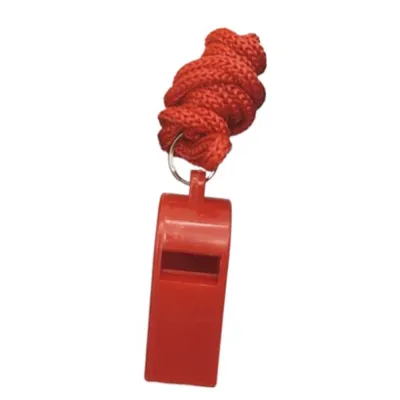
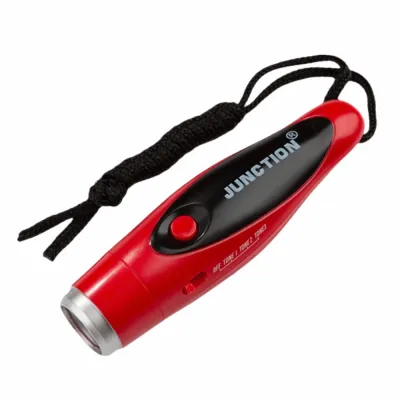
![[LK6W]USB Rechargeable Electronic Whistle with Flashlight Ideal for Sports for Football Soccer Handheld Use in Classroom Lifeguard](https://img.lazcdn.com/g/p/4c2a78d532fbf47241702f9bbb843920.jpg_400x400q80.jpg_.webp)
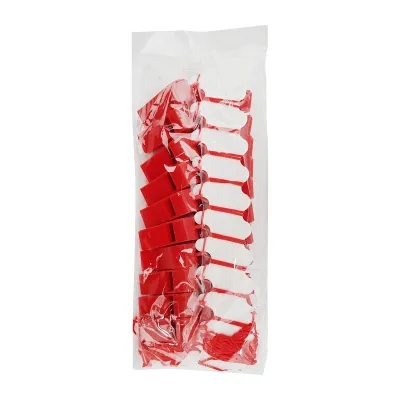
![[SG SELLER] OUTDOOR FINGER WHISTLE CYLINDRICAL AND 6 FORM ORDINARY SPORTS TRAINING WHISTLE WITH LANYARD AND HARD CASE](https://img.lazcdn.com/g/p/a0d018a86bb7b795fca9e591acaf5500.png_400x400q80.png_.webp)
Prices are valid at publication and may change. Please refer to the product page for the latest price.
Before purchasing, verify the manufacturer’s technical specifications rather than relying on vague marketing claims of extreme loudness. Look for detailed acoustic data, material certifications, and physical dimensions that align with your kit’s storage constraints. The whistle should feature a highly visible color, such as safety orange or neon yellow, making it easy to locate in low-light conditions or inside a cluttered medical bag.
Finally, consider how the whistle will be carried and accessed. Whether you prefer a secure lanyard, a heavy-duty spring clip, or an integrated finger grip, the attachment mechanism must keep the device secure during rapid movement while allowing for instant deployment. A whistle buried at the bottom of a packed first aid kit is of little use when an urgent situation arises on the field.
Evaluating Loudness and Acoustic Reliability
Acoustic performance is the core metric of any emergency signaling device. While many consumer whistles claim high volume levels, true emergency reliability depends on how effectively the sound cuts through ambient environmental noise. In sports settings, this noise can include roaring wind, heavy rain, rushing water, or the collective din of a crowded stadium or sports complex.

To understand acoustic effectiveness, it is helpful to distinguish between raw decibel (dB) levels and perceived pitch. Decibels measure sound pressure on a logarithmic scale, meaning a small increase in decibels represents a massive jump in sound intensity. However, high-frequency sounds—typically measured in Hertz (Hz)—are far more effective at penetrating background noise than lower frequencies. Human hearing is naturally sensitive to frequencies between 2,000 Hz and 5,000 Hz, which is the range where high-quality emergency whistles concentrate their acoustic energy.
When reviewing product specifications, look for multi-tone or dual-chamber designs. These whistles project two or more discordant frequencies simultaneously. The resulting sound is not only exceptionally loud but also highly distinctive, preventing it from blending into natural background sounds like wind or rustling leaves. This discordance also makes it much easier for search-and-rescue personnel or nearby coaches to pinpoint the exact direction of the signal.
Verify these acoustic properties by checking official manufacturer documentation rather than unverified online reviews. Reputable safety brands provide clear frequency charts and decibel ratings tested under standardized laboratory conditions. Ensure the whistle is rated to project sound over the specific distances required by your sport, whether that involves a 100-meter athletic track or a vast open-water sailing course.
Assessing Durability and Weather Resistance
A sports first aid kit is often subjected to rough handling, accidental drops, and harsh environmental exposure. The whistle you choose must be constructed from materials that can withstand these physical demands without cracking, warping, or losing acoustic integrity.
High-impact ABS plastic and advanced polycarbonates are the industry standards for modern safety whistles. ABS plastic is exceptionally lightweight, highly resistant to impact, and does not corrode when exposed to sweat, saltwater, or common first aid disinfectants. Polycarbonate offers even greater structural strength and superior resistance to ultraviolet (UV) radiation. This is a critical consideration for sports kits used in tropical climates like Singapore, where intense, year-round sunlight can rapidly degrade and embrittle lower-grade plastics.
Metal whistles, typically crafted from aluminum, brass, or titanium, offer unmatched structural durability but come with distinct trade-offs. In extremely cold environments, wet skin can instantly freeze to a metal mouthpiece, causing severe tissue damage. Conversely, in hot, sunny climates, a metal whistle left in an outdoor kit can absorb heat rapidly, making it painful or dangerous to place against the lips. If you select a metal whistle, ensure it features a protective thermoplastic or silicone mouth grip to insulate your lips from extreme temperatures.
Weather resistance also extends to how the whistle handles moisture. Look for self-draining chamber designs. When a whistle is used in heavy rain or during water sports like kayaking and dragon boating, water can enter the acoustic chambers and muffle the sound. Self-draining models feature small escape channels that allow water to clear instantly when you blow into the mouthpiece, ensuring a clear, high-decibel signal even when fully submerged moments prior.
Choosing the Right Whistle Mechanism and Style
Understanding the mechanical differences between whistle types allows you to match the device to the specific operational realities of your sport. The primary division lies between traditional pea whistles, modern pealess designs, and electronic alternatives.
Traditional pea whistles are highly effective for indoor sports officiating where conditions are clean and dry. However, they are poorly suited for emergency first aid kits. The internal pea can swell if made of cork, or it can become stuck to the inner walls due to dried saliva, dirt, or moisture. If the pea cannot move, the whistle cannot produce its characteristic trilling sound, rendering it useless. Pealess whistles eliminate this failure point entirely, relying solely on the geometry of the air chambers to split the air column and generate sound.
Electronic whistles represent another category, utilizing a battery-powered speaker to emit a loud, consistent tone at the press of a button. These devices are highly hygienic because they do not require oral contact, allowing multiple first responders to use the same device without cross-contamination. They are also beneficial for individuals who may lack the lung capacity to blow a manual whistle due to asthma, physical exhaustion, or injury. However, electronic whistles are heavier, bulkier, and introduce electronic failure points, such as battery depletion, corrosion, or water damage. For a primary sports first aid kit, a manual pealess whistle remains the gold standard for fail-safe reliability, though an electronic model can serve as an excellent secondary tool.
The physical style of the whistle also dictates its usability in a crisis. Lanyards are popular for keeping the whistle close at hand, but they present a strangulation hazard in contact sports or fast-moving outdoor activities unless equipped with a quick-release breakaway clasp. Finger-grip styles, which clip securely over the fingers, are excellent for active coaches and referees who need to run while keeping the whistle ready. For first aid kits, a whistle with an integrated, heavy-duty spring clip or a rugged key ring attachment is often ideal, allowing you to secure the device directly to the exterior webbing of the medical bag or to a personal flotation device.
Verifying Specifications and Building Your Shortlist
With numerous options available on online marketplaces and at specialty outdoor retailers, building a reliable shortlist requires a systematic verification process. Avoid purchasing unbranded, generic whistles that lack clear manufacturing origins, as these items rarely meet safety-grade acoustic standards.
Begin your verification by checking for compliance with recognized international safety standards. For example, whistles used in marine or water sports should ideally carry SOLAS (Safety of Life at Sea) approval or meet ISO standards for life-saving appliances. These certifications guarantee that the whistle has undergone rigorous testing for loudness, water clearance, and material durability under extreme conditions.
Next, perform a physical inspection of the whistle’s construction if purchasing in person, or carefully review high-resolution product images and technical diagrams. Examine the seams of plastic whistles; high-quality models utilize ultrasonic welding to fuse the body halves together, creating a seamless, virtually indestructible bond. Avoid whistles with visible glue lines or loose joints, as these are prone to splitting under pressure or impact.
Finally, filter your shortlist based on the specific environmental challenges of your sport. If your activities involve marine environments, prioritize corrosion-resistant plastics and marine-grade stainless steel split rings. For high-altitude or cold-weather sports, focus on thermoplastic mouthpieces that will not stick to skin. By matching the whistle’s technical specifications to your specific sporting environment, you ensure the device will perform flawlessly when called upon.
Integrating and Maintaining the Whistle in Your Kit
Owning a high-quality emergency whistle is only effective if the device is instantly accessible and properly maintained. A common mistake is packing the whistle deep inside a zippered compartment of a first aid kit, requiring a frantic search during a high-stress medical emergency.
To optimize accessibility, mount the whistle on the exterior of your first aid kit. Use a heavy-duty carabiner, a secure clip, or a high-visibility lanyard to attach it to an external loop, zipper pull, or MOLLE webbing. If the first aid kit is stored in a vehicle or a locker, the primary responder should transfer the whistle to their person—such as clipping it to a belt loop, life jacket, or pack strap—before stepping onto the field or trail.
Establish a routine maintenance schedule to ensure the whistle remains in peak operating condition. At least once every three months, perform a thorough inspection and cleaning. Wash the whistle in warm, soapy water to remove dust, lint, and dried saliva. For plastic whistles, a brief soak in a mild vinegar solution can help dissolve stubborn mineral deposits or scale that may accumulate inside the acoustic chambers. Avoid using harsh chemical solvents or boiling water, which can warp or degrade the plastic.
During your quarterly inspection, check the whistle for physical signs of wear. Look for hairline cracks along the seams, deep scratches on the mouthpiece, or fading and brittleness caused by UV exposure. Test the sound output in an open outdoor area to verify that the acoustic chambers are clear and that the whistle achieves its full, piercing volume. If you detect any degradation in sound quality, physical structural integrity, or attachment hardware, replace the whistle immediately. Budgeting S$10 to S$30 for a premium replacement is a minor investment that ensures your primary emergency signaling tool is always ready to save a life.
Frequently Asked Questions (FAQ)
Can I use a standard referee whistle for emergency first aid?
While a standard referee whistle is excellent for controlling a sports match, it is generally not suitable for emergency first aid kits. Most referee whistles utilize an internal pea, which can easily jam when exposed to dirt, water, or saliva, rendering the whistle silent during a crisis. Furthermore, referee whistles are designed to project sound over relatively short distances on a controlled court or field. Dedicated emergency whistles feature specialized dual- or triple-chamber pealess designs that produce much higher decibel levels and discordant frequencies, allowing the sound to penetrate dense foliage, heavy rain, and extreme wind over vast distances.
How often should I replace the whistle in my first aid kit?
You should inspect your emergency whistle at least quarterly and replace it immediately if you observe any signs of physical or acoustic degradation. For whistles stored inside a protected, dark first aid kit, high-quality ABS or polycarbonate models can easily last five to ten years. However, if the whistle is mounted on the exterior of a pack or worn daily where it is exposed to direct sunlight, sweat, and physical impacts, it should be replaced every two to three years. UV radiation from intense sunlight can make plastic brittle, increasing the risk of the whistle shattering when dropped or stepped on.
Community discussion
Share your experience or ask a question. Comments are reviewed before publication.