
Setting up a strength training space in a Singapore apartment requires balancing your fitness goals with the realities of high-density living. To choose the right Olympic barbell, you must evaluate how your lifting style aligns with critical technical specifications—such as shaft diameter, tensile strength, and sleeve rotation—while carefully managing local constraints like limited floor space, noise transmission to neighbors, and intense tropical humidity. Making the wrong choice can lead to damaged walls, cracked floor tiles, rusted equipment, or noise complaints from those living below you.
Before attempting any heavy lifts, always inspect your equipment and environment. Check the manufacturer’s maximum load rating for both the barbell and your squat rack, and ensure that you use secure collars to lock the weights in place. If you notice any structural cracks, deep rust, or bent shafts, stop using the barbell immediately and consult the manufacturer or a qualified fitness equipment professional. Equipment cannot replace proper training, form, and sound judgment.
Space and Setup Constraints for HDB and Apartment Gyms
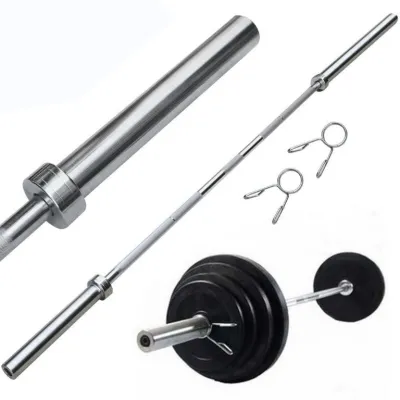
The physical dimensions of a standard Singapore housing development board (HDB) flat or condominium unit present the first major hurdle when planning a home gym. A standard competition-sized Olympic barbell measures 2.2 meters (approximately 7.2 feet) in length. When you place this bar in a typical spare bedroom or bomb shelter—which often measures between 2.8 and 3.5 meters in width—you are left with very little clearance on either side. A 2.2-meter bar in a 3-meter-wide room leaves only 40 centimeters of space per side, making the process of loading and unloading weight plates incredibly tight and awkward.
Products mentioned in this guide
![[Instock] Hare Fitness Olympic Barbell / Straight Bar EZ Bar / Weightlifting Bar](https://img.lazcdn.com/g/p/fa38f558653d217c56cd1bbb4b02f382.png_400x400q80.png_.webp)
Prices are valid at publication and may change. Please refer to the product page for the latest price.
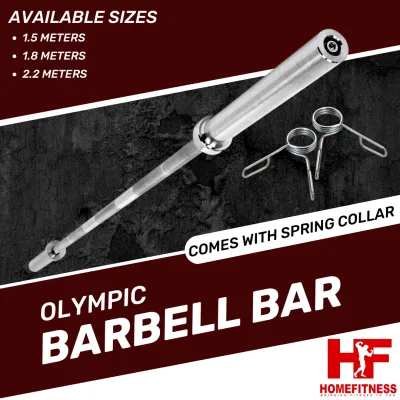
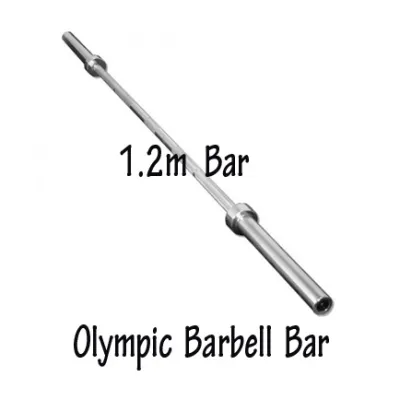
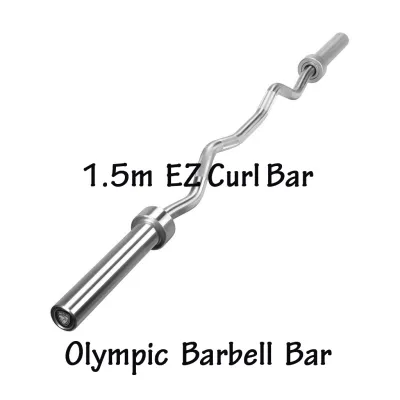
Evaluating your room dimensions before purchasing is essential for safety and comfort. If your training space is exceptionally narrow, a shorter alternative like a 1.8-meter (6-foot) or 1.5-meter (5-foot) barbell may seem appealing. However, these shorter bars come with significant trade-offs that you must verify. Shorter barbells typically have a narrower shaft length between the sleeves, which may not span the width of a standard squat rack or power cage. Always measure the outer width of your rack and compare it to the bar’s shaft length to ensure compatibility before buying.
Sleeve clearance is another critical spatial factor that directly impacts your safety during dynamic movements. When performing exercises like the overhead press, snatch, or clean and jerk, the barbell can easily drift horizontally. If the ends of the bar are positioned too close to concrete walls, glass windows, or built-in wardrobes, a slight loss of balance could result in a dangerous collision. To prevent damage to your home and avoid sudden, off-balance deflections during a lift, maintain a minimum clearance of 60 to 80 centimeters between the ends of the barbell sleeves and any surrounding obstacles.
Floor protection and noise mitigation are absolute necessities when training in a multi-story residential building. Dropping a loaded barbell directly onto ceramic, homogeneous, or vinyl tiles will likely cause immediate, expensive structural damage to your subfloor. Furthermore, the structural impact of heavy weights hitting the floor creates low-frequency vibrations that travel effortlessly through concrete slabs, disturbing neighbors downstairs. To preserve your flooring and maintain neighborly peace, you must install high-density rubber gym mats (at least 15mm to 20mm thick) across your entire lifting area. For heavy deadlifts or dynamic Olympic lifts, complement these mats with dedicated foam crash pads to absorb the kinetic energy and dampen the sound of the impact.
Technical Specs to Match Your Lifting Style
Understanding the engineering behind a barbell allows you to select a tool that matches your specific training style and prevents premature equipment failure. The shaft diameter is the first technical detail that defines how a bar feels in your hands. A 28mm shaft is the standard for Olympic weightlifting; it is thinner, easier to grip using a hook grip, and offers more flexibility (or “whip”) under load. A 29mm or thicker shaft is the standard for powerlifting, providing a stiff, unyielding feel that minimizes bar bend during heavy squats and bench presses. For general fitness, a 28.5mm shaft serves as a versatile, multi-purpose compromise.

Tensile strength is a critical safety metric that measures the amount of pressure a barbell steel can withstand before permanently bending. This is measured in pounds per square inch (PSI). For reliable, long-term home use, verify that the manufacturer specifies a tensile strength rating of at least 165,000 PSI. Intermediate and advanced lifters who plan to load the bar heavily or drop it from overhead should look for a rating of 190,000 PSI or higher. Avoid purchasing budget barbells that do not openly publish their PSI rating, as they are often made of low-grade steel that can easily warp under moderate use.
The rotation of the barbell sleeves is governed by either bushings or bearings, and this mechanism dictates how the bar behaves during a lift. Bronze bushings are solid sleeves that fit between the shaft and the outer sleeve, offering a smooth, controlled, and slower spin. Bushings are highly durable, cost-effective, and ideal for slow, heavy compound movements like squats, deadlifts, and overhead presses. Needle bearings, on the other hand, consist of small cylindrical rollers that allow the sleeves to spin extremely fast and freely. This rapid spin is essential for dynamic Olympic lifts like the snatch, as it prevents the rotational inertia of the spinning plates from transferring to the shaft and twisting your wrists or elbows.
Knurling is the cross-hatched pattern etched into the steel shaft to enhance your grip. The aggressiveness of the knurling ranges from passive (smooth and comfortable for high-rep conditioning) to aggressive (sharp, deep cuts that bite into the skin for heavy deadlifts). Additionally, you must consider the presence of a center knurl, which is a patch of knurling in the middle of the bar. A center knurl is highly beneficial for securing the bar against your back during heavy back squats, but it can scratch your collarbones and throat during high-rep front rack positions, clean variations, or overhead presses. If your training is diverse, a bar with no center knurl or a very passive center knurl is generally more comfortable.
Recommended Barbell Configurations for Home Lifters
Rather than searching for a single, universally perfect brand, successful home gym owners select a barbell based on their primary training dominance and physical space limits. Matching the bar’s specific configuration to your daily routine ensures that you do not pay for high-end features you do not need, nor do you end up with a bar that hinders your progress. Before finalizing any purchase, run through a core buying checklist: verify the maximum weight tolerance, inspect the sleeve finish, check the flexibility (whip), and read the warranty terms carefully to ensure coverage for home use.
The Multi-Purpose Workhorse
- Specifications: 20kg weight, 28.5mm shaft diameter, dual knurl marks (conforming to both IPF and IWF spacing), moderate whip, and a high-quality bronze bushing system.
- Best For: Lifters who perform a hybrid mix of powerlifting, Olympic weightlifting, and general functional fitness in a single session. This configuration offers the greatest versatility, allowing you to transition from bench presses to clean pulls without switching equipment, and typically provides the best balance of durability and cost.
The Space-Saver (Short Bar)
- Specifications: 15kg weight, 1.8-meter (6-foot) total length, standard 50mm diameter sleeves, but with a significantly shorter sleeve loading area (usually around 25 to 30 centimeters).
- Best For: Home gym owners operating in highly constrained HDB spare rooms or enclosed balconies where a full-length 2.2-meter bar cannot be safely maneuvered. While this bar fits easily into tight spaces, keep in mind its limitations: the shorter sleeves restrict the maximum number of weight plates you can load, and you must verify that the shaft is wide enough to rest securely on your squat stand.
The Powerlifting Specialist
- Specifications: 20kg weight, 29mm shaft diameter, aggressive knurling, a distinct center knurl, high tensile strength (190,000+ PSI), and a stiff shaft with minimal whip.
- Best For: Dedicated strength athletes focusing purely on the squat, bench press, and deadlift. The stiff shaft ensures a highly stable, predictable feel when handling heavy loads, the center knurl keeps the bar locked onto your upper back during squats, and the aggressive knurling provides a secure grip without requiring excessive chalk.
Protecting Your Barbell from Singapore's High Humidity
Singapore’s tropical climate features relative humidity levels that regularly exceed 80 percent, creating a highly corrosive environment for exposed steel. If left unprotected, moisture in the air will quickly react with the iron in your barbell, leading to unsightly and structurally damaging rust. The primary defense against this oxidation is the coating applied to the shaft and sleeves. Before purchasing, compare the rust resistance of different finishes:
- Bare Steel: Offers the most natural, grippy feel but has zero rust resistance. It requires weekly oiling and is not recommended for humid Singapore apartments unless your gym is continuously air-conditioned and dehumidified.
- Black Oxide: Provides a mild level of protection and a decent grip feel, but the coating wears off over time in high-contact areas, leaving the underlying steel vulnerable to sweat and moisture.
- Chrome and Zinc (Bright or Black): Offer good, reliable rust resistance at a moderate price point. They are highly popular for home gyms, though the plating can make the knurling feel slightly more slippery than bare steel or stainless steel.
- Cerakote: A ceramic-based coating that provides exceptional rust resistance and is available in various colors. It is highly durable but can chip if repeatedly struck against bare metal, so always use plastic-lined J-cups on your squat rack.
- Stainless Steel: The gold standard for home gyms. It offers maximum rust resistance combined with the natural, unplated feel of raw steel, though it comes at a premium price.
Establishing a simple, routine cleaning habit is the most effective way to extend the lifespan of your barbell. Sweat, hand oils, and gym chalk (magnesium carbonate) act as magnets for moisture, trapping water directly against the steel and accelerating the rusting process. After every training session, use a stiff nylon brush to scrub any chalk residue and skin debris out of the knurling. Once brushed clean, wipe down the entire shaft with a dry microfiber cloth to remove residual sweat and moisture. Avoid using wire brass or steel brushes on coated bars (such as Cerakote or zinc), as these harsh metal bristles will scratch and strip away the protective finish.
Proper lubrication and storage will keep the internal sleeve mechanisms spinning smoothly for years. Every one to three months, depending on how often you train and how humid your room is, apply a few drops of 3-in-1 oil or a dedicated light machine lubricant to the sleeve joints. Spin the sleeves to distribute the oil evenly, let it sit for a few minutes, and then wipe away any excess oil with a clean cloth. Store your barbell horizontally on a padded wall rack or vertically in a dedicated floor holder. If storing vertically, make sure the sleeves are dry, and avoid placing the bar directly under air-conditioning vents, where cold air can cause moisture condensation to pool inside the sleeve mechanisms.
Frequently Asked Questions (FAQ)
Can I use standard 1-inch plates on an Olympic barbell?
No, standard weight plates with a 1-inch (25mm) center hole are physically incompatible with an Olympic barbell. Olympic barbells are engineered with rotating sleeves that have an outer diameter of 2 inches (50mm), meaning standard plates cannot slide onto the bar. For safety and proper function, you must pair an Olympic barbell with dedicated Olympic plates that feature a 2-inch center hole. Do not attempt to use unstable DIY adapters or modify standard plates for heavy lifting, as this raises the risk of the plates shifting, slipping, or falling off during a lift, which can cause severe injury.
Will dropping an Olympic barbell damage my HDB floor?
Yes, dropping a loaded barbell directly onto typical HDB flooring—such as ceramic tiles, homogenous tiles, parquet, or vinyl overlays on concrete—will almost certainly cause severe structural damage. The intense, concentrated impact can easily crack tiles, dent wood, and fracture the underlying concrete subfloor. To protect your home and maintain good relations with your neighbors, never drop weights directly onto the floor. Always use high-density rubber gym flooring (minimum 15mm thick) for controlled lifts. For dynamic movements where dropping the bar is common, you must use thick, high-density foam drop pads or a multi-layered lifting platform to absorb the kinetic energy and dampen the noise.
Community discussion
Share your experience or ask a question. Comments are reviewed before publication.