
Authentic miniature FIFA balls are highly prized by football enthusiasts in Singapore, serving as excellent tools for close-control skill training, unique collector’s items, or compact gifts. Finding a genuine miniature ball requires navigating a market filled with both official tournament replicas and low-quality novelty imitations. To secure a high-quality product, you must understand the structural differences between various miniature models, know how to verify licensing credentials, and identify authorized local retail channels.
While standard match balls dominate store shelves during major tournament cycles, manufacturers regularly release scaled-down versions of these iconic designs. These miniature editions allow fans to own a piece of football history without the storage demands or expense of a full-sized official match ball. Balancing your specific needs—whether active footwork practice or pristine shelf display—against your budget is the key to making a satisfying purchase.
How to Choose the Right Miniature Ball for Your Needs
Selecting the right miniature football depends heavily on how you plan to use it. Not all small balls are engineered for the same physical demands, and choosing the wrong type can lead to rapid wear or a disappointing tactile experience.
Products mentioned in this guide
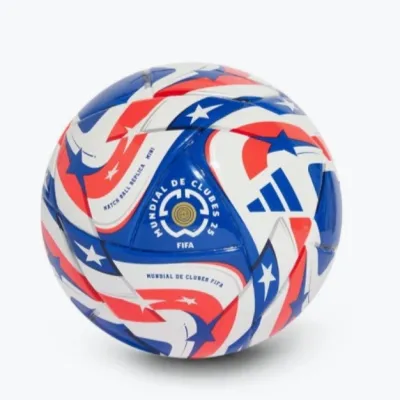
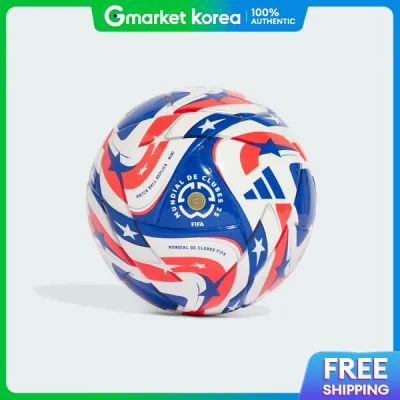
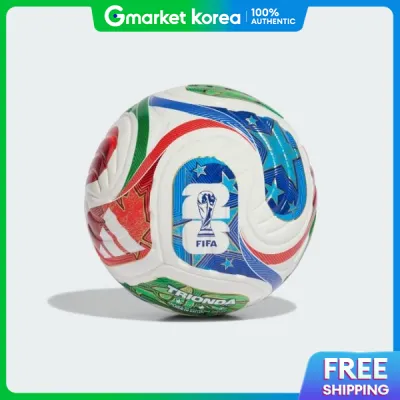
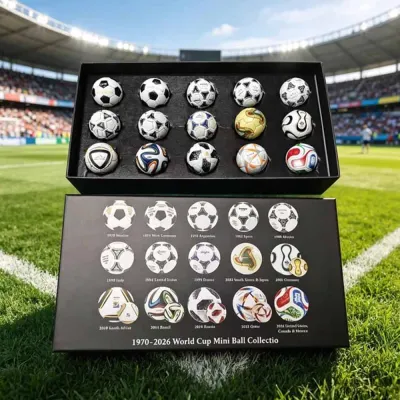
Prices are valid at publication and may change. Please refer to the product page for the latest price.
Intended Use and Activity Level
Before browsing, determine whether the ball will be subjected to physical impact or remain stationary. If your goal is active footwork practice, juggling, or coordination drills, you require a durable skill ball designed to withstand repetitive contact with hard ground or footwear. Conversely, if the ball is intended solely as a desk accessory, office toy, or display piece, a lightweight promotional replica with a softer casing is entirely sufficient and often more comfortable for casual indoor handling.
Size and Weight Variations
Miniature footballs generally fall into two distinct physical categories. Size 1 skill balls are the standard training miniature, measuring approximately 40 to 43 centimeters in circumference. These are constructed with a weight that mimics the feel of a full-sized ball on a smaller scale, providing realistic rebound and flight characteristics during footwork drills. Promotional miniatures, on the other hand, can be significantly smaller and lighter, sometimes featuring foam cores instead of inflatable bladders, making them unsuitable for serious training but perfect for safe indoor play.
Material and Construction Quality
The longevity of a miniature ball is determined by its outer casing and internal bladder. High-quality miniatures typically feature a Thermoplastic Polyurethane (TPU) or polyurethane (PU) cover, which offers a soft touch, excellent flexibility, and resistance to scuffing. For construction, machine-stitched seams provide reliable durability for daily handling, while premium replicas may utilize thermal bonding to create a seamless surface that resists moisture absorption. Avoid cheap polyvinyl chloride (PVC) models, as this material tends to stiffen, crack, and lose its shape quickly.
Design and Tournament Editions
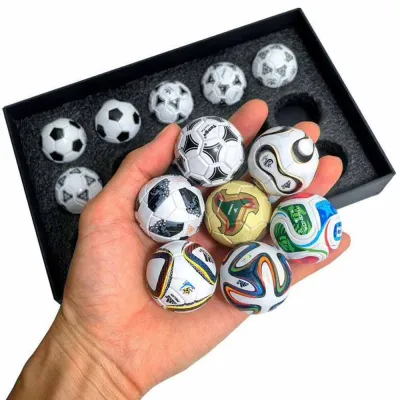
Miniature balls are frequently released to celebrate major football milestones, such as the FIFA World Cup, regional championships, or specific club seasons. If you are a collector, look for miniatures that faithfully replicate the graphic panels, colorways, and branding of the official match balls used on the pitch. If you prefer a classic look, standard brand-line miniatures offer clean designs focused purely on training utility rather than historical commemoration.
Practical Checks to Verify Authenticity
Because miniature footballs are popular gift items, the market contains numerous counterfeit products that mimic official designs but lack structural integrity. Performing a few systematic checks will help you verify that a ball is a genuine licensed product.

Official Licensing Marks
Genuine FIFA-branded merchandise carries specific licensing indicators that are difficult for counterfeiters to replicate accurately. Look for the official FIFA licensed product logo, which should feature crisp typography and correct color alignment. On tournament-specific miniatures, check for the official event emblem alongside the manufacturer’s registered logo. Any smudging, pixelation, or slight variation in the font style of these marks is a strong indicator of a counterfeit product.
Build Quality and Physical Alignment
Inspect the physical construction of the ball closely before purchasing. Authentic manufacturers maintain strict quality control, ensuring that all panel seams are perfectly aligned, tight, and free of loose threads or excess glue. The inflation valve should be cleanly integrated into the casing, sitting flush with the surface without any rough edges or misalignment. Roll the ball on a flat surface to check its sphericity; a genuine ball will roll smoothly, whereas a counterfeit often suffers from asymmetrical panel tension that causes an uneven wobble.
Packaging and Security Tags
Official miniature balls are rarely sold loose without any identifying packaging. Genuine products typically come in branded cardboard presentation boxes or feature high-quality cardstock hangtags. These tags should display a scannable barcode, a unique product SKU code that matches the manufacturer’s official catalog, and often a holographic security sticker that shifts color when tilted under light. Missing packaging, generic plastic wrapping, or tags with blurry print are major warning signs.
Common Red Flags to Avoid
Be highly skeptical of deals that seem too good to be true. Authentic licensed miniature balls require quality materials and licensing fees, meaning extremely low prices are highly suspicious. Additionally, check the spelling of the brand and tournament names on both the ball and the packaging; counterfeiters frequently make subtle spelling errors to evade trademark detection. If the seller cannot provide clear information about the manufacturer or the product’s origin, it is best to walk away.
Reliable Purchasing Channels in Singapore
To guarantee you are purchasing a genuine product, you must select your retail channels carefully. Singapore offers several secure environments where you can buy licensed sports merchandise with confidence.
Official Brand Flagship Stores
The most secure way to buy an authentic miniature ball is to visit the physical flagship stores of major sports brands located in Singapore’s primary retail districts. Shopping in these brick-and-mortar locations allows you to handle the ball, inspect the stitching, and verify the weight in person. Alternatively, purchasing directly from the official Singapore websites of these brands ensures that you receive genuine stock backed by official return policies.
Authorized Sports Retailers
Established local sports department stores and specialty football shops across Singapore are highly reliable sources. These retailers maintain direct distribution agreements with official sports brands, ensuring that their entire inventory consists of licensed merchandise. Staff at these specialty stores are also well-equipped to answer technical questions regarding the ball’s construction and suitability for training.
Navigating Online Marketplaces Safely
If you prefer the convenience of online shopping, exercise caution on open e-commerce platforms. To avoid counterfeit goods, restrict your purchases to official brand flagship stores or certified mall sellers within these platforms. Look for verification badges that indicate the seller is an authorized distributor. Avoid unverified third-party sellers who ship from overseas without clear return policies or product guarantees.
Understanding Price Expectations
In Singapore, authentic miniature footballs typically retail between S$15 and S$35, depending on the brand, construction complexity, and the specific tournament edition. Premium thermally bonded replicas or limited-edition collector pieces may sit at the higher end of this range. Understanding these baseline prices helps you quickly identify suspicious listings; a seller offering a “genuine” tournament miniature for under S$10 is highly likely to be selling a counterfeit.
Care and Storage Tips for Collectors and Players
Proper maintenance is essential to preserve the appearance, shape, and material integrity of your miniature football, especially when dealing with Singapore’s unique environmental conditions.
Safe Cleaning Methods
To clean your miniature ball, wipe the surface gently with a soft microfiber cloth dampened with clean water and a mild, diluted soap. Avoid using harsh chemical detergents, alcohol-based sanitizers, or abrasive scrubbing pads, as these substances can quickly degrade the synthetic outer casing and dissolve the printed graphics or tournament logos. Always dry the ball thoroughly with a clean towel immediately after wiping.
Protecting Against Singapore's Climate
Singapore’s tropical climate, characterized by high humidity and ambient warmth, can accelerate the degradation of synthetic materials like polyurethane through a process called hydrolysis. To prevent the outer casing from becoming sticky, peeling, or cracking, store your miniature ball in a well-ventilated indoor space away from direct sunlight. Avoid storing the ball in damp cupboards, enclosed plastic bags, or areas prone to extreme heat, such as balconies or near large electronic appliances.
Display and Shape Preservation
If you are displaying your miniature ball, use a dedicated plastic or acrylic ball stand to keep it stable and prevent it from rolling off shelves. For valuable collector pieces, a sealed acrylic display case offers excellent protection against dust, airborne oils, and accidental drops. For inflatable models, check the air pressure periodically; keeping the ball inflated to a firm but gentle pressure helps maintain its round shape and prevents the casing from developing permanent creases or structural flat spots over time.
Frequently Asked Questions (FAQ)
Are miniature FIFA balls suitable for professional skill training?
Miniature balls, specifically size 1 skill balls, are highly effective tools for improving foot-eye coordination, reaction times, and close-control dribbling. However, their suitability depends entirely on their construction. Durable, machine-stitched TPU models with inflatable bladders are designed to handle active training drills. Lightweight promotional miniatures, particularly those filled with foam or featuring delicate decorative panels, are not built to withstand high-impact use and should be kept strictly for display or casual indoor play.
Do authentic miniature balls come with a certificate of authenticity?
Standard retail miniature balls, even those replicating official tournament designs, do not typically come with a physical certificate of authenticity. Instead, their authenticity is verified through official packaging, branded hangtags, and holographic security labels. Physical certificates of authenticity are generally reserved for high-end, limited-edition collector sets or autographed memorabilia. To ensure authenticity for standard miniatures, rely on the credibility of authorized retail channels rather than expecting separate documentation.
Can I inflate a miniature FIFA ball if it arrives deflated?
Yes, most high-quality miniature footballs feature standard inflation valves and can be inflated using a standard ball pump. To avoid damaging the internal bladder, always lubricate the inflation needle with a drop of water or glycerin before inserting it gently into the valve. Pump the air slowly to monitor the shape of the ball, and avoid over-inflation, which can stretch the seams and distort the casing. If a recommended pressure limit is printed near the valve, ensure you stay within those specifications.
Community discussion
Share your experience or ask a question. Comments are reviewed before publication.