
Topwater fishing offers some of the most visual and exciting moments in angling. Watching a predatory fish break the surface to engulf a lure is a sensation that keeps anglers returning to the water. For those new to this style of fishing, the popper lure is one of the most effective and straightforward tools to master.
A popper lure is designed to sit on the surface of the water and mimic the movements of injured prey. Choosing your first popper requires an understanding of how different sizes, weights, and cup designs affect the lure’s performance. By matching these characteristics to your local fishing environment and target species, you can significantly increase your chances of a successful hookset.
Before heading out, it is important to realize that topwater fishing is as much about technique as it is about gear. Mastering the physical mechanics of the retrieve and pairing your lure with the correct rod, reel, and line setup will ensure your presentation looks natural to hungry predators.
Products mentioned in this guide
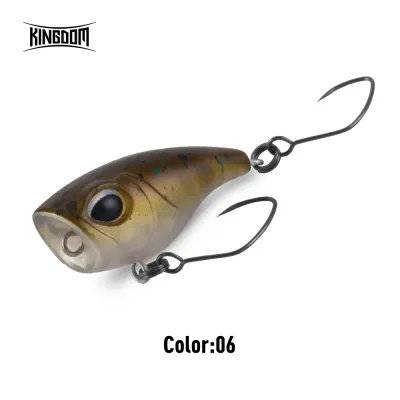
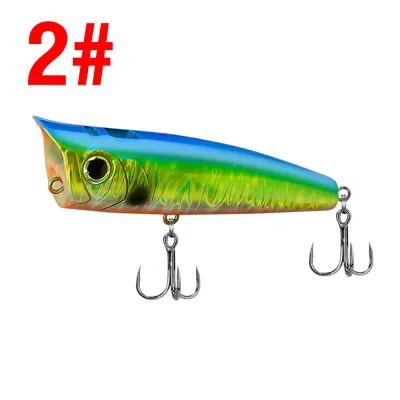
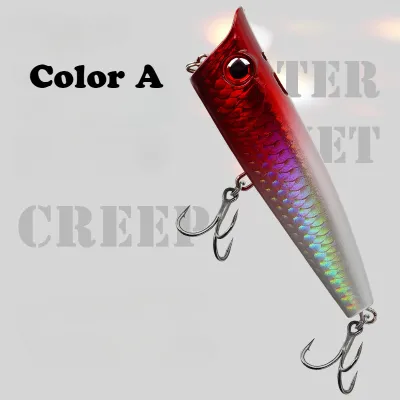
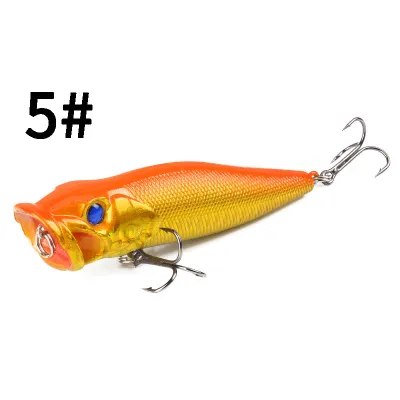
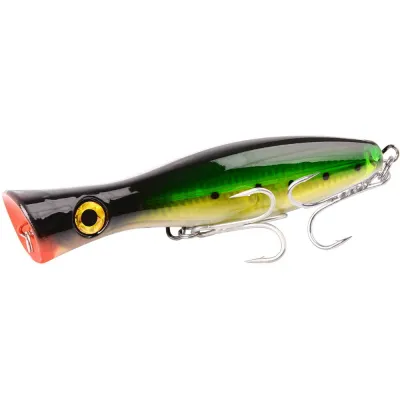
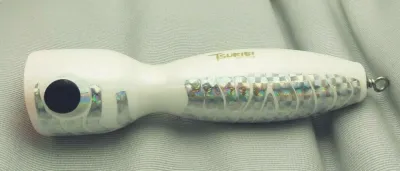
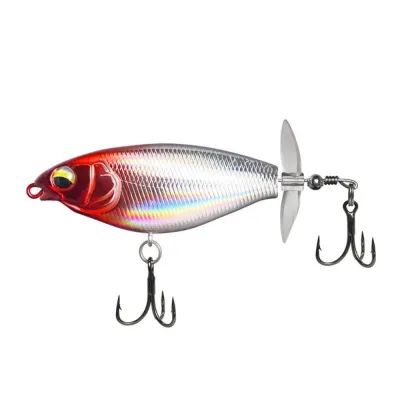
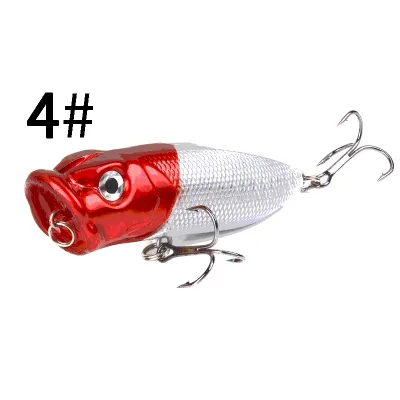
Prices are valid at publication and may change. Please refer to the product page for the latest price.
Understanding Popper Lures: When to Target Surface-Feeding Fish
The core mechanism of a popper lure lies in its unique front design, which features a concave cup face. When you twitch your fishing rod, the lure is pulled forward, trapping air and water within this cup. This action forces a sudden displacement of water, creating a distinctive “pop” or “bloop” sound, accompanied by a visible surface splash and a trail of bubbles. To a predatory fish lurking below, this combination of noise and visual disturbance mimics a distressed baitfish, a terrestrial insect, or a frog struggling on the surface.
To maximize the effectiveness of this mechanism, you must target the right environmental conditions. Surface-feeding fish are highly active during low-light periods, making dawn and dusk the absolute prime times for throwing poppers. Overcast days also provide excellent opportunities, as the reduced sunlight prevents fish from being easily spooked by shadows or highly visible lines.
Water surface conditions also dictate how you should fish. Calm, glassy water is ideal for a subtle approach, where even a small splash can attract attention from a distance. Slightly choppy surfaces can also be highly productive, as the natural movement of the water helps disguise the artificial nature of the lure, though you will need a popper that makes a louder sound to cut through the surface noise.
Safety should always be your top priority when engaging in topwater fishing. Before making your first cast, ensure you are wearing polarized sunglasses. When a predatory fish strikes at a popper, it often misses the hooks entirely. If you strike to set the hook and the fish misses, the tension on your line can launch the heavy, treble-hooked lure directly back toward your face at high speed. Polarized lenses protect your eyes from these flying hooks while simultaneously cutting water glare, allowing you to spot subsurface followers tracking your lure.
Essential Gear Setup: Rod, Reel, and Line for Topwater Action
Working a popper lure correctly requires a specialized tackle setup that allows you to manipulate the lure with precision and drive hooks into tough fish mouths.

Rod Selection To get the best action out of a popper, you need a fast-action rod with medium-heavy to heavy power. A fast-action rod has a stiff mid-section and a tip that recovers quickly after bending. This stiffness is crucial because it immediately transfers the sharp twitches of your wrist directly to the lure without absorbing the energy. The medium-heavy or heavy power provides the necessary backbone to drive large treble hooks deep into the bony jaws of predatory fish, such as peacock bass or barramundi, which are common targets in Singapore’s managed ponds and reservoirs.
Reel Requirements Your reel must have a high gear ratio, ideally 6.2:1 or higher. Every time you twitch your rod to make the lure pop, you create a small amount of slack line. A high gear ratio reel allows you to quickly pick up this slack with a turn of the handle, keeping your line taut. If a fish strikes during or immediately after a pop, having a tight line ensures you can set the hook instantly, rather than pulling against loose slack.
Line and Leader The standard line configuration for topwater popping consists of a braided main line paired with a leader. Braided line has virtually zero stretch, which provides unmatched sensitivity and allows you to transmit sharp rod movements to the lure even at the end of a long cast. Additionally, the thin diameter of braid improves casting distance.
However, because braided line is highly visible and has poor abrasion resistance against rocks, structures, or fish teeth, you must tie on a leader. A heavy monofilament leader is highly recommended for topwater fishing because monofilament floats, helping to keep the nose of your popper pointing upward. Alternatively, a fluorocarbon leader can be used around sharp structures due to its superior abrasion resistance, though its tendency to sink means you must keep the lure moving to prevent the nose from dipping.
Hardware Check Before heading to the water, always perform a thorough hardware inspection. Check the split rings and treble hooks on your popper for any signs of rust, corrosion, or structural weakness. Saltwater environments and high humidity can quickly degrade metal components. Dull hooks will fail to penetrate a fish’s mouth, while weakened split rings can bend or break under the pressure of a strong fight. Replace any questionable hardware with high-quality, corrosion-resistant alternatives.
How to Choose the Right Popper: Matching Sizes, Weights, and Cup Faces
Selecting the right popper lure involves matching the physical characteristics of the lure to your target species, the casting distance required, and the prevailing water conditions.
Matching Size and Weight to Target Fish and Casting Distance
Popper lures are generally categorized into three main size and weight classes, each suited to specific scenarios:
- Small and Light (under 15g): These compact lures are designed for smaller predatory species and light tackle setups. They are highly effective in calm, shallow waters where a heavy splash would easily spook wary fish. In Singapore's freshwater reservoirs, small poppers are excellent for targeting peacock bass, which often feed on tiny baitfish near the margins.
- Medium (15g to 30g): This is the most versatile weight range for beginners. It balances casting distance with a substantial surface presence, making it suitable for both freshwater and inshore saltwater applications. These lures can be cast easily on standard medium-power spinning or baitcasting gear and are highly effective for species like barramundi or small jacks.
- Large and Heavy (over 30g): These substantial lures are reserved for large, aggressive predators and long-distance casting. They are designed to be thrown on heavy tackle in windy conditions or rough coastal waters. The heavy weight helps the lure cut through strong winds, while the large profile ensures it remains visible and noisy amidst breaking waves.
Understanding Cup Face Shapes and Sound Profiles
The shape of the cup face determines the acoustic signature and water displacement of the lure:
- Deep and Concave Cups: Lures with deep, heavily cupped faces displace a large volume of water, producing loud, low-frequency "bloop" sounds and massive splashes. These are ideal for choppy water, windy days, or when you need to draw predatory fish up from deep structures or murky water.
- Shallow and Flat Cups: These designs produce a much quieter, high-frequency spitting sound and a tighter wake. They are best suited for calm, clear water conditions or when targeting highly pressured fish that are easily frightened by loud noises.
- Lipless vs. Lipped Designs: Most traditional poppers are lipless, sitting tail-down in the water at rest. This allows them to pop cleanly when twitched. Some poppers feature a small lower lip, which causes the lure to dive slightly below the surface and swim with a tight wiggle on a steady retrieve, offering a hybrid action between a topwater popper and a shallow-running minnow.
Step-by-Step Retrieval Techniques: How to Work a Popper
To catch fish consistently with a popper, you must learn how to manipulate your rod and reel to create different surface actions.
The Standard "Pop and Pause"
This is the foundation of popper fishing and should be the first technique you master:
- Step 1: Cast your lure slightly past your target area, such as a submerged log, rock pile, or weed edge. Once the lure lands, do not move it immediately. Allow the water rings created by the splash to settle completely. Predatory fish often notice the initial splash and move in to investigate; moving the lure too quickly can spook them.
- Step 2: Point your rod tip down toward the water surface. Keeping the rod tip low ensures that your line pull is horizontal, which keeps the cup face of the popper engaged with the water rather than lifting the lure into the air.
- Step 3: Execute a sharp, short snap of the rod tip downward or sideways. At the same time, make a quick turn of your reel handle to collect the slack line. This quick snap forces the cup face to dig into the water, creating the signature pop and bubble trail.
- Step 4: Pause the lure. Let it sit completely still for 2 to 5 seconds, allowing the ripples to expand. The vast majority of strikes occur during this pause, as the stationary lure looks like an easy, defenseless meal.
The "Walk the Dog" Variation
Some poppers, particularly those with slimmer bodies and shallower cups, can be worked in a zigzag pattern across the surface. To achieve this, use rhythmic, continuous twitches of the rod tip while maintaining a small amount of slack in the line. Each twitch should be accompanied by a half-turn of the reel handle. This technique allows you to cover a large amount of water quickly, making it ideal for searching for active fish over flats or open water.
The "Chug and Run" (Continuous Popping)
This technique involves a faster, continuous popping cadence with very short or no pauses. It is highly effective when you spot active schools of predatory fish feeding on the surface. The rapid, repeated splashes mimic a group of baitfish fleeing for their lives, which can trigger a competitive feeding frenzy among schooling predators.
Execution Tip Always keep your rod tip low during the retrieve. A low rod tip not only ensures better lure action but also keeps you in the optimal position to set the hook. When a fish strikes, do not immediately lift the rod. Wait until you feel the physical weight of the fish on the line, then sweep the rod firmly to the side to drive the hooks home.
Troubleshooting Missed Strikes: Common Mistakes and Adjustments
Topwater fishing can be highly frustrating for beginners because fish frequently miss the lure or fail to hook up. Understanding how to diagnose and correct these situations is key to improving your success rate.
Mistake 1: Popping too fast or skipping the pause. If you are working the lure continuously without pausing, fish may struggle to target the moving object, leading to missed strikes.
- Adjustment: Slow down your retrieve. Increase the duration of your pauses, counting to 3 or 5 seconds between each pop. This gives the fish a stationary target, making it much easier for them to strike accurately.
Mistake 2: Pulling the lure out of the water. This occurs when you use a long, sweeping arm motion to work the lure, which pulls the popper too far forward and often lifts it off the surface.
- Adjustment: Focus on using short, sharp wrist snaps rather than moving your entire arm. The movement of the rod tip should be minimal—only a few inches is needed to create a loud pop while keeping the lure anchored in the strike zone.
Mistake 3: Speeding up when a fish follows. When anglers see a fish create a swirl or “boil” behind the lure, their natural reaction is to speed up the retrieve out of excitement. This often causes the fish to lose interest or miss the lure entirely.
- Adjustment: Do not alter your rhythm or speed up. Maintain your established cadence, or pause the lure completely. A sudden, dead stop of a lure that has just been chased often triggers an aggressive reaction strike from a predatory fish.
Safety and Environment Always prioritize safety when handling fish caught on topwater lures. Because poppers feature multiple treble hooks, a thrashing fish can easily drive a hook into your hand. Always use proper fish handling tools, such as long-nose pliers and a fish grip, to secure the fish and safely remove the hooks. Additionally, wear non-slip footwear when fishing from wet rocks, concrete banks, or boat decks to prevent slips and falls.
Frequently Asked Questions (FAQ)
What is the best line to use for popper lures?
The standard setup is a braided main line paired with a leader. Braided line has no stretch, which ensures that every twitch of your rod is directly transferred to the lure, resulting in a crisp pop. The thin diameter of braid also allows for longer casts. Always pair the braid with a floating monofilament leader or a highly abrasion-resistant fluorocarbon leader to prevent the line from being visible to fish and to protect against sharp structures.
Do I need to add external weight to a popper lure?
No, you should never add external weights to a popper lure. Poppers are specifically designed to float on the surface of the water. Adding external weight will cause the lure to sink or sit too low in the water, ruining its popping action. Any weights inside a commercial popper, such as internal tungsten balls, are engineered by the manufacturer to provide casting balance and acoustic rattling, not to sink the lure.
When is the best time of day to throw a popper?
The best times to throw a popper are dawn, dusk, and overcast days. During these low-light periods, predatory fish are highly active and comfortable feeding near the surface. The bright, midday sun typically drives fish into deeper, cooler water or dense cover, making topwater lures much less effective during the middle of the day.
Community discussion
Share your experience or ask a question. Comments are reviewed before publication.