
Selecting the right kids swimming goggles is not about finding the most popular brand or the brightest colors. Instead, it requires matching the physical design of the goggles to your child’s rapidly changing facial structure and their specific activities in the water. Because children’s faces grow quickly and their swimming abilities evolve from playful splashing to structured lessons, a single pair of goggles cannot serve them through every developmental stage.
To make an informed choice, you must evaluate how different frame shapes, seal materials, and strap designs perform on different age groups. A poorly fitting pair will leak, fog up, or pinch, which can quickly ruin a child’s confidence in the water. By understanding what to look for at each stage of growth, you can ensure your child stays comfortable, focused, and eager to swim.
Essential Features to Check on Any Kids Goggle
Before looking at age-specific designs, you should understand the core components that dictate the comfort, visibility, and durability of any children’s goggles. The most critical component is the gasket, or the seal that contacts the face. Prioritize soft, hypoallergenic liquid silicone over cheap plastic or rubber. Silicone conforms gently to the facial contours, provides a reliable seal with minimal tension, and resists degradation from chlorine and UV exposure.
Products mentioned in this guide
![[SG Stock] Kids Swimming Goggles Quick Release Anti Fog Leak Proof Swim Goggle Easy Wear Adjustable Children UV Google](https://img.lazcdn.com/g/p/4fd6a3bffd2b77d2b8d4cf76d21e1eb1.jpg_400x400q80.jpg_.webp)
![[SG Stock] Kids Goggles Wide Lens Swim Mask Swimming Quick Release Anti Fog UV Adjustable Google Children](https://img.lazcdn.com/g/p/605fd0c52b20b0f0413cdac9e154fb65.jpg_400x400q80.jpg_.webp)
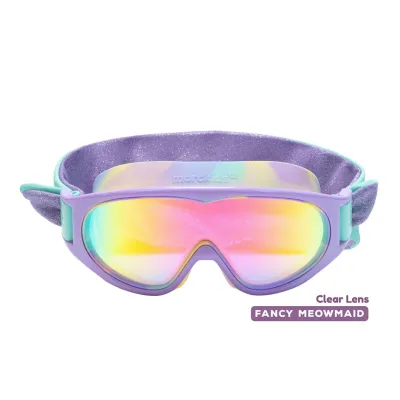
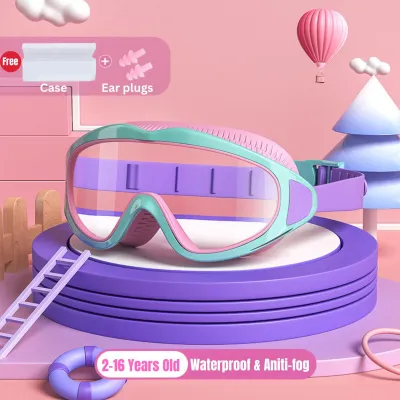
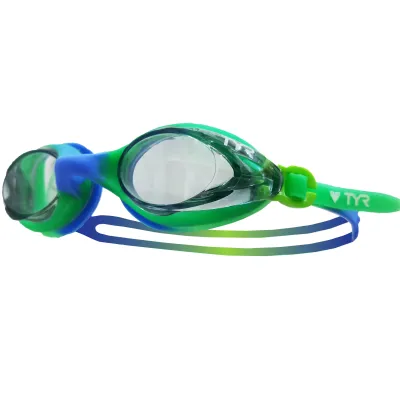
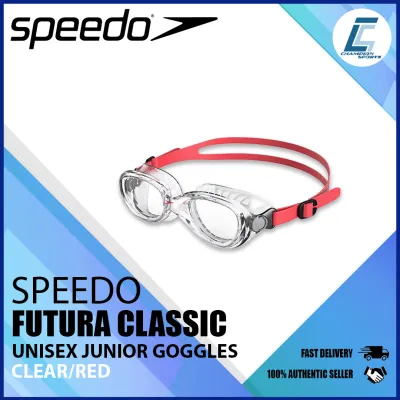
Prices are valid at publication and may change. Please refer to the product page for the latest price.
Lens treatments are equally important for safety and visibility. Always verify that the lenses offer complete UV protection, which is essential for protecting young eyes in outdoor swimming environments. Additionally, look for factory-applied anti-fog coatings. In humid climates, temperature differences between the water and the air cause rapid condensation inside the lenses, making a reliable anti-fog treatment necessary for uninterrupted swimming.
The strap and adjustment mechanism determine how easy the goggles are to put on and how securely they stay in place. Look for split-strap designs that cup the back of the head to distribute pressure evenly. Side clips or rear adjustment buttons should be intuitive and robust, allowing you to make quick adjustments without pulling your child’s hair. Avoid complicated buckle systems that require excessive force to adjust.
Finally, pay close attention to the nose bridge design. The nose bridge holds the two lenses together and determines the distance between the seals. Some goggles feature a fixed, flexible nose bridge that stretches to fit, while others use interchangeable nose pieces of varying widths. A nose bridge that is too wide will cause water to leak into the inner corners of the eyes, while one that is too narrow will pinch the bridge of the nose.
What to Look for in Toddler and Beginner Goggles (Ages 2–5)
For toddlers and very young children, the primary goal of wearing goggles is building water confidence. At this stage, children are often hesitant about getting water in their eyes, but they can also be easily bothered by the tight, squeezing sensation of traditional goggles. To prevent this discomfort, look for large-frame or mask-style goggles that rest on the outer cheekbones and forehead rather than directly inside the eye sockets.

These larger frames distribute the sealing pressure over a much wider surface area, making them feel significantly more comfortable for sensitive skin. They also offer a wide, unobstructed field of vision. A broad view helps toddlers feel more secure because they can maintain peripheral vision and easily see their parents or instructors without turning their heads constantly.
Strap design is another critical factor for this age group. Standard silicone straps can easily snag and pull fine, thin toddler hair, leading to tears before they even enter the pool. Look for goggles featuring wide fabric straps or neoprene covers. These materials slide smoothly over the head, do not tangle in hair, and are much easier for young children to put on and take off independently.
Avoid low-profile, high-suction racing styles entirely for toddlers. The focus should be on a gentle, comfortable seal that keeps splashes out during playful exploration. If the goggles feel too tight or leave deep red marks around your child’s eyes, they will likely refuse to wear them, which can set back their comfort level in the water.
What to Look for in Young Swimmer and Lesson Goggles (Ages 6–9)
As children transition into structured swim lessons and begin learning formal strokes, their gear requirements change. Between the ages of six and nine, children spend more time moving actively through the water, practicing breathing techniques, and submerge their heads repeatedly. This level of activity requires a more secure, hydrodynamic fit than toddler masks can provide.
Look for medium-sized, dual-lens frames that offer a balance between a wide field of vision and a streamlined profile. These goggles sit closer to the face, reducing water resistance as your child practices gliding and kicking. The seals should still be made of soft silicone, but the frame itself should be rigid enough to maintain its shape during active movement.
Because a child’s nasal bridge develops significantly during these years, adjustable or highly flexible nose bridges are essential. A fixed nose bridge that fit perfectly at age six may begin to leak by age eight. Choosing goggles with interchangeable nose pieces allows you to adjust the spacing as your child’s face grows, extending the usable life of the goggles.
At this stage, durability becomes a major factor. Children in swim lessons handle their goggles frequently, often pushing them up onto their foreheads or dropping them on the pool deck. Look for scratch-resistant polycarbonate lenses that can withstand rough handling. If your child attends daytime lessons in bright outdoor pools, consider mirrored or tinted lenses to reduce glare and prevent eye strain; for indoor or evening lessons, stick to clear or light blue lenses.
What to Look for in Pre-Teen and Recreational Goggles (Ages 10–14)
By the time children reach their pre-teen years, their facial structures are approaching adult proportions, and their swimming activities may include competitive training, school swim teams, or prolonged recreational swimming. For this group, look for low-profile, streamlined goggles designed to minimize drag and stay securely in place during fast starts, dives, and flip turns.
These goggles feature smaller lenses that fit snugly inside the eye socket. While they offer a narrower field of vision than recreational masks, they provide a highly secure fit that is less likely to shift when hitting the water at high speeds. To ensure a leak-proof seal, these models must include multiple sizes of interchangeable nose bridges so the user can customize the fit to their exact facial width.
Stability is enhanced by dual-silicone straps. These straps feature two separate bands that run across the back of the head—one positioned high and the other low—to prevent the goggles from slipping down during vigorous swimming. The adjustment buckles on these models are typically located at the back of the head to maintain a smooth, hydrodynamic profile on the sides.
Match the lens tint precisely to your pre-teen’s primary swimming environment. For indoor training under bright fluorescent lights, clear, pink, or light blue lenses provide excellent visibility. If they train in outdoor pools under the bright sun, dark smoke, mirrored, or polarized lenses are highly beneficial, as they filter out harsh reflections and protect the eyes during long training sets.
How to Test the Fit and Maintain the Lenses
To avoid buying goggles that leak, you should perform a quick suction test before your child ever enters the pool. Have your child hold the goggle lenses gently against their eyes without putting the strap over their head. Instruct them to press the frames slightly to expel the air. If the goggles stick to their face for a second or two by suction alone before falling off, the shape is a good match for their facial structure. If they pop off instantly, air is leaking past the seal, meaning water will do the same.
Once you find a pair that fits, proper maintenance is key to preserving the lenses and seals. The most important rule is to never touch or wipe the inside of the lenses. The factory-applied anti-fog coating is an extremely thin, delicate chemical layer that is easily scratched or rubbed off by fingers, towels, or t-shirts. If the goggles fog up during a swim, gently dip them in the pool water and shake off the excess.
After every swim session, rinse the goggles thoroughly in cool, fresh tap water. This removes chlorine, salt, sunscreen, and body oils that can slowly degrade the silicone seals and cloud the lenses. Do not use dish soap, hand soap, or hot water, as these can strip away the lens coatings and warp the plastic frame.
Allow the goggles to air dry completely in a shaded, well-ventilated area. Never leave them to dry in direct sunlight or inside a hot car, as extreme heat causes silicone to become brittle, lose its elasticity, and crack. Once dry, store the goggles in a hard protective case to prevent the lenses from getting scratched by other gear in your swim bag. Expect to spend around S$15 to S$40 for a high-quality, durable pair that will last through a full season of regular use.
Frequently Asked Questions (FAQ)
Do kids need prescription swimming goggles?
Prescription swimming goggles are highly recommended for children with moderate to high degrees of myopia or astigmatism. Being able to see clearly underwater is not just a matter of performance; it is a safety concern, as it allows children to read pool depth markers, see the pool walls, and clearly follow their swim instructor’s hand signals and demonstrations.
When sourcing prescription goggles, consult an optometrist to determine the correct diopter strength. Because water naturally magnifies images slightly, the required prescription for swimming goggles is often slightly lower than your child’s daily glasses. Ensure the prescription lenses are made of shatterproof polycarbonate to protect the eyes from accidental impacts during active play.
How often should kids' swimming goggles be replaced?
Kids’ swimming goggles generally need to be replaced every six to twelve months, depending on how frequently they are used and how well they are maintained. The most common indicator that it is time for a new pair is persistent fogging that cannot be resolved by rinsing, which indicates the factory anti-fog coating has fully degraded.
You should also inspect the physical components regularly. If the silicone seals feel sticky, stiff, or show visible cracks, they will no longer form a reliable seal. Stretched-out straps that slip during use or deep scratches on the lenses that impair vision are also clear signs that a replacement is necessary. Finally, because children’s faces grow rapidly, you should reassess the physical fit of their goggles every six months to ensure they have not outgrown the frame width.

Community discussion
Share your experience or ask a question. Comments are reviewed before publication.