
Finding the right optical swimming goggles in Singapore requires balancing your exact vision correction needs with high-quality lens construction. Because water refracts light differently than air, swimming without proper correction compromises safety, spatial awareness, and performance, while wearing standard goggles over contact lenses poses severe ocular health risks. To secure the best underwater clarity, swimmers must evaluate the available diopter ranges of different brands, verify the physical and optical quality of the lenses, and purchase through authorized channels that guarantee product authenticity.
By understanding how to read your prescription and matching it to the structural features of modern swim gear, you can enjoy clear, comfortable vision in both pool and open-water environments. This guide outlines the essential steps to evaluate, select, and maintain optical swimming goggles tailored to your eyes.
Understanding Your Vision Needs for Swimming
Before searching for specific brands or models, you must determine your exact optical requirements. Vision correction underwater is not always identical to your daily spectacle prescription, and understanding the differences will help you narrow down your options effectively.
Products mentioned in this guide
![[SWANS] Optical Cushion Swimming Goggle SW-45OP Made In Japan](https://img.lazcdn.com/g/p/4600be6ddc469668a5fb75293feb3a07.jpg_400x400q80.jpg_.webp)
![[SWANS] Adult Optics Swimming Goggle FO-1OP (Made In Japan)](https://img.lazcdn.com/g/p/52447b9a86b581b2bc9cf64340d26626.jpg_400x400q80.jpg_.webp)
![[SWANS] Optics Short Sighted Racing Swimming Goggle SR-2NEVOP MINUS (Made In Japan)](https://img.lazcdn.com/g/p/65b195e52ee189e85a5bbd9790513976.png_400x400q80.png_.webp)
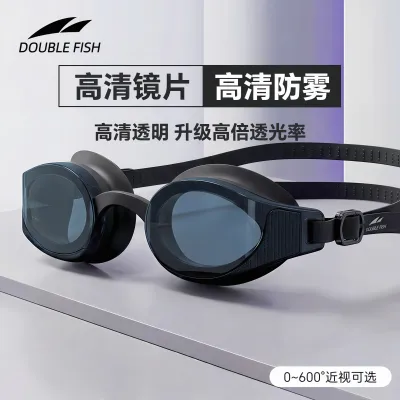
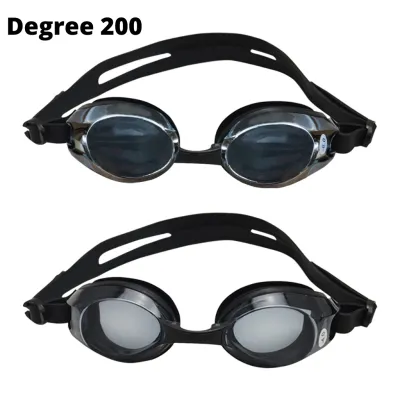
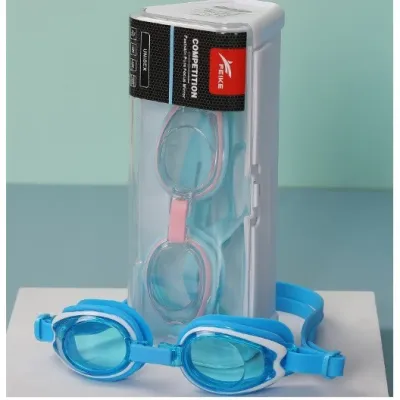
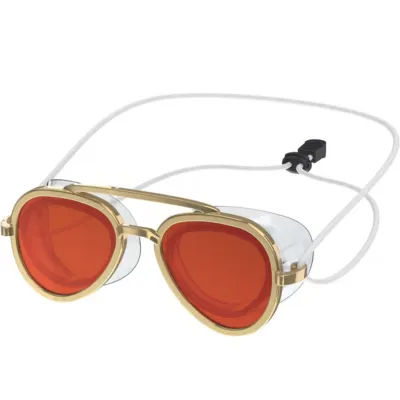
Prices are valid at publication and may change. Please refer to the product page for the latest price.
Nearsightedness (myopia) is highly common among swimmers, making it the most widely catered-for condition in the optical goggle market. Farsightedness (hyperopia) and astigmatism (distortion caused by an irregular corneal curve) are also common but require closer attention when selecting swim gear. Because water itself has a refractive index close to that of the human eye, uncorrected underwater vision is naturally blurry, making accurate correction even more critical for safety and navigation.
To identify your needs, look at your current optical prescription card. The three primary values to note are Sphere (SPH), Cylinder (CYL), and Axis. Sphere indicates the strength of correction needed, measured in diopters, with a minus sign (-) for nearsightedness and a plus sign (+) for farsightedness. Cylinder and Axis values represent the strength and orientation of astigmatism correction; if these numbers are low or absent, your selection process will be much simpler.
For standard corrections without significant astigmatism, ready-made step diopter goggles are the most practical and cost-effective choice. These goggles come pre-assembled with lenses in fixed increments, typically starting at -1.5 and going up to -8.0 or -10.0. However, if you have a complex prescription, such as high astigmatism (typically a CYL value greater than -1.00) or a large difference in correction between your left and right eyes, you may need to look for brands that offer custom-molded lenses or interchangeable lens systems.
Evaluating Prescription Ranges and Lens Options
Once you know your vision profile, you must assess whether a brand’s available prescription increments and formats match your specific correction needs. Not all manufacturers offer the same range of diopters, and choosing the wrong increment can lead to eye strain.

When browsing different brands, always check the manufacturer specifications for their maximum and minimum prescription limits. While many standard brands cover common nearsighted ranges from -2.0 to -6.0, swimmers with high myopia (above -8.0) or hyperopia (farsightedness) must seek out specialized optical swim brands. Some specialized manufacturers extend their ranges up to -10.0 or even offer positive diopters from +1.0 to +8.0, though these are less common and may require a special order through an optician.
Because ready-made optical goggles are sold in step diopters, they usually change in increments of 0.5 diopters (for example, -2.0, -2.5, -3.0). If your exact prescription falls between these steps, such as -3.25, the standard recommendation is to round down to the nearest lower half-diopter, which would be -3.0. Rounding down prevents over-correction, which can cause eye strain, headaches, and spatial disorientation while swimming. Never round up to a stronger prescription unless specifically advised by an eye care professional.
Another critical factor is whether the brand offers interchangeable lens systems or only fixed prescription goggles. Fixed goggles feature identical lenses on both sides, which is only suitable if both of your eyes require the exact same correction. If your eyes have different prescriptions, look for brands that sell individual left and right lenses separately. These interchangeable systems allow you to purchase the exact diopter needed for each eye and snap them into a shared nose bridge and strap assembly, providing a customized fit without the high cost of custom-molded laboratory lenses.
Checking Lens Quality and Optical Features
Beyond the prescription strength, the physical material and optical coatings of the lenses determine how well the goggles perform over time. High-quality construction protects your eyes and ensures long-lasting clarity.
Always review the product packaging or manufacturer specifications to confirm the lenses are made from impact-resistant materials. Polycarbonate is the industry standard for optical swim goggles because it is highly durable, lightweight, and naturally shatterproof. This material provides essential physical protection against accidental impacts from pool walls, lane ropes, or other swimmers’ limbs, ensuring the lens will not crack or splinter near your eyes.
Verify the presence of anti-fog and ultraviolet (UV) protection coatings through official product documentation rather than relying solely on marketing slogans. In Singapore’s tropical climate, high humidity and warm water temperatures accelerate fogging on the inside of the lenses. A reliable hydrophilic anti-fog coating is essential to keep your vision clear. Additionally, if you swim in outdoor pools or open water, look for lenses that specify UV400 protection or a clear UV-blocking rating to shield your eyes from intense solar radiation.
Lens geometry also plays a significant role in underwater vision quality. Flat lenses provide the most accurate, distortion-free vision directly ahead, making them ideal for pool training where lane lines are your primary guide. Curved lenses offer a wider peripheral view, which is highly beneficial for open-water swimming and triathlons, but they can introduce slight geometric distortion at the outer edges due to the way light bends through curved plastic underwater. Ensure the optical center of the lens aligns well with your pupils to minimize eye fatigue during long swim sessions.
Where to Buy and Verify Authenticity in Singapore
Finding a reliable purchasing channel in Singapore ensures you receive genuine optical gear with valid warranties and accurate prescription markings. Specialized optical gear should always be sourced from reputable sellers.
| Retail Channel Type | Best Suited For | Key Advantages | Trade-offs |
|---|---|---|---|
| Specialized Optical Shops | Complex prescriptions, astigmatism, and custom fittings | Professional eye measurements, custom-molded lenses, expert advice | Higher cost, longer waiting times for assembly |
| Dedicated Sports Retailers | Standard step-diopter needs and physical fit testing | Ability to try on frames, immediate purchase, physical stock | Limited high-diopter ranges, fewer custom options |
| Official Brand Online Stores | Swimmers with known prescriptions seeking specific models | Wide range of diopters, convenient delivery, direct brand access | Cannot try on before buying, shipping wait times |
When purchasing online through major e-commerce platforms, always look for the “Official Store” or “Mall” designation to avoid counterfeit products. Counterfeit optical goggles often use sub-standard plastics that distort vision and lack genuine UV-blocking coatings, which can expose your dilated pupils to harmful solar radiation. Check for authorized dealer certificates or holographic authenticity stickers on the packaging before opening the product.
Before finalizing your purchase, carefully review the retailer’s return and exchange policies. Because optical swimming goggles are classified as personal hygiene items and specialized optical wear, many retailers enforce strict return conditions. This is especially true for interchangeable lens systems that have been custom-assembled for mismatched prescriptions. Ensure you have selected the correct diopters and frame size before checking out, as opened or used goggles are rarely eligible for exchange.
Fitting, Testing, and Maintenance
Even the highest-quality optical lenses will fail to perform if the goggles do not seal properly against your face or if the delicate coatings are damaged through improper care.
To ensure a watertight seal, perform a dry suction test before adjusting the head strap. Press the goggle lenses firmly against your eye sockets without putting the strap over your head, then release your hands. If the goggles stick to your face for a few seconds through suction alone, the silicone gaskets match your facial structure. If they fall off immediately, air is leaking in, meaning water will likely enter the goggles during your swim, regardless of how tightly you pull the strap.
To preserve the sensitive anti-fog and UV coatings, establish a strict rinsing and drying protocol after every swim. Chlorine, salt, sweat, and sunscreen residue will rapidly degrade the lens coatings if left to dry on the surface. Gently rinse your goggles under cold, fresh tap water immediately after use. Never use dishwashing liquid, hand soap, or hot water, as these chemicals and temperatures can strip the protective layers.
Allow the goggles to air dry completely in a shaded, well-ventilated indoor area before storing them in a protective case. Crucially, never wipe, rub, or touch the inside of the lenses with your fingers, a towel, or a microfiber cloth. The anti-fog coating is a delicate chemical layer that scratches easily; rubbing it will smear the coating and permanently ruin the optical clarity of the lens.
Monitor your goggles regularly for observable signs of degradation. Over months of regular use in chlorinated water, silicone gaskets will naturally harden, lose their flexibility, or develop micro-tears, leading to leaks. The head strap may lose its elasticity, requiring constant tightening that puts uncomfortable pressure on your eye sockets. If you notice persistent fogging that cannot be resolved with a gentle rinse, or if the plastic lenses develop fine hairline scratches that blur your vision, it is time to replace your optical goggles to maintain safe, clear vision.
Frequently Asked Questions (FAQ)
Can I use my daily contact lenses under regular swimming goggles?
No, you should never wear daily contact lenses while swimming, even under tight-fitting regular goggles. Swimming pools, freshwater lakes, and the ocean contain various waterborne pathogens, including bacteria and amoebae such as Acanthamoeba. If water leaks into your goggles—which is a common occurrence—these microorganisms can easily become trapped behind your contact lens, leading to rapid, severe corneal infections, painful ulcers, and potential permanent vision loss. Prescription swimming goggles are the standard, medically safe alternative for vision correction in the water.
How do I prevent optical swimming goggles from fogging up?
To prevent fogging, always perform a quick pre-swim rinse by dipping your goggles into the pool water just before putting them on. This equalizes the temperature of the lens with the water, reducing the condensation that forms when your warm facial skin meets the cooler pool water. Never touch or wipe the inner surface of the lenses, as this destroys the factory-applied anti-fog coating. Once the original coating naturally wears off after several months of use, you can apply a drop of manufacturer-approved anti-fog spray to the inner lens, rinse it lightly in fresh water, and let it dry before your swim.
Should I choose a lower prescription for underwater use?
Because water acts as a natural magnifying medium due to its refractive index, objects underwater appear roughly 33% larger and closer than they actually are. For this reason, some swimmers find that a slightly lower diopter (about 0.25 to 0.50 less than their land prescription) provides a more comfortable visual experience and reduces mild spatial distortion. However, you should not guess this adjustment on your own. Consult your optometrist for a spherical equivalent recommendation, especially if you have astigmatism, to ensure your distance vision remains sharp enough to spot lane markers, pool walls, and other swimmers safely.

Community discussion
Share your experience or ask a question. Comments are reviewed before publication.