
Finding the right prescription swimming goggles requires matching your specific corrective lens needs with a secure, leak-proof frame design. Unlike standard eyewear, swim goggles must handle the unique refractive properties of water while maintaining a watertight seal. By understanding how your optical prescription translates to the pool, evaluating frame materials, and choosing the correct lens type, you can achieve crystal-clear underwater vision that matches the clarity of your everyday glasses.
For many swimmers, navigating the pool deck or open water without corrective lenses is a safety hazard. Misjudging the pool wall during a turn, missing lane markers, or failing to see other swimmers can lead to painful collisions. Investing in a dedicated pair of prescription goggles restores your spatial awareness, reduces eye strain, and allows you to focus entirely on your stroke technique and breathing rhythm.
Choosing the ideal pair involves more than simply matching your glasses prescription. You must consider how light behaves in water, the physical construction of the goggle frame, and the specific environments where you plan to swim. This guide breaks down the essential optical, material, and structural factors to help you select a reliable pair of prescription goggles that deliver comfort, durability, and perfect clarity.
Products mentioned in this guide
![[SG] Swimming Goggles Degree | Anti Fog + UV Shield | Adult & Children | Prescription Goggles](https://img.lazcdn.com/g/p/22798ce7f1849ad31e914f8712a501f1.jpg_400x400q80.jpg_.webp)
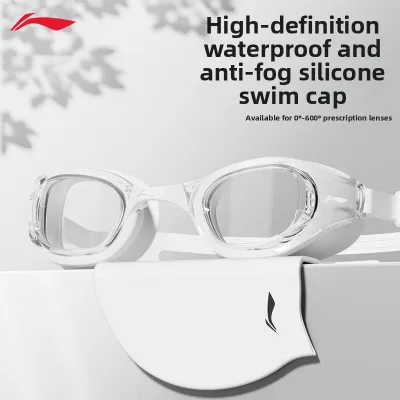
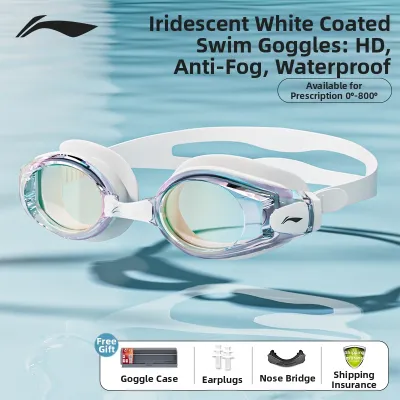
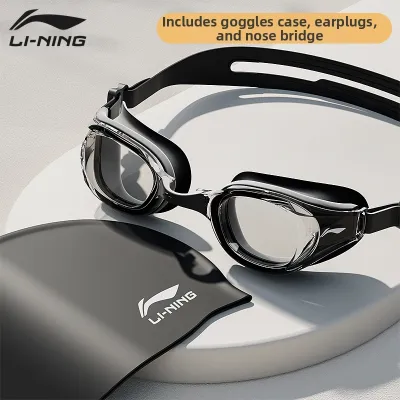
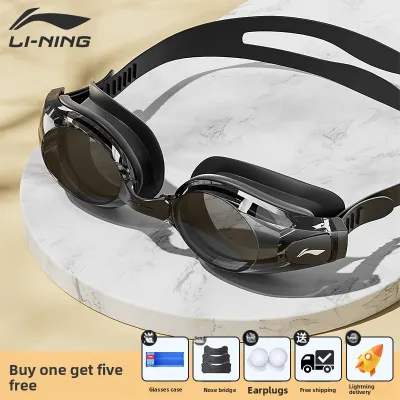
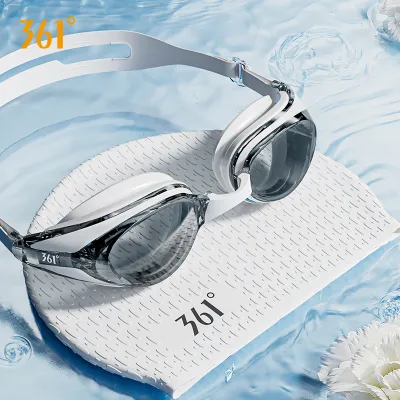
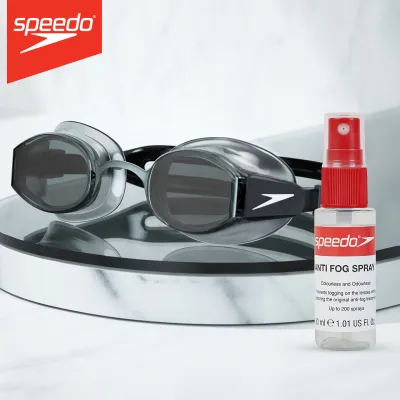
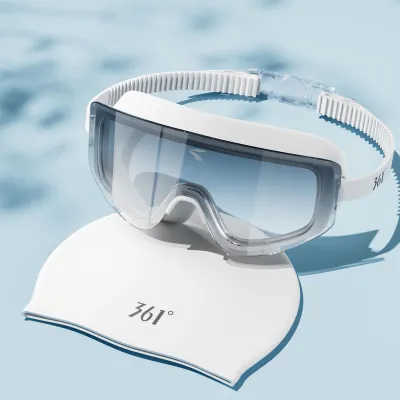
Prices are valid at publication and may change. Please refer to the product page for the latest price.
Understanding Your Prescription and Lens Options
To select the correct lenses, you must first understand how water affects your vision. Water has a higher refractive index than air, which naturally magnifies everything you see by about 33 percent. For near-sighted individuals, this magnification effect means that objects underwater will appear slightly closer and larger than they actually are. Consequently, you may find that you require a slightly lower diopter strength underwater than you do on land to achieve comfortable focus.
When calculating your underwater prescription, a standard optical practice is to determine your spherical equivalent. This is especially useful for swimmers with mild astigmatism. The spherical equivalent is calculated by taking your spherical value and adding half of your cylinder value. For recreational swimming, rounding this number to the nearest half-diopter typically provides excellent underwater clarity without the need for custom-made lenses.
However, if you have significant astigmatism—generally defined as a cylinder value greater than -1.50—relying on standard spherical lenses can cause visual distortion, headaches, and depth perception issues. In these cases, standard step-diopter goggles may not suffice, and you should look into custom-molded lenses that incorporate your exact cylinder and axis measurements. Consulting your optometrist before purchasing is highly recommended, as they can provide a specific swim prescription tailored to your eyes and the refractive properties of water.
Beyond the corrective power, you must also select the right lens tint and protective features. If you swim in outdoor pools or open water, especially in sunny tropical climates like Singapore, UV protection is non-negotiable. Look for lenses that block 100 percent of UVA and UVB rays to protect your eyes from long-term sun damage. Lens tints should match your swimming environment: dark or mirrored lenses are ideal for bright outdoor conditions as they reduce glare and squinting, while clear, blue, or yellow lenses are preferred for indoor pools or low-light evening sessions to maximize visibility.
Key Features to Evaluate in Prescription Goggle Brands
When evaluating different goggle brands, the quality of the anti-fog coating is a primary indicator of performance. Because your face generates heat while swimming and the pool water is cool, condensation quickly forms on the inside of the lenses. High-quality brands apply a durable, hydrophilic anti-fog coating to the inner lens surface during manufacturing. When assessing brands, look for those that utilize baked-on or integrated coatings rather than simple spray-on films, as the former resist washing off and provide much longer-lasting clarity.

The material used for the goggle seal, or gasket, directly impacts both comfort and the longevity of the watertight seal. Medical-grade silicone is the gold standard for modern swim gear. It is highly flexible, hypoallergenic, and conforms easily to various facial structures without requiring excessive strap tension. Silicone also resists the degrading effects of chlorine, salt water, and UV exposure, ensuring the goggles maintain their shape and suction over years of use. In contrast, cheaper foam seals degrade rapidly, absorb water, and can harbor bacteria and mold, making them a poor choice for regular swimmers.
A modular design is another crucial feature to look for in a reliable brand. Because human faces vary widely in width, eye spacing, and nose bridge height, a fixed-frame goggle rarely fits everyone perfectly. Premium prescription goggles feature interchangeable nose bridges of different lengths, allowing you to customize the distance between the lenses. This adjustability ensures that the optical centers of the lenses align correctly with your pupils, preventing eye strain and ensuring the gaskets sit comfortably on your orbital bones without pinching.
Additionally, some modular systems allow you to customize each eye individually. This is a vital feature if your left and right eyes require different prescription strengths. Instead of buying two complete pairs of goggles to mix and match, look for brands that sell individual prescription goggle lenses and a separate assembly kit containing the strap, nose bridges, and side clips. This modular approach is highly cost-effective and allows you to easily replace a single damaged lens or update your prescription in the future without discarding the entire setup.
Common Types of Prescription Goggles on the Market
Prescription goggles generally fall into three categories, each catering to different vision profiles, budgets, and usage frequencies. The most common and accessible option is the pre-made step-diopter goggle. These are mass-produced goggles available in standard spherical strengths, usually ranging from -1.5 to -8.0 in half-diopter steps, and sometimes in positive diopters for far-sighted swimmers. They are highly affordable, widely available, and perfectly suited for swimmers with simple prescriptions and minimal astigmatism.
For swimmers with complex optical needs, custom-molded prescription goggles are the ultimate solution. These are custom-built by optical laboratories using your exact ophthalmic prescription, including precise corrections for high myopia, farsightedness, astigmatism, and prism. While they represent a significant financial investment compared to standard step-diopter options, they provide the same crisp, distortion-free vision underwater that you expect from your daily eyeglasses. They are highly recommended for competitive swimmers, triathletes, or anyone who spends hours in the water and suffers from eye fatigue using standard goggles.
The third category is optical insert goggles, which utilize a standard, non-prescription outer goggle frame paired with a prescription lens carrier that clips onto the inside of the nose bridge. This design is highly versatile because if the outer goggle becomes scratched or the seal degrades, you only need to replace the inexpensive outer frame while retaining the prescription insert. However, this system has distinct drawbacks. The double-layer lens design restricts your peripheral vision, adds noticeable weight to the front of your face, and creates a secondary cavity where water and fog can easily become trapped, making them more difficult to keep clear during active swims.
How to Ensure a Comfortable and Leak-Proof Fit
No matter how accurate the prescription lenses are, a pair of goggles is useless if it leaks or causes pain. To find the perfect fit, you must perform a physical suction test before adjusting the head strap. Press the goggle cups firmly against your eye sockets without pulling the strap over your head. If the gaskets are a good match for your facial structure, they should create a natural vacuum and stick to your face for a few seconds before releasing. If they pop off immediately, air is escaping, meaning water will easily enter the goggles when you swim.
Once you establish a basic seal, use the interchangeable nose bridges to fine-tune the fit. The nose bridge should allow the eye cups to sit squarely over your eyes without pulling them inward or pushing them outward. If the bridge is too narrow, the inner corners of the gaskets will dig into the sides of your nose, causing pain and leaks. If it is too wide, the outer edges of the goggles will lift off your temples, breaking the seal. Experiment with the different sizes provided in the box until the goggles sit comfortably and securely on your face.
The final step is adjusting the head strap, which should only be tight enough to keep the goggles in place during movement. A common mistake is overtightening the strap to stop leaks, which actually distorts the silicone gaskets, causes painful pressure around the eyes, and leads to premature wear of the strap. Position the split strap with one band resting high on the crown of your head and the other positioned lower, near the middle of the back of your head. This dual-band positioning distributes the tension evenly, preventing the goggles from shifting or slipping off during dive starts, forceful push-offs, or flip turns.
Purchasing and Verification Checklist
When you are ready to purchase your prescription goggles, choosing the right retail channel is essential for ensuring product authenticity and receiving proper customer support. Official brand websites and specialized local swim shops are the safest options, as they provide accurate product specifications, genuine materials, and knowledgeable staff who can help you interpret your prescription. While general online marketplaces and e-commerce platforms may offer lower prices, you run the risk of purchasing counterfeit goods, older stock with degraded anti-fog coatings, or goggles with inaccurate diopter markings.
Before finalizing your purchase, carefully review the retailer’s return and exchange policies. Because prescription goggles are classified as personal health and hygiene products, many sellers have strict limitations on returns. Standard step-diopter goggles can usually be returned or exchanged if they are completely unused and remain in their original, sealed packaging. However, custom-molded prescription goggles are almost always non-refundable unless there is a clear manufacturing defect. Ensure you double-check your prescription values and frame measurements before placing an order.
Once your new goggles arrive, perform a thorough post-delivery inspection before taking them to the pool. First, hold the lenses up to a bright light and inspect them for any scratches, bubbles, or optical distortions. Next, run your fingers along the silicone seals to check for tears, uneven molding, or debris that could compromise the watertight seal. Finally, stretch the head strap and adjust the buckles to ensure they hold their position under tension without slipping. Verifying these details at home ensures you can address any manufacturing issues with the retailer immediately.
Frequently Asked Questions (FAQ)
Can I wear contact lenses under regular swimming goggles instead?
Wearing contact lenses while swimming is highly discouraged by eye care professionals due to the severe risk of waterborne infections. Pool water, sea water, and tap water contain harmful microorganisms, such as Acanthamoeba, which can easily become trapped behind a contact lens. This can lead to rapid corneal infections, painful ulcers, and even permanent vision loss. Furthermore, if water enters your goggles, it can easily dislodge or wash away your contact lenses. If you must wear contacts as a temporary measure, use daily disposables, wear a highly secure, watertight goggle, and discard the lenses immediately after your swim.
How do I clean prescription goggles without damaging the anti-fog coating?
To preserve the delicate anti-fog coating on the inside of your lenses, you must never touch, rub, or wipe the inner surface with your fingers, towels, or cloths. After every swim, gently rinse the goggles in cool, fresh tap water to remove chlorine, salt, sweat, and organic residue. Shake off any excess water and allow them to air dry completely in a shaded, well-ventilated area away from direct sunlight, which can degrade the silicone seals. Once dry, store your goggles in a breathable protective case to prevent scratches, dust accumulation, and accidental damage.

Community discussion
Share your experience or ask a question. Comments are reviewed before publication.