
For a beginner golfer starting out at the driving range, choosing the right practice equipment is essential for building a consistent swing. Among these tools, golf tees rubber models are indispensable for practicing on artificial mats, offering a reusable and stable platform for repeated shots. To choose the right rubber tee, you must look for three main factors: an appropriate height that matches your specific clubs, a base design that sits securely on or under your practice mat, and a durable rubber compound that can withstand high-velocity club impacts without tearing or causing damage to your clubface.
Understanding these key features prevents the frustration of a tee that constantly flies away, tips over, or forces you into poor swing habits. By focusing on practical specifications rather than aesthetic designs, you can establish a reliable practice setup that translates directly to better performance on the golf course.
Quick Diagnostic: What to Check Before Buying Golf Tees Rubber Options
Before purchasing a set of rubber golf tees, a quick self-assessment of your practice environment and equipment will save you time and money. Use the following diagnostic checklist to identify your specific needs:
Products mentioned in this guide
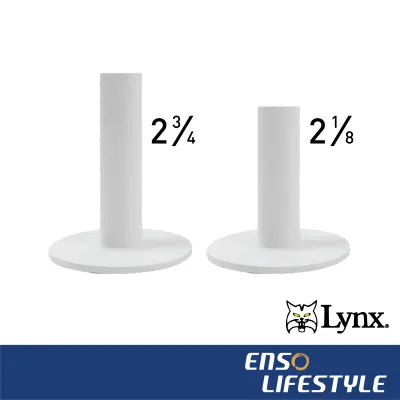
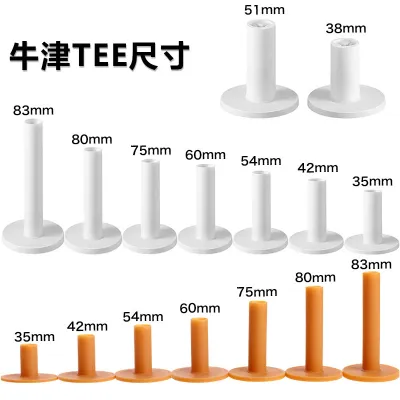
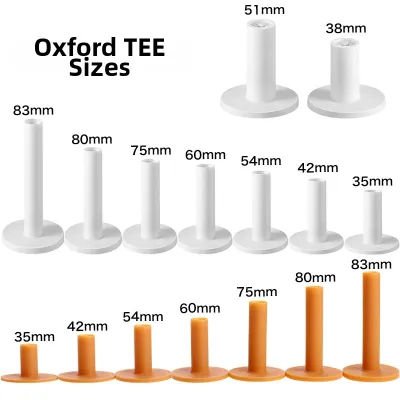
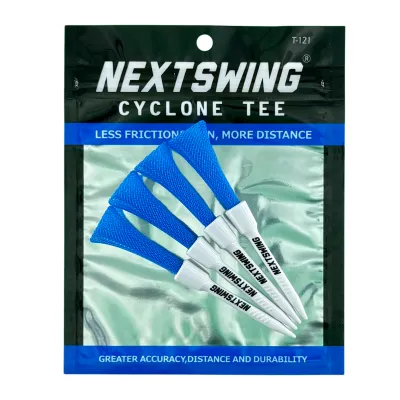
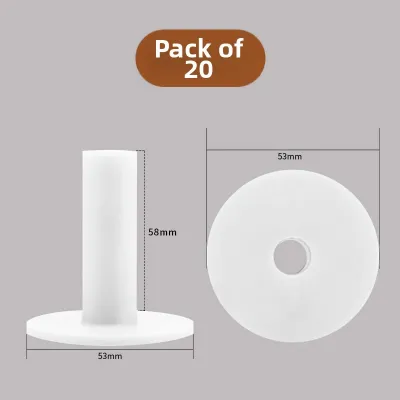
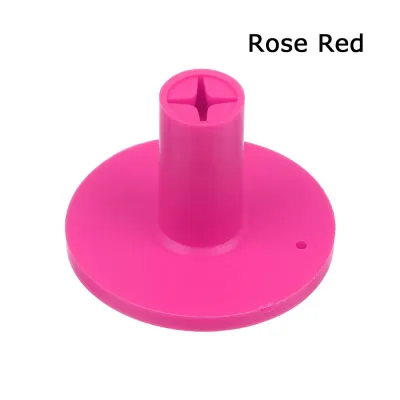
Prices are valid at publication and may change. Please refer to the product page for the latest price.
- Practice Surface: Are you practicing on commercial driving range mats, a home simulator setup, or backyard grass? Most rubber tees are designed specifically to slot through the pre-cut holes of heavy artificial turf mats, while others are designed to stand freely on top of hard surfaces.
- Club Selection: Which clubs will you practice with most frequently? Drivers require tall tees to allow an upward strike, whereas fairway woods, hybrids, and irons require low-profile or ultra-short tees to encourage clean turf contact.
- Tee Style: Do you prefer a fixed-height tee that provides absolute consistency, or an adjustable system that allows you to experiment with different heights as your swing mechanics develop?
- Climate Exposure: If you practice outdoors in Singapore's tropical heat and high humidity, your equipment will face accelerated UV degradation. Look for UV-stabilised rubber compounds to prevent premature cracking.
Keep in mind that rubber tees are fundamentally designed as high-repetition practice tools. Their primary purpose is to offer low club resistance and long-term durability, rather than the low-friction launch optimization associated with on-course wooden or plastic tees.
Matching Tee Height to Your Clubs and Swing Mechanics
The height of your tee directly dictates your angle of attack and the quality of your ball contact. When practicing with a driver, the general rule of thumb is to position the ball so that its equator aligns precisely with the top edge (or crown) of the clubhead at address. This height allows you to strike the ball on the upward phase of your swing, which maximizes launch angle and minimizes spin. If the tee is too low, you will likely hit down on the ball, causing a low, spinning ball flight or a frustrating slice.

For fairway woods, hybrids, and irons, the requirement changes dramatically. These clubs are designed to strike the ball with a slightly downward or sweeping blow, meaning the ball should sit only a few millimeters above the turf. Using a driver-height tee for an iron shot will result in “skying” the ball—hitting it high on the clubface, which can leave unsightly scuff marks on your club crown and severely reduce distance. Conversely, a tee that is too short for a driver often leads to “topping” the ball, where the bottom of the club strikes the top half of the ball, sending it skittering along the ground.
To accommodate these differing needs, beginners must choose between fixed-height and adjustable-height rubber tees. Fixed-height tees are simple, single-piece units that insert from the bottom of a driving range mat. They are incredibly durable but require you to buy a multi-pack of varying heights (typically ranging from 35mm to 80mm) to cover your entire bag. Adjustable-height rubber tees utilize a peg-and-collar system or a nesting design, allowing you to slide the tee up or down to customize the height. While highly versatile for fine-tuning your setup, adjustable models have more moving parts and may wear out faster under heavy use.
If you find yourself consistently topping or skying the ball during practice, do not immediately assume your swing is broken. First, perform a simple height check: place your club next to the teed ball on the mat and verify the ball’s alignment. Adjusting your tee height by even five millimeters can instantly correct your contact point, allowing you to focus on your swing mechanics without wrestling with improper equipment setup.
Evaluating Base Stability for Mats, Grass, and Hard Surfaces
The base of a rubber golf tee determines how well it stays anchored during your swing and how it reacts when struck by a club moving at high speed. There are two primary base configurations available: sub-mat insert bases and free-standing bases. Sub-mat bases feature a wide, flat flange at the bottom that sits underneath the driving range mat, with the stem protruding through a pre-cut hole. This design is exceptionally stable because the weight of the heavy rubber mat holds the tee firmly in place, preventing it from flying down the range after a shot.
Free-standing rubber tees, on the other hand, feature a heavy, wide dome or a multi-pronged base that sits directly on top of the turf or mat. These are ideal for home simulator setups or driving ranges that do not have pre-cut holes in their mats. However, because they are not anchored down, they rely entirely on gravity and base friction to stay upright. If you choose a free-standing tee, look for a wide, weighted base that resists tipping over when you place a ball on top, yet remains flexible enough to yield upon impact.
The balance between stability and yield is critical for both safety and equipment protection. A high-quality rubber tee must stand perfectly upright under the weight of a golf ball, but it must immediately bend and give way when struck by the clubhead. If the base or stem is too rigid, the tee will resist the club’s path, causing the clubhead to catch, twist, or decelerate rapidly. This twisting action can transfer harsh vibrations up the shaft into your hands and wrists, potentially causing discomfort or strain, and can even alter your clubface angle mid-impact, leading to inaccurate practice feedback.
Before taking a full swing with any new rubber tee, always perform a manual stability and friction test. Place the tee on your practice surface, press down on the top with your finger to simulate a club strike, and observe how easily it bends and returns to its original shape. If the tee slides excessively, resists bending, or lifts the mat upon impact, adjust its positioning or choose a softer compound to protect your clubs and joints from unnecessary stress.
Assessing Rubber Quality and Durability for Repeated Practice
Not all rubber is created equal, and the material composition of your golf tee directly impacts its lifespan and performance. High-quality rubber tees are typically made from injection-molded thermoplastic elastomer (TPE) or premium natural rubber compounds. When evaluating a tee in person, look for high elasticity and flexibility; the tee should bend easily under hand pressure and immediately snap back to a perfectly straight vertical position without leaving crease marks or structural deformation.
Avoid tees that feel excessively stiff, plastic-like, or brittle. Stiff rubber might seem durable initially, but it lacks the impact-absorption properties needed to survive repeated strikes from a metal club face. Over time, the sharp grooves of your irons or the leading edge of your woods will gouge and slice into rigid rubber, leading to deep cracks and eventual snapping. Conversely, avoid tees that are overly soft or gummy, as they will sag under the weight of the ball, making it difficult to keep the ball balanced, especially in warm conditions.
In Singapore, the tropical climate presents unique challenges for rubber golf gear. High ambient temperatures, intense sunlight, and humidity can accelerate the degradation of low-grade rubber, causing it to become sticky, brittle, or cracked within a few weeks of outdoor storage or use. When shopping, check the product specifications for UV resistance and weatherproofing. Storing your rubber tees in a cool, shaded pocket of your golf bag rather than leaving them exposed in a hot car trunk will also significantly extend their usable lifespan.
Deciding When to Use Rubber Tees vs. Wood or Plastic
While rubber tees are exceptional practice aids, they are not a universal replacement for traditional wood or plastic tees. Rubber tees find their ideal use cases in indoor golf simulators, commercial driving ranges with artificial mats, and backyard net setups. In these environments, driving a standard wooden tee into the ground is either impossible or highly impractical. Rubber tees provide a consistent, low-maintenance solution that eliminates the need to constantly retrieve broken wooden shards from your practice area.
However, rubber tees have distinct limitations when transitioned to a real golf course. On natural turf, a flat or flanged rubber base cannot easily grip or penetrate the soil, making it highly unstable on uneven tee boxes or soft, lush grass. Additionally, the bulkier profile of a rubber tee can create more aerodynamic and physical drag against the clubhead compared to the slender, low-profile design of a traditional wooden peg.
For a beginner, the most effective strategy is to use rubber tees as your high-volume training foundation to build swing consistency on artificial mats. Once you transition to the course or practice on natural grass tee boxes, switch to standard biodegradable wood or performance plastic tees. This dual approach ensures you protect your clubs and enjoy hassle-free practice sessions while maintaining realistic, regulation-compliant conditions during actual rounds of play.
Frequently Asked Questions (FAQ)
Do rubber golf tees damage club faces?
High-quality, flexible rubber tees are designed to bend easily upon impact and will not damage or scratch your club faces. However, if you use degraded, brittle, or excessively hard rubber tees, they can leave stubborn black smudge marks on the sole or face of your clubs. If these marks occur, they can usually be cleaned off with warm soapy water and a soft-bristled brush, but it is best to replace the rigid tee with a softer, more pliable model to prevent cosmetic wear.
Can I use rubber tees on a real golf course?
While there is no official rule in the Rules of Golf that explicitly bans rubber tees, they are highly impractical for on-course play. Their wide bases are designed to sit flat on artificial mats and will not sit securely on natural, uneven grass tee boxes. Additionally, retrieving a loose rubber tee after every drive on a real course can slow down your pace of play, making traditional wooden or plastic pegs the much better choice for actual rounds.
Community discussion
Share your experience or ask a question. Comments are reviewed before publication.