
Selecting the right hinged knee brace in Singapore requires balancing structural stability with the physical demands of your sport. Whether recovering from a ligament strain or seeking preventative support during high-impact court games, the ideal brace must match your movement patterns while remaining comfortable in Singapore’s hot and humid climate. A well-chosen brace provides mechanical reinforcement, but it is a supportive aid rather than a substitute for physical conditioning, strength training, and professional medical guidance. Before purchasing, you must evaluate the hinge design, material breathability, and fit to ensure safety.
Understanding Hinged Knee Brace Support Levels
Hinged knee braces manage lateral (side-to-side) and rotational (twisting) forces, protecting key ligaments like the medial collateral ligament (MCL) and lateral collateral ligament (LCL). The level of support you require depends heavily on whether you need rigid stabilization or guided mobility. Rigid hinges feature solid metal or composite side bars that physically block abnormal lateral movement. These are recommended for rehabilitative support following moderate-to-severe ligament sprains or surgical interventions, where preventing joint deviation is critical for tissue healing.
In contrast, flexible or dual-axis hinges utilize lightweight, articulating joints that guide the knee through its natural flexion and extension path without completely locking out movement. These are ideal for prophylactic (preventative) use in high-impact sports where the joint is subjected to sudden external forces but still requires a high degree of mobility. When selecting a brace, consider the primary forces of your activity: sports involving rapid pivoting require robust lateral resistance, while linear activities like running benefit from lighter, tracking-focused hinges.
Products mentioned in this guide
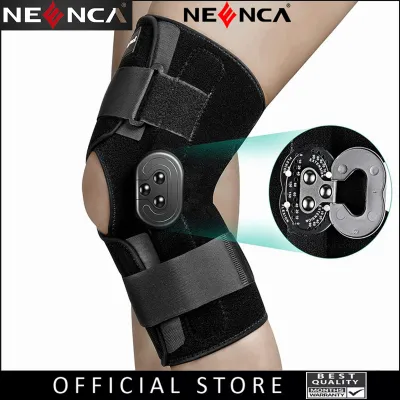
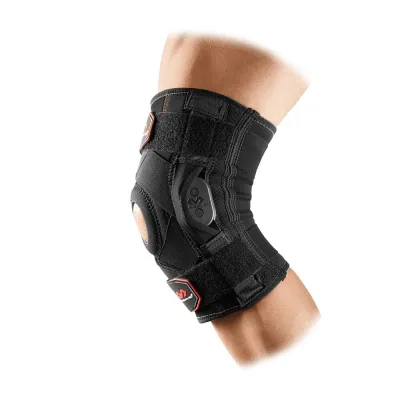
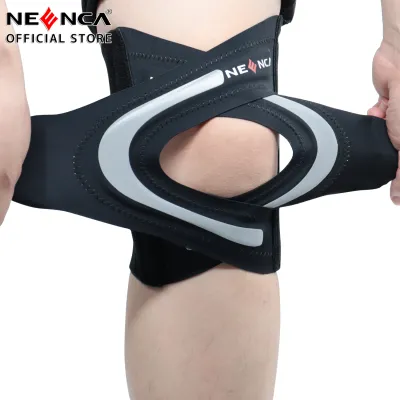
Prices are valid at publication and may change. Please refer to the product page for the latest price.
It is vital to distinguish between these support intensities to avoid over-restricting your joint. Wearing an excessively rigid brace during low-risk activities can lead to muscle weakness over time, as the brace assumes the stabilizing role normally performed by your muscles. Conversely, an under-supportive flexible brace will not offer sufficient protection against high-velocity lateral impacts. Always assess your current joint stability, consult a healthcare professional if recovering from an injury, and choose a support level that matches your specific recovery stage or athletic risk profile.
Matching Brace Features to Specific Sports and Activities
Different sports impose unique biomechanical demands on your knees, meaning a brace designed for linear running may perform poorly on a basketball court. For running and cycling, the primary challenges are repetitive motion, heat buildup, and brace migration. You should prioritize lightweight, low-profile designs constructed from highly breathable materials, such as perforated neoprene or advanced spacer fabrics. Look for integrated anti-slip silicone strips along the inner cuffs to prevent the brace from sliding down your leg as you sweat in Singapore’s humid environment.

For high-impact court and field sports like basketball and football, the brace must withstand intense lateral forces, sudden deceleration, and frequent jumping. These activities require robust strap systems—typically dual or quad-strap configurations—that secure the brace firmly above and below the knee joint. The hinge housing should be impact-resistant to protect both the mechanism and other players during physical contact. Additionally, the outer material must be durable enough to resist tearing during falls or collisions on hard court surfaces.
Weightlifting and cross-training demand a hinge mechanism that accommodates deep knee flexion, such as during squats or cleans, without binding or pinching the skin. A polycentric hinge, which mimics the natural gliding motion of the human knee joint, is highly beneficial here. Ensure the brace features an open patella design with a reinforced silicone buttress; this helps maintain proper patellar tracking under heavy loads while relieving direct pressure on the kneecap.
Court sports like tennis and badminton involve rapid, multi-directional lunges and quick changes of direction. For these activities, you must balance lateral stability with agility. A mid-weight hinged brace with a streamlined profile is ideal, as it prevents the brace from catching on your clothing or opposing leg during fast footwork. The materials should offer excellent moisture management to handle the rapid sweat production associated with intense indoor and outdoor court sessions.
Key Specifications to Verify Before Buying
A hinged knee brace can only protect your joint if it fits correctly and matches your anatomical measurements. Before making a purchase, use a flexible measuring tape to determine your thigh and calf circumferences. Most manufacturers require measurements taken at specific distances—typically 15 centimeters above and below the center of the kneecap. Do not guess your size or rely on general clothing sizes, as sizing charts vary significantly between brands. An improperly sized brace can restrict blood circulation if too tight, or fail to provide stability if too loose.
Inspect the physical construction of the brace carefully before use. Examine the hinge mechanism to ensure it moves smoothly without catching, and verify that the metal or plastic hinges are securely pocketed so they do not rub against your skin. Look for flatlock or reinforced seams, which minimize friction and reduce the risk of chafing during prolonged movement. The straps should feature high-quality hook-and-loop fasteners that remain secure under tension.
Material composition is another critical verification point, particularly for users with sensitive skin or allergies. Check the product label to confirm if the brace contains natural rubber latex, which can cause severe skin reactions in sensitive individuals. If you are prone to heat rashes or eczema, prioritize hypoallergenic, latex-free, and moisture-wicking fabrics.
Finally, verify the manufacturer’s stated weight limits, intended use cases, and contraindications. Some heavy-duty braces are not rated for high-impact sports, while others may have specific weight thresholds to guarantee structural integrity. If you have pre-existing circulatory issues, peripheral neuropathy, or open wounds around the knee, consult a medical professional before using any compression or hinged support.
Where to Buy and How to Verify Authenticity in Singapore
To ensure you are purchasing a genuine, high-quality hinged knee brace, buy directly from reputable sources. In Singapore, authorized channels include official brand websites, specialized sports medicine clinics, and established local pharmacies such as Guardian, Watsons, or Unity. Purchasing from these outlets guarantees that the product has met local safety standards and is sourced directly from the manufacturer.
If you prefer shopping on online marketplaces, exercise caution to avoid counterfeit products that may look identical but lack structural integrity. Look for verified seller badges, official brand flagship stores, and positive customer reviews that mention product durability. Be skeptical of listings offering premium braces at prices significantly lower than the typical local retail range of S$80 to S$150, as counterfeit hinges can fail under load, risking joint injury.
Upon receiving your brace, inspect the packaging for authenticity markers. Genuine products typically feature high-quality printing, clear instruction manuals, warranty registration cards, and unique serial numbers or holographic anti-counterfeit labels. Many manufacturers allow you to verify the serial number on their official website to confirm authenticity.
Additionally, review the retailer’s return and exchange policies before finalizing your purchase. Because sports and medical supports are worn directly against the skin, many retailers have strict hygiene policies that limit returns once the packaging is opened. Ensure the seller allows exchanges for sizing mismatches, provided the product is tried on over clean clothing and returned in its original, undamaged packaging.
Proper Fit, Wear, and Maintenance Guidelines
To maximize the effectiveness of your hinged knee brace, you must wear it correctly. Begin by aligning the hinge axis precisely with the center of your knee joint, which corresponds to the middle of your kneecap. If the hinges are positioned too high, too low, or rotated outward, they will fight against your knee’s natural movement, causing discomfort, restricted mobility, and potential damage to both the brace and your joint.
When securing the straps, adjust the tension so the brace feels snug and supportive but not overly constrictive. A good rule of thumb is that you should be able to slide one finger comfortably under each strap. Check your leg periodically for signs of restricted circulation or nerve compression, such as numbness, tingling, coldness in the foot, or deep skin indentations. If you experience any of these symptoms, loosen the straps immediately or remove the brace.
Proper maintenance is essential to preserve the elastic properties of the fabric and the structural integrity of the hinges. Hand wash the brace in cold water using a mild detergent, avoiding bleach or fabric softeners which can degrade the synthetic fibers. If the hinges are removable, slide them out of their pockets before washing; if they are non-removable, ensure they are thoroughly dried after washing to prevent rust or mechanical binding.
Allow the brace to air dry flat in a well-ventilated indoor area, away from direct sunlight and heat sources like radiators or clothes dryers, which can warp plastic components and destroy the elasticity of the straps. Regularly inspect your brace for signs of wear and tear. If you notice frayed straps, weakened hook-and-loop fasteners, stretched-out fabric, or loose, cracked, or bent hinges, the brace’s protective capacity is compromised, and it should be replaced immediately.
Frequently Asked Questions (FAQ)
Can I wear a hinged knee brace over my pants?
It is highly recommended to wear a hinged knee brace directly against your skin. Direct contact allows the anti-slip silicone grips to function correctly, preventing the brace from migrating during movement. Wearing a brace over thick clothing like sweatpants or jeans can cause the hinges to misalign, reduce the effectiveness of the compression, and lead to chafing. If you must wear a layer underneath due to skin sensitivity, choose a thin, form-fitting compression sleeve designed specifically for sports use.
How long should I wear a hinged knee brace during a workout?
You should generally wear your hinged knee brace only during the active portion of your workout and the immediate warm-up and cool-down phases. Keeping the brace on for extended periods when resting is unnecessary and can restrict normal blood circulation. Unless a medical professional has prescribed a specific wear schedule for post-surgical recovery, remove the brace after your activity to allow your skin to breathe and to encourage your natural stabilizing muscles to engage.
Do I need a prescription to buy a hinged knee brace in Singapore?
No, you do not need a prescription to purchase standard commercial sports hinged knee braces in Singapore. These are widely available over-the-counter at local pharmacies, sports retail stores, and online marketplaces. However, if you require a highly specialized, custom-molded, or post-surgical range-of-motion (ROM) brace, you will typically need a referral from an orthopedic specialist or a physical therapist who can professionally fit and calibrate the device to your specific rehabilitation needs.
Community discussion
Share your experience or ask a question. Comments are reviewed before publication.