
Quick Answer: Core Criteria for Compact HDB Living
Selecting the right Xiaomi WalkingPad for a compact Housing & Development Board (HDB) flat in Singapore requires balancing your available storage space against your personal fitness goals. If you live in a 2-room or 3-room flat, the primary decision factors are the physical storage clearance of your home and your maximum speed requirements.
The fundamental trade-off lies between maximum foldability and physical stability. Flat-folding, handrail-free models offer the most compact footprint and can easily slide under a sofa, but they limit you to lower walking speeds. Models with foldable handrails provide greater stability and support higher speeds for light running, but they require more vertical or horizontal storage clearance.
To make an informed choice, you must evaluate your flat’s physical dimensions, compare folding mechanisms, and align the machine’s specifications with your household’s daily habits. The following sections will guide you through these critical measurements and lifestyle checks.
Products mentioned in this guide
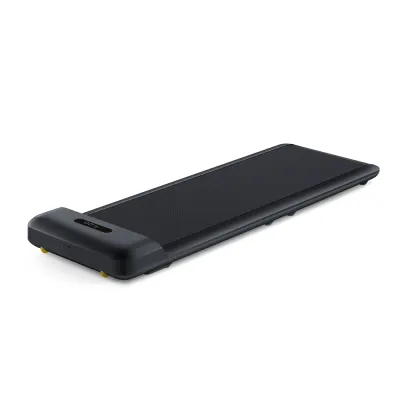
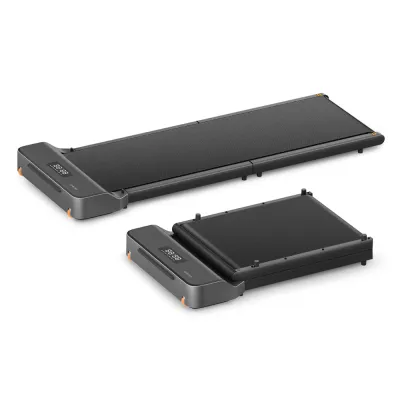
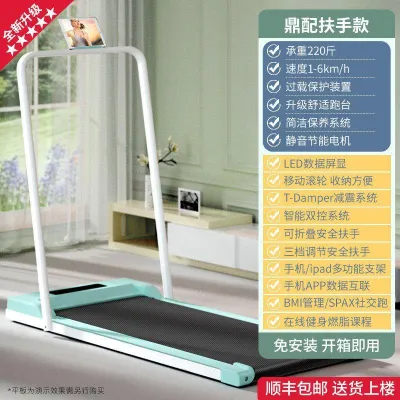
Prices are valid at publication and may change. Please refer to the product page for the latest price.
Measuring Your HDB Space and Layout Constraints
Before purchasing any fitness equipment, you must measure the active clearance area in your flat. Walking pads require more than just the physical footprint of the machine itself to operate safely. You need to account for the ceiling height, the swing radius for models with foldable handrails, and a safe walking perimeter.

Safety guidelines typically recommend leaving at least 0.5 meters of clear space on both sides of the walking deck. Additionally, you should maintain a clearance of 1 to 2 meters behind the walking pad. This rear clearance is crucial to prevent injuries in the event of a slip, trip, or sudden loss of balance.
Next, evaluate where the machine will live when it is not in use. Common storage spots in HDB flats include the gap under a bed, the space behind a living room door, or inside a built-in wardrobe. Measure these gaps with a tape measure to check both the height clearance for horizontal storage and the depth clearance for vertical storage.
Remember to account for any protruding parts like wheels, hinges, or folded handrails that might add extra centimeters to the stored dimensions. A machine that is even a centimeter too tall will not slide under a low-profile sofa or bed frame.
Finally, consider your flat’s flooring material, whether it is vinyl, laminate, parquet, or polished porcelain tiles. Walking pads generate friction, vibration, and heat during use, which can scratch or discolor delicate wood or vinyl surfaces over time.
Furthermore, the repetitive impact of your steps can transmit low-frequency noise through the concrete floor slab to your downstairs neighbors. Placing a dedicated, high-density rubber or PVC protective mat under the machine is highly recommended to distribute weight, prevent sliding, and dampen sound transfer.
Comparing Foldability, Noise, and Design Features
Xiaomi WalkingPads are known for their folding designs, but the exact mechanism varies across models. Some models feature a patented 180-degree double-fold design, where the walking deck folds completely in half, reducing the length footprint by nearly 50%. Other models only fold the handrail down flat against the deck without folding the deck itself.
If you have extremely limited floor space, a double-fold model that can stand upright against a wall or fit inside a shallow utility closet is highly advantageous. These models often feature built-in standing feet that allow them to remain stable in a vertical position without leaning heavily on walls.
Handrails are a critical safety and speed differentiator. Handrail-free models are incredibly compact and easy to slide under a desk, but they are generally restricted to walking speeds, typically capping out at 6 km/h. Models equipped with a foldable handrail allow for higher speeds, often up to 10 km/h or 12 km/h, which are suitable for light jogging or running.
If you choose a model with a handrail, verify whether the handrail must be raised to operate the machine at higher speeds. You must also ensure you have the physical space to raise and lower the handrail comfortably within your designated workout area.
In high-density HDB estates, keeping noise to a minimum is essential for maintaining good neighborly relations. Look for models equipped with brushless motors, which generally operate more quietly, run cooler, and have a longer lifespan than traditional brushed motors.
While manufacturers provide decibel ratings, actual noise will depend on your walking speed, body weight, and floor type. Checking these motor specifications helps ensure your early morning or late-night workouts do not disturb others in your household or next door.
Operating a walking pad in a tight space requires intuitive controls. Models typically offer three control options: a compact handheld remote control, automatic speed control via pressure sensors in the walking deck, or a companion mobile application.
Automatic speed control accelerates the belt when you step closer to the front and slows it down when you step toward the rear. Consider which interface fits your workflow, especially if you plan to use the machine while working at a standing desk where holding a remote might be inconvenient.
Aligning the Equipment With Your Daily Lifestyle
Your daily routine should dictate the type of walking pad you select. If your primary goal is to accumulate steps while working from home or watching television, a basic, low-profile walking pad without a handrail is highly efficient. It can easily slide under a standing desk and be pulled out during virtual meetings.
However, if you or your family members plan to use the machine for dedicated cardio workouts, sweat-inducing power walks, or light running, a sturdier model with a handrail and a higher speed limit is necessary to support that level of exertion.
When multiple people in an HDB household share the same equipment, you must accommodate the diverse physical needs of all users. Check the maximum weight capacity of each model, which typically ranges from 90 kg to 110 kg. Heavier users require a more robust frame and a more powerful motor to prevent belt slipping and motor strain.
Additionally, older family members or those with balance concerns will benefit significantly from the physical support and emergency stop safety clips found on handrail-equipped models. These safety features provide peace of mind and prevent accidental falls.
Integrating a walking pad into an open-plan HDB living area or a study requires careful planning. If you plan to use a standing desk, measure the distance between the desk legs to ensure the walking pad’s deck can fit comfortably between them.
You should also consider your sightline to the television or computer screen. A model that is easy to roll and maneuver on its built-in transport wheels allows you to transition smoothly from a work-from-home setup to an entertainment-focused layout without straining your back.
Final Pre-Purchase Verification and Delivery Checklist
Before finalizing your purchase on any online marketplace, cross-reference the official manufacturer specification sheets. Verify the exact folded and unfolded dimensions, the net weight of the machine, and the maximum load limit. Do not rely solely on promotional images, which can sometimes make the machines look smaller than they are in reality.
Because fitness equipment contains complex electronic and mechanical parts, securing a reliable warranty is crucial. Check if the seller offers a local Singapore warranty with an authorized service center. A local warranty ensures that if you encounter motor issues, belt alignment problems, or electronic errors, you can access professional repair services or replacement parts without the hassle of shipping the heavy machine overseas.
Finally, plan the physical delivery route into your HDB flat. Check the dimensions of your estate’s passenger lift, the width of your front door, and any narrow corridors inside your home. Walking pads are delivered in large, heavy boxes that require adequate clearance to maneuver.
Ensure someone is available to assist with lifting, or verify if the delivery service includes bringing the package directly into your home and assisting with the initial unboxing. This prevents injury and ensures the machine is set up correctly from day one.
Frequently Asked Questions (FAQ)
Do I need a shock-absorbing mat for my HDB floor?
Yes, using a shock-absorbing mat is highly recommended for HDB flats. Standard HDB flooring materials like vinyl, laminate, or parquet can easily be scratched or dented by the heavy frame of a walking pad. A high-density mat helps distribute the machine’s weight evenly, prevents it from sliding during use, and absorbs the vibrations generated by your footsteps. This vibration absorption is critical for dampening the low-frequency thumping noise that can travel through the concrete floor slab and disturb neighbors living directly below you.
Can I safely use a walking pad without a handrail?
You can safely use a handrail-free walking pad provided you adhere to certain safety limits. These models are designed strictly for walking speeds, typically capping out at 6 km/h. If you are using the machine while multitasking—such as typing on a laptop or watching a screen—your balance can easily be compromised. For safety, always start at a low speed, wear proper athletic footwear, keep the remote control within reach, and ensure the area immediately behind the walking pad is completely clear of obstacles.
How do I maintain the belt tension in a compact folding model?
Maintaining proper belt tension is essential for the longevity of a folding walking pad. Over time, the walking belt may stretch or shift to one side, causing it to slip or rub against the side rails. To check the tension, look at the alignment of the belt relative to the deck edges while the machine is running slowly. If the belt is off-center, use the hex key provided by the manufacturer to adjust the tension bolts located at the rear of the deck. Refer to your user manual for the exact number of turns required, and apply silicone lubricant under the belt periodically as recommended by the manufacturer to reduce friction.
Community discussion
Share your experience or ask a question. Comments are reviewed before publication.