
Selecting the right 10kg kettlebell for a Housing & Development Board (HDB) flat requires a careful balance between exercise versatility, floor protection, and acoustic control. Unlike a commercial gym with reinforced flooring and dedicated lifting zones, a high-density residential space demands equipment that minimizes noise transmission, fits into tight storage corners, and will not damage delicate floor surfaces. For most Singaporean home trainees, a high-quality cast-iron kettlebell with a durable urethane or virgin rubber coating and a machined flat base offers the best combination of safety, longevity, and apartment compatibility.
While a 10kg weight may seem modest, the dynamic nature of kettlebell training—which includes ballistic swings, cleans, and snatches—amplifies the force exerted on both your body and your home environment. Choosing the wrong design can lead to cracked floor tiles, strained relationships with downstairs neighbors, or awkward storage solutions in an already crowded living space. By focusing on specific material compositions, handle geometries, and protective accessories, you can build a highly effective strength-training routine without compromising your living conditions.
Why HDB Living Changes How You Choose a Kettlebell
Training in a typical Singaporean HDB flat introduces unique environmental constraints that do not exist in commercial fitness centers. The most significant factor is the structural layout of modern BTO (Build-To-Order) and resale flats. Living rooms, bedrooms, and service yards are highly compact, meaning your workout zone often doubles as a high-traffic communal area. A kettlebell with a sprawling footprint or an unstable design quickly becomes a tripping hazard or an eyesore when not in use.
Products mentioned in this guide
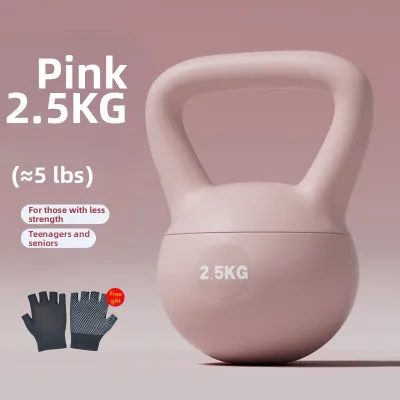
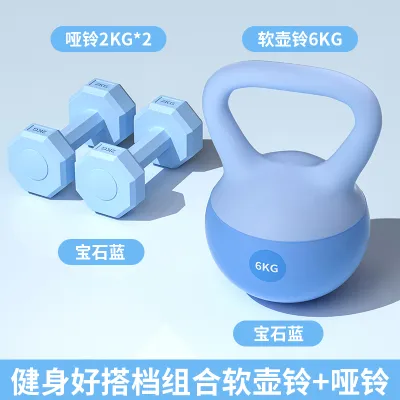
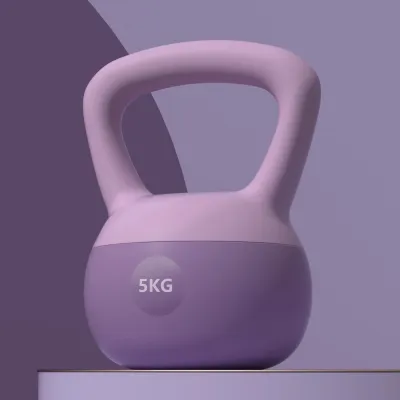
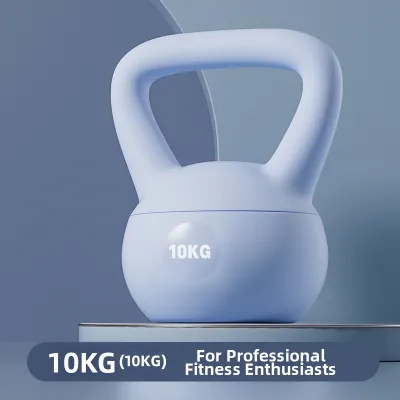
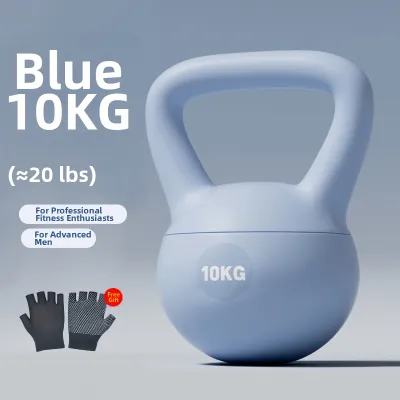
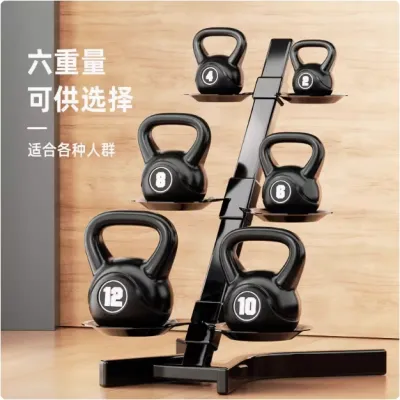
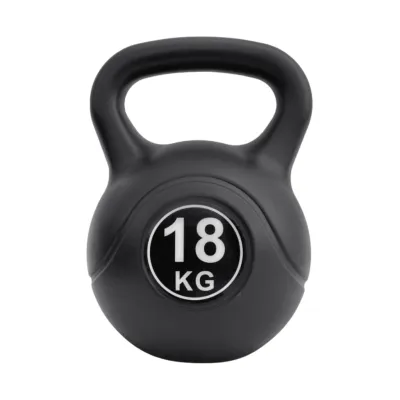
Prices are valid at publication and may change. Please refer to the product page for the latest price.
Acoustic transmission is another critical concern. HDB blocks are constructed using reinforced concrete slabs, which are highly efficient conductors of impact noise and structural vibrations. When you place a heavy iron weight down too quickly, or if it accidentally slips during a high-repetition set, the kinetic energy travels directly through the floor and resonates in the unit below. This low-frequency impact noise can be highly disruptive to neighbors, making noise mitigation a primary safety and courtesy requirement for home workouts.
Finally, the vulnerability of common HDB flooring materials cannot be overstated. Many modern flats feature ceramic or homogenous tiles, luxury vinyl tiles (LVT), laminate, or engineered timber. Ceramic tiles are brittle and highly susceptible to cracking under point-load impacts, while vinyl and laminate can easily suffer deep scratches, permanent indentations, or tears if a heavy metal object is dragged or dropped on them. To protect your home and secure your rental deposit or property value, your equipment choices must actively prevent these forms of localized damage.
Essential Features for an Apartment-Friendly 10kg Kettlebell
To find a kettlebell that integrates seamlessly into a residential environment, you must look beyond the weight stamp. The physical construction, exterior coating, and handle finish dictate how the tool performs in close quarters and how safely it can be stored.

Base Flatness and Footprint
A perfectly flat, wide base is the foundation of a safe home kettlebell. During manufacturing, cheap cast-iron weights are often poured into low-quality molds, resulting in uneven bottom surfaces, protruding seams, or wobbling. In a tight HDB apartment, a wobbly kettlebell is a safety hazard. If set down on an uneven surface or bumped accidentally, it can easily roll into glass sliding doors, wooden furniture, or your feet.
Base stability is also a functional requirement for floor-based exercises. Movements like renegade rows, kettlebell push-ups, and plank pull-throughs require you to place your body weight directly over the handle of the kettlebell while it rests on the floor. If the base is not perfectly flat and wide, the bell can slip or tip sideways, risking severe wrist hyperextension or facial impact. When shopping, look for precision-machined flat bases that sit flush against the floor without any rocking.
Storage efficiency is closely tied to the base footprint. In small apartments, equipment is often tucked away under beds, inside low shoe cabinets, or in the corner of a service yard. A compact, vertically oriented kettlebell with a stable base allows you to store it upright, occupying minimal square footage. Avoid designs with excessively wide or bulbous bodies that waste valuable floor space.
Material and Coating for Floor Protection
The material surrounding the iron core determines how well the kettlebell dampens sound and protects your flooring from micro-scratches. There are several common options available on the market, each with distinct trade-offs for residential use:
- Bare Cast Iron or Powder-Coated Iron: These traditional options offer an authentic tactile feel and excellent grip. However, they provide zero impact absorption. If set down directly on tiles or vinyl, they will scratch the surface and create a loud clanging noise. Additionally, Singapore's high relative humidity (frequently exceeding 80%) can cause bare iron to rust quickly if sweat is not meticulously wiped off after every session.
- Rubber-Coated Cast Iron: A highly popular choice for home gyms, these bells feature a thick rubber encasement around the bell's body. The rubber acts as a shock absorber, significantly reducing noise and protecting floors from light impacts. However, low-grade recycled rubber coatings often emit a pungent, toxic chemical odor that can linger in closed, air-conditioned HDB rooms. Over time, cheap rubber can also degrade, become sticky, or split.
- Urethane-Coated Cast Iron: Polyurethane (urethane) is the premium standard for indoor fitness equipment. It is incredibly durable, highly resistant to tearing, and completely odorless. Unlike rubber, urethane does not degrade in humid environments or leave black scuff marks on light-colored flooring. While more expensive, it offers the best long-term performance and floor protection for indoor flats.
- Vinyl-Dipped Cast Iron: Vinyl coatings provide a smooth, colorful, and easy-to-clean exterior that prevents scratches on wood or vinyl floors. However, vinyl can become highly slippery when exposed to sweat, making it harder to hold during floor transitions. The coating can also crack or peel if the kettlebell is bumped against other hard surfaces.
Handle Design and Clearance
The handle is your sole point of contact with the kettlebell, making its design paramount for safety and comfort. For a 10kg kettlebell, the handle diameter typically ranges between 30mm and 33mm. A handle that is too thick will prematurely fatigue your grip, especially during high-rep swing sets, while a handle that is too thin can pinch the skin of your palms.
Horn spacing—the width of the handle opening—must be wide enough to accommodate a comfortable two-handed grip. Many foundational kettlebell movements, such as the two-handed swing or the goblet squat, require you to place both hands side-by-side on the handle. If the window is too narrow, your hands will be squeezed together, leading to poor wrist alignment and increased risk of losing control of the weight.
The surface finish of the handle must be completely smooth and free of casting seams. Cheap manufacturing processes often leave a raised ridge of metal along the underside of the handle where the two halves of the mold met. During dynamic movements like cleans or snatches, this seam rubs repeatedly against your palms, causing painful blisters and calluses. Opt for powder-coated or lightly textured steel handles that provide a secure grip without requiring excessive chalk, which can create a mess in your living room.
Furthermore, the overall geometry of the handle affects how the kettlebell rests against your forearm in the “rack position” (holding the bell against your chest). A well-designed horn curve distributes the weight evenly across your forearm, preventing painful pressure points on your wrist bones during overhead presses or front squats.
Which 10kg Kettlebell Type is Best for Small Spaces?
Understanding the structural differences between kettlebell categories helps you choose a model that aligns with your space limitations and fitness goals.
Coated Cast Iron vs. Competition Kettlebells
The two primary styles of solid kettlebells are classic cast iron and competition steel. Each serves a different training style and presents unique spatial challenges for HDB users.
| Feature | Coated Cast Iron Kettlebell | Competition Steel Kettlebell |
|---|---|---|
| Size & Dimensions | Scales with weight; 10kg is highly compact. | Uniform size across all weights; 10kg is large. |
| Base Design | Varies; high-quality models have machined flat bases. | Perfectly flat, wide steel base. |
| Floor Protection | High (when coated in urethane or rubber). | Low (requires a protective mat to prevent scratches). |
| Handle Geometry | Slightly curved horns; wider window for two hands. | Straight horns; narrow window designed for one hand. |
| Best For | General fitness, two-handed swings, compact storage. | Kettlebell sport, high-rep single-arm ballistic lifts. |
Coated cast-iron kettlebells are generally the superior choice for HDB homes. Because their physical size scales with their weight, a 10kg cast-iron bell is quite small and easily stored in tight spaces. The protective coating safeguards your flooring, and the wider handle window accommodates beginners learning two-handed movements.
Competition kettlebells, by contrast, maintain a standardized physical size regardless of weight. A 10kg competition bell is physically identical in size to a 32kg bell, featuring a hollow core to achieve the lighter weight. This makes it unnecessarily bulky for small HDB rooms. Because they are made of bare steel, they will scratch floors easily if used without a high-density mat. They are only recommended if you are specifically training for competitive kettlebell sport and require consistent handle dimensions for single-arm techniques.
Adjustable and Soft Kettlebells for Space Saving
For those facing severe space constraints or strict noise limitations, alternative kettlebell designs offer unique solutions.
Adjustable kettlebells utilize a central locking mechanism or a series of removable plates nested inside a single shell. This allows you to adjust the weight from 4kg up to 16kg or more, effectively replacing an entire rack of weights with a single footprint. While highly space-efficient, adjustable models are physically larger (usually matching the size of a standard 24kg bell) and require regular maintenance. You must inspect the locking pins, screws, or clamps before every workout to ensure the internal plates do not rattle or slip out mid-swing, which could cause catastrophic damage to your home.
Soft or sand-filled kettlebells feature an outer shell made of heavy-duty neoprene, canvas, or soft PVC, filled with steel shot or sand. These are the quietest options available and offer the highest level of floor protection; if dropped, they absorb the impact without cracking tiles or making loud noises. However, they have significant performance limitations. The shifting mass inside makes ballistic movements unpredictable, and the bulky, soft handles lack the smooth glide needed for clean transitions. They also suffer from lower long-term durability, as seams can split and leak sand over time. They are best reserved for light, non-ballistic strength exercises.
Protecting Your HDB Floors and Managing Noise
Even with a coated kettlebell, executing dynamic exercises on bare domestic flooring is highly risky. Setting up a dedicated, protective workout zone is essential for safeguarding your property and maintaining good neighborly relations.
First, invest in a high-density exercise mat or interlocking rubber gym tiles. Standard yoga mats are too thin (usually 4mm to 6mm) and soft to protect against point-load impacts; they will simply compress under the weight, allowing the force to transfer directly to the subfloor. Instead, look for high-density rubber tiles with a thickness of at least 15mm to 20mm. These tiles are designed to absorb shear forces, distribute weight across a larger surface area, and dampen the acoustic vibrations of a heavy set-down.
Second, establish clear spatial boundaries before you begin training. Ensure you have a clear clearance zone of at least 1.5 to 2 meters in all directions. Remove any nearby coffee tables, fragile decor, or floor lamps. Crucially, in Singapore flats with standard ceiling heights of approximately 2.6 meters, always check the path of your ceiling fan. Performing overhead presses or high-swing snatches directly underneath an active ceiling fan can result in dangerous impacts and equipment damage.
Finally, modify your lifting technique to suit a residential environment. Focus on controlled eccentric phases—slowly lowering the kettlebell back to the floor rather than letting gravity pull it down. Practice the “soft landing” technique: when finishing a set, transition the kettlebell smoothly from the hips to the floor, letting your legs absorb the final momentum so the bell makes zero noise when touching the mat. Avoid high-velocity drops or throwing movements entirely. If you feel your grip failing during a heavy set, guide the weight down onto your high-density mat rather than letting it fall freely.
Frequently Asked Questions (FAQ)
Is a 10kg kettlebell heavy enough for building muscle at home?
Yes, a 10kg kettlebell is highly effective for building muscle, particularly for beginners, cardiovascular conditioning, and targeted upper-body or single-leg training. While it may eventually become too light for bilateral lower-body exercises like standard squats, you can maximize the muscle-building potential of a 10kg load through specific training strategies.
Focus on increasing your time under tension (TUT) by performing slow, controlled eccentric movements (e.g., taking three seconds to lower into a squat). You can also transition to unilateral (single-sided) exercises, such as single-leg deadlifts, Bulgarian split squats, or single-arm overhead presses, which double the relative load on the working muscle. Increasing your total repetition volume and reducing rest intervals between sets will also stimulate muscular hypertrophy without requiring heavier equipment.
How do I stop my kettlebell from smelling like rubber?
If your new rubber-coated kettlebell emits a strong, unpleasant odor, it is likely due to the off-gassing of volatile organic compounds (VOCs) commonly found in cheap recycled rubber. To eliminate or significantly reduce this smell, start by washing the coated portion of the kettlebell with a solution of warm water and mild dish soap or a 1:1 mixture of water and white vinegar. Avoid using harsh chemical solvents, bleach, or abrasive scrubbers, which can degrade the rubber surface.
After washing, place the kettlebell in a well-ventilated outdoor area, such as a service yard, balcony, or corridor, for several days to allow it to off-gas naturally. Keep it out of direct, intense sunlight, as prolonged UV exposure can dry out the rubber, causing it to crack and peel. To avoid this issue entirely in the future, prioritize buying kettlebells coated in high-quality virgin rubber or polyurethane (urethane), which are inherently odorless.
Can I use a kettlebell on HDB vinyl flooring without a mat?
No, you should never use a kettlebell directly on HDB vinyl flooring without a protective mat, even if the kettlebell has a rubber or vinyl coating. While luxury vinyl tiles (LVT) are highly durable and water-resistant, they are still susceptible to point-load damage. A 10kg weight resting on a small, hard base concentrates a significant amount of pressure on a tiny surface area, which can cause permanent indentations or warping in the vinyl wear layer.
Furthermore, dynamic movements like swings can cause the kettlebell to slide or pivot on the floor, leading to deep scuff marks and micro-scratches that ruin the floor’s finish. Always place a high-density rubber mat or utility tile over your vinyl flooring to distribute the weight, absorb vibrations, and preserve the structural integrity of your home’s interior.
Community discussion
Share your experience or ask a question. Comments are reviewed before publication.