
Finding the right Adidas weight bench for a small Housing & Development Board (HDB) flat requires balancing your strength training goals with the physical realities of compact Singaporean apartments. For most HDB dwellers, a folding or highly compact adjustable utility bench is the most practical choice. These models allow you to perform a wide range of incline, decline, and flat exercises while retaining the ability to collapse the frame and slide it under a bed or store it vertically in a household shelter. If you have a dedicated workout corner that does not require daily packing, a sturdy flat bench offers excellent stability with a minimal permanent footprint.
Assessing Your HDB Space and Workout Needs
HDB bedrooms and living rooms often have tight layouts, especially in newer Build-To-Order (BTO) flats. Before browsing online catalogs, measure your designated workout zone with a physical tape measure. Do not just measure the static footprint of the bench; you must account for dynamic clearance.
A standard weight bench requires at least one meter of open space on all sides. This clearance ensures you can safely mount and dismount the bench without bumping into television consoles, wardrobes, or dining tables. It also provides the necessary clearance for wide-arc movements like dumbbell flyes, lateral raises, or overhead extensions where your arms extend far beyond the bench’s physical frame.
Products mentioned in this guide
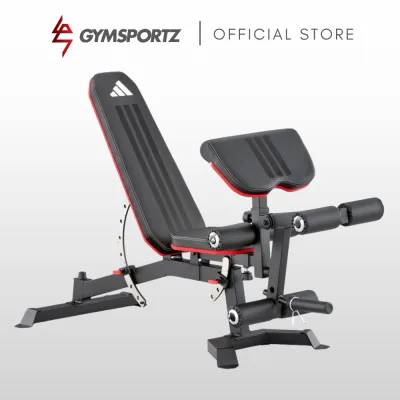
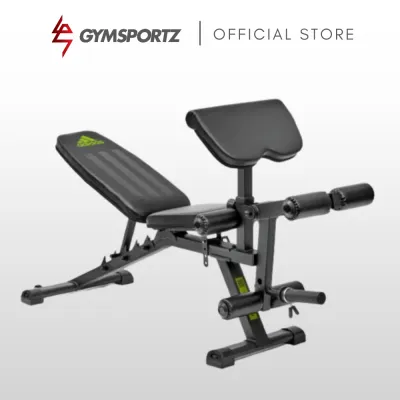
Prices are valid at publication and may change. Please refer to the product page for the latest price.
Your training routine dictates the type of bench you need. If your program consists primarily of flat dumbbell presses, single-arm rows, and step-ups, a simple flat bench is highly space-efficient. However, if you plan to target different areas of the chest and shoulders with incline or decline presses, an adjustable utility bench becomes necessary, despite its slightly larger frame.
Consider where the bench will live when you are not working out. Measure the clearance height under your bed frame, the depth of your built-in wardrobe, or the available floor space inside your household shelter. A bench that is too tall to slide under a standard bed frame or too long to stand vertically in a utility closet will end up permanently cluttering your living space, which can quickly become a source of household friction.
Key Space-Saving Features to Look For
When space is at a premium, the folding mechanism of the bench is its most critical feature. Look for models equipped with quick-release pull pins or spring-loaded locking knobs. These components allow you to collapse the support legs and backrest support bar in under a minute, reducing the overall height of the bench to a fraction of its assembled size.

Examine the design of the folding hinges. High-quality folding benches utilize reinforced steel brackets at the pivot points to ensure that the folding action does not introduce unwanted wobbling or lateral play during heavy lifts. A loose hinge can make the bench feel unstable, which undermines your confidence when pressing weights over your face.
Moving a solid steel bench across an HDB flat can be physically taxing and potentially damaging to your floors. Integrated transport wheels on the rear stabilizer bar are essential. These wheels allow you to lift one end of the bench and roll it effortlessly from your bedroom to the living room, minimizing the risk of back strain or accidental drops.
The weight of the bench frame itself is a key trade-off. A lighter frame is easier to lift and store, but it may feel less stable under heavy loads. Conversely, a heavy-duty steel frame provides excellent stability but can be cumbersome to move daily. Look for a balanced weight—typically between 12 to 18 kilograms—which offers sufficient structural mass without being overly difficult to maneuver.
Some benches feature detachable leg developer rollers, preacher curl pads, or resistance band attachment points. While these accessories add versatility, they also increase the storage footprint. Opt for models where these attachments can be easily removed via hand screws, allowing you to store the accessories separately in a drawer while keeping the main bench frame compact.
Comparing Adidas Bench Types for Compact Living
Adidas offers several distinct categories of weight benches, each designed to cater to different training styles and space constraints. Understanding the structural differences, setup times, and spatial trade-offs of these categories will help you select the model that aligns with your HDB layout and fitness routine.
Adjustable Utility Benches
Adjustable utility benches, often referred to as FID (Flat, Incline, Decline) benches, offer the highest level of workout versatility. By adjusting the backrest angle through multiple positions, you can transition from flat chest presses to incline shoulder presses and decline abdominal work. This multi-angle capability allows you to perform a comprehensive full-body workout using a single piece of equipment, reducing the need for additional specialized machines.
The primary trade-off for this versatility is the physical footprint and weight. Adjustable benches require a more robust adjustment spine and a heavier base to support the shifting center of gravity at different angles. Consequently, they tend to be longer and heavier than flat benches. If you choose an adjustable model, verify whether it features a folding frame; non-folding adjustable benches typically require a permanent, dedicated corner in your flat.
When evaluating an adjustable model, always check the manufacturer’s product label for both the fully assembled and folded dimensions. Some adjustable benches claim to be “compact” but still require significant vertical clearance when stood upright. Ensure your storage closet or designated wall space can accommodate the total folded height before making a purchase.
Folding and Compact Benches
Folding and compact benches are specifically engineered for users who need to reclaim their living space immediately after a workout. These models feature collapsible legs and folding backrests that allow the bench to fold almost completely flat. This design is ideal for HDB flats where the living room serves multiple purposes, allowing you to transition from a home gym to a family space in seconds.
While folding benches offer unmatched convenience, you must carefully verify their locking mechanisms and maximum weight capacities. The folding joints and pins represent potential points of movement. Ensure the model you select uses heavy-duty locking pins that fit snugly into the frame. Be aware that folding models may have slightly lower maximum weight limits compared to their fixed-frame counterparts, so calculate your body weight plus your maximum lifting weight to ensure a safe margin.
Flat and Fixed Benches
Flat and fixed benches feature a single, solid horizontal platform with no moving parts or adjustment hinges. This simple construction makes them incredibly stable, as there are no joints that can wobble or wear out over time. They also tend to have a much smaller and narrower footprint, making them easy to tuck against a wall or place at the foot of a bed.
The main limitation of a flat bench is its lack of exercise variety; you are restricted to flat movements, rows, step-ups, and core exercises. However, if your training program is straightforward and you have a small, permanent spot in your flat—such as a study corner or a balcony—a flat bench provides a highly reliable, cost-effective, and space-saving solution that requires zero setup time before your workout.
Safety, Stability, and Floor Protection
HDB flats commonly feature homogeneous tiles, vinyl planks, or laminate flooring. These surfaces are susceptible to scratching, denting, or cracking under the weight of heavy fitness equipment and dropped dumbbells. Placing a weight bench directly on bare flooring is a recipe for cosmetic damage and potential repair costs when you move out or renovate.
To protect your floors, always place a high-density rubber mat or interlocking foam tiles beneath your weight bench. The mat should extend at least 30 centimeters beyond the bench’s footprint on all sides. This protective layer absorbs the impact of the bench feet during heavy lifts and prevents scratches from accidental dumbbell contact.
Living in an HDB flat means sharing walls and floors with neighbors. The sound of a bench shifting during a set or the vibration of weights being set down can easily travel through the concrete structure. High-density mats and rubber foot caps on the bench legs act as crucial dampeners, absorbing micro-vibrations and keeping your workouts quiet enough to avoid disturbing those living downstairs.
Safety should always be your top priority when training at home. Before starting any exercise, verify the manufacturer’s stated maximum weight capacity. This limit is a combined total of your body weight and the weight of the dumbbells or barbell you are lifting. For example, if a bench has a maximum capacity of 150 kilograms and you weigh 80 kilograms, you must not lift more than 70 kilograms on that bench.
Develop a habit of inspecting your bench before every workout session. Check that all quick-release pins are fully inserted and locked into place, and ensure that the adjustment knobs are tightened securely. If you notice any loose bolts, worn rubber feet, or structural cracks in the welds, suspend your workout immediately and contact the manufacturer or a qualified technician for repair.
Where to Buy and What to Verify Before Checkout
When purchasing an Adidas weight bench in Singapore, it is important to buy from authorized sporting goods stores, official brand storefronts on major e-commerce platforms, or reputable local fitness equipment retailers. Purchasing from authorized channels ensures that you receive a genuine product that has undergone proper safety testing and quality control, rather than a counterfeit model that may look similar but use inferior steel.
Before clicking the checkout button, carefully review the product specification page. Verify the exact assembled dimensions to ensure the bench will fit in your measured workout space. Check the maximum load capacity to confirm it meets your long-term strength goals. Additionally, review the warranty terms; authorized Adidas fitness equipment typically comes with a manufacturer’s warranty covering the frame and upholstery against defects.
Avoid the temptation to purchase extremely cheap, unbranded benches that mimic the appearance of established brands. These counterfeit or low-grade items often use thin-walled steel tubing, weak welding joints, and low-density foam padding that degrades quickly. Investing in a genuine, safety-certified bench protects you from structural failures during heavy lifts, ensuring a safe and productive home workout experience for years to come.
Frequently Asked Questions (FAQ)
Can I keep an Adidas weight bench in a shared HDB corridor?
Singapore Civil Defence Force (SCDF) fire safety regulations strictly prohibit the obstruction of common corridors, stairwells, and lift lobbies. These areas must remain completely clear to ensure safe evacuation routes for all residents during an emergency. Keeping a weight bench or any other large fitness equipment in a shared corridor is a violation of these safety guidelines.
To avoid potential fines, complaints from neighbors, or enforcement action by your local Town Council, always store your weight bench entirely inside your apartment. Utilizing a folding bench model makes it easy to keep your equipment indoors without sacrificing your valuable living space, ensuring you remain compliant with local housing regulations while maintaining a harmonious relationship with your neighbors.
Do folding Adidas benches compromise workout stability?
Folding Adidas benches are specifically engineered to balance portability with structural stability for home use. They utilize high-tensile steel frames and precision-engineered locking pins to minimize movement at the folding joints. When set up correctly on a flat, level surface, a high-quality folding bench provides a highly stable platform that is perfectly adequate for standard dumbbell and bodyweight training.
However, the stability of a folding bench depends heavily on proper usage. Always ensure that all locking pins are fully engaged and clicked into their designated slots before lying down. Avoid dropping heavy weights abruptly onto the bench, as sudden impact forces can stress the folding joints over time. By adhering to the manufacturer’s weight limits and performing regular maintenance checks, you can enjoy the space-saving benefits of a folding bench without compromising your safety or workout performance.
Community discussion
Share your experience or ask a question. Comments are reviewed before publication.