
Selecting the correct maximum weight capacity for adjustable dumbbells requires balancing your current strength baseline with the need for future progressive overload. Rather than guessing a number, you can determine the ideal weight range by testing your current capabilities, calculating your growth trajectory, and verifying equipment specifications against your living space and training goals.
In Singapore, where home workouts often take place in compact Housing & Development Board (HDB) apartments, space efficiency is just as critical as the physical load. An adjustable dumbbell set replaces an entire rack of fixed weights, making it an excellent investment for home fitness. However, choosing a set that is too light will stall your progress within months, while selecting a set that is too heavy can lead to wasted space and unnecessary expenditure. Finding the sweet spot ensures your equipment remains useful as your strength develops.
Assess Your Current Strength Baseline
To choose the right adjustable dumbbell weight range, you must first establish your current physical baseline. This process involves finding your repetition maximum (RM), which is the heaviest weight you can lift for a specific number of repetitions with proper technique. For general strength and hypertrophy goals, finding your 8-to-12 RM is the standard benchmark.
Products mentioned in this guide
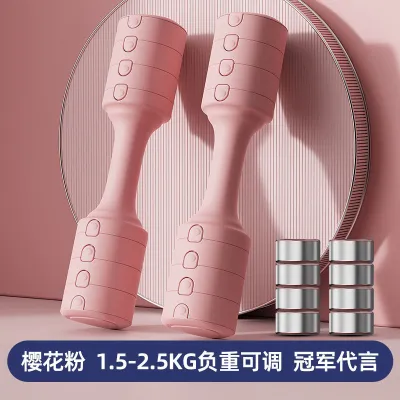
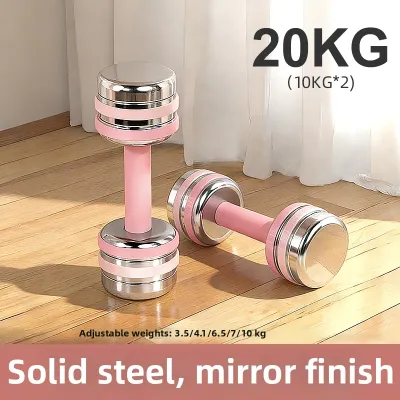
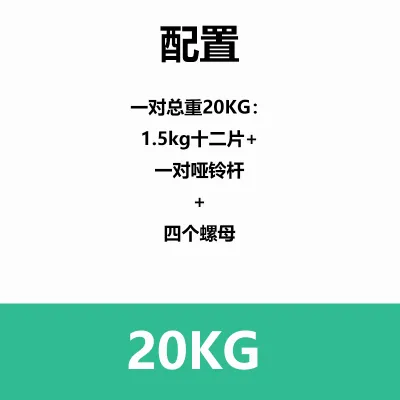
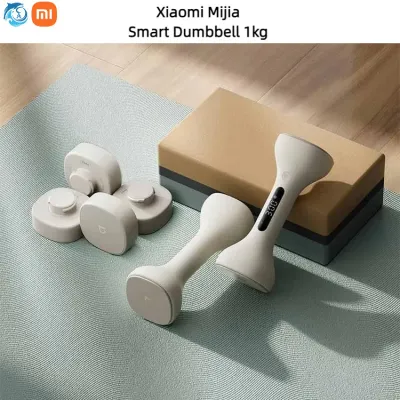
Prices are valid at publication and may change. Please refer to the product page for the latest price.
You can perform this test using existing fixed-weight dumbbells, resistance bands, or household items with known weights, such as filled water bottles. Select a weight that feels moderately challenging. If you can easily complete more than 12 repetitions with proper form, the weight is too light; if you cannot reach 8 repetitions, it is too heavy.
Maintaining strict form during these baseline tests is critical. Swinging your body or shortening the range of motion leads to an overestimation of your actual strength. For instance, when testing a bicep curl, your elbows should remain pinned to your sides with the movement controlled throughout. Overestimating your baseline can lead to purchasing a set that is too heavy to use safely.
Your strength also varies significantly across different muscle groups. Your body naturally possesses different capabilities for upper-body pushing, upper-body pulling, and lower-body movements. For example, your shoulders might handle a moderate load during a press, while your back and legs can lift substantially heavier weights during rows or squats.
Record multiple baselines rather than relying on a single exercise. Test at least three distinct movements: an isolation exercise like the bicep curl, an upper-body compound movement like the shoulder press, and a lower-body compound movement like the goblet squat. This gives you a comprehensive view of your strength profile, which is essential for selecting a versatile set.
Calculate Your Progressive Overload Needs
Once you have established your current strength baseline, the next step is to project your strength gains over the next six to twelve months. Muscle adaptation is a continuous process, and to keep making progress, you must apply the principle of progressive overload. This principle involves gradually increasing the resistance or volume of your workouts over time to challenge your muscles.

Beginners typically experience rapid strength adaptations, often referred to as “newbie gains,” during their first few months of consistent training. During this phase, neurological adaptations allow you to recruit muscle fibers more efficiently, leading to quick weight increases on your lifts. Intermediate lifters experience a more gradual strength adaptation curve, where progress requires more structured training and smaller incremental weight jumps.
To ensure your adjustable dumbbells remain useful as you grow stronger, you should add a 20% to 30% buffer to your current 8-to-12 RM baseline. For example, if your current maximum comfortable lift for a shoulder press is 10 kg per dumbbell, your target maximum weight for an adjustable set should be at least 12 kg to 13 kg. This buffer ensures that you do not outgrow your equipment within the first few weeks of your fitness journey.
However, managing the strength gap between different muscle groups requires careful planning. Your legs and back are comprised of much larger muscle groups that will naturally progress at a faster rate than your arms and shoulders. A weight range that is challenging for a bicep curl may quickly become far too light for a Romanian deadlift or a lunge.
To address this disparity, evaluate whether the adjustable dumbbell system you are considering offers expansion options. Some modular dumbbell systems allow you to purchase add-on weight plates or expansion kits later, increasing the maximum capacity of the handle without requiring you to buy an entirely new set. If expansion kits are not available for a particular model, it is generally wiser to lean toward a heavier maximum weight tier, provided the minimum starting weight is still light enough for your isolation exercises.
Match Weight Ranges to Training Goals and Space Constraints
Adjustable dumbbells generally fall into three weight tiers: light (typically up to 10 kg or 15 kg per dumbbell), medium (up to 24 kg or 25 kg), and heavy (up to 32 kg, 40 kg, or more). Matching these tiers to your specific training goals is essential for long-term satisfaction. Light tiers are highly suitable for high-repetition endurance training, aerobic conditioning, and physical therapy. Medium tiers serve as the versatile sweet spot for general fitness, muscle building, and tone. Heavy tiers are designed for powerlifting, heavy strength training, and experienced lifters.
Living in a compact space, such as a Singapore HDB flat, introduces unique storage and spatial constraints that must be factored into your decision. Unlike a commercial gym, your home gym must share space with daily living areas. Before purchasing, measure the physical footprint of the dumbbell set, including the base station or storage tray. The base station is crucial because it holds the plates that are not currently in use, and it must sit on a flat, stable surface.
Consider where the dumbbells will be stored when not in use and where you will stand while exercising. A set of heavy adjustable dumbbells can take up a surprising amount of floor space and may require a dedicated stand to keep them off the floor. Ensure that the storage location allows you to lift the dumbbells straight up out of their cradle safely, without straining your back or bumping into nearby furniture.
Another critical specification to check is the minimum weight increment adjustment. Some adjustable dumbbells change weight in steps of 2 kg or 2.5 kg, while others offer smaller micro-loading increments of 1 kg or 1.1 kg. Smaller increments are incredibly valuable for upper-body isolation movements, where jumping up by 2.5 kg can represent a massive percentage increase that might compromise your form. Ensure the selector mechanism, whether it is a dial, a pin, or a twisting handle, allows for increments that match your training progression.
Verify Equipment Specifications and Safety Features
Before finalizing your purchase, it is essential to verify the build quality and safety features of the adjustable dumbbells. Because these tools contain moving parts and mechanism-locked plates, safety must be your top priority. Start by checking the manufacturer’s specifications regarding materials. Cast iron plates offer excellent durability and a compact profile, while rubberized or thermoplastic coatings can help reduce noise and protect your flooring from scratches.
Pay close attention to the drop-resistance limitations of the equipment. Many adjustable dumbbells utilize internal plastic gears, selector pins, or complex locking mechanisms that can crack or misalign if the dumbbells are dropped onto the floor. If you train at high intensities where dropping weights is common, look for models specifically rated for high impact, or adjust your training style to ensure you always place the weights down gently.
The ergonomics of the handle play a significant role in both safety and comfort. Verify the grip texture, diameter, and overall length of the handle. A knurled metal handle provides a secure, non-slip grip even when your hands are sweaty, which is particularly important in Singapore’s warm and humid climate. Ensure the handle length is sufficient for your hand size and allows you to perform two-handed exercises, such as holding a single dumbbell vertically for goblet squats, without pinching your fingers.
Finally, review the warranty terms and the availability of replacement parts. A reliable warranty provides peace of mind, especially for mechanical fitness equipment. Check how the plates lock into the handle; when you lift the dumbbell from its base station, the unused plates must remain securely locked in the tray, and the selected plates must lock tightly onto the handle without rattling or shifting. A secure locking mechanism prevents plates from slipping off mid-exercise, protecting you from injury and safeguarding your home environment.
Frequently Asked Questions (FAQ)
Can I use one adjustable dumbbell set for all exercises?
An adjustable dumbbell set is designed to be highly versatile, but a single set may have limitations if there is a massive gap between your weakest and strongest lifts. For example, if your set has a minimum weight of 5 kg and a maximum of 25 kg, the 5 kg starting weight might be too heavy for lateral raises, while the 25 kg limit might eventually feel too light for squats. To maximize the utility of a single set, choose a model with a low starting weight and small adjustment increments, which allows you to perform both delicate isolation movements and heavier compound exercises.
What should I do if I outgrow my current adjustable dumbbells?
If you find that you have outgrown the maximum weight of your adjustable dumbbells, you have several practical options to continue your progressive overload. First, check if the manufacturer offers official expansion kits or heavier add-on plates that can be integrated into your existing system. If expansion is not possible, you can increase the difficulty of your exercises without adding weight by slowing down the tempo (increasing time under tension), reducing rest times between sets, or switching to unilateral (single-leg or single-arm) variations of the movements. Alternatively, you can supplement your setup by purchasing a separate pair of heavy fixed-weight dumbbells for your strongest lifts.
Community discussion
Share your experience or ask a question. Comments are reviewed before publication.