
Selecting the ideal weight range for an adjustable dumbbell depends on your current physical strength, your target exercises, and your long-term fitness goals. For most beginners and casual fitness enthusiasts in Singapore, a mid-range set peaking at 24 kg per dumbbell provides the perfect balance of versatility and room for progression. Advanced lifters focusing on heavy compound movements will require a heavy-duty set reaching 32 kg to 41 kg, while those focusing on rehabilitation, light conditioning, or high-rep endurance can successfully train with a light set topping out around 15 kg. Choosing the right range ensures you do not waste money on weights you cannot safely lift, nor outgrow your investment within a few months of consistent training.
Assess Your Current Fitness Level and Strength Baseline
Evaluating your current lifting capacity and fitness experience is the first step to establishing a safe and effective starting weight. Fitness levels in resistance training are generally categorized into three stages: beginner, intermediate, and advanced. Beginners typically have less than six months of consistent lifting experience and require lighter starting weights with small increments to master proper form. Intermediates have trained consistently for six months to two years and can handle moderate loads, while advanced lifters have over two years of structured training and require heavy resistance to stimulate further adaptation.
If you are transitioning from a commercial gym to a home setup, you can estimate your dumbbell baseline using your existing machine or free-weight metrics. Keep in mind that dumbbell exercises require significantly more stabilization than machines, meaning your dumbbell starting weight should be roughly 30% to 40% lower per hand than what you lift on a guided machine. For those with no formal gym experience, everyday household items can serve as a practical starting point. For example, lifting a standard 1.5-litre water bottle (approximately 1.5 kg) or a 5 kg bag of rice can help you gauge your basic comfort level and arm strength.
Products mentioned in this guide
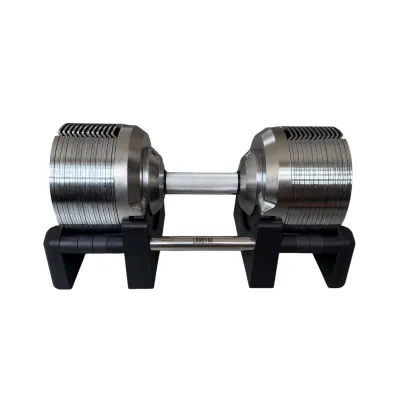
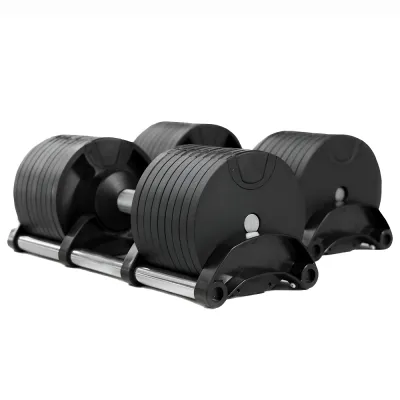
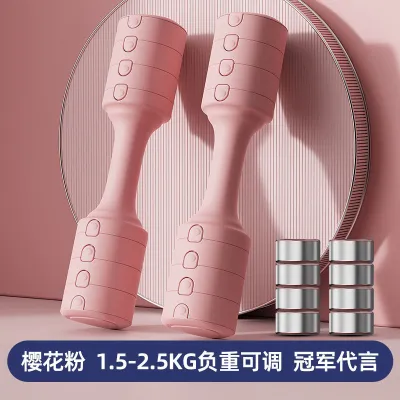
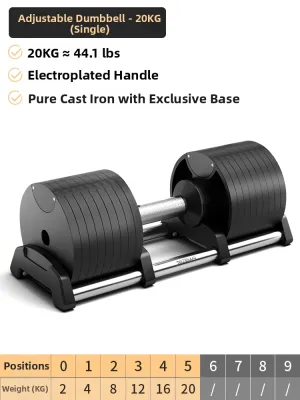
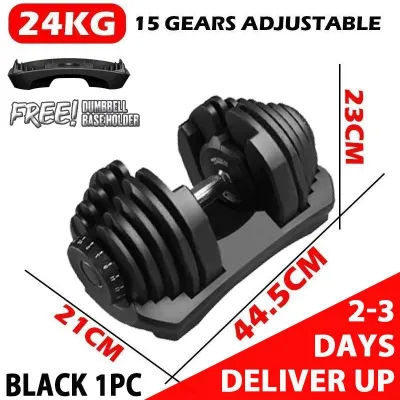
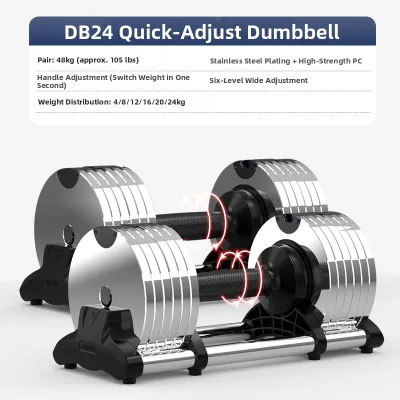
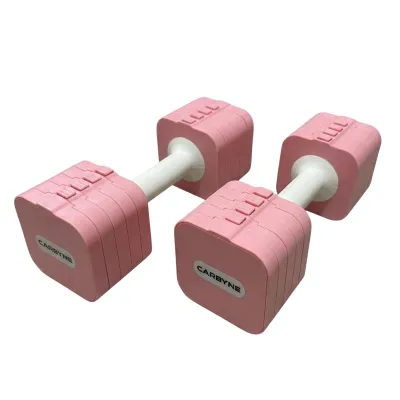
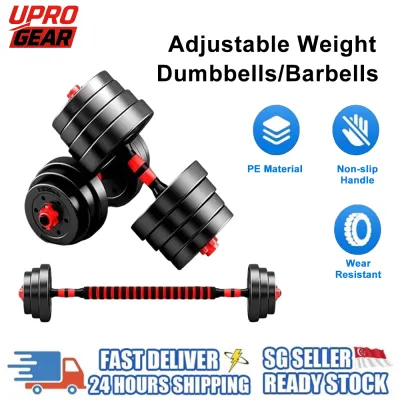
Prices are valid at publication and may change. Please refer to the product page for the latest price.
Your current fitness level dictates both your starting weight floor and the necessary increment sizes, not just the maximum capacity of the dumbbell. Many buyers make the mistake of focusing solely on the heaviest setting, ignoring the minimum weight. If the lowest setting on an adjustable dumbbell is 5 kg, a beginner may struggle to perform delicate upper-body movements safely, which can lead to poor form and joint strain. Always prioritize proper lifting form over heavy loads; equipment cannot replace proper training or physical judgment. If you experience joint pain or lose control of the weight, stop immediately and verify that the dumbbell’s locking mechanism is fully engaged according to the manufacturer’s instructions.
To ensure long-term progress, select a dumbbell set that leaves ample room for progressive overload rather than buying a set where the minimum weight is already near your limit. Progressive overload is the gradual increase of stress placed upon the body during exercise, which is typically achieved by adding small increments of weight over time. If your starting weight is too close to the dumbbell’s maximum capacity, your training will quickly plateau, forcing you to purchase a new set much sooner than anticipated.
Match Weight Requirements to Your Intended Exercises
A single fixed weight is highly inefficient for full-body workouts because different muscle groups vary drastically in size, leverage, and strength. Your lower body and back are naturally built to handle much heavier loads than your shoulders and arms. To design a balanced home workout routine, you must match your dumbbell’s weight capacity to the specific movement patterns and training goals you plan to pursue.

Compound vs. Isolation Movements
Compound movements involve multiple joints and recruit large muscle groups working in unison. Exercises such as goblet squats, Romanian deadlifts, and bent-over rows engage the glutes, hamstrings, and latissimus dorsi. Because these muscle groups are large and powerful, you will quickly require heavier maximum weights—often ranging from 20 kg to over 40 kg per dumbbell—to challenge them effectively.
In contrast, isolation movements target a single joint and smaller, more delicate muscle groups. Exercises like lateral raises, bicep curls, and tricep overhead extensions isolate small muscles such as the lateral deltoids and biceps. For these movements, heavy weights are counterproductive and highly dangerous. You will need a low weight floor, starting as light as 2 kg or 3 kg, to perform these exercises with strict control and avoid shoulder or elbow injuries.
Mapping your planned workout split to these movement categories is essential for identifying your required weight ceiling and floor. If your routine focuses heavily on lower-body strength and compound lifts, prioritizing a higher maximum weight capacity is crucial. If your goals lean toward high-intensity interval training (HIIT), core sculpting, or upper-body toning, a lighter set with rapid adjustment mechanisms will offer greater practical value.
Rep Ranges and Training Goals
Your specific training objectives directly influence the weight range you need to load onto your dumbbell handles. Strength training typically operates in lower rep ranges, such as 1 to 6 repetitions per set, which demands a higher maximum weight capacity to challenge your muscles near their limits. If your primary goal is building absolute strength, a heavy-duty dumbbell set is non-negotiable.
Hypertrophy (muscle building) and muscular endurance require a broader range of lighter to moderate weights. Hypertrophy training generally targets 8 to 12 repetitions, while muscular endurance focuses on 15 or more repetitions per set. These styles require highly versatile dumbbells that allow you to fine-tune the resistance across a wide spectrum of exercises without experiencing sudden, unmanageable jumps in weight.
To stimulate physical adaptation and progress, you must select a weight range that allows you to reach muscular fatigue or near-failure within your target rep range. If you can perform 20 repetitions of an exercise easily at the dumbbell’s maximum setting, the equipment is no longer providing the necessary stimulus. Ensure your chosen set provides enough overhead to keep your muscles challenged as your endurance and strength improve.
Navigate Standard Adjustable Dumbbell Weight Categories
Adjustable dumbbells generally fall into three distinct weight categories on the market, each designed to serve different training profiles and fitness levels.
The Light Range, which typically tops out around 15 kg (approximately 33 lbs), is best suited for physical rehabilitation, active recovery, absolute beginners, or users focusing exclusively on high-rep endurance and cardio-sculpting workouts. While highly manageable and compact, most users will quickly outgrow this range for compound lower-body movements like squats and lunges.
The Mid Range, spanning from roughly 2 kg to 24 kg (5 to 50 lbs), is widely considered the standard for most home gym users. This range covers almost all upper-body exercises, such as chest presses and rows, for beginners and intermediates alike. It also provides a respectable starting resistance for basic lower-body movements, making it the most versatile and popular option for general fitness.
The Heavy Range, reaching up to 32 kg (70 lbs) or 41 kg (90 lbs), is necessary for advanced lifters, experienced strength athletes, or anyone prioritizing heavy compound leg and back training. While offering the ultimate room for long-term progression, these sets require a larger financial investment and are physically bulkier to handle.
When comparing models, pay close attention to the weight increment steps, such as 2 kg versus 2.5 kg jumps. Smaller increments are incredibly beneficial for isolation exercises, where adding even 2 kg can represent a massive percentage increase in total load. Finer adjustment steps allow for a smoother progressive overload process, protecting your joints from sudden spikes in resistance.
Before purchasing, it is vital to verify the grip quality and locking mechanism safety of the specific model. Adjustable dumbbells use various adjustment mechanisms, including dial-turn systems, pull-pin selectors, and handle-twist locks. Ensure the handle features a textured, non-slip grip (such as knurled steel or high-density rubber) to maintain control when your hands sweat. Always inspect the locking mechanism to ensure the plates are securely held in place; a loose plate can drop unexpectedly, causing severe injury or damaging your floor.
Additionally, consider the physical size and handle length differences that accompany heavier maximum capacities. Heavier adjustable dumbbells often utilize longer selector rods or wider plates to accommodate the extra mass. Even when set to a light weight, the physical frame of a 41 kg dumbbell remains large and wide, which can sometimes interfere with your range of motion during exercises like bicep curls or overhead presses.
Future-Proof Your Purchase: Expandability and Space Constraints
Investing in quality fitness equipment is a long-term decision, and future-proofing your purchase can save you significant money and frustration. Buying a set that only matches your current strength levels often results in double spending once your body adapts and grows stronger.
Expandable adjustable dumbbells offer an elegant solution to this progression problem. Some premium brands design base models that top out at 22 kg or 24 kg but are engineered to accept additional weight plates or expansion kits later on. This allows your dumbbells to grow alongside your physical capabilities, eventually reaching 32 kg or 41 kg without requiring you to buy an entirely new system.
When evaluating cost-effectiveness, compare the upfront price of a heavy set against the combined cost of a lighter set plus future expansion kits. Purchasing a heavier set immediately is often more economical in the long run if you are committed to long-term strength training. However, if you are working within a strict initial budget or are testing your commitment to home workouts, starting with a lighter, expandable set minimizes your initial financial risk.
Physical space and climate are critical considerations in compact living environments, such as HDB flats or condominiums in Singapore. Heavier adjustable dumbbells require a stable, dedicated storage footprint and cannot be easily tucked away under a bed. A pair of 32 kg or 41 kg dumbbells often requires a specialized, heavy-duty floor rack to ensure safety, protect your flooring, and make weight selection ergonomically comfortable.
Furthermore, Singapore’s high year-round humidity can accelerate rust and corrosion on metal gym equipment. When selecting your dumbbells, consider the materials used. Cast iron plates are highly durable but prone to rusting if exposed to moisture, while polyurethane-coated or chrome-plated plates offer superior corrosion resistance. Always check the manufacturer’s care instructions for maintaining the locking mechanism and plates in humid environments to ensure smooth operation and long-term safety.
To make your final decision, apply a simple framework: if you have a dedicated workout space, a healthy budget, and plans to perform heavy compound lifts, purchase the maximum weight range immediately. If you live in a compact space, focus primarily on general fitness, or want to manage upfront costs, opt for a mid-range set—ideally one that offers an expandable pathway for future upgrades.
Frequently Asked Questions (FAQ)
Is a 24kg adjustable dumbbell heavy enough for building muscle?
Yes, a 24 kg adjustable dumbbell is heavy enough to build substantial muscle mass for the majority of home gym users. This weight provides ample resistance for upper-body exercises like chest presses, shoulder presses, and rows. However, as you transition from intermediate to advanced levels, you may eventually outgrow 24 kg for major lower-body movements like squats and deadlifts, which naturally require heavier loads to stimulate muscle growth.
Should I buy a single adjustable dumbbell or a pair?
For a complete and balanced workout routine, purchasing a pair of adjustable dumbbells is highly recommended. A pair allows you to perform essential bilateral exercises, such as chest presses, shoulder presses, and lunges, while maintaining symmetrical muscle development and saving workout time. While a single dumbbell can work for unilateral movements or tight budgets, it significantly limits your exercise selection and complicates structured training splits.
How do I know when it is time to upgrade my weight range?
You will know it is time to upgrade when you can consistently complete your target repetitions (such as 12 to 15 reps) on your heaviest exercises with perfect form and minimal exertion. Another clear signal is if you find yourself compromising your movement mechanics or rushing through repetitions just to make a lighter weight feel challenging. Before purchasing a completely new set, check if your current brand offers compatible expansion kits to save space and money.
Community discussion
Share your experience or ask a question. Comments are reviewed before publication.