
Choosing the right aerobic step board for a small Housing & Development Board (HDB) flat comes down to balancing safety with spatial efficiency. For most homeowners living in compact apartments in Singapore, a compact-sized step board—typically measuring between 68 cm and 80 cm in length—offers an ideal compromise. This size provides a sufficiently wide landing platform for dynamic cardio exercises while remaining small enough to fit within tight living areas and slide easily under standard bed frames or sofas when not in use. Selecting the right board requires evaluating your specific room layout, understanding how different dimensions affect your workout, and identifying smart storage solutions that keep your home clutter-free.
Assessing Your Available Workout Space in an HDB Flat
Before purchasing any fitness equipment, it is essential to measure the actual usable floor area in your flat rather than relying on the total room dimensions. HDB living rooms and bedrooms often host multiple pieces of furniture, such as television consoles, sofas, dining tables, or wardrobes, which significantly reduce the open floor space. To determine if a step board will fit, clear a dedicated zone and measure the flat, unobstructed floor surface. You must account for more than just the physical footprint of the board itself; dynamic cardio routines require a generous safety buffer around the equipment.
A safe workout zone requires at least 60 cm to 90 cm of clear space on all sides of the aerobic step board. This clearance ensures you can perform lateral steps, lunges, and off-board transitions without colliding with furniture corners, walls, or electrical cords. Additionally, vertical clearance is a critical but frequently overlooked factor in Singapore public housing. Standard HDB ceiling heights typically range from 2.6 to 2.8 meters. If you plan to perform high-impact jumps or overhead arm movements while standing on an elevated step, you must verify that your head and hands will clear ceiling fans, light fixtures, and decorative beams. Finally, measure the width of your hallways and doorways to ensure you can easily carry the board between rooms without scraping the walls.
Products mentioned in this guide
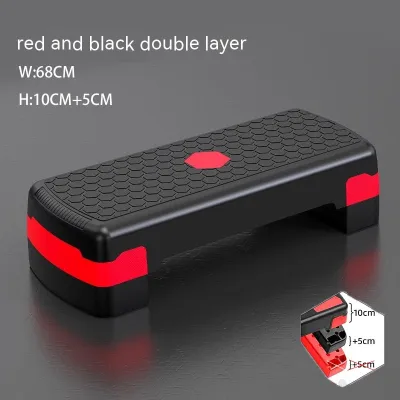
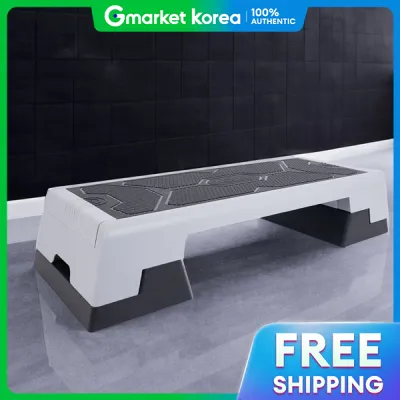
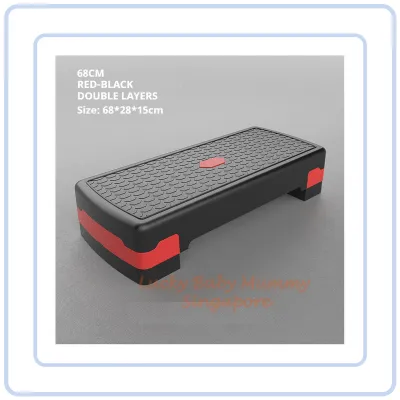
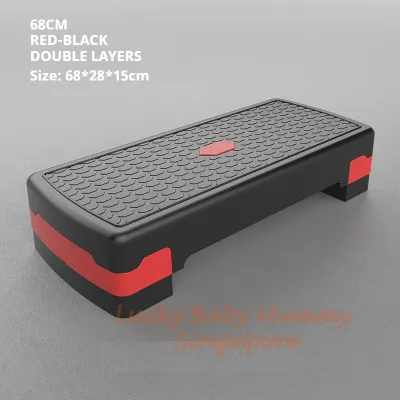
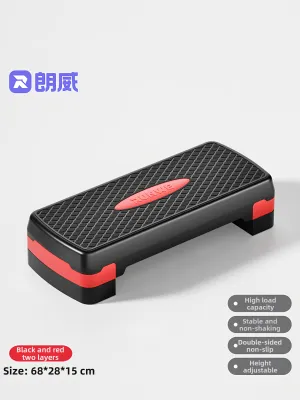
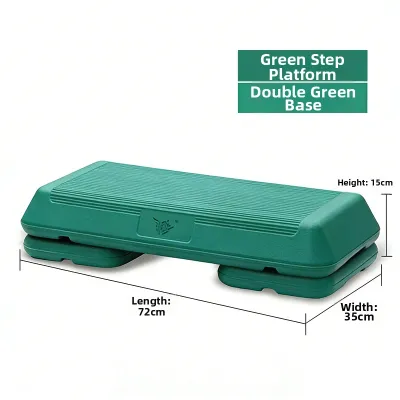
Prices are valid at publication and may change. Please refer to the product page for the latest price.
Comparing Aerobic Step Board Sizes for Compact Areas
Aerobic step boards generally fall into three size categories: compact, club, and adjustable-width designs. Compact boards, usually measuring 68 cm to 80 cm in length and about 28 cm to 30 cm in width, are highly suited for HDB flats. They occupy minimal floor space and are lightweight, making them easy to move. However, the smaller surface area requires greater precision during fast-paced workouts to ensure your entire foot lands securely on the platform. Club-sized boards, which often exceed 100 cm in length, offer a much larger target for high-intensity training but can easily dominate a small room and present significant storage challenges in a compact apartment.

The height of the board is another crucial dimension that affects both your workout intensity and storage requirements. Most boards come with adjustable risers that allow you to set the platform height to 10 cm, 15 cm, or 20 cm. While adding risers increases the physical volume of the equipment, many modern designs allow the risers to store directly underneath the main platform. When comparing models, check the manufacturer’s specifications for the total weight capacity. A higher weight limit does not always require a larger board; many compact, high-density polyethylene platforms are engineered to support substantial weight loads without adding unnecessary bulk to your living space. Verify these structural limits on the product label to ensure the board matches your body weight and exercise intensity.
Space-Saving Designs and Storage Solutions
In a compact HDB flat, how you store your fitness equipment is just as important as how you use it. Manufacturers have developed several space-saving designs to address the needs of apartment dwellers. Foldable or collapsible aerobic step boards are popular options, featuring legs or risers that fold flat into the underside of the platform. When considering a foldable model, inspect the hinge mechanisms and locking pins carefully. These moving parts must be robust and securely locked into place before any workout to prevent the board from collapsing under dynamic lateral forces.
For traditional non-folding boards, organizing detachable risers is key to minimizing clutter. Look for systems where the risers stack neatly inside or directly beneath the main platform when not in use. This self-containing design reduces the overall height of the unit, allowing it to slide easily into tight spaces. Excellent storage locations in an HDB flat include the gap beneath a platform bed, the bottom shelf of a wardrobe, or the narrow space behind a bedroom door. If floor space is extremely limited, consider storing the board vertically against a wall inside a utility closet. When storing equipment vertically, ensure it is positioned securely so it cannot tip over and cause injury or damage.
Safety and Setup Checks for Home Cardio
Setting up your aerobic step board correctly is vital for preventing injuries and protecting your home’s flooring. HDB flats commonly feature tile, vinyl, or laminate flooring, which can be slippery under dynamic movement. To prevent the step board from sliding during high-energy workouts, verify that the bottom of the board or its risers are equipped with high-quality, non-slip rubber feet. Using a dedicated, high-density exercise mat underneath the board is highly recommended. This mat not only provides additional grip to keep the board stable but also dampens noise and vibration, which is essential for maintaining good relations with your downstairs neighbors in a high-rise building.
Before starting any exercise routine, perform a quick stability check. Place the board on a level surface and apply pressure to the edges to ensure it does not rock or tilt. If your flat has slightly uneven flooring, adjust the positioning of the board or use a firmer mat to create a stable base. Always check the manufacturer’s weight limits and structural guidelines before use. Establish a clear safety rule: if you hear unusual clicking sounds, feel the platform flexing excessively, or notice the board shifting during a workout, stop immediately. Inspect the locking joints and risers to ensure everything is fully engaged before resuming your routine.
Frequently Asked Questions (FAQ)
Can I use an aerobic step board on a carpeted HDB bedroom floor?
Using an aerobic step board directly on a carpeted surface or a thick rug can introduce stability risks. The soft, compressible pile of a carpet can cause the board to tilt, sink, or wobble when you step near the edges, especially during rapid lateral movements. To ensure a safe workout, place a rigid, non-slip exercise mat over the carpet to create a firm, level foundation. This helps distribute your weight evenly and prevents the board from shifting. Always consult the manufacturer’s instruction manual, as some brands explicitly advise against using their equipment on carpeted surfaces due to these stability concerns.
Do foldable aerobic step boards support the same weight as solid ones?
Foldable aerobic step boards do not automatically share the same weight capacity as solid, single-piece platforms. The hinges, joints, and folding mechanisms introduce potential points of flexion that can lower the overall load limit compared to a solid plastic or composite board. It is critical to check the specific weight capacity label provided by the manufacturer for each individual model. Before beginning any exercise session, always inspect the locking pins and hinges to verify they are fully engaged and secure, ensuring the platform remains rigid under dynamic impact.
How much clearance do I need around the step board for a full workout?
For a safe and effective workout, you should maintain a clear buffer zone of at least 60 cm to 90 cm on all sides of your aerobic step board. This unobstructed space is necessary to accommodate wide steps, lunges, jumps, and active arm movements without the risk of striking nearby objects. If your routine involves complex choreography, high-intensity interval training, or rapid directional changes, you may need an even larger clearance area. Always check your surroundings before starting, paying close attention to the corners of furniture, low-hanging light fixtures, and ceiling fans within your movement zone.
Community discussion
Share your experience or ask a question. Comments are reviewed before publication.