
Finding the right balance between staying active and maintaining a clutter-free home is a common challenge for those living in Singapore’s Housing & Development Board (HDB) flats. An aerobic stepper is an exceptionally versatile tool for cardiovascular fitness and strength training, but its physical dimensions can easily overwhelm a compact living area if chosen hastily. To keep your living room functional, the ideal aerobic stepper should provide a stable, safe platform for your workouts while being compact enough to store out of sight when you are finished.
Generally, a compact aerobic stepper measuring approximately 70cm in length fits seamlessly into most HDB layouts, whereas a standard 90cm professional platform is better suited for those who can dedicate a semi-permanent corner to their fitness routine. Choosing the right size requires looking beyond the product’s surface dimensions to evaluate your actual workout clearance, storage constraints, and safety limits.
Assessing Your True Workout Space in an HDB Living Room
While the overall floor plan of a modern 3-room, 4-room, or 5-room HDB flat might seem to offer plenty of space on paper, the actual usable area for dynamic exercise is often highly restricted. Living rooms typically serve multiple purposes, housing large furniture pieces such as L-shaped sofas, coffee tables, television consoles, standing fans, and decorative indoor plants. These items create fixed obstacles and reduce your net activity zone to narrow pathways.
Products mentioned in this guide
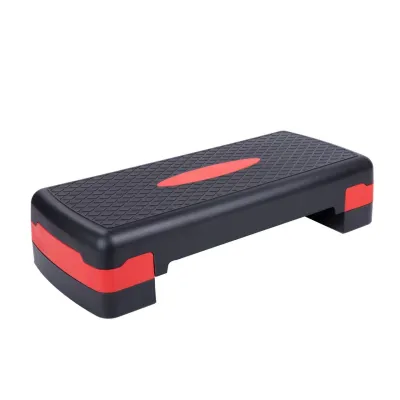
![🇸🇬 [READY STOCK] 3 Layer Adjustable Aerobic Stepper S & XL Exercise Board Leg Thigh Training Squat](https://img.lazcdn.com/g/p/b42f594445009c0ec9ad257b3cf268b6.jpg_400x400q80.jpg_.webp)
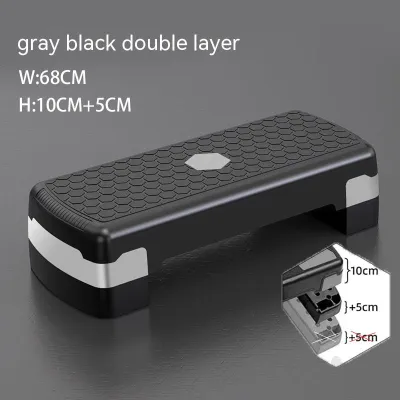
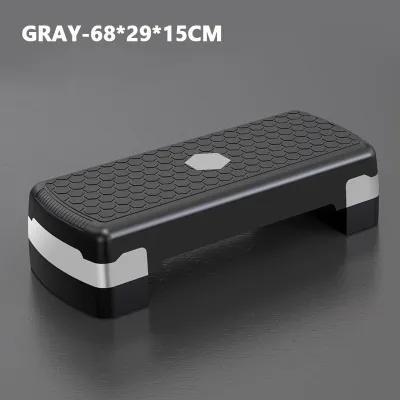
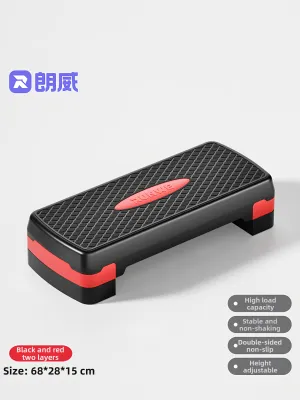
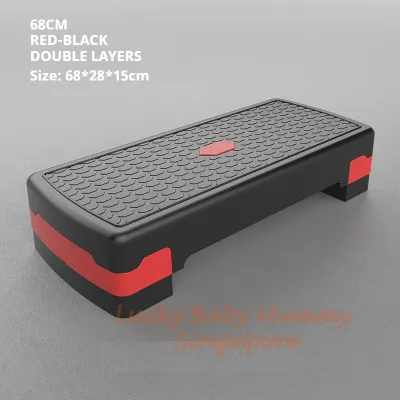
Prices are valid at publication and may change. Please refer to the product page for the latest price.
To avoid bumping into furniture or tripping during a high-energy workout, you must measure your physical space with precision rather than relying on a visual estimate. Clear a dedicated testing zone in your living room and physically measure the unobstructed floor space. A safe and effective step workout requires a clear rectangular area of at least 1.5 metres by 1.5 metres. This space ensures that you can place the stepper in the center and still have enough room to step on, off, and around the platform without restriction.
Additionally, pay close attention to the floor surface itself. Many HDB flats feature porcelain tiles, luxury vinyl tiles (LVT), or engineered wood flooring. Over time, slight settling or minor screed variations can create uneven surfaces, particularly near transition strips between rooms or close to balcony sliding doors. Placing an aerobic stepper on an uneven floor can cause it to wobble or slide when you apply force, increasing the risk of slips or ankle sprains. Always verify that your chosen workout spot is perfectly level and free of any floor transitions before laying down your equipment.
Comparing Standard and Compact Aerobic Stepper Dimensions
Aerobic steppers generally fall into two primary size categories: standard platforms and compact versions. Understanding the physical differences between these two options allows you to make an informed decision based on your fitness goals and the physical limits of your HDB flat. Regardless of the category you choose, always verify the exact dimensions on the manufacturer’s product label before making a purchase, as individual brand specifications can vary.

Standard and Professional Platforms
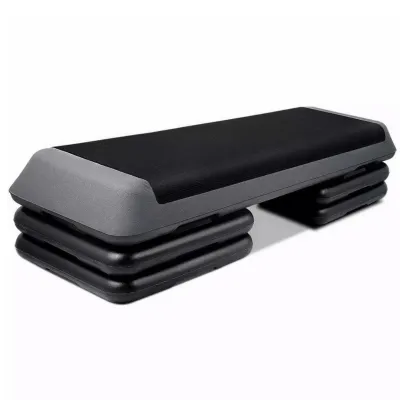
Standard aerobic steppers are the typical models you find in commercial fitness centers. They generally measure around 90cm to 110cm in length and approximately 30cm to 35cm in width. The primary advantage of a standard platform is its generous surface area. This larger footprint provides excellent stability and gives you a wider margin of error during fast-paced, complex choreography.
If you are a taller individual, have a wider natural stance, or weigh more, a standard platform offers the structural support and space you need to exercise with confidence. However, these professional-grade platforms require a substantial amount of dedicated floor space. In a smaller HDB flat, a 90cm stepper can easily dominate the central living area, making it difficult for other household members to move around. These larger models are best suited for homes where you can establish a semi-permanent workout corner, or if you have a spacious household shelter with dedicated shelving to store the equipment when it is not in use.
Compact and Space-Saving Platforms
Compact aerobic steppers are specifically designed with home users in mind, typically measuring around 60cm to 70cm in length and 28cm in width. These dimensions make them incredibly well-suited for tighter HDB layouts, such as 2-room flexi or 3-room apartments. Because they are smaller, compact steppers are significantly lighter and much easier to maneuver, allowing you to quickly pull them out for a quick session and stow them away without straining your back.
While compact platforms are highly convenient, they do come with trade-offs. The smaller stepping surface means you have less room for error when landing. You must remain highly focused on your foot placement, particularly during high-intensity interval training (HIIT) or rapid lateral movements. If you have larger feet or enjoy complex, dance-style step routines that require moving diagonally across the board, a compact stepper might feel restrictive. However, for straightforward vertical stepping, basic lunges, and elevated push-ups, a compact platform provides more than enough utility.
Calculating Your Safe Clearance and Ceiling Limits
Selecting the right stepper size is not just about finding a model that fits on your floor; it is also about ensuring you have adequate physical clearance to move safely in three dimensions. A common mistake is failing to account for the space your body occupies as you move dynamically on and off the platform. To prevent injuries and avoid damaging your home, you must calculate both your lateral clearance and your vertical ceiling limits.
For lateral safety, always maintain a clearance zone of at least 0.5 metres to 1 metre of completely empty space on all sides of the stepper. When performing step aerobics, you do not simply step straight up and down; many exercises involve stepping off to the sides, lunging backward, or swinging your arms widely for balance. If the stepper is placed too close to a wall, a television console, or a glass display cabinet, a minor loss of balance could result in a painful collision or broken household items.
Vertical clearance is another critical factor that is frequently overlooked in HDB flats, where standard ceiling heights typically hover around 2.6 metres. If you install a ceiling fan or have low-hanging light fixtures, standing on an elevated platform can bring your head dangerously close to these hazards. To ensure your safety, use this simple calculation framework:
Ceiling Height – (Stepper’s Maximum Height + Your Height) = Headroom Clearance
For example, if your HDB ceiling is 260cm, your stepper is adjusted to its maximum height of 20cm, and you are 175cm tall, your headroom clearance is 65cm (260 – 195 = 65). This is a safe margin. However, if you have a low-hanging ceiling fan that drops 40cm from the ceiling, that clearance shrinks to just 25cm, which is highly dangerous if you plan to perform jumping movements or overhead arm reaches. Always factor in the thickness of any protective floor mats as well, as a high-density rubber mat can add an extra 1cm to 2cm to your starting platform height.
Maximising Utility with Smart Storage and Dual-Purpose Designs
To prevent your fitness equipment from taking over your living room, look for smart design features that enhance storage efficiency and multi-functional utility. Modern fitness manufacturers have developed several clever solutions to help urban residents maximise their living space without sacrificing their workout quality.
One of the most effective space-saving features is an integrated riser design. Most aerobic steppers allow you to adjust the workout intensity by adding or removing risers (blocks) under the main platform to change its height, typically between 10cm, 15cm, and 20cm. High-quality steppers are designed so that these risers stack and lock securely directly underneath the main platform. This nesting capability ensures that the storage footprint of the equipment remains exactly the same as the platform’s length and width, preventing loose blocks from cluttering your closets or household shelter.
Before making a purchase, measure the vertical clearance under your sofa, bed frame, or TV console. Many modern, minimalist furniture pieces common in Singaporean homes feature a clearance of 10cm to 15cm. If you choose a compact stepper that can nest its risers, the entire unit can often slide easily into this gap, keeping it completely hidden from view when you are not exercising. This simple storage solution ensures your living room retains its clean, relaxing aesthetic.
You can also look for dual-purpose designs that justify their presence in your living room by serving multiple functions. Some premium aerobic steppers feature removable, high-density padded covers. When you are not working out, these models can serve as a sturdy bench, a footrest, or even extra seating for guests when covered with a decorative throw. Others feature adjustable backrests, allowing the stepper to transform into an inclined weight bench for strength training.
Furthermore, some models include integrated attachment points or built-in channels for resistance bands. By choosing a stepper that supports resistance band training, you can eliminate the need to purchase and store separate sets of dumbbells, kettlebells, or bulky strength-training racks. This single piece of equipment can facilitate a full-body cardio and strength routine, making it an exceptionally efficient use of your HDB floor space.
Common Sizing and Placement Mistakes to Avoid
Avoiding common pitfalls during the selection and placement process can save you from post-purchase regret and potential safety hazards. Many homeowners make assumptions about fitness equipment that do not hold up under the physical demands of a high-energy workout.
First, never assume that the top platform dimensions represent the total space the equipment will occupy on your floor. Many aerobic steppers feature angled or flared base risers designed to distribute weight evenly and prevent tipping. This means the base of the stepper is often several centimetres wider and longer than the stepping surface itself. Always check the manufacturer’s specifications for the “base footprint” rather than just the “stepping surface” to ensure it fits within your measured workout zone.
Second, avoid placing your stepper too close to fragile structures or high-traffic areas. Positioning your equipment near glass sliding balcony doors, low-set windows, or delicate home decor is highly risky. A single slip, trip, or loss of balance during an intense routine could push the stepper or your body into these fragile surfaces, causing severe injury or property damage.
Third, ensure your workout setup does not block primary transit paths within your home. Setting up your stepper directly in front of the main entrance, the kitchen doorway, or the access path to the bathroom can cause friction with other household members. It also creates a serious tripping hazard in dark or emergency situations.
Finally, do not assume that all aerobic steppers are naturally non-slip. Smooth HDB flooring materials, such as polished porcelain tiles or vinyl, offer very little traction. A stepper without high-quality rubber feet can easily slide across the floor when you perform dynamic lateral movements. Always verify the quality of the bottom grips and invest in a high-density, non-slip exercise mat to anchor the stepper securely and protect your floors from damage.
Frequently Asked Questions (FAQ)
Will an aerobic stepper scratch HDB tile or vinyl flooring?
While most aerobic steppers are equipped with rubberised feet or protective pads, the intense, repetitive downward and lateral forces generated during a step workout can still pose a risk to your floors. Fine dust and grit particles can become trapped beneath the stepper’s feet, acting like sandpaper under your body weight. Over time, this friction can cause micro-scratches, scuffs, or dull patches on smooth porcelain tiles, luxury vinyl tiles (LVT), or laminate flooring.
To safeguard your home, check the manufacturer’s care instructions and always place a high-density, non-slip exercise mat beneath the stepper. This mat serves a dual purpose: it protects your flooring from physical wear and dampens the impact vibrations, significantly reducing noise transmission to your downstairs neighbours.
Is a mini stair stepper a better space-saving alternative?
A mini stair stepper and an aerobic stepper serve fundamentally different workout purposes, and your choice should depend on your fitness goals rather than footprint alone. A mini stair stepper uses hydraulic pistons to simulate a continuous, vertical climbing motion. It is highly compact and fits easily into a tiny corner, making it excellent for low-impact cardiovascular endurance. However, its movement pattern is highly linear and restricted.
In contrast, an aerobic stepper is a highly versatile, multi-directional platform. It allows you to perform lateral steps, lunges, jumps, and a wide variety of strength and bodyweight exercises that a mini stepper cannot support. If you want maximum exercise variety and the ability to perform full-body workouts, the aerobic stepper is the superior investment, provided you have the space to store it.
Community discussion
Share your experience or ask a question. Comments are reviewed before publication.