
Finding the right ankle brace support depends on two key elements: the current state of your ankle joint and the physical demands of your target activity. Choosing incorrectly can either leave you vulnerable to painful rolls or restrict your movement so severely that it hinders your performance. To make the best choice, you must balance mechanical stability with joint mobility, selecting a brace type that specifically addresses your injury history or athletic goals. This guide will walk you through evaluating your condition, matching support levels to your lifestyle, and understanding the distinct categories of braces available.
Assess Your Ankle Condition for the Right Ankle Brace Support
To find the ideal ankle brace support, you must first evaluate the physical state of your joint. Ankle issues generally fall into two categories: acute injuries and chronic instability. An acute injury is a sudden, recent trauma, such as a fresh sprain or strain from landing awkwardly. These require immediate stabilization to prevent further tissue damage. Chronic instability, on the other hand, is a long-term condition characterized by recurring ankle rolls, persistent weakness, or joint laxity from past injuries that never fully healed.
Paying close attention to specific, observable signals from your body will help you gauge the level of support required. Take note of any swelling around the lateral or medial malleolus (the bony bumps on the sides of your ankle). Assess your pain levels when bearing weight, and monitor whether the joint feels structurally unstable, as if it might give way during normal walking. Morning stiffness or a dull ache after prolonged rest can also indicate low-grade inflammation or chronic joint wear.
Products mentioned in this guide
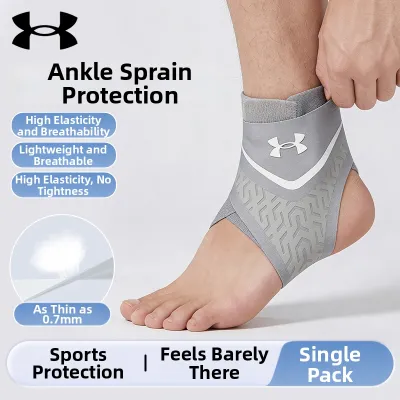
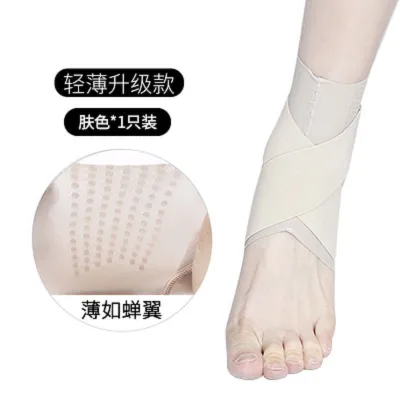
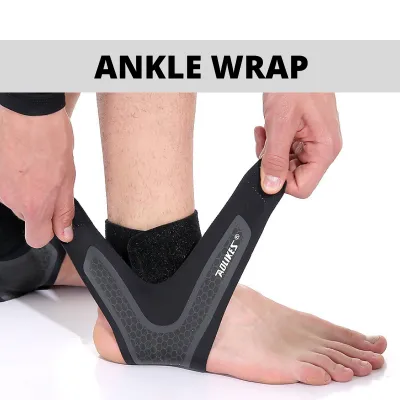
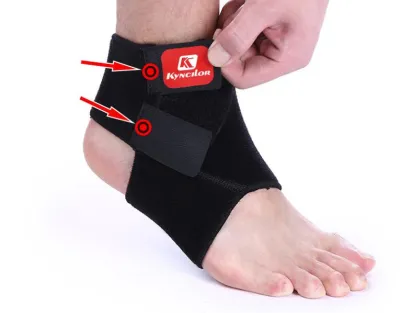
Prices are valid at publication and may change. Please refer to the product page for the latest price.
It is vital to understand what an over-the-counter ankle brace support can and cannot do. A high-quality brace is designed to manage symptoms, reduce swelling through compression, and provide external mechanical boundaries to prevent excessive lateral movement. However, a brace cannot physically heal torn ligaments, repair damaged cartilage, or restore native joint stability on its own. It serves as a protective external framework while your body undergoes its natural healing process.
Before purchasing any support, you must establish a strict safety boundary. If you experience severe, sharp pain, an absolute inability to bear weight or take even a few steps, visible joint deformity, or numbness and tingling in your foot, do not attempt to self-treat with an over-the-counter brace. These symptoms often point to a fracture, complete ligament rupture, or nerve compression. Seek an immediate medical evaluation from a qualified healthcare professional to obtain an accurate diagnosis.
Match Support Levels to Your Physical Activity
Your daily routine and athletic pursuits dictate the mechanical demands placed on your ankle joint. Different activities require vastly different levels of rigidity, flexibility, and breathability. For instance, low-impact and linear activities—such as walking along Singapore’s Park Connector Network (PCN), light jogging, or cycling—primarily require mild compression rather than heavy, rigid restriction. In these scenarios, a lightweight brace provides essential proprioceptive feedback, which is the sensory input that helps your brain recognize joint positioning and coordinate balance.

Conversely, multi-directional and high-impact sports demand moderate to maximum support. Activities like basketball, soccer, tennis, and badminton—which are highly popular at local sports halls and community clubs—involve rapid lateral cuts, sudden acceleration, and high-impact jumps. These dynamic movements place immense rotational stress on the lateral ligaments. To prevent sudden inversion (inward roll) or eversion (outward roll) during these intense lateral shifts, you will need a brace with structural reinforcement, such as strapping systems or semi-rigid inserts.
When selecting a brace, you must also evaluate footwear compatibility and bulkiness. A highly supportive brace is useless if it cannot fit comfortably inside your specific athletic footwear, whether that means tight-fitting football cleats, court shoes, or heavy hiking boots for trails like Bukit Timah. A brace that is too bulky can create painful pressure points, restrict circulation, or even alter your gait, which can lead to secondary injuries in your knees or hips. Always test the brace with the exact socks and shoes you plan to wear during your activity.
Keep in mind the fundamental trade-off of ankle brace support: higher mechanical stability almost always restricts your natural range of motion. While a rigid brace offers exceptional protection against rolling, it can limit your ankle’s ability to flex up and down (plantarflexion and dorsiflexion). This restriction can slightly reduce your agility, vertical jump height, or sprinting efficiency. Balancing this trade-off requires choosing a brace that provides just enough stability to protect your joint without unnecessarily hindering your athletic performance.
Compare Ankle Brace Types and Their Best Uses
Ankle braces are categorized into four primary designs, ranging from highly flexible sleeves to rigid mechanical frameworks. Understanding the structural differences and intended use cases of each type will help you pinpoint the precise model for your needs.
Compression Sleeves
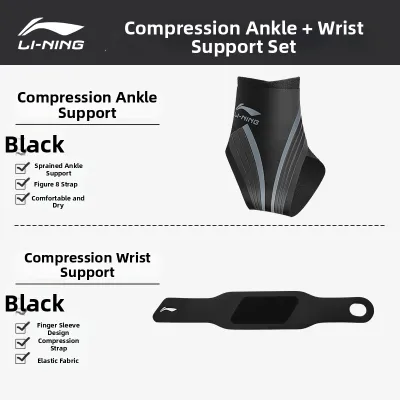
Compression sleeves are lightweight, elastic pull-on supports typically made from neoprene, knit fabrics, or nylon blends. These sleeves are best suited for individuals dealing with mild swelling, minor aches, chronic arthritis, or those seeking preventive support during low-impact activities.
The primary function of a compression sleeve is to provide uniform warmth, mild compression, and skin-tight tactile feedback. This feedback enhances proprioception, helping your nervous system better monitor joint alignment during movement. In Singapore’s hot and humid tropical climate, choosing a highly breathable, moisture-wicking knit sleeve is essential to prevent skin irritation and heat rash.
It is important to recognize that compression sleeves offer virtually no mechanical restriction. They will not physically stop your ankle from rolling inward or outward if you step on an uneven surface or land on another player’s foot. If your joint is structurally unstable or recovering from a recent moderate-to-severe sprain, a sleeve alone is insufficient to protect against re-injury.
Lace-Up and Wrap Braces
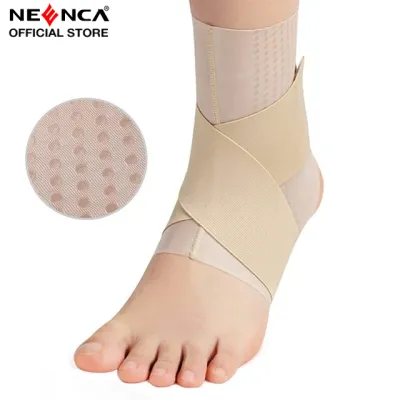
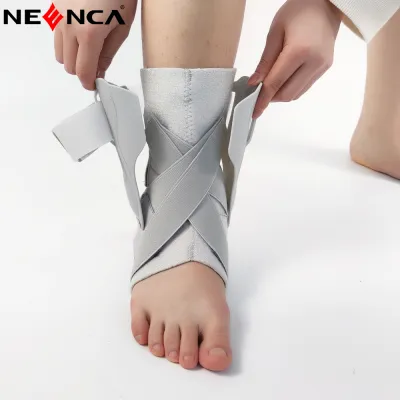
Lace-up and wrap braces feature a fabric boot secured by laces, often reinforced with figure-eight elastic straps that mimic professional athletic taping. This design provides moderate to high support and is highly favored by athletes in multi-directional sports like basketball, netball, and soccer.
The main benefit of a lace-up brace is its highly customizable tension. You can adjust the tightness along different parts of your foot and ankle to match your comfort level and anatomy. The crisscrossing straps lock the heel in place and restrict extreme ranges of motion, offering excellent protection against sudden lateral rolls while maintaining a relatively low profile that fits into most athletic shoes.
However, lace-up braces have a notable operational trade-off. As you run, jump, and sweat, the fabric and laces naturally stretch, shift, and loosen over time. During long training sessions or matches, you will likely need to pause, unlace, and re-tighten the brace to maintain its optimal level of support. Additionally, the multiple layers of fabric can trap heat, making thorough washing and drying crucial to prevent odor buildup.
Stirrup and Semi-Rigid Braces
Stirrup and semi-rigid braces incorporate hard plastic or composite shells along the medial (inner) and lateral (outer) sides of the ankle, held in place by adjustable hook-and-loop straps. This design is engineered specifically for acute injury management, post-operative recovery, and early-stage rehabilitation.
These rigid side panels provide exceptional lateral stability, making it virtually impossible for the ankle to roll inward or outward. By locking down lateral movement, stirrup braces protect healing ligaments from painful stretching while still allowing a limited amount of safe, linear movement. They are highly effective at controlling acute post-injury swelling by keeping the joint aligned.
The primary drawback of semi-rigid braces is their bulkiness. The hard plastic shells make them difficult to fit inside sleek, narrow athletic shoes or tight cleats. They are typically worn over a thick sock to prevent the plastic from chafing against the skin, and they are best suited for walking, structured physical therapy, or daily activities rather than high-performance agility sports.
Hinged Ankle Braces
Hinged ankle braces represent the highest level of mechanical ankle brace support. They feature rigid lateral struts connected by a mechanical hinge aligned with the ankle joint, combined with a secure strapping system.
This advanced design is engineered to allow almost completely natural upward and downward movement (plantarflexion and dorsiflexion) while completely blocking any side-to-side, rotational, or rolling motions. This makes hinged braces highly effective for individuals returning to high-impact sports after severe ligament tears, those with severe chronic joint laxity, or patients transitioning out of a medical boot.
Because they are highly restrictive and structurally complex, hinged braces are bulky and can feel heavy on the foot. They require precise alignment with your anatomical joint axis to function correctly without causing discomfort. Due to their specialized nature and high mechanical control, it is strongly recommended to consult a doctor, podiatrist, or physical therapist before using a hinged brace to ensure it is appropriate for your specific biomechanics.
When to See a Doctor Instead of Relying on a Brace
While an over-the-counter ankle brace support is an excellent tool for managing minor instability and mild sprains, it should never be used as a substitute for professional medical care when dealing with a severe injury. Relying on a brace to mask severe pain can lead to long-term joint damage and chronic physical limitations.
You must seek immediate clinical evaluation if you experience any of the following red flag symptoms:
- An absolute inability to take four consecutive steps immediately after the injury and at the time of evaluation.
- Severe, rapid swelling that develops within minutes of the injury.
- Deep bruising that spreads quickly down toward your toes or up your lower leg.
- A distinct "popping," "snapping," or "cracking" sound or sensation at the exact moment of injury.
- Numbness, coldness, or a pale appearance in your foot or toes, which indicates compromised blood flow or nerve compression.
Attempting to return to sports or daily physical activities by simply strapping on a tight brace to dull pain carries significant risks. Masking structural damage can lead to further ligament stretching, cartilage wear, and early-onset osteoarthritis. Without proper diagnosis, you might aggravate an undiagnosed fracture or high ankle sprain, leading to months of avoidable pain and a much longer recovery timeline.
Always remember that an ankle brace is a supplementary tool designed to protect your joint temporarily. It cannot replace a structured rehabilitation program. True, long-term joint health requires targeted physical therapy, balance training (such as using a wobble board), and progressive strengthening of the peroneal muscles that run along the outside of your shin. These exercises rebuild your body’s natural stability, ensuring you do not become permanently dependent on an external support.
Frequently Asked Questions (FAQ)
Can I wear an ankle brace all day?
It is generally not recommended to wear an ankle brace support all day unless specifically instructed by your physician or physical therapist. Continuous wear can trap sweat and moisture, particularly in Singapore’s humid climate, increasing the risk of skin maceration, fungal infections, and chafing. Furthermore, keeping the joint constantly supported can restrict local blood circulation and limit natural movement. Unless you are recovering from an acute injury, limit brace usage to active periods, such as during sports, workouts, or prolonged walking, and allow your skin and muscles to rest during periods of inactivity.
Do ankle braces weaken your ankle muscles over time?
An ankle brace support does not inherently cause muscle weakness or atrophy if used correctly as a temporary protective aid. However, if you rely on a highly supportive or rigid brace constantly for everyday activities without performing rehabilitation exercises, your body may begin to rely on the external support, leading to a lazy gait and reduced muscle activation. To prevent this, always pair your brace use with active ankle-strengthening, mobility, and proprioceptive exercises, gradually weaning yourself off the brace as your natural joint stability improves.
How tight should my ankle brace be?
Your ankle brace support should feel snug, firm, and secure, but it should never cause pain, pinch your skin, or restrict blood flow. Always check your specific product’s label and the manufacturer’s instructions for correct sizing and application before use. To verify a proper fit, strap or lace the brace comfortably, and then perform a quick circulation check after 15 minutes of wear. Inspect your toes: they should feel warm, retain their normal color, and have full sensation. If your toes feel cold, look pale or blue, or if you experience tingling, numbness, or a throbbing sensation, loosen the brace immediately to restore proper circulation.
Community discussion
Share your experience or ask a question. Comments are reviewed before publication.