
To choose the right assist hook size and strength for beginner jigging, you must match the hook’s gap to the physical width of your jig while aligning the wire thickness with your rod’s power rating and target species. A balanced rigging setup ensures the hook swings freely, penetrates cleanly, and holds secure without overloading your leader or dampening the jig’s action. By focusing on these core mechanical relationships, you can avoid common rigging mistakes and significantly improve your hook-up ratios on the water.
Understanding how these components interact is the first step toward building a reliable jigging system. Rather than relying on trial and error, beginners can use simple physical checks and gear matching principles to select the ideal terminal tackle for their local fishing environments.
Understanding Assist Hook Basics for Jigging
An assist hook consists of a single or double hook bound to a flexible, high-strength braided cord, which connects to a solid metal ring. Unlike traditional hard lures that rely on rigid treble hooks hanging from the tail, jigging setups utilize these flexible configurations attached to the top eyelet of the jig. This design fundamentally changes how the lure behaves in the water and how fish are hooked.
Products mentioned in this guide
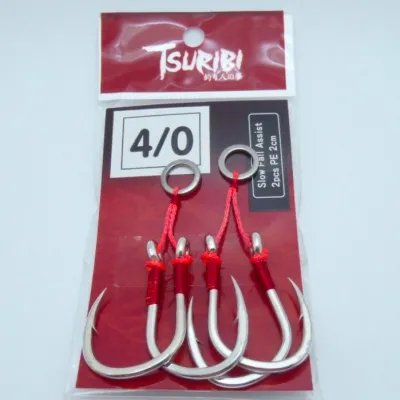
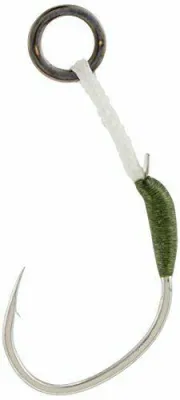
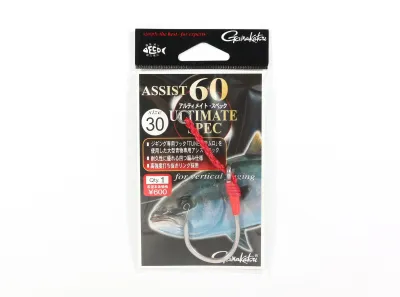
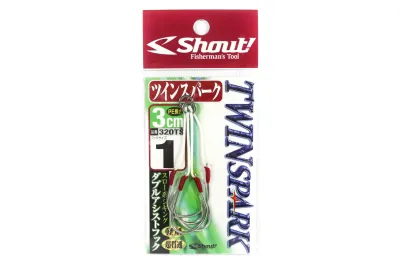
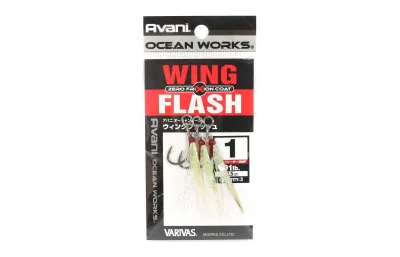
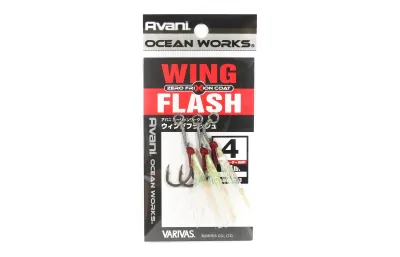
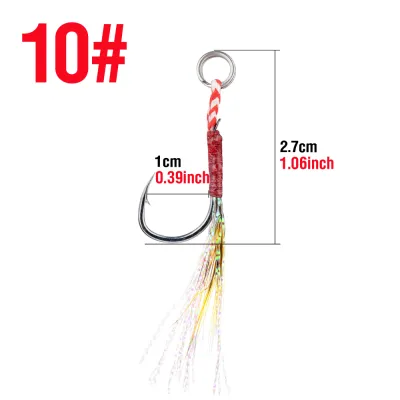
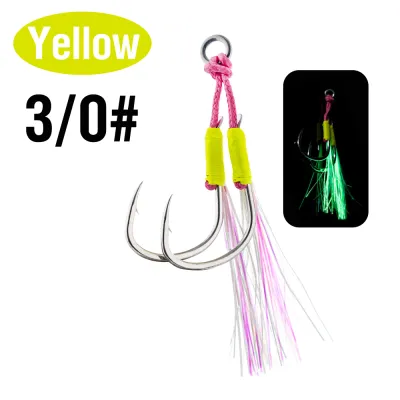
Prices are valid at publication and may change. Please refer to the product page for the latest price.
Treble hooks are highly prone to snagging on underwater structures such as reefs, rocks, and wrecks. Because they hang rigidly, they also act as a lever when a fish shakes its head, often allowing the fish to tear the hook free. Assist hooks, by contrast, swing freely and independently of the heavy jig body. When a fish strikes, the flexible cord prevents the fish from using the weight of the jig to throw the hook, resulting in a much higher hook-up and landing ratio.
For beginners, keeping the initial setup simple is key to avoiding frustration on the water. A basic assist hook assembly comprises the hook itself, the assist cord (often made of Kevlar or high-density polyethylene), a solid ring, and a split ring to connect the assembly to the jig. Starting with a pre-rigged single assist hook minimizes tangles and allows you to focus on mastering your jigging rhythm and rod action.
Matching Hook Size to Your Jig Weight and Profile
Selecting the correct hook size requires analyzing the physical dimensions of your jig rather than just its weight. The most critical dimension to measure is the hook gap, which is the distance between the hook shank and the sharp point. As a general rule, the hook gap must be slightly wider than the thickest part of the jig’s body.

If the hook gap is too narrow, the body of the jig can act as a shield during a strike, physically blocking the hook point from penetrating the fish’s mouth. Conversely, if the hook is excessively large, it will constantly loop over the back of the jig, causing the hook to get stuck against the metal body. This tangling completely ruins the natural flutter of the jig and prevents it from attracting fish.
To verify the fit, lay the assist hook flat against the side of the jig. The hook point should clear the edges of the jig body with a few millimeters of clearance. The length of the assist cord should position the bend of the hook roughly one-third to one-half of the way down the length of the jig. This positioning ensures that when a fish attacks the head or center of the moving lure, the hook is perfectly placed to find purchase.
When shopping for hooks, you will encounter manufacturer sizing charts using numerical designations like #1, 1/0, 2/0, or 3/0. Because these sizes are not standardized across different brands, always check the physical measurements provided on the packaging or official brand websites. Compare these measurements directly against the width of the jigs in your tackle box to ensure a precise match.
Selecting Wire Thickness and Strength for Target Species
Assist hooks are manufactured in various wire gauges, typically categorized as light, medium, or heavy wire. Choosing the right thickness is a balance between the physical strength of the hook and its ability to penetrate a fish’s mouth cleanly under the pressure of your rod.
Light wire hooks are incredibly sharp and require very little force to penetrate. They are ideal for light jigging setups targeting species with soft mouths, or when using light rods that cannot exert massive hook-setting force. However, light wire can bend or straighten if subjected to heavy drag settings or when fighting powerful, hard-pulling fish near structure.
Medium and heavy wire hooks provide the structural integrity needed for larger, hard-fighting species. In local tropical waters, reef-dwelling species like Groupers and Snappers have extremely hard, bony mouths and will immediately dive for cover when hooked. A medium to heavy wire hook is essential to withstand the high drag pressure required to stop these fish from breaking your line on the rocks.
However, thicker wire hooks require a much firmer hookset to drive the barb home. To ensure your gear works as a cohesive system, you must match the hook’s wire strength to your rod and reel’s line rating. If you use a heavy-wire hook on a light PE 1-2 rod, the rod will flex too much to drive the thick hook point into a fish’s mouth. Always verify that your rod has the backbone to set the hook size you choose, and ensure the breaking strain of your assist cord and split rings does not exceed the safe working limits of your mainline and leader.
Step-by-Step Guide to Rigging Your First Assist Hook
Rigging your first assist hook correctly ensures that your terminal tackle remains secure under load and that your jig maintains its intended action in the water. Follow these steps to assemble your rigging safely.
- Step 1: Select the correct split ring. Choose a split ring with a strength rating that matches your leader material. The wire diameter of the split ring must be thin enough to pass through both the solid ring of your assist hook and the eyelet of your jig without binding.
- Step 2: Attach the assist cord to the split ring. Use a dedicated pair of split ring pliers to pry the split ring open. Slide the solid ring of the assist hook assembly into the split ring, rotating it until it is securely looped inside. Never use your fingernails or a knife to open split rings, as this can deform the metal and cause painful hand injuries.
- Step 3: Position the hook on the jig. For standard fast jigging, attach the split ring to the top eyelet of the jig so the hook hangs downward toward the body. If you are slow-pitch jigging near the seabed, you may choose to rig one assist hook at the top eyelet and another at the tail eyelet to catch fish that strike on the drop. For beginners, starting with a single top-mounted hook is highly recommended to reduce bottom snags.
- Step 4: Verify the connection and free swing. Hold the completed rig by the solid ring and let the jig hang vertically. Shake the setup gently to ensure the assist hook swings completely freely in all directions. If the cord catches on the split ring or the jig body, disassemble the components and check for any physical obstructions or mismatched sizes.
Common Beginner Mistakes and Safety Checks
One of the most common mistakes beginners make is using corroded, rusted, or deformed split rings and hooks. Saltwater is highly corrosive, and even a single day on the water can weaken metal components. A rusted split ring can easily open under the pressure of a fighting fish, resulting in lost tackle and missed opportunities.
Another frequent error is rigging mismatched gear, such as pairing a massive, heavy-duty assist hook with a small micro-jig. The excessive weight of the heavy hook and thick cord will damp the delicate flutter of the jig, making it far less appealing to passing fish. Always keep your terminal tackle proportional to the size of the lure you are fishing.
Before every casting session, perform a quick visual and physical safety check. Run your fingernail lightly over the hook point; if the hook slides off without catching, it is too dull and needs to be sharpened or replaced. Inspect the assist cord for any signs of fraying or wear from contact with fish teeth or underwater rocks, and replace any cord that shows structural damage.
Finally, always prioritize safety by using the correct tools. Investing S$15 to S$30 in a quality pair of split ring pliers and carrying a reliable set of line cutters will make rigging much safer and more efficient. Keep these tools easily accessible on your boat or kayak to handle quick rigging changes and hook removals safely.
Frequently Asked Questions (FAQ)
Should I use single or double assist hooks for beginner jigging?
For beginners, starting with a single assist hook rigged at the head of the jig is highly recommended. Single hooks offer excellent snag resistance, making them ideal for fishing over rocky bottoms, reefs, or wrecks where jigs are easily lost. They are also much easier and safer to remove from a thrashing fish once landed. Double assist hooks do increase your hook-up rate on fast-moving pelagic fish, but they also double the risk of snagging the seabed or tangling with your leader during the jig’s descent. Master the single hook setup first before experimenting with double configurations.
How often should I replace my assist hooks and split rings?
You should replace your assist hooks and split rings based on their physical condition rather than a set timeframe. Inspect your gear after every fishing trip for visual signs of wear, including rust spots, bent hook shafts, or split rings that no longer spring back completely closed. If the assist cord shows any fraying or the hook point feels dull even after sharpening, replace the component immediately. To maximize the lifespan of your terminal tackle, always rinse your jigs, hooks, and rings thoroughly in fresh water after saltwater use, and dry them completely before storing them in your tackle box.
Community discussion
Share your experience or ask a question. Comments are reviewed before publication.