
Choosing the right back support for men depends entirely on matching the brace’s design to the specific biomechanical demands of your sport. A rigid belt that stabilizes a heavy squat will severely restrict a runner’s stride, while a flexible running wrap will fail to provide the intra-abdominal pressure needed for a heavy deadlift. By evaluating your activity’s movement patterns, checking manufacturer specifications, and understanding how to fit the gear properly, you can select a support that aids your performance without compromising your natural mobility.
When to Use a Back Support and When to Seek Professional Advice
Before purchasing a back support, identify whether your physical condition warrants external bracing. Back supports generally fall into three categories: preventive support, injury recovery, and chronic pain management. Preventive supports are typically lightweight and flexible, designed to provide sensory feedback and mild compression during high-load activities. If you are recovering from an acute injury or managing chronic pain, a brace should only be used as part of a structured rehabilitation plan supervised by a healthcare professional.
Certain symptoms, known as red flags, indicate that a back support is insufficient and that you must stop all physical activity immediately. If you experience sharp, shooting pain down your legs, numbness or tingling in your lower extremities, muscle weakness, or any sudden changes in bowel or bladder control, seek urgent medical evaluation from a doctor or physiotherapist. These symptoms often point to nerve compression or spinal issues that require professional diagnosis rather than self-treatment with a retail brace.
Products mentioned in this guide
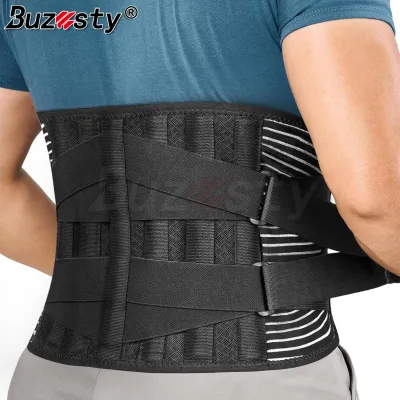
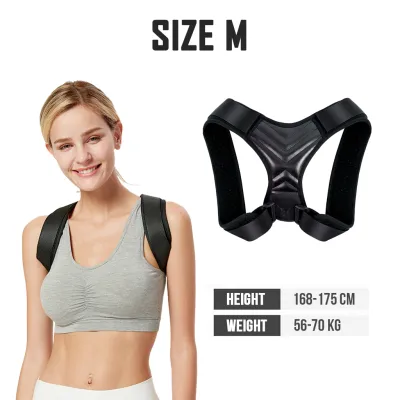
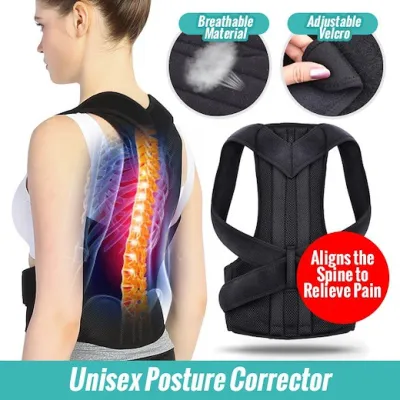
![[Sg Seller] Adjustable Posture Corrector Shoulder Lumbar Brace Support Brace Back Support Belt Back Shoulder Adult Corset Posture Correction](https://img.lazcdn.com/g/p/f47985cc9cfc0416883841cb76f8ecff.png_400x400q80.png_.webp)
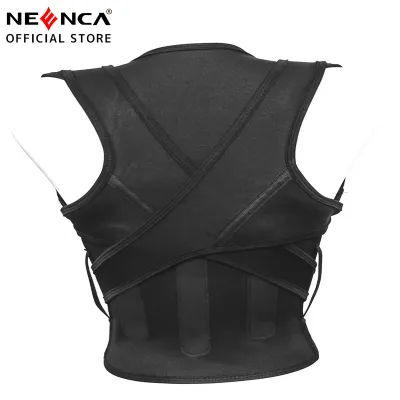
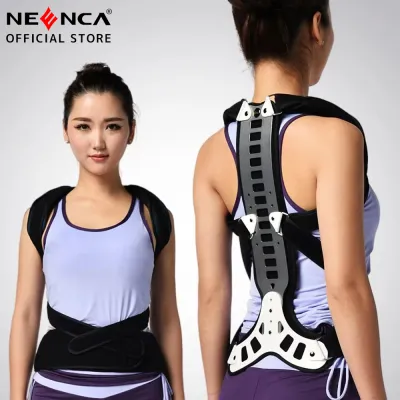
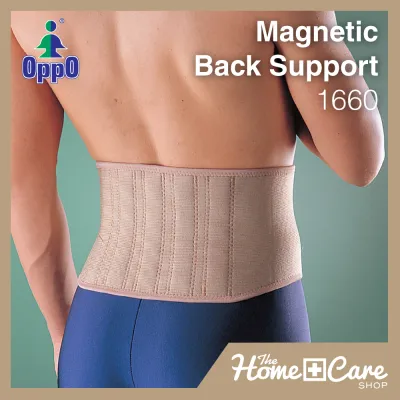
Prices are valid at publication and may change. Please refer to the product page for the latest price.
Remember that a back brace is a temporary supplement, not a permanent replacement for core strength and proper movement mechanics. Relying solely on a brace to protect your back can lead to muscle laziness and eventual atrophy of the deep stabilizing muscles of your abdomen and spine. To maintain long-term spinal health, integrate targeted core-strengthening exercises—such as planks and bird-dogs—into your fitness routine, and prioritize learning correct lifting and running techniques.
Selecting Back Support for Weightlifting and Strength Training
Strength training and powerlifting place immense axial loads on the spine, requiring a highly specialized type of back support. For heavy, slow lifts like squats, deadlifts, and overhead presses, a rigid lifting belt is the standard choice. These belts provide a solid, non-yielding wall for your abdominal muscles to push against, which increases intra-abdominal pressure and stabilizes the lumbar spine. In contrast, flexible lumbar supports made of neoprene or thin nylon are better suited for high-repetition functional fitness workouts where you need to bend, transition quickly between exercises, and maintain a high heart rate.

When shopping for a weightlifting belt, check the manufacturer’s product labels for specific dimensions, material stiffness, and closure mechanisms. A standard four-inch width across the entire length of the belt is ideal for most men, but those with shorter torsos may find a three-inch belt more comfortable as it prevents the edges from digging into the ribs or hip bones during deep squats. Leather belts offer the highest level of stiffness and durability but require a break-in period, whereas heavy-duty nylon belts with hook-and-loop closures offer immediate comfort and easier adjustability. For maximum security under near-maximal loads, look for steel prong buckles or lever-lock systems.
Proper positioning and core engagement are critical to using a lifting belt safely. Position the belt firmly around your waist, typically just above your hip bones and directly over your navel. It should be tight enough that you must slightly contract your abdomen to fasten it, but not so tight that you cannot take a full, deep breath. To engage the support during a lift, perform the Valsalva maneuver: take a deep breath into your belly, push your abdominal wall outward against the belt as if preparing to take a blow to the stomach, and hold this pressure throughout the lift, exhaling only when you reach the top of the movement.
Choosing Back Support for Running and Endurance Activities
Running and endurance sports subject the body to repetitive, low-magnitude impacts over extended periods, which can lead to postural fatigue in the lower back. Unlike weightlifting, back supports for running must prioritize lightweight, low-profile designs that do not restrict your natural stride or cause painful friction. The goal is to provide gentle compression that encourages an upright posture as fatigue sets in, without adding unnecessary bulk or weight.
In warm and humid climates, such as Singapore, heat dissipation and moisture management are critical factors when selecting running gear. Look for back supports made from advanced moisture-wicking fabrics, perforated neoprene, or breathable mesh panels. These materials allow sweat to evaporate quickly, reducing the risk of severe skin chafing, heat rash, and bacterial buildup during long-distance runs. Avoid thick, solid neoprene wraps that trap body heat and sweat, as they can quickly become uncomfortable and heavy.
When evaluating a running support, check the compression level and flexibility. The brace should offer enough elasticity to accommodate the natural rotational movements of your pelvis and spine as you run. A support that is too rigid will alter your running gait, potentially transferring stress to your hips, knees, or ankles and increasing the risk of lower-limb injuries.
Additionally, pay close attention to how you adjust the tension of your running support. It must be snug enough to stay in place without sliding up or down, yet loose enough to allow unrestricted diaphragmatic breathing. If you feel your breathing becoming shallow or confined to your upper chest, the support is too tight. Your diaphragm must be able to expand fully to ensure optimal oxygen intake during endurance activities.
Finding the Right Back Brace for Court Sports and Agility Training
Court sports such as basketball, tennis, and badminton demand rapid acceleration, sudden deceleration, explosive jumping, and frequent lateral twisting. A back brace designed for these high-intensity agility sports must strike a delicate balance between lateral stability and multidirectional flexibility. It must protect the lower back during sudden changes of direction while allowing the torso to twist and bend naturally.
To achieve this balance, look for supports that feature flexible side stabilizers, such as plastic stays or spring steel inserts, built into the fabric. These components provide structural reinforcement along the sides of your spine, helping to prevent hyperextension and excessive lateral bending without locking your torso in a rigid, upright position. The main body of the brace should be made of a highly elastic, durable synthetic blend that moves dynamically with your body.
Because court sports involve constant jumping, pivoting, and sweating, keeping the brace securely in place is a common challenge. Check product specifications for non-slip silicone grips or textured interior linings that prevent the brace from riding up during play. A double-strap adjustment system is highly recommended; this design features a primary wide band to secure the brace around your waist, and secondary elastic tension straps that allow you to customize the level of compression and support on the fly.
Hygiene and durability are also paramount for court sports gear. Because you will sweat heavily in enclosed sports halls or outdoor courts, check the manufacturer’s care instructions to ensure the brace is fully washable. Regular washing is necessary to remove sweat, salt, and bacteria, which can degrade the elastic fibers and hook-and-loop fasteners over time. Choosing a brace with high-quality, debris-resistant fasteners will ensure it remains secure match after match.
How to Fit, Wear, and Maintain Your Back Support
To get the maximum benefit from your back support and avoid skin irritation or circulation issues, you must know how to fit and wear it correctly. Begin by centering the lumbar pad or the widest section of the brace directly over your lower back, ensuring it covers the lumbar spine evenly. Wrap the primary wide band around your abdomen and secure it firmly, making sure it sits flat against your undergarments or skin without bunching. Once the primary band is secure, grasp the secondary tension straps on both sides, pull them forward simultaneously with equal force to ensure balanced compression, and fasten them securely.
Always verify the fit of your brace before starting your workout by using the two-finger rule. Slide two fingers flat between the brace and your body; they should fit snugly but comfortably. If you cannot slide your fingers in, the brace is too tight and should be loosened. Watch for physical warning signs such as numbness, tingling, coldness in your legs or feet, or visible skin redness and irritation. If you experience any of these symptoms, remove or loosen the brace immediately to prevent nerve compression or restricted blood flow.
Proper maintenance is essential to preserve the elasticity, structural integrity, and hygiene of your back support. Always refer to the manufacturer’s care label for specific instructions, but as a general rule, most sports supports should be hand-washed in cold water using a mild, liquid detergent. Before washing, fasten all hook-and-loop straps to prevent them from nagging on the fabric or collecting lint. Avoid using bleach, fabric softeners, or harsh chemicals, as they can break down the synthetic fibers and ruin the elasticity. Always air-dry the brace flat in a shaded, well-ventilated indoor area; never place it in a clothes dryer or expose it to direct sunlight, as high heat will warp plastic stabilizers and degrade the rubber or elastic components.
Frequently Asked Questions (FAQ)
Can I wear a back support all day outside of sports activities?
No, you should not wear a back support all day during your normal daily routines unless a doctor or physiotherapist has explicitly instructed you to do so. Wearing a brace for extended periods when you are not engaging in high-load sports can cause your core and spinal stabilizing muscles to become inactive, relying on the external support instead of doing their natural job. Over time, this muscle dependency can lead to muscle weakness and atrophy, ultimately making your back more vulnerable to injury when the brace is removed. Limit your use of the support to active sports sessions, and focus on building natural core strength for daily spinal stability.
Does a back support improve my lifting performance?
A back support, such as a weightlifting belt, does not directly increase your muscular strength or act as a substitute for proper lifting technique. Instead, it works by providing a rigid external wall for your abdominal muscles to push against, which helps increase intra-abdominal pressure and stabilize your spine under heavy loads. This stabilization can make a lift feel more secure and help you maintain proper spinal alignment, but it is not a shortcut to lifting heavier weights. Relying on a belt to lift weights beyond your physical capacity without mastering the correct form can lead to severe injury.
Community discussion
Share your experience or ask a question. Comments are reviewed before publication.