
Choosing the right badminton trainer depends heavily on your current playing ability, your training environment, and what specific skills you want to develop. A trainer is an excellent tool to supplement your on-court practice, but it cannot replace professional coaching or real match play. Selecting the wrong type of device can lead to frustration, poor habit formation, or equipment that sits unused in a storage closet. By matching the trainer’s mechanics to your skill level, you can ensure your practice sessions are both productive and safe.
Which Badminton Trainer Fits Your Current Skill Level?
Basic return trainers (tethered shuttlecocks)
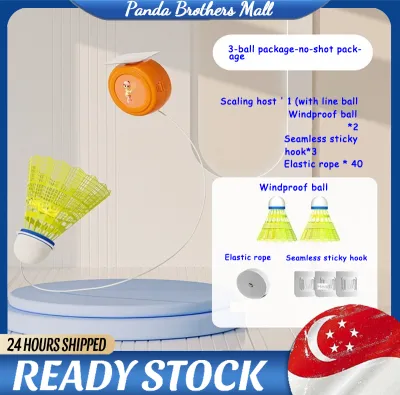
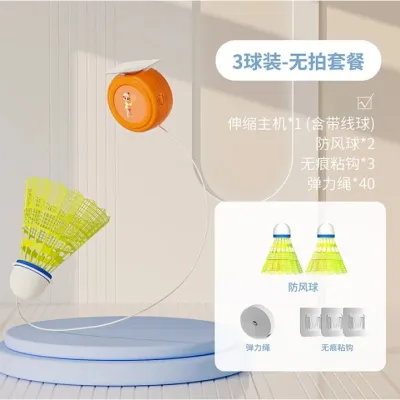
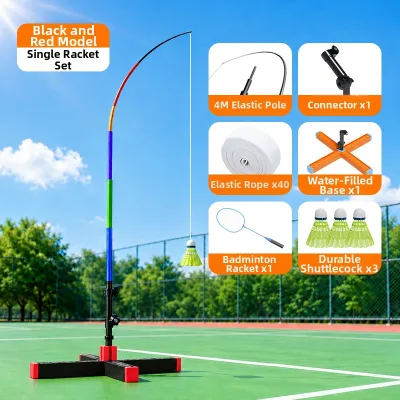
Beginner players often struggle with the fundamentals of contact, timing, and basic racket grip. For those starting out, a basic return trainer—typically consisting of a weighted base, a flexible telescopic pole, and a shuttlecock attached to an elastic tether—is highly effective. This setup allows you to practice repetitive swings without the need for a partner to feed shots or the constant interruption of picking up fallen shuttlecocks.
Using a tethered trainer helps build muscle memory for fundamental strokes like the overhead clear, drop shot, and basic serves. Because the shuttlecock returns to you along a predictable path determined by the elastic cord, you can focus entirely on your racket face angle, foot positioning, and follow-through. It is an excellent tool for solo practice in limited spaces, such as a backyard, a spacious living room, or a sheltered void deck.
Products mentioned in this guide
![🇸🇬 [In Stock]Badminton Rebound Trainer Indoor Outdoor Hanging Single Children Adult Trainer Playing Badminton Elastic](https://img.lazcdn.com/g/p/d5ec9ded0bfc69d773fb1b9613217c54.jpg_400x400q80.jpg_.webp)
Prices are valid at publication and may change. Please refer to the product page for the latest price.
However, players must recognize the limitations of these basic systems. The rebound trajectory of a tethered shuttlecock does not perfectly mimic the flight physics of a free-flying shuttlecock. Relying solely on a return trainer can sometimes lead to timing issues when transitioning back to real court play, as the elastic pull accelerates the shuttlecock faster than natural air resistance would. Therefore, beginners should use this tool primarily for warm-ups, grip transitions, and basic hand-eye coordination rather than trying to simulate high-speed rallies.
Multi-shuttle feeders (launching machines)
As you transition to an intermediate level, your training needs shift from basic contact to consistency, footwork, and physical conditioning. This is where multi-shuttle feeders, also known as automated launching machines, become highly valuable. These devices hold a stack of shuttlecocks and launch them at set intervals, allowing you to practice continuous footwork patterns and repetitive stroke execution.
An intermediate player can use a feeding machine to drill specific court movements, such as moving from the center to the rear court for an overhead smash, or lunging forward to the net for a delicate drop shot. By setting the machine to deliver shuttlecocks to a specific spot, you can isolate and refine your technique under controlled, repetitive conditions. This repetition is crucial for building the aerobic endurance and leg strength required for competitive matches.
When selecting a multi-shuttle feeder, it is essential to verify its compatibility with different types of shuttlecocks. Some machines are designed specifically for nylon or synthetic shuttles, while others can handle natural feather shuttlecocks. In humid climates like Singapore, feather shuttlecocks can absorb moisture and change weight, which may affect how smoothly they feed through the machine’s mechanism. Always check the manufacturer’s specifications regarding shuttlecock compatibility and recommended storage conditions to prevent frequent jams during your drills.
Advanced reaction trainers (light-based or programmable systems)
Advanced players already possess refined stroke mechanics and consistent footwork; their primary focus is on speed, decision-making, and rapid court coverage. For this level of play, advanced reaction trainers—often utilizing programmable LED light pods or highly customizable multi-angle launching systems—are the ideal choice. These systems are designed to simulate the unpredictable nature of a real opponent.
Reaction light systems are typically placed at various corners of the court or mounted on walls. The lights illuminate in random sequences, forcing the player to react instantly, sprint to the designated spot, tap the sensor, and recover to the center position. This training sharpens cognitive processing, visual tracking, and explosive first-step quickness, which are critical during fast-paced rallies.
Programmable launching machines offer similar benefits by varying the speed, angle, and interval of each feed randomly. This prevents the player from anticipating the next shot, forcing them to maintain a split-step readiness and adapt their racket skills on the fly. Because these systems demand high physical exertion and rapid directional changes, players should ensure they have a proper warm-up routine and adequate court shoes with excellent grip to prevent slips or joint strain on hard surfaces.
Evaluating Your Space, Power, and Training Goals
Space and clearance requirements
Before purchasing any badminton trainer, you must carefully evaluate the physical space available to you. A basic return trainer with a telescopic pole requires relatively little clearance—usually a circle with a radius of about two to three meters is sufficient for safe swinging. This makes it highly suitable for indoor residential spaces, sheltered outdoor areas, or small gardens.

In contrast, automated multi-shuttle feeders require a much larger footprint to be effective. To simulate realistic trajectories, the machine needs to be positioned on one side of the net while you stand on the other, requiring a full-sized or near-full-sized badminton court. If you plan to use a feeder in a shared sports hall or an outdoor community court, you must ensure that the machine’s setup does not obstruct neighboring courts or create safety hazards for other players.
Reaction light systems also demand significant space, as the pods are often spread across the entire court boundary. When setting up these systems, check that the floor surface is clean, dry, and free of debris. Slippery floors in non-air-conditioned halls or outdoor courts can lead to serious injury when performing high-speed reaction drills.
Power access and portability
Portability is a key consideration for players who do not have dedicated private courts. If you frequently train at public ActiveSG sports halls, school facilities, or outdoor community spaces, you will need a trainer that is easy to transport and quick to assemble. Look for lightweight designs that come with dedicated carrying bags or compact folding mechanisms.
Power source availability is another critical factor. Many advanced feeders and reaction systems require electrical power to operate. If you plan to train on outdoor courts or facilities without accessible wall outlets, you must verify if the device can run on rechargeable batteries. Check the manufacturer’s specified battery runtime under continuous use to ensure it can last through your entire training session.
For battery-operated models, it is also wise to check the charging time and whether the batteries are removable. Having a spare battery pack can prevent your training session from being cut short. If the device relies on a mains power connection, ensure you have a suitable, heavy-duty extension cord that can be safely taped down or positioned away from foot traffic to prevent tripping hazards.
Noise and shuttlecock compatibility
The environment in which you train should influence your choice of equipment, particularly regarding noise levels. Automated launching machines utilize motors and spinning wheels to propel the shuttlecock, which can generate a noticeable mechanical hum or high-pitched whirring sound. If you plan to use the machine in a quiet residential area, a condominium function room, or a small indoor space, this noise could be disruptive to others.
Furthermore, the type of shuttlecock you use regularly should match the machine’s feeding mechanism. Synthetic nylon shuttlecocks are generally more durable and consistent in shape, making them less prone to jamming in automated feeders. Feather shuttlecocks, while offering more realistic flight characteristics, are fragile; bent or broken feathers can easily cause the feeding arm to jam or misfeed.
If your training goals require the use of feather shuttlecocks, look for feeders specifically designed with wider feeding tubes or gentle mechanical arms. Regularly inspect your shuttlecocks before loading them into the machine, discarding any with severely damaged feathers or deformed corks. This simple check will save you time and prevent unnecessary wear on the machine’s internal motors.
Essential Specifications and Pre-Purchase Checks
Adjustability and progression
A good badminton trainer should be able to adapt as your skills improve. When evaluating different models, pay close attention to the range of adjustability they offer. For multi-shuttle feeders, check if you can adjust the frequency of the launches, the speed of the shuttlecock, and the vertical angle of the projection.
An adjustable frequency allows you to start with slow, manageable feeds while you focus on technique, and gradually speed up the intervals to challenge your fitness and reaction times. Variable speed settings are crucial for simulating different types of shots, from slow, high clears to fast, flat drives. The ability to adjust the vertical angle allows you to practice both defensive lifts and offensive smashes.
For reaction systems, check the customization options of the accompanying mobile application or control panel. The ability to program custom sequences, adjust light duration, and track your reaction times over time provides valuable feedback on your progress. Avoid systems with fixed, non-adjustable patterns, as you will quickly adapt to them, reducing the training effectiveness.
Durability and build quality
Badminton training involves high-impact movements and powerful racket strikes, meaning your training equipment must be built to last. For basic return trainers, inspect the quality of the telescopic pole and the elastic tether. The pole should be made of flexible yet sturdy materials, such as carbon fiber or high-grade fiberglass, which can bend repeatedly without snapping.
The elastic cord is often the first component to wear out or break due to the high tension and repetitive stretching. Check if the manufacturer includes spare cords in the package or if replacement tethers are easily purchasable. The connection point between the cord and the shuttlecock should also be reinforced to prevent the shuttle from flying off during a powerful smash.
For automated feeders, look for impact-resistant plastic casings and robust internal gears. Since these machines may occasionally be hit by stray shuttlecocks or rackets, a durable outer shell is essential. Reading user reviews regarding the longevity of the feeding motor and the reliability of the electronic components can help you avoid models prone to premature mechanical failure.
Safety and base stability
Safety should always be a primary concern when using any sports training equipment. A stable base is critical for preventing accidents during intense workouts. For tethered return trainers, the base must be heavy enough to remain stationary when you hit the shuttlecock with full force. Many models feature hollow bases that can be filled with water or sand; sand is generally preferred as it provides greater weight and cannot leak onto your floor.
If you are using an automated feeder, the tripod or stand must be sturdy and well-balanced. A top-heavy machine can easily tip over if bumped by a player or if set up on an uneven outdoor surface. Look for stands with wide footprints, non-slip rubber feet, or ground pegs for outdoor grass setups.
Additionally, ensure that the training area is kept clear of loose shuttlecocks, bags, and water bottles. When performing rapid footwork drills, stepping on a stray shuttlecock can easily cause a twisted ankle or a fall. Regularly pause your training to clear the court surface, ensuring a safe environment for yourself and anyone else sharing the space.
Frequently Asked Questions (FAQ)
Can beginners use multi-shuttle feeders effectively?
Yes, beginners can use multi-shuttle feeders, but they should do so with caution and proper guidance. While an automated feeder provides a consistent stream of shuttlecocks, a beginner who has not yet learned correct grip and swing mechanics may end up repeating bad habits. Without a coach or experienced player to correct your form, practicing hundreds of repetitive strokes can reinforce poor technique, which becomes much harder to correct later on.
If you do choose to use a feeder as a beginner, set the machine to its slowest speed and longest interval settings. Focus entirely on executing a clean, controlled stroke rather than trying to hit the shuttlecock hard. It is highly recommended to combine feeder practice with instructional videos or professional coaching to ensure you are building a solid technical foundation.
How do I maintain a shuttlecock feeding machine to prevent jams?
Regular maintenance is key to keeping your automated feeding machine running smoothly and extending its lifespan. Always refer to the manufacturer’s specific instructions for cleaning and care. As a general rule, keep the feeding tubes and launching wheels clean and free of dust, dirt, or feather debris. You can wipe down the external surfaces and the feeding track with a dry or slightly damp microfiber cloth.
Before loading shuttlecocks into the machine, inspect each one carefully. Avoid using shuttlecocks with broken feathers, bent nylon skirts, or loose cork bases, as these irregularities are the primary cause of mechanical jams. Additionally, store the machine in a cool, dry place away from direct sunlight and extreme humidity to protect the electronic components and prevent the rubber launching wheels from degrading.
Community discussion
Share your experience or ask a question. Comments are reviewed before publication.