
Choosing the right balance pad for a home workout in Singapore requires balancing physical training goals with the practical realities of apartment living. These simple foam tools introduce instability to standard exercises, forcing your core and stabilizing muscles to engage more deeply to maintain equilibrium. However, because local homes often feature hard tiled, vinyl, or polished wood flooring and limited storage space, selecting a pad is not just about finding the softest foam. You must evaluate material durability, slip resistance, and dimensions to ensure the accessory fits both your physical routine and your living space safely.
Unlike heavy gym equipment, a balance pad is lightweight and highly portable, making it ideal for HDB flats or condominiums where dedicated gym space is at a premium. To make an informed decision, you need to look past generic marketing claims and focus on verifiable specifications like foam density, dimensions, and surface textures. By understanding how these physical properties affect your workouts, you can select a durable tool that enhances your fitness routine without cluttering your home.
Identify If a Balance Pad Matches Your Fitness Goals
Before purchasing a balance pad, it is essential to confirm whether this specific accessory aligns with your training objectives. A balance pad is primarily designed to challenge your proprioception—the body’s ability to sense its position, movement, and spatial orientation. By creating an unstable surface, the pad forces the small stabilizing muscles in your ankles, knees, hips, and core to work harder during standard movements. If your goals include improving functional fitness, enhancing athletic agility for outdoor runs, or building better overall posture, incorporating a balance pad into your routine can provide a highly effective stimulus.
Products mentioned in this guide
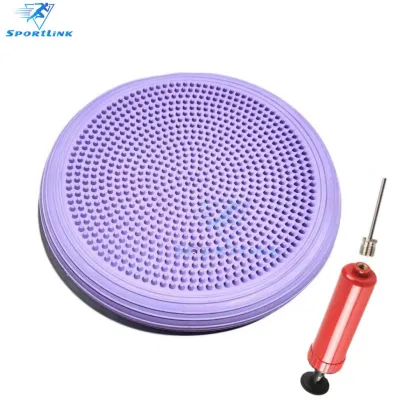
![[OKLIFE. SG]aron Anti-Slip Balance Pad Inflatable Wobble Balance Pad PVC Inflatable Yoga Mat for Core Strength & Balance Training](https://img.lazcdn.com/g/p/6c290bce7f4f951da067b79ca7ea0e12.jpg_400x400q80.jpg_.webp)
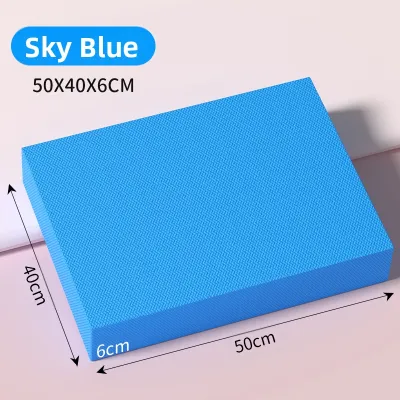
![[BEST SELLER]Balance Foam Pad Yoga Mat Exercise Non-slip Waterproof Soft for Fitness Training](https://img.lazcdn.com/g/p/ecdbe1ded9c6362a36a977bc38118d05.jpg_400x400q80.jpg_.webp)
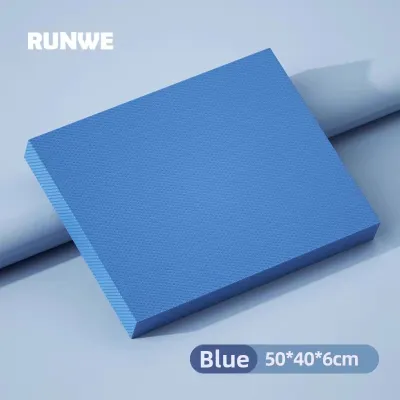
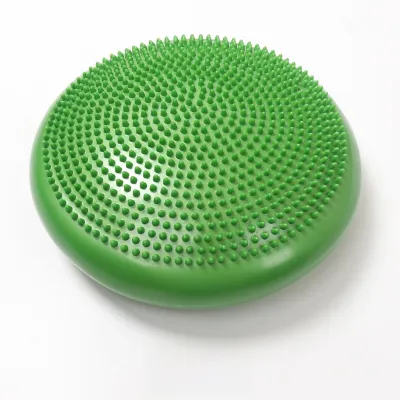
Prices are valid at publication and may change. Please refer to the product page for the latest price.
For those focusing on joint rehabilitation and low-impact conditioning, a balance pad offers a cushioned environment that minimizes impact on sensitive joints. It is commonly used in physical therapy settings to rebuild strength in the lower limbs after minor ankle sprains or knee strains. However, it is crucial to remember that fitness equipment cannot replace professional medical guidance or structured rehabilitation training. If you are recovering from an injury, always verify your readiness for instability training with a qualified healthcare professional before introducing a balance pad to your routine.
Beyond specialized balance training, these pads are highly versatile tools for bodyweight exercises and light resistance training. You can place a pad under your knees to provide comfortable cushioning during lunges or kneeling planks, or use it under your hands to add a stability challenge to push-ups. It can even serve as an active sitting cushion on your work chair to help engage your core during long hours of remote work.
Because instability training carries an inherent risk of losing your balance, you must always prioritize safety and recognize your physical limits. Beginners should start by placing the pad near a sturdy wall, a heavy piece of furniture, or a stable counter that they can easily grab if they begin to fall. Always perform your first few sessions at a slow, controlled pace, and stop the exercise immediately if you experience sharp joint pain, sudden dizziness, or a complete loss of control. Equipment is a tool to assist your training, but your personal judgment and physical awareness remain the primary safeguards against injury.
Evaluate Foam Density and Surface Grip Specifications
When shopping for a balance pad, the physical construction of the foam determines both the difficulty of your exercises and the lifespan of the product. Foam density and thickness are the primary factors that dictate how much the pad will compress under your weight. Most standard balance pads feature a thickness of approximately 5 cm to 6 cm. A thicker pad generally creates a more unstable surface, offering a greater challenge for advanced users, whereas a thinner pad provides a more stable foundation that is highly suitable for beginners, seniors, or those undergoing early-stage rehabilitation.

To ensure the pad remains effective over time, look for high-density, closed-cell foam. Low-density foams tend to bottom out completely under your weight, meaning your feet press straight through to the hard floor beneath. This defeats the purpose of the pad and removes the instability challenge. High-density foam, on the other hand, compresses just enough to challenge your balance while maintaining its supportive structure.
Surface texture and grip patterns are equally critical, especially in Singapore’s warm and humid climate. Sweat can quickly turn a smooth foam surface into a slipping hazard. When evaluating product specifications, look for pads that feature embossed textures, waffle patterns, or diamond-grid surfaces on both the top and bottom. These textures help your bare feet, socks, or athletic shoes maintain traction during dynamic movements, and they also help prevent the pad itself from sliding across your floor.
Material composition is another key specification to check on product labels. The two most common materials used for balance pads are Thermoplastic Elastomer (TPE) and Ethylene-Vinyl Acetate (EVA). TPE is generally considered a premium option for fitness accessories because it offers excellent elasticity, slip resistance, and durability. It is also typically odorless and free of PVC. EVA foam is lighter and often more budget-friendly, but it may compress permanently over time if subjected to heavy, repeated loads. Choosing a closed-cell TPE pad ensures that moisture and sweat cannot penetrate the core of the foam, making it much easier to keep clean and odor-free.
Select the Right Size and Shape for Your Exercises
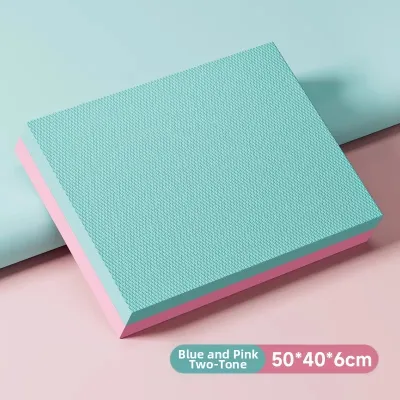
Balance pads come in several dimensions and shapes, and selecting the right one depends heavily on your body size and the specific exercises you plan to perform. The most common design is the standard rectangular pad, which typically measures around 40 cm in length, 50 cm in width, and 6 cm in height. This size is highly versatile because it provides a wide enough platform for a bilateral stance, allowing you to stand with both feet on the pad at a natural, shoulder-width distance. It also offers ample surface area for placing both forearms during planks or sitting comfortably during core work.
If your training routine focuses heavily on unilateral work—such as single-leg stands, single-leg deadlifts, or targeted ankle stability drills—you might consider contoured pads or dual-pad setups. Some manufacturers offer smaller, oval-shaped pads or pairs of circular balance discs. These smaller options allow you to position each foot independently, which can be highly beneficial for customizing your stance width or performing dynamic stepping exercises. However, keep in mind that these smaller designs offer less surface area, making them less suitable for exercises that require you to place your knees, hands, or hips on the pad.
Before finalizing your choice, always check the weight capacity limits specified on the product packaging or the manufacturer’s official website. While high-quality, high-density foam pads can comfortably support user weights up to 120 kg or more, lighter or budget-grade pads may have much lower weight thresholds. Exceeding the recommended weight limit can cause the foam to compress permanently, reducing its effectiveness and potentially causing you to lose your footing unexpectedly. Ensuring the pad’s weight capacity matches your body weight and any additional weights you plan to hold during exercises is a simple but vital safety check.
Plan for Storage and Footprint in Compact Spaces
Living in a typical Singapore apartment means that every square meter of floor space is valuable. Before purchasing any new fitness equipment, you must plan where you will use it and where it will live when your workout is finished. A standard rectangular balance pad has a relatively small footprint, but you still need to ensure you have a safe, clear area to use it.
Measure your designated workout space to ensure you have at least 1.5 meters of clear, open space in every direction around the pad. This clearance zone should be completely free of sharp furniture corners, glass coffee tables, or low-hanging fixtures. If you lose your balance during a challenging drill, you must be able to step off the pad quickly and safely without colliding with household objects.
Because balance pads are made of lightweight foam, storing them is incredibly easy compared to bulky metal gym gear. Most pads weigh less than 1 kg, allowing you to move them around your home with minimal effort. When your workout is complete, you can easily slide the pad horizontally under a bed or sofa, tuck it vertically into the gap beside a wardrobe, or stack it on a utility shelf. If you purchase multiple pads for family members, look for flat, rectangular designs that stack neatly on top of one another to minimize storage clutter.
To maximize the utility of your purchase in a compact home, consider how the balance pad can double as a multi-functional household aid. Because of its supportive, high-density foam construction, a balance pad can serve as an excellent kneeling cushion for household chores like cleaning low cabinets, a supportive block for restorative yoga stretches, or an ergonomic seat cushion for your home office chair. Finding multiple uses for a single piece of gear is one of the best ways to justify its footprint in a smaller living space.
Verify Product Claims When Shopping on E-commerce Platforms
When browsing online marketplaces and e-commerce platforms in Singapore, you will encounter a wide variety of balance pads at various price points, typically ranging from S$15 to S$60. Because you cannot physically touch or stand on the pad before purchasing online, you must take extra steps to verify the seller’s claims and avoid low-quality products that may degrade quickly.
Start by cross-referencing the listed thickness and density specifications with user-uploaded photos in the customer review section. Sellers sometimes use digitally altered stock images that make a thin, low-quality pad look thick and robust. Look for photos taken by actual buyers that show the pad in use. If you see photos where a user’s foot is sinking completely to the floor, or where the edges of the pad are curling upward, this is a clear indicator of low-density foam that will not provide a lasting stability challenge.
Next, compare prices in S$ and pay close attention to the platform’s return policies and warranty terms. While it can be tempting to opt for the cheapest available option, extremely low-priced pads are often made of cheap EVA foam that may arrive warped or emit a strong, unpleasant chemical odor. A reputable seller should offer a clear return policy that allows you to exchange or return the product if it arrives damaged, warped, or fails to match the advertised dimensions.
Finally, spend time reading verified customer reviews, specifically looking for feedback regarding long-term durability. Search for terms like “compression,” “indentation,” “tearing,” or “odor.” If multiple reviews mention that the pad retains deep, permanent footprints after only a few uses, or that the surface texture begins to peel and flake off, it is best to avoid that product. Investing a little more in a high-quality, highly-rated TPE balance pad will ensure you receive a durable, safe, and effective training tool that supports your fitness journey for years to come.
Frequently Asked Questions (FAQ)
How do I clean and maintain a foam balance pad?
To clean a foam balance pad, wipe the surface down with a damp cloth and a small drop of mild dish soap. Avoid using harsh chemical cleaners, bleach, or abrasive scrubbing brushes, as these can degrade the closed-cell structure of TPE or EVA foam and ruin the non-slip surface texture. After wiping the pad with soapy water, use a clean, damp cloth to remove any remaining soap residue. Always allow the pad to air-dry completely in a shaded, well-ventilated indoor area before storing it away. Do not place the pad in direct sunlight to dry, as prolonged exposure to UV rays can cause the foam to dry out, become brittle, and lose its natural elasticity.
Can I use a balance pad on slippery tile or hardwood floors?
Yes, but you must perform a quick safety check before starting your workout. Hardwood, laminate, and polished ceramic tiles common in Singapore homes can sometimes be slippery, especially when dust or moisture is present. Place the balance pad on your floor and apply light pressure with your foot to see if it slides easily. If the pad shifts or slides under light pressure, do not use it directly on that surface. To secure the pad, place a high-grip rubber yoga mat or a dedicated non-slip rug underlay beneath it. This simple step anchors the pad securely to the floor, allowing you to perform your balance exercises safely without the risk of the pad slipping out from under you.
Community discussion
Share your experience or ask a question. Comments are reviewed before publication.