
Setting up a home gym in a Singapore Housing & Development Board (HDB) flat requires a careful balance between training ambition and spatial reality. To find the ideal barbell, you must evaluate both the physical footprint of the equipment and its structural limits. A barbell that is too long will strike walls or furniture, while one with insufficient weight capacity poses safety risks as your strength progresses. Generally, a 6-foot barbell offers an excellent compromise for tight spare rooms, but a standard 7-foot barbell remains viable if you have a dedicated lifting area and a compatible rack. Your decision should hinge on precise room measurements, your preferred exercises, and a verified load rating that accommodates your long-term fitness goals.
Measure Your Available Space and Clearance Requirements
Before purchasing any strength equipment, map out the exact dimensions of your designated workout area. Start by measuring the total width of the room where you plan to lift. A common mistake is matching the room’s width directly to the length of the barbell without accounting for the space needed to load and unload weight plates. You must factor in at least 30 to 45 centimeters of open space on both sides of the bar. This clearance allows you to slide plates onto the sleeves comfortably and secure them with collars without scraping your walls.
Physical access to your flat is another critical logistical detail. Measure your door frames, narrow hallway turns, and lift entryways before placing an order. A standard Olympic barbell is rigid and cannot bend around tight corners. If your spare room is located at the end of a sharp corridor, maneuvering a long box into the space can be challenging. Ensuring the path from your front door to your lifting zone is clear of obstructions will save you from frustrating delivery day surprises.
Products mentioned in this guide
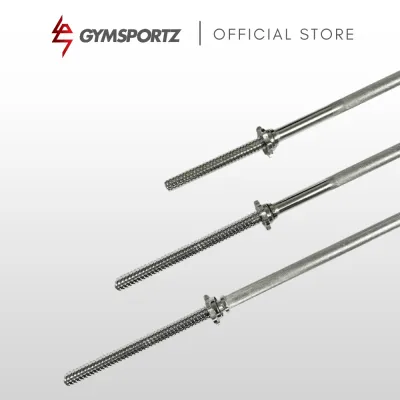
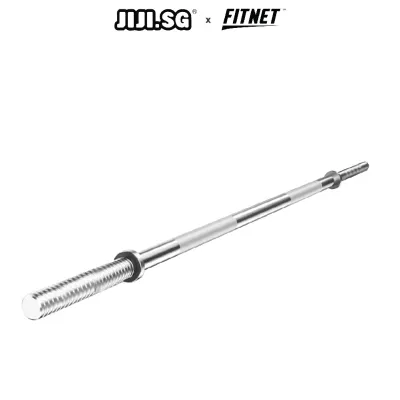

Prices are valid at publication and may change. Please refer to the product page for the latest price.
Finally, look upward and assess your vertical clearance. Overhead movements like the shoulder press require sufficient ceiling height. In many HDB flats, ceiling fans and low-hanging light fixtures present immediate hazards. Measure the distance from the floor to these fixtures, and simulate your overhead reach with a broomstick to verify you will not strike any objects. Lateral clearance is equally vital; ensure that slight shifts in your balance during a heavy lift will not cause the barbell to impact nearby windows or walls.
Match Barbell Length to Your Room Layout and Training Goals
Selecting the right barbell length requires understanding how its structural components affect your workouts. A barbell consists of a central shaft, which you grip, and two outer sleeves where the weight plates are loaded. The length of the shaft dictates your grip width, while the length of the sleeves determines how many weight plates you can load. Balancing these dimensions is key to maintaining both exercise variety and safety in a compact home gym.

If you choose a bar that is too short, you may find the shaft is not wide enough to accommodate a comfortable grip for wide-stance movements like the snatch or a wide-grip bench press. Conversely, a bar with excessively long sleeves might provide more weight capacity than you realistically need while consuming valuable floor space. By analyzing your training goals, you can determine whether you need the full dimensions of a standard bar or if a compact alternative will suffice.
Standard 7-Foot Barbells for Full-Range Lifts
The standard 7-foot (approximately 2.2 meters) Olympic barbell is the gold standard for powerlifting, weightlifting, and functional fitness. If your HDB flat has a spacious spare room or a dedicated living room corner, this length is highly desirable. A 7-foot bar is designed to fit perfectly on standard power racks, half racks, and squat stands. This compatibility ensures that the bar rests securely on the J-cups, leaving ample room for your hands outside the rack uprights during setups for squats or bench presses.
This standard length is particularly beneficial for lifters who require substantial sleeve space. If you use bumper plates, which are thicker than cast iron plates, you will quickly run out of sleeve space on shorter bars. A 7-foot barbell provides the necessary sleeve length to stack multiple thick plates, allowing you to progress to heavier weights without restriction. However, you must ensure your room is at least 3 meters wide to accommodate the bar and the necessary loading clearance safely.
Shorter and Specialty Barbells for Tight Spaces
When a 7-foot bar is too long, shorter alternatives offer a practical solution. A 6-foot (approximately 1.8 meters) barbell is a popular compromise for HDB home gyms. These bars shorten both the shaft and the sleeves slightly, allowing them to fit into narrower rooms while maintaining enough shaft width to be compatible with specialized, narrow-width squat stands. They allow you to perform major compound lifts without feeling claustrophobic.
For tighter spaces, 5-foot bars and specialty bars like EZ-curl bars are excellent options. A 5-foot bar is highly maneuverable and ideal for accessory movements, though its short shaft usually prevents it from being used with a standard squat rack. When exploring these shorter options, always verify the sleeve diameter. Many compact bars feature standard 2-inch (50mm) sleeves to fit Olympic plates, but some budget models use 1-inch (25mm) sleeves. Ensuring compatibility with your existing weight plates is crucial.
Determine the Right Weight Capacity and Load Rating
Selecting a barbell with the appropriate weight capacity is fundamental to safety and equipment longevity. Weight capacity refers to the maximum load the bar can support without bending permanently, while tensile strength measures resistance to breaking under tension. Rather than relying on vague marketing terms, always look for the manufacturer’s certified load rating, typically expressed in kilograms or pounds.
To determine your required capacity, calculate your current maximum lift for heavy compound movements like the deadlift or squat. Add the weight of the barbell and your heaviest plates, then factor in a safety margin for future progression. If your current deadlift is 100 kilograms, choosing a bar rated for at least 150 to 200 kilograms ensures the equipment remains safe as you get stronger. A higher load rating also indicates better construction quality, meaning the bar is less likely to develop a permanent bend.
Exceeding the manufacturer’s specified limits is highly dangerous. A barbell that bends under load can cause you to lose balance, leading to injury or property damage. Furthermore, cheap bars with low weight ratings often lack the structural integrity to handle sudden drops. Investing in a barbell with a verified, high-quality load rating provides peace of mind and ensures your home gym remains a safe environment.
Plan for Plate Storage and Safe Movement Zones
An organized lifting area is essential for maintaining safety and functionality in a compact HDB flat. Leaving weight plates scattered on the floor creates tripping hazards and limits usable space. To keep your floor clear, consider vertical plate trees or wall-mounted storage pegs. These solutions utilize vertical space, keeping your weights organized and easily accessible while preserving precious floor real estate for your actual workouts.
Establishing a dedicated safe movement zone around your lifting area is also critical. This zone should be completely free of furniture, electronics, and household items. When performing lifts, you must ensure that if you abort a repetition, the barbell can be safely guided down without striking nearby objects. To protect your HDB flooring from scratches, cracks, and impact damage, invest in high-density rubber gym mats. These mats help distribute the force of heavy lifts and reduce noise, which is important for maintaining good relations with neighbors.
Keep in mind that HDB floors are designed to support standard residential loads. While typical strength training setups are safe, avoiding high-impact drops of heavy weights is highly recommended. Using thick rubber tiles in combination with controlled lifting techniques ensures you protect both the building’s structure and your equipment. By planning your layout carefully, you can create an efficient, safe, and respectful home gym environment.
Frequently Asked Questions (FAQ)
Can I use a standard power rack in an HDB flat with a 7-foot barbell?
Yes, you can use a standard power rack with a 7-foot barbell in an HDB flat, provided your room has sufficient width. A standard rack is typically around 1.2 meters wide, and a 7-foot barbell is 2.2 meters long. This setup requires a room width of at least 3 meters to allow for safe plate loading on both sides. Always measure both the external width of the rack and the total length of the barbell before purchasing to ensure they fit comfortably within your available space.
Do shorter barbells fit standard Olympic weight plates?
Many shorter barbells, such as 6-foot and 5-foot models, are designed with standard 2-inch (50mm) diameter sleeves, making them fully compatible with Olympic weight plates. However, some compact or budget-friendly barbells utilize 1-inch (25mm) diameter sleeves, which require standard plates with smaller center holes. It is essential to check the manufacturer’s specifications for both the barbell sleeves and your weight plates to guarantee a proper fit before making a purchase.
Community discussion
Share your experience or ask a question. Comments are reviewed before publication.