
Finding the right basketball ring for your home in Singapore requires balancing your personal playing goals with the strict spatial and regulatory realities of local housing. Whether you reside in a high-rise Housing & Development Board (HDB) flat, a private condominium, or a landed estate, your choice of equipment must align with property rules, structural safety, and neighborly consideration. By evaluating your available space, understanding local property guidelines, and verifying key product specifications, you can establish a safe and enjoyable shooting setup without risking fines or community friction.
Assessing Your Space and Housing Rules
HDB void decks and common corridors are public property managed by local Town Councils. Installing any permanent fixture, including a wall-mounted basketball ring, is strictly prohibited without official authorization, which is rarely granted for private recreational use. Even using portable hoops in these shared spaces can lead to complaints regarding noise, pathway obstruction, or safety hazards. If you plan to use a portable hoop temporarily in a common area, you must verify the specific Town Council by-laws and ensure the equipment is completely removed and stored inside your home immediately after your session.
Condominium living introduces a different set of regulations managed by the Management Corporation Strata Title (MCST). Before purchasing any basketball setup for a private balcony, patio, or shared recreational zone, you must consult your estate’s MCST by-laws. Many condominiums prohibit the installation of visible fixtures on balconies to maintain aesthetic uniformity, while others have strict noise limits that make active basketball play near residential blocks problematic. If you wish to propose a basketball hoop for a shared facility, you will need to go through the formal management committee channels rather than taking unilateral action.
Products mentioned in this guide
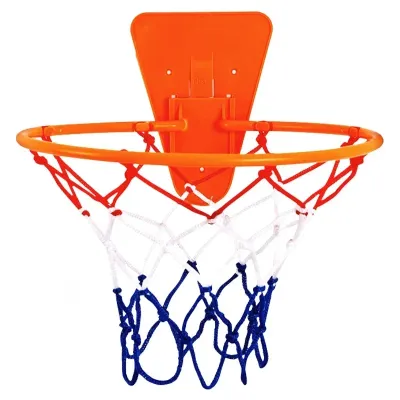
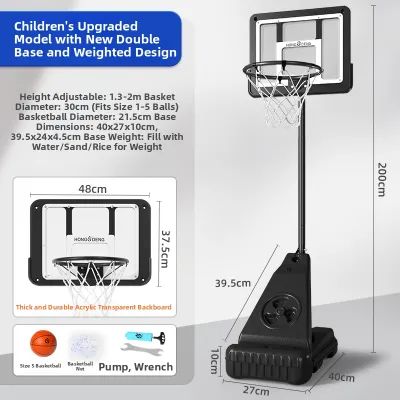
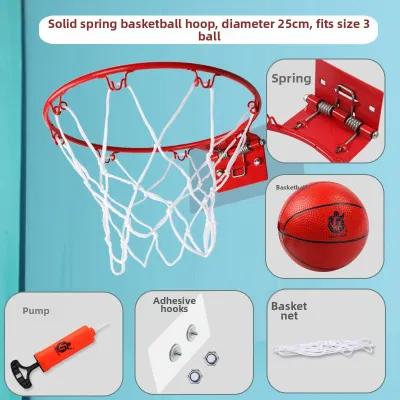
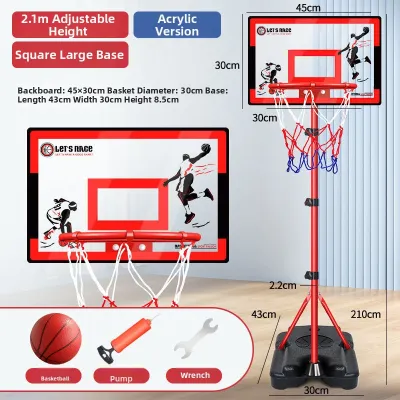
![[45cm x 29cm] Mini Basketball Board Hoop Slam Dunk Rim Spring Small Kids Children Ring Bola Keranjang](https://img.lazcdn.com/g/p/a9e774c532c92d64bf28ba8b02aa57c8.jpg_400x400q80.jpg_.webp)
Prices are valid at publication and may change. Please refer to the product page for the latest price.
Landed properties offer the greatest flexibility but still require careful spatial assessment. You must evaluate your driveway, front yard, or garden space to ensure there is adequate clearance from property boundaries, overhead power lines, and neighboring structures. Playing on a driveway that slopes toward a public road requires extra caution to prevent balls from rolling into traffic, which poses a safety risk to players and motorists alike. Additionally, you must check that your playing area has sufficient overhead clearance, free from low-hanging tree branches, roof eaves, or utility cables that could interfere with high-arching shots.
Matching Basketball Ring Types to Your Setup
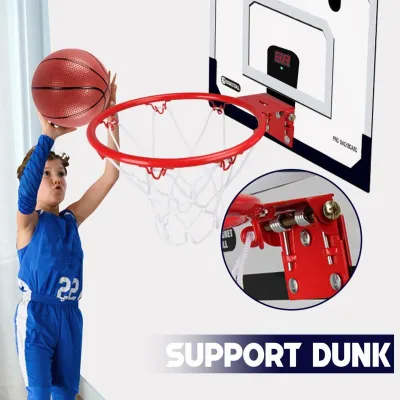
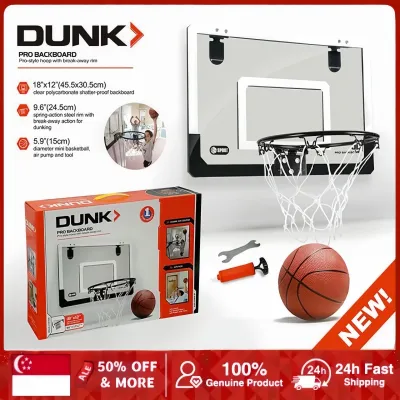
For those living in rented rooms, compact HDB flats, or apartments where drilling into walls is not an option, over-the-door and mini hoops offer a practical indoor alternative. These lightweight systems typically hang over standard interior doors or mount using damage-free adhesive strips. While they do not support full-force play or dunking, they allow for casual shooting practice in a highly confined space. When selecting an indoor mini hoop, verify that the brackets are padded with protective foam to prevent scratching your doors and to dampen the sound of backboard vibrations against the wood.

Portable basketball systems are highly popular in Singapore because they do not require permanent structural modifications. These systems feature a molded plastic base that you fill with water or sand to keep the unit upright, connected to a support pole and backboard. They are highly suited for landed driveways or flat, paved private areas where permanent installations are restricted. However, because these systems can be heavy and bulky when filled, you must check if the base is equipped with built-in wheels to facilitate easier transport and storage when the hoop is not in use.
If you have a solid brick or concrete wall on your landed property or within an approved condominium private area, a wall-mounted basketball ring is a highly space-efficient option. By mounting the backboard directly to an existing structure, you eliminate the need for a bulky ground pole or base, preserving valuable floor space. Before purchasing, you must verify that the target wall is structurally sound and capable of supporting both the static weight of the system and the dynamic forces generated during play. Avoid mounting these systems to hollow brick walls or lightweight partition panels without professional structural reinforcement.
In-ground basketball hoops represent the most permanent and stable option, making them suitable exclusively for private landed gardens or spacious driveways. Installing an in-ground system involves digging a deep hole, securing a heavy-duty steel pole in concrete, and mounting a large backboard. This setup provides a professional-grade playing experience with minimal vibration. However, before undertaking any excavation work, you must conduct thorough checks to ensure there are no underground utility lines, water pipes, or electrical cables running through the intended digging site.
Key Specifications and Features to Verify
The material of your backboard directly influences both the rebound performance and the long-term durability of your setup. Polycarbonate backboards are highly impact-resistant and virtually unbreakable, making them an excellent choice for family yards where safety is a priority, though they tend to lose their bounce over time. Acrylic backboards offer a clearer, more professional appearance and better rebound feedback, but they can scratch and weather under intense sunlight. Tempered glass backboards provide the ultimate, gym-quality rebound performance preferred by competitive players, but they are significantly heavier and require robust structural support.
Understanding the difference between rim designs is crucial for safety and equipment longevity. Standard static rims are bolted directly to the backboard or mounting bracket and do not bend under pressure; these are suitable for casual shooting but can bend or damage the backboard if subjected to hanging or dunking. Breakaway rims feature enclosed steel springs that compress under load, absorbing the impact of a dunk to protect both the player’s wrists and the backboard from shattering. Always check the manufacturer’s specifications to confirm whether a rim is rated for dunking, and never attempt to hang on a rim that is not explicitly designed to support your body weight.
Outdoor basketball equipment in Singapore must withstand high humidity, heavy tropical downpours, and intense UV exposure. When evaluating portable systems, check the manufacturer’s specified base capacity to ensure it can hold enough weight to remain stable during active play. Look for steel poles and hardware that feature rust-resistant powder coatings or hot-dip galvanization to prevent corrosion. Additionally, verify that plastic components, such as the backboard frame and the weighted base, are treated with UV inhibitors to prevent them from becoming brittle and cracking under the sun.
When planning your purchase, compare prices in S$ across authorized sporting goods retailers to find a system that fits your budget. Keep in mind that the retail price of the basketball hoop is often only a portion of the total cost. You must factor in potential delivery fees, especially for bulky portable or in-ground systems, as well as professional installation charges if you do not have the tools or expertise to assemble the unit yourself. Requesting a comprehensive quote that includes delivery, assembly, and anchoring services will help you avoid unexpected expenses.
Installation, Maintenance, and Safety Checks
Safety must be your primary concern during the planning and assembly phases. Before mounting a heavy wall-mounted backboard or assembling a tall portable system, carefully inspect the surrounding area for potential hazards. Ensure there are no overhead electrical wires, low-hanging roof gutters, or glass windows within the immediate playing zone. If you are installing an in-ground system, always contact local utility providers or consult your property’s architectural blueprints to verify the absence of buried gas, water, or electrical lines before digging.
Properly securing your basketball hoop is essential to prevent tipping accidents that can cause severe injury or property damage. For portable systems, always follow the manufacturer’s exact instructions regarding the volume and type of ballast required for the base. If using water, check the base regularly for leaks or evaporation, and consider adding a non-toxic algae inhibitor to prevent internal buildup. For wall-mounted systems, use only high-quality expansion bolts and anchors rated for the specific weight of your system, and verify that all fasteners are tightened to the recommended torque specifications.
Singapore’s tropical climate accelerates the wear and tear of outdoor sports equipment, making regular maintenance checks necessary. Inspect all metal components monthly for signs of rust, particularly around joints, bolts, and weld points, and apply a rust-inhibiting spray or touch-up paint at the first sign of corrosion. Check that all bolts and nuts remain tightly fastened, as the vibrations from repeated ball impacts can loosen hardware over time. Additionally, inspect the net for fraying or UV degradation, replacing it promptly when it shows signs of tearing to maintain a safe playing experience.
Basketball play can generate significant noise from ball bounces, backboard vibrations, and rim impacts, which can easily disturb nearby neighbors in densely populated residential areas. To minimize noise complaints, consider adding foam padding to the back of wall-mounted backboards to absorb vibrations before they travel through the wall. Choosing a system with a rubber-coated rim or using a high-quality, properly inflated composite leather basketball can also help dampen the sound of impacts. Setting reasonable playing hours, such as avoiding early mornings or late evenings, is a simple and effective way to maintain good relations with your community.
Frequently Asked Questions (FAQ)
Can I install a basketball ring at an HDB void deck?
Permanent installations of basketball rings at HDB void decks or common areas are not permitted for private residents, as these spaces are public property managed by the local Town Council. Any unauthorized permanent fixture will be removed, and residents may face penalties for obstructing common property. If you wish to play in these areas, you must use designated public basketball courts or obtain explicit, formal approval from your Town Council for community events. For private practice, portable hoops must be kept within your own property boundaries or used temporarily in approved spaces and stored away immediately after use.
What is the standard height for a home basketball ring?
The standard regulation height for a basketball ring is 3.05 meters (or 10 feet) from the top of the rim to the playing surface. This height is used in all official high school, college, and professional competitions worldwide. If you are purchasing a hoop for younger children or players who are still developing their shooting form, look for a model with an adjustable height mechanism. Many home systems allow you to adjust the rim height down to 2.3 meters (or 7.5 feet), which helps younger players build proper shooting mechanics and confidence before progressing to the standard regulation height.
How do I prevent a portable basketball hoop from blowing over?
To prevent a portable basketball hoop from tipping over during strong winds or intense play, you must ensure the base is filled to its maximum capacity with the correct ballast material. While water is convenient and easy to drain if you need to move the system, sand is significantly denser and provides greater stability, making it less prone to shifting. For maximum security, some manufacturers recommend using a mixture of sand and water to fill any remaining air gaps in the base. Additionally, always lower the adjustable pole to its lowest height setting during periods of severe weather or when the system will be left unattended for extended periods.
Community discussion
Share your experience or ask a question. Comments are reviewed before publication.