
Finding the right snorkeling mask when you have myopia is the difference between exploring Singapore’s vibrant marine life and staring at a blurry underwater haze. For beginners, the most effective solution is a dual-lens snorkeling mask fitted with corrective prescription lenses or inserts. Rather than relying on a single “universal” model, the ideal choice depends on your specific facial structure, the degree of your nearsightedness, and a secure, leak-free fit.
While standard masks require you to sacrifice clear vision or risk wearing contact lenses in the water, a dedicated prescription mask provides a reliable, watertight seal with clear optics. By focusing on proper fit, lens compatibility, and quality materials, you can safely enjoy popular local snorkeling spots or regional weekend trips with complete visual clarity.
Understanding Your Vision Needs for Snorkeling
Before purchasing a prescription mask, you must understand how the underwater environment alters your vision. Water has a higher refractive index than air, which creates a natural magnification effect. This physical property makes objects underwater appear roughly 33% larger and 25% closer than they actually are. For individuals with mild myopia (around -1.0 diopter or less), this natural magnification may actually compensate enough for you to see clearly without corrective lenses.
Products mentioned in this guide
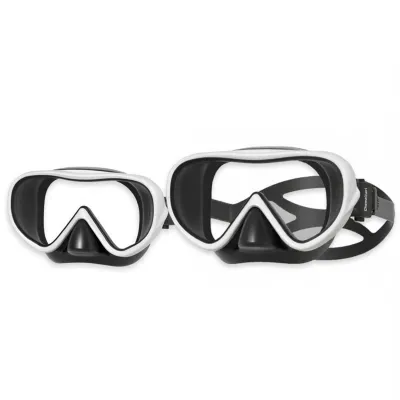
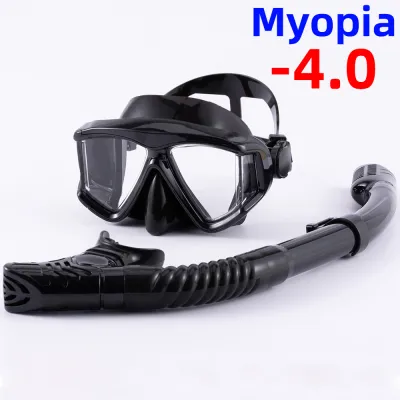
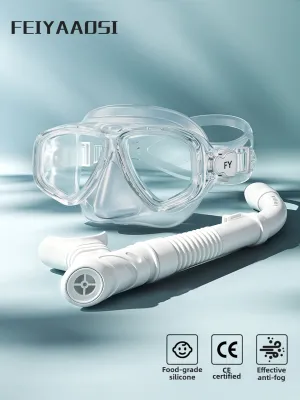
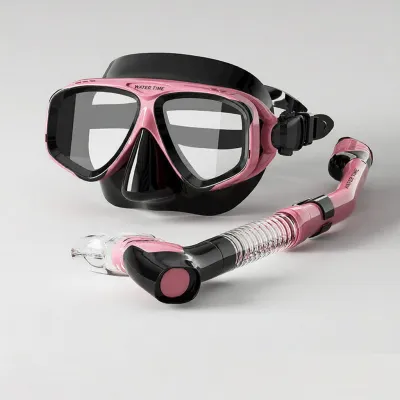
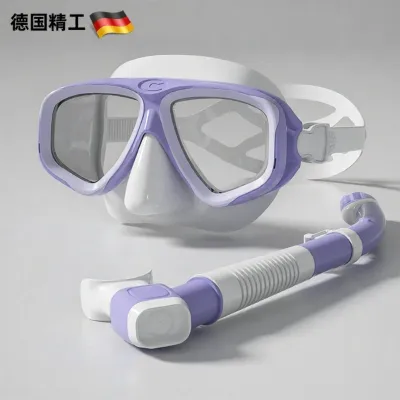
![[Qiafa]Diving Mask Optical Nearsighted Myopia Diving Glass Scuba Swimming Googles Tempered Glasses Short-Sighted Reading](https://img.lazcdn.com/g/p/8a6dbe2d7e3dbf06e24d68cb8deb5b39.jpg_400x400q80.jpg_.webp)
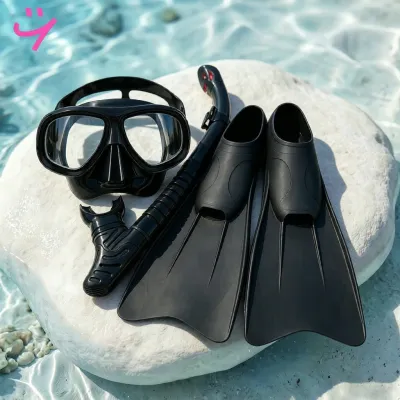
![[Qiafa]Optical Myopia Scuba Diving Mask Snorkel Set Tempered GlassDry Top Swimming Googles Nearsighted Lenses Short-Sighted](https://img.lazcdn.com/g/p/890f223019fc23fb4148a7b23c2654d2.jpg_400x400q80.jpg_.webp)
Prices are valid at publication and may change. Please refer to the product page for the latest price.
For moderate to high myopia, however, corrective lenses are essential for safety and navigation. When calculating your underwater prescription, a general rule of thumb is to use your exact land prescription or slightly reduce the strength to account for water magnification. Consulting an optometrist before buying is highly recommended, especially if your prescription is more complex or if you have not had an eye exam in the past year.
Astigmatism introduces another layer of complexity. Standard off-the-shelf prescription snorkeling lenses, known as step-diopter lenses, only correct spherical nearsightedness. If you have mild astigmatism (typically under -1.0 diopter), these standard spherical lenses are usually sufficient for casual snorkeling. If you have strong astigmatism, using standard spherical lenses can cause double vision, distortion, or persistent headaches, meaning you may need to invest in custom-bonded toric lenses instead.
Key Features for Beginner-Friendly Prescription Masks
When evaluating masks, the skirt material is the most critical factor for comfort and sealing capability. High-grade liquid silicone is the industry standard because it remains highly flexible, conforms easily to various facial shapes, and resists degradation from saltwater and UV exposure. Avoid cheap plastic or PVC skirts, which tend to stiffen in cooler water, lose their shape quickly, and create painful pressure points on your face.

Safety underwater requires tempered glass construction. Look for a distinct “T” or “Tempered” marking stamped directly on the lenses. Tempered glass is highly scratch-resistant, provides excellent optical clarity, and is designed to withstand pressure changes. Most importantly, if tempered glass does break under a severe impact, it crumbles into small, relatively harmless granular pieces rather than shattering into sharp, dangerous shards.
Mask volume refers to the amount of air space inside the frame. Low-volume masks sit closer to your face, which reduces the buoyancy pull of the mask and makes it significantly easier to clear water if a leak occurs. High-volume masks offer a more spacious feel but require more effort and lung capacity to clear. For beginners, a low-to-medium volume mask is generally easier to manage and helps build confidence in the water.
Prescription-compatible masks require a dual-lens frame design. Because each eye often requires a different level of correction, the mask frame must feature two separate glass panes held in place by secure, removable retaining rings. Single-lens masks, which feature a continuous pane of glass across the bridge of the nose, cannot accommodate individual step-diopter prescription lenses.
Comparing Prescription Solutions: Inserts vs. Custom Lenses
There are two primary ways to integrate corrective lenses into a snorkeling mask: drop-in replacement lenses and inner bracket inserts. Drop-in lenses replace the original tempered glass of the mask entirely. This method is highly secure because the corrective lens becomes an integral part of the mask’s structure, eliminating any risk of the lens shifting or falling out during use.
Drop-in lenses offer excellent optical clarity because there is only one layer of glass between your eye and the water. This single-layer design minimizes internal reflections and reduces the surface area where fogging can occur. Furthermore, if your prescription changes over time, you can easily purchase and install a single replacement lens rather than buying an entirely new mask.
Inner bracket inserts consist of a small plastic or wire frame that holds corrective lenses and clips into the nose pocket or frame behind the main mask glass. While these brackets are highly versatile and can sometimes be transferred between different compatible mask models, they introduce a second layer of glass. This double-layer setup is highly prone to trapping moisture, leading to severe fogging issues that are difficult to clear while swimming.
Custom-bonded lenses are a premium alternative where an optical laboratory glues custom-made prescription lenses directly to the inside of the mask’s original glass. This option is ideal for snorkelers with high astigmatism or complex bifocal needs. However, custom bonding is a permanent process with high upfront costs, and the lenses cannot be easily swapped out if your vision prescription changes in the future.
Building Your Shortlist: Fit, Sizing, and Leak Testing
No matter how advanced the prescription lenses are, a mask is useless if it leaks. To find a compatible frame, you must perform a dry inhale seal test. Clear any hair away from your forehead and cheeks, then place the mask gently on your face without using the head strap. Inhale lightly through your nose and hold your breath. If the mask seals instantly and remains firmly on your face when you look down, the skirt shape is compatible with your facial structure.
Pay close attention to how the nose pocket and frame interact with your facial features. The nose pocket must be deep enough that your nasal bridge does not press against the hard plastic frame, which can cause bruising under water pressure. Additionally, you must be able to easily pinch your nose through the silicone pocket to equalize pressure in your ears, even when wearing gloves.
Examine the strap adjustment buckles and tension mechanisms. Look for masks where the buckles are attached directly to the flexible silicone skirt rather than the rigid plastic frame. Skirt-mounted buckles allow the strap to angle naturally around the crown of your head, reducing tension on the frame and minimizing the risk of water leaking through the sides of the mask.
When purchasing prescription gear, review the seller’s return and exchange policies carefully. Because prescription lenses are often customized or fitted specifically to your order, some retailers do not allow returns once the lenses have been installed. Ensure you have verified the physical fit of the empty mask frame before committing to the final installation of your corrective lenses.
Purchasing Channels and Pre-Buy Checks in Singapore
For the safest and most accurate fit, visit authorized physical dive shops in Singapore. Physical stores located in central areas or near coastal activity hubs allow you to try on multiple mask frames and perform the dry inhale test under professional guidance. Staff at these specialized shops can also assist in verifying your prescription alignment and installing the lenses correctly.
If you choose to browse online marketplaces or e-commerce platforms, verify the seller’s credentials and look for official brand flags or authorized distributor badges. Be cautious of generic, unbranded masks sold at extremely low prices, as these often use cheap PVC skirts that leak easily and may lack genuine tempered safety glass.
Before finalizing your purchase, inspect the physical stock for quality control. Check that the silicone skirt is completely smooth, free of warping, and has no microscopic tears along the sealing edge. Press down on the lens retaining rings to ensure they are flush with the frame, and test the strap buckles to confirm they lock securely and adjust smoothly without slipping.
Confirm the availability of local after-sales support and replacement parts in Singapore. Silicone straps and plastic buckles can wear out over time due to exposure to chlorine, salt, and UV rays. Choosing a well-established brand ensures you can easily purchase replacement straps, buckles, or new prescription lenses locally without having to replace the entire mask system.
Frequently Asked Questions (FAQ)
Can I wear my daily contact lenses under a standard snorkeling mask?
Wearing contact lenses under a standard mask carries significant safety and hygiene risks. If water enters your mask, it can easily wash your contact lenses out of your eyes, leaving you disoriented in the water. More importantly, marine water contains microorganisms and bacteria that can become trapped behind a contact lens, potentially leading to severe corneal infections or long-term eye damage. If you must wear contacts, use daily disposables and discard them immediately after your swim, though a prescription mask remains the far safer choice.
How do I prevent my prescription mask or inserts from fogging up?
New masks have a thin layer of silicone residue on the inside of the glass from the manufacturing process, which causes rapid fogging. Before your first use, gently scrub the inner lenses with a non-abrasive toothpaste or a specialized glass prep agent, then rinse thoroughly. Before every snorkeling session, apply a drop of commercial anti-fog solution or diluted baby shampoo to the dry inner lenses, spread it evenly, and rinse it quickly in clean water. Avoid touching the inner glass with your fingers after rinsing to keep the protective film intact.
Is it safe to use a prescription mask if I have a strong astigmatism?
If you have a strong astigmatism (typically a cylinder value greater than -1.0 or -1.5), standard spherical step-diopter lenses will not fully correct your vision. Using them can cause blurriness, depth perception issues, and eye strain, which can compromise your safety when navigating currents or reading depth gauges. For strong astigmatism, you should consult an optometrist to discuss custom-bonded toric lenses. Never snorkel in open water if your vision remains significantly blurred, as clear situational awareness is vital for safety.
Community discussion
Share your experience or ask a question. Comments are reviewed before publication.