
Selecting the right bicycle reflector depends on your typical riding environment, the time of day you travel, and the traffic conditions you encounter. While active lights illuminate your path, passive reflectors serve as a critical, battery-free line of defense by bouncing light back to its source. Matching your reflector setup to your cycling style—whether you are navigating the shared paths of Singapore’s Park Connector Network (PCN), commuting through busy urban intersections, or road cycling alongside fast-moving vehicles—ensures you remain visible to others from all angles.
Assess Your Riding Environment and Visibility Gaps
To determine your baseline reflector needs, start by analyzing the ambient light conditions of your typical routes. Well-lit urban paths, such as those winding through housing estates, offer high overhead illumination but present unique challenges like sudden pedestrian crossings and blind corners. In contrast, shared roads expose you to mixed traffic, where your profile can easily get lost against the glare of shopfronts, streetlights, and oncoming headlamps. Unlit or dimly lit park trails require a different approach, as there is minimal ambient light to bounce off your reflectors unless another trail user approaches with a headlamp.
Next, identify the specific angles where other path users or motorists might fail to see you. Standard front and rear setups handle traffic approaching directly from ahead or behind, but they do little for lateral visibility. Intersections, roundabouts, and driveway exits are notorious blind spots where side-on collisions can occur. If you frequently cross these zones, your side profile must be highly reflective to catch the headlights of vehicles turning into your path.
Products mentioned in this guide
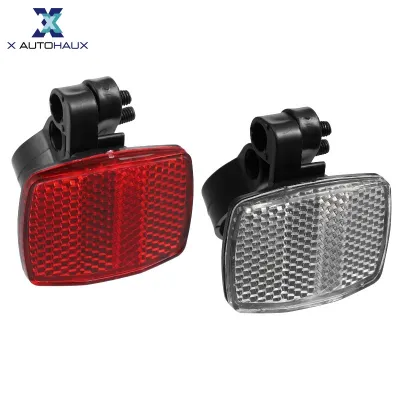
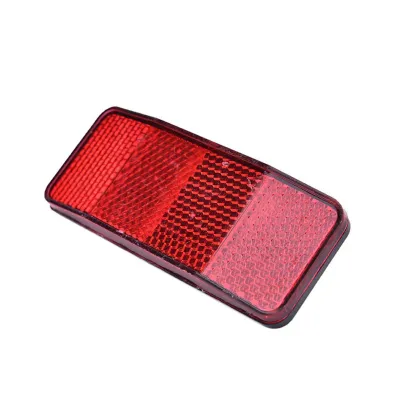
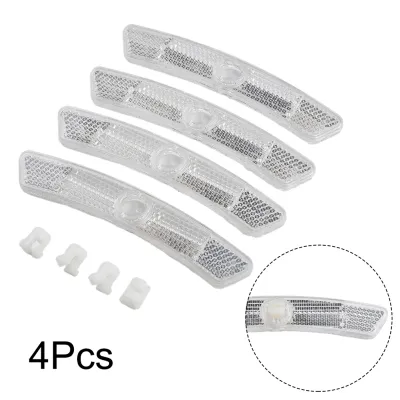
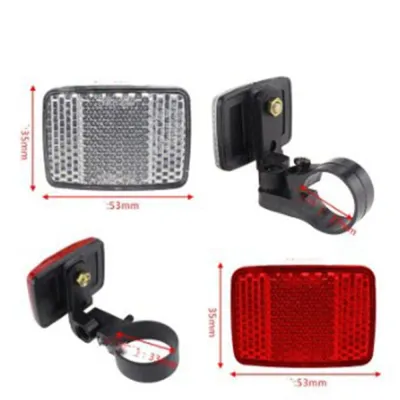
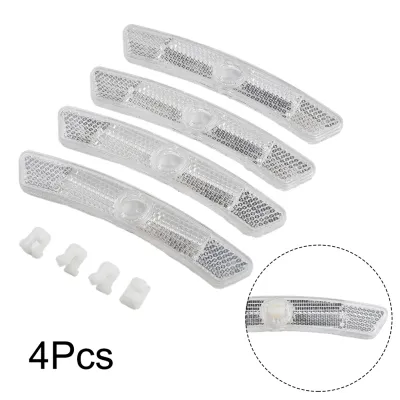
Prices are valid at publication and may change. Please refer to the product page for the latest price.
Finally, take a close look at your current bicycle setup to identify any missing coverage or worn-out components. Many stock bicycles come with basic reflectors that may have become loose, misaligned, or clouded over time. If you have added pannier bags, rear racks, or frame bags, these accessories might block your existing reflectors from view. Evaluating these gaps allows you to build a targeted visibility strategy that complements your active lighting system.
Understand Bicycle Reflector Types and Their Functions
Bicycle reflectors are categorized by their placement and the specific direction of light they return. Front reflectors, which are white, and rear reflectors, which are red, provide longitudinal visibility. They are designed to alert oncoming and trailing traffic to your presence along your direct line of travel. These are essential for establishing your position on long, straight stretches of road or path, giving drivers and other cyclists ample time to adjust their speed.

For lateral visibility, you must rely on wheel, spoke, and pedal reflectors, which are typically yellow or amber. Wheel and spoke reflectors catch light from the side, creating a distinct moving pattern as your wheels spin. Pedal reflectors are particularly effective because their constant up-and-down motion is instantly recognizable to motorists as a bicycle, even from a distance. This dynamic movement helps break through the visual clutter of urban environments, signaling your presence at crosswalks and junctions.
When choosing reflectors, you will encounter different materials and designs, primarily molded plastic prisms and retroreflective tape. Molded plastic reflectors use micro-prisms to reflect light back at precise angles, offering high intensity over long distances when clean. Retroreflective tape uses microscopic glass beads or sealed prisms embedded in a flexible adhesive backing. While tape can be applied directly to curved frame tubes, rims, or helmets, you should check the manufacturer’s specifications to ensure the material is rated for outdoor durability and maintains high reflectivity when wet.
Match Reflector Setups to Your Cycling Use Case
For commuters using the Park Connector Network (PCN) and urban paths, lateral visibility is your highest priority. PCN routes feature frequent intersections with minor roads, driveways, and pedestrian crossings where side-on visibility is crucial. A setup featuring amber wheel or spoke reflectors, combined with pedal reflectors, ensures that pedestrians and cross-traffic can spot you as you approach junctions. Because speeds on these paths are generally moderate, a balanced, multi-angle setup is more beneficial than a single high-intensity beam.
Road cycling demands a setup optimized for high-speed, mixed-traffic environments. When riding on open roads alongside fast-moving vehicles, you need high-intensity front and rear reflectors that can be seen from a significant distance. Because road bikes often lack traditional pedal or wheel reflectors due to weight or aerodynamic considerations, riders should look for alternative solutions. Highly reflective spoke sleeves or specialized retroreflective frame wraps can provide the necessary lateral profile without interfering with high-performance components.
Casual and recreational riders who stick to well-lit parks during daylight or early evening hours can rely on a basic compliance setup. This typically includes standard front white and rear red reflectors, along with pedal reflectors. While these environments are low-risk compared to open roads, sudden weather changes or delayed trips can quickly reduce visibility. Having a reliable, passive system ensures you remain visible without worrying about battery life or electronic failure.
Verify Installation, Condition, and Local Compliance
Even the highest-quality reflectors lose their effectiveness if they are dirty, damaged, or poorly positioned. Regularly inspect your reflector surfaces for road grime, mud, scratches, or UV degradation. Over time, exposure to intense tropical sunlight and heavy rain can cloud plastic lenses, drastically reducing their ability to return light. A simple wipe-down with a damp cloth during your routine bike cleaning is often enough to maintain peak performance, but heavily scratched or faded units should be replaced immediately.
Mounting stability is another critical factor to verify. Ensure that all brackets are securely tightened and that the reflectors are aligned correctly. A rear reflector angled downward toward the road or upward toward the sky will fail to return light to an approaching driver’s eyes. Refer to the product instructions for correct torque limits, especially when mounting brackets to carbon fiber frames or lightweight seatposts, to avoid structural damage.
Finally, always ensure your setup aligns with local active mobility guidelines in Singapore. Local regulations specify mandatory safety equipment for riding on public paths and roads, which typically includes functioning front white lights and rear red lights or reflectors during hours of darkness. Keeping your bicycle compliant not only avoids potential fines but also ensures you meet the baseline safety standards designed to protect all road and path users.
Frequently Asked Questions (FAQ)
Can I use reflective tape instead of standard plastic reflectors?
Reflective tape can be an excellent supplement to your visibility setup, but it should not completely replace standard molded reflectors unless permitted by local regulations. Molded plastic reflectors are engineered with specific prismatic structures that return light efficiently over long distances. If you choose to use reflective tape, verify that the product label specifies high-intensity retroreflective performance and weather resistance, and apply it to clean, flat surfaces on your frame or rims where it will not peel.
Do I still need reflectors if my bicycle has bright LED lights?
Yes, passive reflectors remain a vital safety component even if you ride with powerful LED lights. Active lights can fail due to depleted batteries, water ingress from sudden downpours, or electronic malfunctions. Furthermore, LED beams are highly directional and may not be visible from side angles if they are not adjusted correctly. Reflectors require no power source, providing a permanent backup that ensures you remain visible to other road users under headlight illumination at all times.
Community discussion
Share your experience or ask a question. Comments are reviewed before publication.