
Choosing the right bicycle water holder is essential for staying hydrated, whether you are commuting along the Park Connector Network (PCN) or tackling rugged off-road trails. The ideal choice depends on your frame’s physical mounting points, the available clearance within the frame triangle, and your specific riding style. Selecting an incompatible holder can lead to bottles ejecting on rough terrain, interference with your pedaling stroke, or even structural damage to your frame.
Assess Your Bike Frame's Mounting Options
Before purchasing any bicycle water holder, you must inspect your bike frame to identify its physical mounting options and spatial constraints. Most modern bicycle frames feature pre-drilled threaded inserts, commonly known as bottle bosses, located on the down tube and the seat tube. These bosses are the standard mounting points for traditional bottle cages. You should visually inspect these areas to confirm their presence and check if they are free of debris or paint buildup.
Measuring the available vertical and horizontal space within your frame’s front triangle is a critical step. On smaller frames, step-through designs, or full-suspension mountain bikes, the physical space is often highly restricted. You must ensure that a standard cage, when holding a full water bottle, will not interfere with the front wheel’s rotation, the movement of the front derailleur, the crankset, or the rear shock absorber.
Products mentioned in this guide
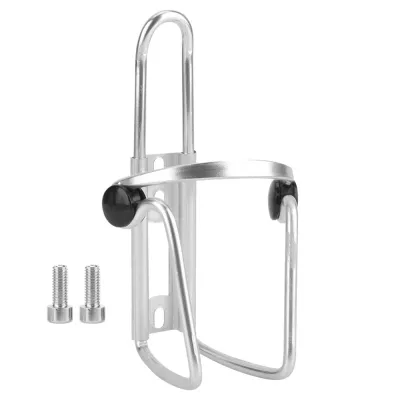
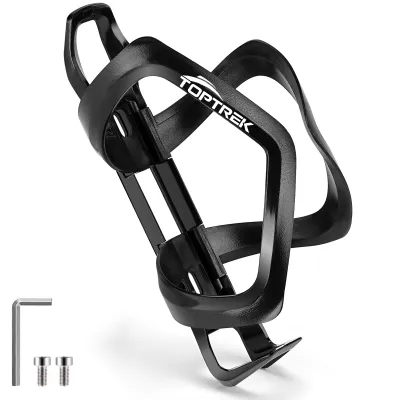
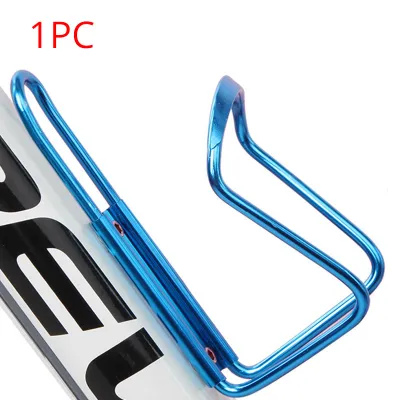
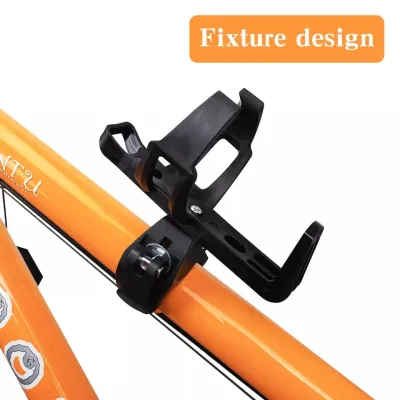
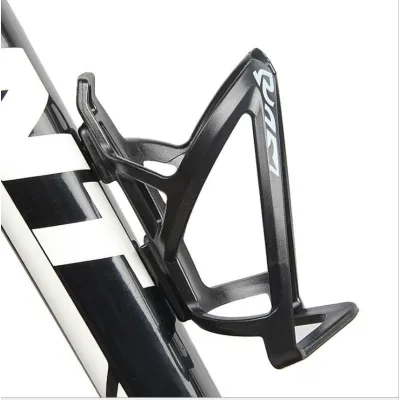
![[SG SELLER] Bicycle Water Bottle Cage Holder Ultralight High strength Polycarbonate Bike Accessories](https://img.lazcdn.com/g/p/e0b169ea263236acd4023e2f2463fc53.jpg_400x400q80.jpg_.webp)
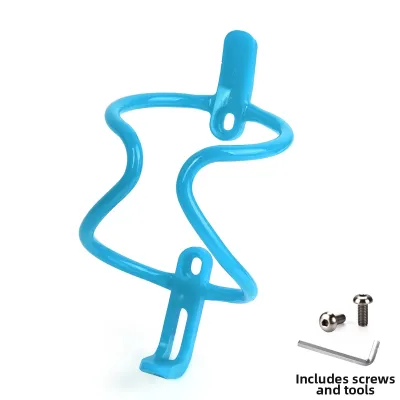
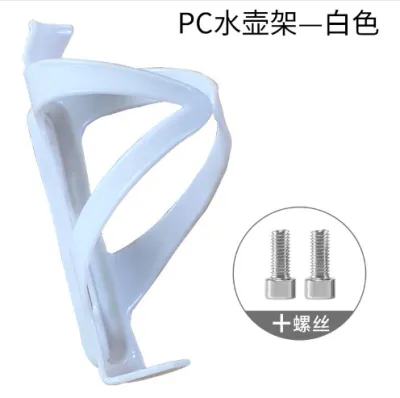
Prices are valid at publication and may change. Please refer to the product page for the latest price.
It is also vital to identify your frame’s material before installing any accessories. Aluminum, steel, and carbon fiber frames handle clamping forces and mounting stresses differently. For instance, carbon fiber frames are highly sensitive to localized pressure. You must check your bicycle manufacturer’s guidelines before applying high-tension clamps or strap-on mounts to carbon tubes, as excessive clamping force can cause structural delamination or cracking. Never attempt to drill new holes into any frame material, as this voids warranties and compromises structural integrity.
Match the Holder Type to Your Riding Needs
Selecting the right water holder requires matching the attachment mechanism to your frame’s compatibility and your typical cycling activities. Bicycle water holders generally fall into three main categories: standard bolt-on cages, adjustable frame mounts, and strap-on or clamp-on alternative holders.

Your riding style dictates the level of retention and accessibility you need. For casual commuting and recreational riding along paved paths, a standard, easily accessible cage is highly suitable. For high-vibration environments like gravel grinding or mountain biking, you require a holder with a high-retention design to prevent bottles from launching on bumpy descents. If you are bikepacking or touring, alternative mounting locations on the fork or handlebars help maximize your carrying capacity.
Standard Cages and Adjustable Frame Mounts
Standard two-bolt cages are the most common option for frames equipped with traditional bottle bosses. These cages mount directly to the frame using standard M5 threaded bolts, providing a secure and stable connection. However, if your frame’s bosses are positioned too high or too low, a standard cage may limit your ability to fit a larger bottle.
Adjustable three-bolt or sliding mounts offer a practical solution for non-standard mounting layouts. These systems allow you to slide the cage up or down along a track, helping you optimize clearance. Before purchasing, verify your frame’s bolt thread standards and clearance requirements against the manufacturer’s specifications.
Keep in mind that adjustable mounts have physical limitations on heavily sloped or compact frame geometries. If the frame triangle is exceptionally small, even a sliding mount may not provide enough clearance to allow a bottle to be inserted or removed vertically.
Strap-On, Clamp, and Alternative Holders
When your frame lacks pre-drilled inserts or has insufficient space within the main triangle, strap-on, clamp-on, and alternative holders offer non-destructive mounting solutions. These systems typically utilize hook-and-loop straps, rubber tension bands, or mechanical clamps to secure the holder to your seatpost, handlebars, or frame tubes.
Before installing a strap-on mount, perform a thorough inspection of the mounting area. Ensure that the straps or clamps do not rub against internal routing cables, pinch external brake lines, or damage the frame’s paint and carbon fiber layups. Applying a layer of protective tape to the frame before mounting can help prevent cosmetic scratches.
Be aware that alternative mounts are more prone to shifting or slipping under heavy loads or during high-vibration riding. If you ride on rough gravel or off-road trails, you must perform frequent tension checks on the straps or clamps to ensure the holder remains securely in place and does not rotate into your moving wheel or pedals.
Check Clearance and Bottle Compatibility
Ensuring that your selected holder and bottle combination fits your bike without causing mechanical interference is a critical safety step. A bottle that interferes with your bike’s moving parts can lead to sudden loss of control or mechanical failure.
First, verify the distance between the water holder (with your preferred bottle inserted) and the front tire during a full steering lock. This is especially important on small road frames, gravel bikes, or commuter bikes with tight geometry, where the front wheel can come surprisingly close to the down tube.
Second, on full-suspension mountain bikes, you must check for rear shock or linkage interference. The space inside the front triangle changes as the rear suspension compresses. To verify safe clearance, you can deflate the rear shock and compress the suspension fully to ensure the shock linkage does not strike the bottle or holder.
Finally, match the holder’s retention mechanism to your bottle’s shape and diameter. While most cycling bottles follow a standard 74mm diameter, some insulated or lifestyle bottles have unique contours. A mismatch can cause the bottle to rattle loose on rough terrain or make it extremely difficult to extract while riding.
Evaluate Material and Retention Features
Choosing the right material and design features for your water holder will impact its durability, weight, and ease of use in different riding environments.
Common materials include:
- Plastic and Composites: These materials are highly flexible, budget-friendly, and completely immune to rust, making them excellent for humid tropical climates. However, they can stretch or degrade over time under intense sun exposure.
- Aluminum and Alloys: Durable and classic, alloy cages allow you to gently bend the metal to adjust the grip tension on your bottle. However, they can scratch plastic bottles over time.
- Carbon Fiber: Extremely lightweight and rigid, carbon fiber cages offer excellent retention and a sleek look, but they are typically more expensive and cannot be adjusted if your bottle is slightly off-size.
For frames with limited vertical space, look for specific retention features like side-loading designs. Side-loading cages allow you to slide the bottle in and out from the side rather than pulling it straight up, which is highly beneficial for compact or full-suspension frames.
To ensure long-term safety, incorporate the water holder into your routine bike maintenance. Use this quick checklist:
- Inspect for stress cracks: Check plastic and carbon cages regularly, especially around the bolt holes.
- Verify bolt tightness: Ensure mounting bolts are torqued to manufacturer specifications (typically 2 to 3 Nm) to prevent stripping the frame threads.
- Look for corrosion: On alloy cages or steel mounting bolts, check for signs of rust or galvanic corrosion, particularly if you ride in wet or humid conditions.
Frequently Asked Questions (FAQ)
Can I install a water holder on a full-suspension bike?
Yes, but you must carefully evaluate the mounting constraints of your specific frame. Full-suspension frames often have limited space in the front triangle due to the rear shock and its moving linkage. Before mounting a cage, check the clearance throughout the entire range of suspension travel. If the main triangle lacks safe clearance, consider alternative mounting locations such as the seatpost, handlebar, or utilizing a hydration pack instead.
What if my frame is too small for a standard water bottle?
If your frame geometry is compact or highly sloped, you can use a side-loading cage, which allows you to access the bottle from the side rather than pulling it vertically. Additionally, opting for smaller capacity bottles (such as 500ml instead of 750ml) can free up necessary clearance. Avoid modifying your frame by drilling new holes, and do not use oversized bottles that block your steering, pedaling stroke, or suspension movement.
Community discussion
Share your experience or ask a question. Comments are reviewed before publication.