
Selecting the right clubbell weight and size is a balancing act between your physical baseline, your training objectives, and the unique physics of leverage. Because a clubbell’s weight is distributed away from the handle, it exerts far more torque on your joints than a standard dumbbell. To find your ideal match, you must evaluate whether your primary goal is joint mobility, fluid movement flows, or raw explosive strength, and then select a weight that allows you to maintain precise control through multi-planar patterns.
Assess Your Training Goals and Movement Patterns
Before purchasing any equipment, you must define what you want to achieve during your training sessions. Clubbells are highly versatile tools, but their effectiveness depends heavily on matching the physical load to your specific movement patterns. Different training objectives require distinct weight ranges and physical dimensions to stimulate the targeted tissues effectively.
For mobility and rehabilitation, your primary focus is on restoring joint range of motion and strengthening connective tissues. This type of training utilizes slow, controlled arcs and traction forces to decompress joints, particularly in the shoulders. To perform these movements safely without overloading delicate ligaments, you should prioritize lighter loads. A lighter clubbell allows you to explore the end-ranges of motion with confidence, ensuring that your muscles are active but not strained to the point of compensation.
Products mentioned in this guide

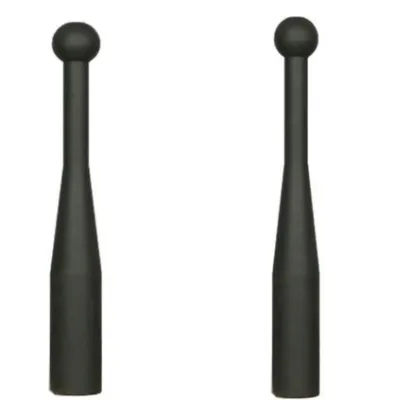
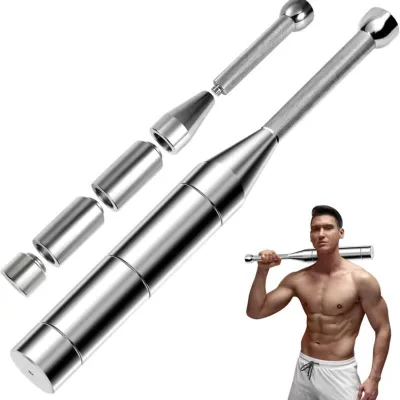
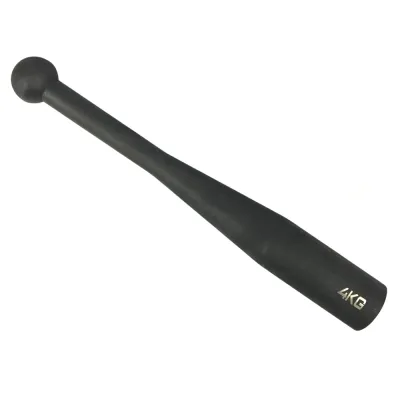
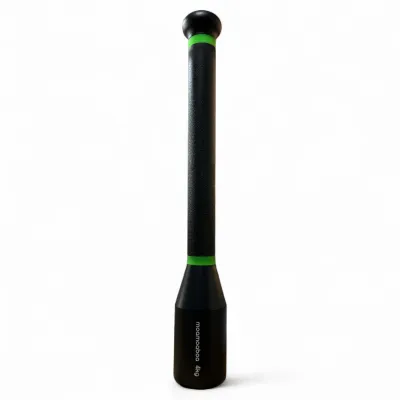
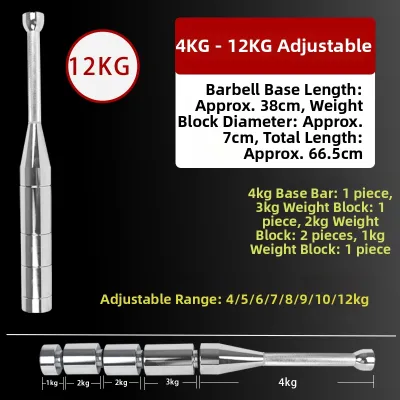
Prices are valid at publication and may change. Please refer to the product page for the latest price.
If your goal is general strength and flow work, you will need a moderate weight that supports continuous, multi-planar movements. Flow training involves transitioning seamlessly between different exercises, such as swings, cleans, and casts. The weight must be heavy enough to provide the necessary momentum to carry the clubbell through its arc, yet light enough that you can safely redirect its path at any moment. This balance allows you to build muscular endurance and coordination without risking joint hyperextension.
For advanced strength and power development, heavier loads are required to build explosive force and grip endurance. These movements are typically shorter, more direct, and require high levels of full-body tension to accelerate and decelerate the clubbell. Training in this category challenges your ability to generate force quickly and maintain structural integrity under heavy rotational loads. Because the demands are so high, these heavier clubbells are usually reserved for experienced lifters who have already established a solid movement foundation.
It is crucial to remember that these training categories are entirely relative to your personal baseline rather than fixed universal numbers. A weight that serves as a challenging strength tool for one individual might be appropriate for another person’s mobility routine. Always assess your own physical capabilities and training history when categorizing your goals, rather than comparing your progress to others.
Understand How Clubbell Dimensions Affect Leverage
To make an informed decision, you must understand how the physical dimensions of a clubbell alter the training stimulus. Unlike traditional gym weights, the length of a clubbell plays a massive role in how heavy it actually feels during movement. This relationship between length, mass, and leverage is what makes clubbell training uniquely challenging and effective.

The overall length of the clubbell directly dictates its center of mass and the resulting torque on your body. A longer clubbell places the bulk of its weight further away from your hand, which dramatically increases the centrifugal force generated during swings. This extended lever arm requires your shoulder stabilizers, core, and hips to work significantly harder to control the arc of the movement. Consequently, a longer clubbell of a lighter weight can often feel much more demanding than a shorter, heavier one.
Handle diameter is another critical dimension that directly impacts your training capacity and forearm fatigue. A thicker handle challenges your grip strength, forcing the muscles in your hands and forearms to work harder just to hold the tool. While this is excellent for building grip endurance, an excessively thick handle can cause your grip to fail long before your target muscles are fully fatigued. Conversely, a handle that is too thin may feel insecure during high-velocity swings, reducing your confidence and control.
Evaluating the physical size of the clubbell is just as critical as checking the stamped weight on the side of the equipment. When browsing options on an online marketplace, always look at the product specifications for overall length and handle diameter. Understanding these measurements will help you anticipate how the tool will behave in motion, ensuring you do not accidentally purchase a weight that is unmanageable due to its length.
Evaluate Your Current Strength Baseline
Selecting a starting weight requires an honest assessment of your current physical capabilities to ensure safe and sustainable progression. Because clubbell training introduces rotational and swinging forces, your baseline strength in traditional linear lifts does not directly translate to this tool. You must evaluate your body’s readiness to handle these unique dynamic loads before making a purchase.
Before introducing swinging loads, you need to assess the stability of your shoulders, core, and grip. Clubbell exercises require your shoulder joints to stabilize in multiple planes of motion while resisting pulling forces. Your core must remain highly active to transfer power between your lower and upper body, and your grip must be strong enough to retain control of the moving weight. If you currently struggle with basic bodyweight planks, overhead presses, or hanging from a bar, you should start with a very conservative weight.
The leverage effect is the primary reason why beginners often overestimate the weight they can safely handle. When you hold a clubbell, the offset center of mass creates a leverage multiplier that makes the tool feel significantly heavier than a standard dumbbell of the same mass. During dynamic swings, this perceived weight increases even further due to momentum and centrifugal force. A weight that feels light when held statically in your hand can quickly become overwhelming once it is put into motion.
To prevent injury and build a sustainable practice, you must prioritize movement quality over maximum load. Starting with a lighter weight allows you to master the fundamental mechanics of swinging, casting, and parking the clubbell without compromising your posture. Once you can perform these movements with complete control and zero joint discomfort, you can gradually increase the challenge by moving your hand lower on the handle or transitioning to a heavier weight.
Practical Selection Framework for Different Scenarios
To finalize your choice, it is helpful to apply a practical decision framework that accounts for your specific training scenarios and equipment setup. Different exercises and hand configurations will alter how you interact with the clubbell, requiring you to adjust your weight expectations accordingly.
One of the first decisions you must make is whether you will be performing single-arm or double-arm exercises. Double-arm movements allow you to share the load between both shoulders and hands, which provides greater stability and control. This configuration is ideal for learning basic swing mechanics and allows you to use a heavier clubbell safely. Single-arm exercises, on the other hand, require unilateral stability and place a much higher demand on your grip and shoulder stabilizers, meaning you should select a lighter weight for these movements.
Your experience level also dictates how you should scale your equipment over time. Beginners should focus on acquiring a single, lighter clubbell to master the basic movement patterns and build tissue tolerance in the shoulders and wrists. As your skill improves, you can transition to a moderate weight for general flow work, or introduce a second clubbell of the same weight for dual-arm training. Experienced lifters often benefit from having a small progression of weights to match different exercises within their programming.
When investing in equipment, consider your training environment and budget. If you are training in a compact space, such as a typical apartment or HDB flat, space-saving solutions are highly beneficial. An adjustable clubbell allows you to change the weight by adding or removing increments, providing a wide range of resistance options without cluttering your living space. Alternatively, purchasing a small, curated set of fixed-weight clubbells offers a seamless training experience, allowing you to transition between exercises without pausing to adjust the equipment.
Safety Checks and Usage Boundaries
Because clubbell training involves swinging weights in close proximity to your body, maintaining a safety-first mindset is essential. Establishing clear pre-workout routines and recognizing your physical limits will help you avoid injury and ensure long-term training success.
Before starting any training session, perform a thorough pre-workout inspection of your equipment. Check the handle grip to ensure it is clean, dry, and free of any oils or sweat that could cause your hands to slip. Inspect the structural integrity of the clubbell, looking for any cracks, loose parts, or damage. If you are using an adjustable model, verify that all weight collars, threads, and end caps are securely tightened according to the manufacturer’s instructions before performing any swings.
During your workout, you must remain highly attentive to your body’s feedback and recognize when to stop. If you experience sudden joint pain, particularly in the shoulders, elbows, or wrists, cease the exercise immediately. Other critical stop signals include a noticeable breakdown in your posture, an inability to control the deceleration phase of a swing, or excessive grip fatigue where you feel you might lose hold of the tool. Pushing through these warning signs significantly increases the risk of acute injury.
Always remember that high-quality equipment cannot replace proper technique instruction and progressive overload principles. If you are new to clubbell training, consider working with a qualified fitness professional or utilizing detailed instructional guides to learn the correct mechanics. Always progress your training gradually, increasing the weight, volume, or complexity of your movements only when you can perform your current routine with complete control and confidence.
Frequently Asked Questions (FAQ)
Can I use a regular dumbbell instead of a clubbell?
While you can use a regular dumbbell for basic strength exercises like presses and rows, it cannot fully replicate the unique training effects of a clubbell. Dumbbells are designed with a balanced center of mass directly in the palm of your hand, which minimizes torque and focuses the load on linear planes. In contrast, a clubbell features an offset center of mass that projects the weight away from your hand, creating rotational and traction forces during swings. These forces challenge your joint stability and core strength in ways that a balanced dumbbell simply cannot match. Therefore, while dumbbells are useful for general strength, they are not a direct substitute for the multi-planar dynamics of clubbell training.
How do I know if my clubbell is too heavy?
You can identify an excessively heavy clubbell through several clear, observable physical cues during your workout. If you find yourself shrugging your shoulders toward your ears, arching your lower back excessively, or leaning your torso backward to complete a swing, the weight is too heavy for your current capacity. Another major indicator is the inability to control the deceleration phase of the movement, causing the clubbell to pull you out of alignment at the bottom of a swing. If you experience these signs, or if your grip begins to fail mid-set, you should immediately reduce the weight or choke up on the handle to shorten the lever arm and regain control.
Community discussion
Share your experience or ask a question. Comments are reviewed before publication.