
Selecting the right equipment is one of the most critical decisions a player can make, as a cricket bat must function as a natural extension of the body. Unlike other sports where standard sizing applies, cricket bats demand a precise alignment between your physical dimensions, muscular strength, and tactical approach on the field. Choosing the correct size and weight ensures that your hands, wrists, and shoulders work in harmony, maximizing swing speed, optimizing ball contact, and minimizing the risk of chronic strain or injury.
An ill-fitting bat compromises your stance, limits your shot selection, and reduces your reaction time against fast bowling. By understanding how physical measurements translate to bat dimensions, and how weight distribution influences your swing mechanics, you can select a bat that enhances your natural playing style. Whether you are a classic front-foot stroke maker or an aggressive power hitter, the correct bat will elevate your performance and keep you comfortable throughout long innings.
Step 1: Determine the Correct Bat Size Based on Height and Age
Bat length is the foundation of proper batting mechanics. If a bat is too long, the toe of the blade will scrape the ground during your backlift, disrupting your timing and forcing you to alter your natural swing path. Conversely, if a bat is too short, you will find yourself crouching excessively in your stance, which places unnecessary strain on your lower back and limits your reach, making you vulnerable to full-pitched deliveries.
Products mentioned in this guide
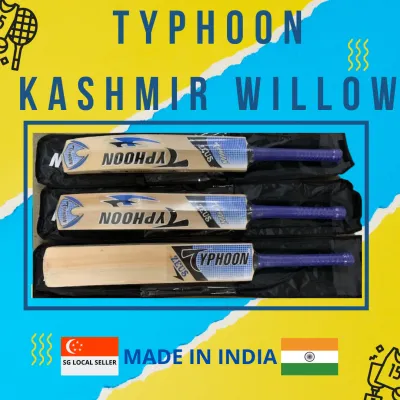
Prices are valid at publication and may change. Please refer to the product page for the latest price.
To find the correct length, you must measure your height accurately while wearing your usual cricket shoes. This step is vital because the extra thickness of the soles on turf shoes or spikes can shift your sizing requirements. Once you have your exact height, refer to manufacturer size charts rather than relying on guesswork. Minor variations in blade and handle lengths exist between brands, meaning a size 6 from one manufacturer may feel slightly different from another.
Sizing for Junior and Youth Players
Junior cricket bats are scaled down proportionally in both blade length and handle size to accommodate growing players. These sizes typically run from Size 1 (for players around 120 cm tall) up to Size 6 and Harrow (for players approaching 168 cm). Each step up increases the physical dimensions of the bat to match the natural growth milestones of young athletes.
- Size 1 to 3: Designed for early junior players (typically ages 4 to 8, height range 120 cm to 137 cm).
- Size 4 to 6: Suited for mid-level junior players (typically ages 9 to 11, height range 138 cm to 155 cm).
- Harrow: The transitional size for older youth players (typically ages 12 to 14, height range 156 cm to 168 cm) who are not yet tall or strong enough for a full-sized adult bat.
A common mistake is purchasing a larger bat for a child to “grow into.” This is highly detrimental to technical development. A bat that is too long or heavy forces a young player to drop their top hand and rely on a dominant bottom-hand grip to lift the weight. This ruins their swing mechanics, prevents them from playing straight, and can cause chronic wrist fatigue early in their playing journey.
Sizing for Adult Players
For adult players, the standard size is the Short Handle (SH). Despite the name, this is the default configuration designed for players between 168 cm and 188 cm (5’6″ to 6’2″). It offers the most balanced ratio of blade length to handle length, allowing for optimal control and wrist flexibility.
- Short Handle (SH): The standard adult size, offering a balanced pickup and maximum maneuverability for the vast majority of adult cricketers.
- Long Handle (LH): Designed for taller players (above 188 cm or 6'2") who require a longer reach. The extended handle allows the hands to sit comfortably on the grip without crowding the body.
- Long Blade (LB): This option features a standard handle but an extended blade, providing extra reach and a larger sweet spot. It requires significant physical strength to control due to the altered weight distribution.
Step 2: Select the Ideal Bat Weight for Your Strength and Build
While length determines your reach and posture, the weight of the bat dictates your control, swing speed, and power generation. In cricket, power is a product of bat mass and velocity. A heavier bat provides more mass behind the ball, but if you cannot swing it quickly, your overall power output decreases, and your reaction time against fast bowling suffers.

To assess your compatibility with a specific weight, perform the “lift test.” Hold the bat in your dominant top hand (the left hand for a right-handed batter) and extend your arm horizontally in front of you. If you cannot hold the bat steady in this position for at least 10 to 12 seconds without your wrist dipping or your arm shaking, the bat is too heavy for your current strength.
Using a bat that is too heavy carries significant physical risks. It places excessive load on your wrists, forearms, and shoulders, which can lead to tendonitis, muscle strains, or joint fatigue over the course of a match. On the field, a heavy bat slows down your backlift and downswing, leaving you vulnerable to fast, swinging deliveries and making it difficult to adjust your shot mid-stroke.
Conversely, a bat that is too light has distinct drawbacks. While it allows for rapid swing speeds, it lacks the momentum required to counter heavy, fast deliveries. When facing a hard leather ball, a light bat can twist in your hands upon impact, leading to poor shot execution, painful vibrations up the handle, and easy catch opportunities for the fielders.
When shopping, always check the manufacturer’s weight grading on the product label—usually measured in pounds and ounces (e.g., 2lb 7oz to 2lb 12oz)—rather than relying solely on how it feels in a store. In tropical climates like Singapore, humidity can cause the wood to absorb moisture over time, slightly increasing the bat’s actual weight. Choosing a slightly lighter bat can help offset this local environmental factor.
Step 3: Match the Bat Profile to Your Batting Technique
The “profile” of a cricket bat refers to how the wood is distributed across the blade. The most critical aspect of the profile is the position of the “middle” or spine, which is the thickest part of the bat where the sweet spot is located. The profile directly influences the bat’s balance and “pickup”—how heavy the bat feels when you lift it, as opposed to its actual weight on a scale.
Manufacturers shape the back of the blade to alter this balance. Some bats feature “scallops” (wood carved out from the back of the blade next to the spine) to reduce dead weight and lighten the pickup, while others maintain a full profile for maximum power across the entire face of the bat. Understanding these design elements allows you to match the bat’s physical attributes to your specific batting style.
Bats for Front-Foot and Drive Players
If your playing style relies on traditional, ground-based strokes, elegant drives, and defensive play, you should look for a bat with a low sweet spot (low middle). This profile concentrates the bulk of the wood closer to the toe of the bat.
- Low Middle: Positions the sweet spot in the lower third of the blade, ideal for driving and playing low-bouncing deliveries.
- Control and Balance: Helps keep the ball on the ground, reducing the risk of catching opportunities in the infield.
- Pitch Compatibility: Highly effective on low-bouncing pitches, such as natural grass outfields or synthetic turf wickets common in local recreational leagues.
This profile ensures that when you meet the ball low down, you are hitting it with the thickest part of the blade, maximizing the transfer of energy while maintaining precise placement.
Bats for Back-Foot and Power Hitters
If you are an aggressive player who loves to pull, hook, cut, or clear the boundary with lofted shots, a mid-to-high sweet spot (high middle) is more suitable. This profile shifts the weight distribution closer to the hands, making the pickup feel incredibly light.
- High Middle: Positions the sweet spot in the upper-middle section of the blade, providing excellent leverage for cross-bat shots.
- Thicker Edges: Often measuring between 38mm and 40mm, offering maximum forgiveness for off-center hits.
- Fast Hand Speed: The lighter pickup allows for rapid hand movement, crucial for reacting to short-pitched, bouncy deliveries.
This profile is particularly effective on bouncy pitches and in short-format games where rapid run-scoring is essential. The concentration of wood higher up the blade provides the necessary leverage to clear fielders with ease.
Step 4: Test and Verify Your Choice Before Buying
Before finalizing your purchase of any cricket bats, you must perform physical verification checks to ensure the equipment matches your body mechanics and movement patterns.
- The Grip Test: Pay close attention to the handle shape, which is typically either round or oval. Oval handles provide better grip alignment and prevent the bat from twisting in your hands, making them ideal for top-hand-dominant players. Round handles are often preferred by bottom-hand-dominant players who like to flick the ball through the leg side. Ensure the grip thickness allows your fingers to wrap comfortably without straining.
- The Shadow Batting Test: Find an open space and play a series of simulated shots—drives, pulls, and cuts—using your natural batting stance. Focus on how the bat feels during the transition from backlift to downswing. A good bat should feel balanced, responsive, and easy to control, rather than dragging your hands down.
- The Tap Test: Assume your batting stance and tap the toe of the bat on the ground behind your back foot. If you have to hunch your shoulders or bend your knees excessively to make contact, the bat is too short. If you feel forced to stand too upright or if your wrists are bent awkwardly, it is too long.
- Wear Your Gloves: Crucially, always wear your actual batting gloves during these tests. Gloves add thickness to your hands and change how you hold the handle, which directly impacts your perception of the bat's weight, pickup, and balance.
Common Mistakes to Avoid When Sizing a Cricket Bat
One of the most frequent errors is buying a heavy bat simply because a professional international player uses one. Professional athletes have elite forearm strength and athletic conditioning that allows them to swing heavy bats with ease. For recreational players, attempting to mimic this will only lead to late shots, poor timing, and shoulder fatigue.
Another mistake is ignoring the handle shape and grip thickness. A handle that is too thick or thin for your hands will limit your wrist flexibility, preventing you from executing delicate wrist-work or controlling the face of the bat during defensive strokes. If the handle does not feel right, you can adjust it with additional grips, but the base shape should be comfortable from the start.
Do not select a bat based solely on brand prestige, cosmetic stickers, or price. A highly expensive, premium willow bat will not improve your game if its profile and weight do not match your physical build and batting style. Focus on the physical specifications, balance, and pickup first.
Finally, consider the format of the game you play most. If you primarily play short-format cricket on synthetic or concrete pitches with a heavy leather ball, you will need a different balance of weight and profile compared to someone playing traditional multi-day matches on turf wickets. Match the tool to the playing environment to get the best results.
Frequently Asked Questions (FAQ)
How do I know if my cricket bat is too heavy?
If you struggle to hold the bat horizontally in front of you with your top hand for 10 seconds, feel muscle fatigue in your forearms after a few overs of batting, or consistently find yourself playing late on fast deliveries, your bat is too heavy. A bat that is too heavy will also cause your hands to drop during your backlift, ruining your swing path.
Can I change the weight of my cricket bat after buying it?
You cannot easily reduce the physical weight of the wood without professional shaving, which can compromise the bat’s structural integrity and void the warranty. However, you can alter the perceived weight and pickup. Adding a second rubber grip or using a heavier grip cone shifts the balance point closer to your hands, making the bat feel lighter during your swing.
Does the type of cricket ball affect the bat size I should choose?
The physical size and length of the bat remain the same regardless of the ball, as they must match your height and stance. However, the weight and profile should change based on the ball type. For heavy leather balls, you need a traditional weight (typically 2lb 7oz to 2lb 12oz) for shock absorption and control. For light tennis or windballs, a much lighter bat with thick edges is preferred to maximize hand speed.
Community discussion
Share your experience or ask a question. Comments are reviewed before publication.