
Selecting the right cricket bat is one of the most critical decisions a player can make, directly impacting batting posture, swing mechanics, and shot execution. To choose the perfect bat, you must align the bat’s length with your physical height, select a weight that allows you to maintain maximum hand speed without sacrificing control, and choose a blade profile that complements your preferred batting technique.
While aesthetic appeal and brand popularity often catch the eye, a bat that is too heavy, too long, or poorly balanced will hinder your development and performance on the pitch. By systematic testing and understanding the structural properties of willow, you can find an instrument that feels like an extension of your arms.
Step 1: Determine the Correct Bat Size for Your Height
Matching the length of your cricket bat to your physical stature is the foundation of a correct batting stance. A bat that is too long will force your hands too high, restricting your backswing and making it difficult to keep your hands close to your body during execution. Conversely, a bat that is too short will force you to bend excessively at the waist, compromising your balance, limiting your reach, and making you vulnerable to low-bouncing deliveries.
Products mentioned in this guide
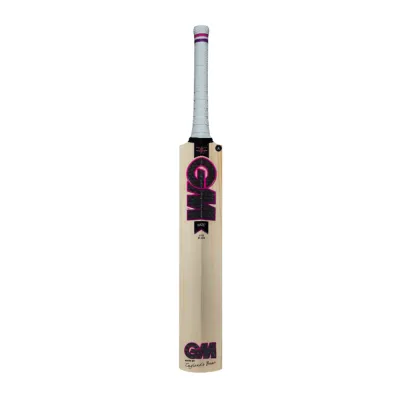
Prices are valid at publication and may change. Please refer to the product page for the latest price.
To find the correct bat size, players are categorized by height into standard sizing brackets. Junior bats range from Size 1 (for players around 120 cm tall) up to Size 6 and Harrow (for players up to 168 cm). Players taller than 168 cm generally require adult-sized bats. The standard adult size is the Short Handle (SH), which suits players between 168 cm and 188 cm. For exceptionally tall players standing over 188 cm, a Long Handle (LH) or Long Blade bat is often necessary to ensure proper ground clearance and reach.
To perform a reliable physical test at home or in a sports shop, stand upright in your normal shoes on a flat surface. Place the cricket bat vertically next to your lead leg, with the toe of the bat resting flat on the ground. The top of the handle should align closely with your groin or the crease where your hip meets your thigh. If the handle extends past your waist, the bat is too long; if it sits below your mid-thigh, it is too short.
Because manufacturing tolerances and handle lengths can vary slightly between international brands, never rely solely on generic size labels. Always consult the specific manufacturer’s size chart before completing a purchase, and use the physical alignment test as your primary verification step.
Step 2: Select the Ideal Weight Based on Strength and Technique
Once you have identified the correct length, you must determine the optimal weight. The weight of an adult cricket bat typically ranges from 2 pounds 7 ounces (approx. 1.1 kilograms) to 3 pounds (approx. 1.36 kilograms). While a heavier bat contains more mass and can theoretically transfer greater momentum to the ball, this physical advantage only holds true if you can swing the bat at high speed.

If a bat is too heavy for your current physical strength, your swing speed will decrease, your reaction time against fast bowling will suffer, and your hands will struggle to control the face of the bat during delicate shots. Lighter bats allow for rapid hand movement, superior defensive control, and easier maneuverability. This makes them highly recommended for junior players, technical batters, and anyone still developing their upper-body and forearm strength.
To assess whether a bat’s weight is appropriate for your strength, perform the standard “one-hand lift test.” Extend your dominant batting hand (the top hand on the handle) and grip the bat normally. Lift the bat straight out in front of you so that it is parallel to the ground, and attempt to hold it steady for 20 to 30 seconds. If your wrist shakes, your forearm strains, or the toe of the bat dips significantly, the bat is too heavy for you to control safely during a long innings.
It is vital to distinguish between a bat’s dead weight on a scale and its “pickup.” The pickup refers to how heavy the bat feels when you lift it into your batting stance. A bat with excellent weight distribution and a higher swell can feel significantly lighter than its actual scale weight, whereas a poorly balanced bat with a bottom-heavy profile will feel sluggish. Prioritize the feel of the pickup over the number on the scale.
Step 3: Match the Bat Profile and Balance to Your Playing Style
The profile of a cricket bat refers to the physical shape of the blade, including the thickness of the edges, the height of the spine, and where the bulk of the wood is concentrated. This concentration of wood creates the “sweet spot”—the area of the blade that yields the maximum power transfer and minimal vibration when striking the ball. Matching this profile to your typical shot selection and local pitch conditions will optimize your run-scoring potential.
Front-Foot and Aggressive Batters
If you prefer to play dominant drives, punch the ball down the ground, or play aggressive lofted shots, you should look for a bat with a low sweet spot. This profile concentrates the thickest part of the willow near the toe of the bat, which is ideal for pitches with low, consistent bounce where the ball is met low to the ground.
These bats typically feature thicker edges and a fuller profile near the bottom of the blade. This design maximizes power transfer for front-foot drives and provides extra stability, preventing the bat from twisting in your hands when you hit across the line or attack slower deliveries.
Back-Foot and Technical Batters
If your playing style relies on timing, late cuts, pulls, hooks, and back-foot defensive play, a bat with a mid-to-high sweet spot is the superior choice. This profile positions the bulk of the willow higher up the blade, closer to the hands, which naturally creates a much lighter and more responsive pickup.
This elevated balance point allows for lightning-fast hand adjustments, enabling you to manipulate the face of the bat at the last fraction of a second to guide the ball into gaps. The lighter feel near the toe also reduces the physical effort required to control back-foot cross-bat shots, protecting your wrists from repetitive strain.
Step 4: Choose the Right Willow Grade and Handle Type
The materials used to construct your bat dictate its performance, lifespan, and care requirements. Cricket bats are manufactured from two main types of wood, each offering distinct characteristics:
- **English Willow (Salix alba caerulea):** This is the premium choice for competitive cricket. It is a soft, fibrous wood that provides exceptional rebound qualities (often referred to as "ping") and a dampening effect that reduces hand shock. However, it is highly susceptible to moisture damage and denting, requiring meticulous maintenance.
- Kashmir Willow: Denser, harder, and significantly heavier than English Willow, Kashmir willow is highly durable and cost-effective. It is an excellent option for beginners, casual players, or those practicing with harder synthetic windballs, though it does not offer the same level of performance or shock absorption as English willow.
When evaluating English Willow, look at the grain structure on the face of the bat. Straight, evenly spaced grains generally indicate a high-quality, mature piece of timber. Grade 1 willow typically features 6 or more straight, unblemished grains, offering peak performance immediately, whereas lower grades (Grade 3 or 4) may have wider, uneven grains or minor cosmetic blemishes but offer greater durability at a lower price point.
The design of the handle and grip also plays a major role in control. Handles are constructed from cane, often interspersed with rubber strips to absorb impact shock. You can choose between a round handle, which promotes a dominant bottom hand for aggressive airborne hitting, and an oval handle, which encourages a firmer top-hand grip for superior directional control along the ground. Additionally, a thicker grip reduces wrist twist during heavy impacts, while a thinner grip allows for maximum wrist mobility.
In Singapore’s tropical climate, where relative humidity levels regularly exceed 80%, proper bat care is essential. High humidity can cause raw willow to absorb excess moisture, making the bat heavy and prone to swelling. Conversely, storing a bat in air-conditioned rooms can dry the wood out, making it brittle. To protect your investment, English Willow bats must be lightly oiled with raw linseed oil and fitted with an anti-scuff face sheet to seal the timber against moisture fluctuations.
Step 5: Test and Verify Your Selection Before Purchase
Before finalizing your purchase, it is essential to conduct a physical evaluation of the bat to ensure there are no hidden structural flaws and that the balance matches your expectations.
Begin by performing a “shadow batting” test. Find a safe, open space in the store and play a series of dry-land strokes—including forward defensive blocks, cover drives, and back-foot cuts. Focus entirely on how the bat moves through the air. The transition from your backlift to the follow-through should feel fluid and natural, without any pulling sensation in your wrists or shoulders.
Next, conduct a thorough visual inspection of the blade and handle. Check the sweet spot for any deep knots, surface cracks, or irregular pressing that could compromise the wood’s structural integrity. Examine the splice—the V-shaped joint where the handle meets the blade—to ensure it is perfectly flush and free of gaps or loose glue. Any creaking sounds when you flex the handle slightly indicate a compromised splice, and the bat should be rejected.
Finally, verify the retailer’s warranty and return policy, and prepare yourself for the essential “knocking-in” process. Almost all new wooden cricket bats, particularly English Willow, require knocking-in before they can be used with a leather cricket ball. This process involves gently striking the face and edges of the blade with a specialized wooden mallet or a heavy leather ball for several hours to compress the soft willow fibers. Skipping this step will void your warranty and almost certainly cause the wood to split or crack during your first net session.
Frequently Asked Questions (FAQ)
How do I know if a cricket bat is too heavy for me?
You can identify a bat that is too heavy by observing your batting mechanics and physical comfort. If you consistently find yourself swinging late at fast deliveries, dropping your back shoulder to compensate for the weight, or struggling to control delicate late cuts, the bat is too heavy. Additionally, experiencing rapid forearm fatigue, wrist soreness, or a loss of grip control after just 10 to 15 minutes of practice is a clear sign that you need a lighter model.
Does a heavier cricket bat hit the ball further?
A heavier bat only hits the ball further if you can swing it at the same speed as a lighter bat. In physics, the kinetic energy transferred to the ball depends on both the mass of the bat and the square of its swing velocity. If a heavier bat slows your swing speed down even slightly, the overall power transferred to the ball will decrease. For most players, maximizing swing speed with a comfortable, well-balanced lighter bat yields much greater distance and better timing.
What size cricket bat should a 12-year-old use?
While age serves as a general baseline, physical height is the only reliable metric for choosing a youth bat size. A typical 12-year-old may require a Size 5, Size 6, or Harrow bat, depending on their growth rate. Measure the player’s height first: a Size 5 is generally suitable for heights between 150 cm and 157 cm, while a Size 6 fits heights up to 163 cm. Always prioritize a lighter weight for junior players to prevent joint strain and encourage the development of correct technical habits.
Community discussion
Share your experience or ask a question. Comments are reviewed before publication.