
Selecting a table tennis racket is a pivotal decision that directly shapes your development as a player. While it is tempting to purchase the fastest, most advanced model available, doing so can actually hinder your progress if the equipment does not match your current physical capabilities and technical skill. Double Fish, a globally recognized brand in the table tennis community, offers a diverse range of rackets designed to accommodate everyone from casual backyard players to competitive tournament athletes. Choosing the right setup requires a clear understanding of how different blade materials, rubber characteristics, and handle shapes interact with your personal playing style.
By aligning your equipment with your current ability, you ensure that the racket acts as an extension of your arm rather than an obstacle. A racket that is too fast will cause beginners to lose control, leading to shortened, tentative strokes to keep the ball on the table. Conversely, a racket that is too slow can limit an advanced player’s ability to execute powerful, spin-heavy attacks. This guide provides a comprehensive framework to help you assess your skill level, evaluate key technical specifications, and verify product details before making your purchase.
Understanding Your Playing Style and Skill Level
Before diving into technical specifications, you must objectively evaluate your current playing ability and tactical goals. Table tennis progression is generally categorized into beginner, intermediate, and advanced stages, each defined by specific physical skills and strategic awareness.
Products mentioned in this guide
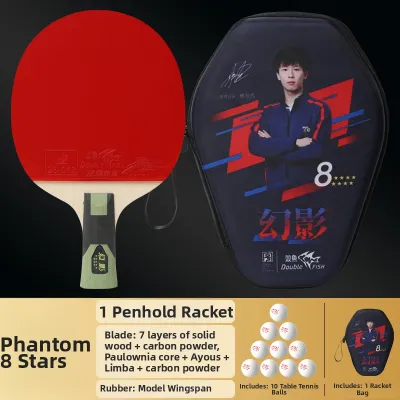
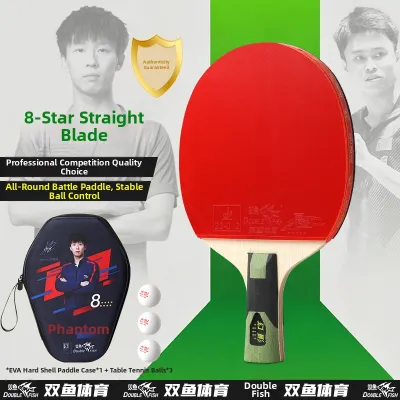
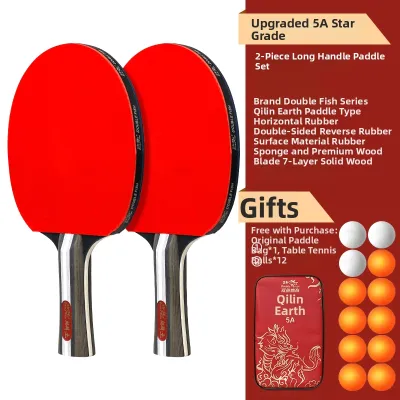
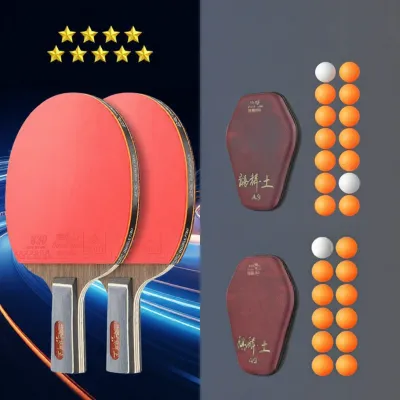
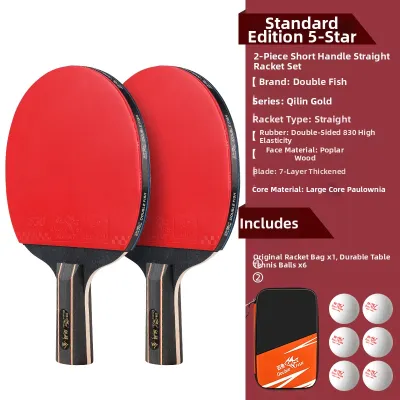
Prices are valid at publication and may change. Please refer to the product page for the latest price.
Beginners are primarily focused on developing consistent contact, basic stroke mechanics, and fundamental ball control. At this stage, your footwork is likely reactive rather than proactive, and your primary goal is to keep the rally going. If you find yourself struggling to return basic serves or consistently hit the table during simple rallies, your priority must be a highly forgiving racket that maximizes control and ball feel.
Intermediate players have mastered the basic strokes—such as the drive, push, and block—and are beginning to incorporate spin into their game. You are likely developing a preferred style, whether it is an aggressive topspin attack or a controlled, all-round game. Your footwork is more active, allowing you to position yourself for stronger shots. At this level, you need a racket that offers a balanced blend of speed and spin, allowing you to transition from defensive blocks to offensive loops without sacrificing consistency.
Advanced players possess high technical consistency, rapid footwork, and a well-defined tactical strategy. You can read incoming spin instantly and execute precise, powerful counter-attacks from various distances. Advanced players require specialized equipment that can maximize their physical output, often opting for stiff blades and high-tension rubbers that demand precise timing and excellent physical conditioning.
Your playing style also dictates your equipment needs. Offensive players who rely on speed and heavy topspin require faster blades and grippy, high-elasticity rubbers. Defensive players, such as choppers, benefit from slower, highly controllable blades paired with specialized rubbers that can neutralize or reverse opponent spin. All-round players need a versatile setup that supports both active attacking and passive blocking.
Key Specifications to Evaluate in Double Fish Rackets
To choose the right Double Fish racket, you must understand the technical components that influence its performance. A table tennis racket consists of three main parts: the blade, the rubber, and the sponge.

The blade is the wooden core of the racket, and its composition determines the overall feel and speed. Pure wood blades, typically made of five or seven layers of wood, offer excellent flexibility and a long dwell time—the amount of time the ball remains in contact with the racket. This high dwell time provides superior feedback, making wood blades ideal for developing control and spin. Carbon blades, which incorporate thin layers of carbon fiber alongside the wood, are significantly stiffer and faster. The carbon layers expand the sweet spot of the blade, ensuring consistent power even on off-center hits, but they reduce ball feel and control.
The rubber and underlying sponge are responsible for generating spin and speed. Inverted rubbers, which have a smooth outer surface, are the most common and versatile, capable of producing high levels of topspin and backspin. Pips-out rubbers, featuring outward-facing pimples, are designed to minimize the effect of opponent spin and are often used for fast, flat hitting or blocking. Sponge thickness and hardness also play a critical role. Thicker sponges (2.0 mm or more) absorb more energy and project the ball with greater speed, making them suitable for offensive play. Thinner sponges (under 1.8 mm) offer more control and are preferred for defensive or close-to-the-table strategies. Harder sponges provide direct power for high-speed shots, while softer sponges offer more control and a higher throw angle, which helps lift backspin over the net.
Handle shape is another essential ergonomic consideration. The two primary styles are shakehand and penhold. Shakehand handles are longer and designed to be held like a handshake. They come in flared (wider at the base) or straight configurations, with flared being the most popular due to its secure grip. Penhold handles are shorter and designed for players who hold the racket like a pen, offering excellent wrist flexibility for close-to-the-table play.
Matching Racket Features to Player Profiles
Selecting the right racket is a matter of balancing trade-offs. A setup that excels in speed will naturally compromise on control, and vice versa. Understanding these dynamics allows you to select a Double Fish configuration that supports your current development phase.
Beginner and Recreational Players
For those starting their table tennis journey, the primary objective is to build muscle memory and master basic stroke mechanics. The ideal racket for this profile is one that prioritizes control, forgiveness, and feedback.
Beginners should look for pure wood blades paired with soft sponges and highly controllable inverted rubbers. This combination ensures a high dwell time, allowing you to feel the ball compress against the racket. This sensory feedback is crucial for learning how to adjust your racket angle and swing speed. A softer sponge also acts as a dampener, absorbing the speed of incoming shots and making it easier to keep the ball on the table.
Pre-assembled rackets are the most practical and cost-effective choice for recreational players. Double Fish offers several entry-level pre-assembled models that are ready to play out of the box. These entry-level options are highly accessible, often priced under S$40, making them a low-risk investment for newcomers. These rackets are designed to be highly balanced, ensuring you do not have to worry about the complexities of matching individual blades and rubbers while you are still learning the basics of the game.
Intermediate and Club-Level Players
As you transition into intermediate play, your equipment must evolve to support more dynamic strokes and tactical variety. At this stage, you require a setup that offers increased speed and spin potential without completely sacrificing control.
Intermediate players should consider upgrading to mid-tier pre-assembled rackets or entry-level custom setups. These configurations often feature slightly stiffer wood blades or outer-ply carbon composites that provide a moderate boost in speed. The rubbers on these rackets typically have thicker, medium-hardness sponges, allowing you to generate more topspin during loops and maintain solid control during active blocks.
This transitional phase is also an excellent time to experiment with different rubber types if your playing style is becoming highly specialized. For example, if you prefer a defensive, control-oriented game, pairing a flexible wood blade with a thinner, high-control rubber on your backhand can significantly improve your chopping and pushing consistency.
Advanced and Competitive Players
Advanced players require high-performance equipment that can withstand intense physical play and deliver maximum power and spin. At this level, equipment is highly customized to match precise tactical requirements.
Competitive setups often utilize advanced carbon blades paired with hard, high-tension rubbers. The stiffness of the carbon allows for explosive speed, enabling you to hit winning shots from mid-to-far distance. However, these setups have a very short dwell time and a low margin for error. To use a carbon setup effectively, you must possess clean technique, fast footwork, and precise timing; otherwise, the stiffness of the blade will result in frequent unforced errors.
Advanced players must also pay close attention to the weight and balance of their racket. A heavier racket can generate more power but requires more physical effort to swing, while a lighter racket allows for faster transitions near the net. While high-performance setups can cost upwards of S$150, the investment is justified for players competing at a high level. Additionally, high-performance rubbers degrade much faster than recreational ones, requiring regular maintenance and frequent replacement to preserve their grip and elasticity.
What to Verify Before Purchasing
When purchasing a Double Fish racket, taking a few precautionary steps will ensure you receive an authentic, high-quality product that meets your playing needs.
First, always verify the authenticity of the product. Double Fish is a prominent brand, and counterfeit rackets do exist on online marketplaces. To protect yourself, purchase from authorized local sports retailers in Singapore or official brand stores on reputable ecommerce platforms. Check for official packaging, holographic security labels, and clear brand markings on the blade and rubber.
If you plan to play in sanctioned local tournaments, such as those organized by community clubs or national associations, you must ensure your racket complies with official regulations. Look for the International Table Tennis Federation (ITTF) approval logo printed on the rubber. This logo guarantees that the rubber meets strict standards regarding thickness, aspect ratio, and surface friction.
Finally, consider the local environmental factors. Singapore’s tropical, highly humid climate can accelerate the degradation of table tennis rubbers and cause wood blades to absorb moisture, altering their playing characteristics. When buying, look for sellers that offer proper storage accessories, such as protective rubber films and padded racket cases. Additionally, review the seller’s return policies and warranty terms to ensure you are covered in the event of manufacturing defects.
Frequently Asked Questions (FAQ)
How often should I replace the rubber on my Double Fish racket?
The lifespan of your table tennis rubber depends on your playing frequency, storage conditions, and the local environment. Over time, exposure to air, dust, and physical impact causes the rubber to lose its grip and the underlying sponge to lose its elasticity. Visual signs of wear include a faded or discolored surface, smooth spots in the high-impact center of the racket, and crumbling edges.
In Singapore’s humid climate, rubber oxidation can occur more rapidly. For casual, recreational players who play once or twice a week, replacing the rubber once a year is generally sufficient. For club-level or competitive players who train multiple times a week, rubbers should be replaced every three to six months to maintain optimal spin and speed performance. Storing your racket in a sealed case with protective film will help extend its lifespan.
Can I upgrade just the rubber on a pre-assembled Double Fish racket?
While it is technically possible to replace the rubber on a pre-assembled racket, it is generally not recommended. Pre-assembled rackets are manufactured using strong, industrial-grade adhesives designed to keep the rubber permanently bonded to the wood. Attempting to peel the rubber off can easily splinter the outer plies of the wooden blade, rendering it unusable.
If you have reached a skill level where you want to customize your rubbers, it is far more cost-effective and beneficial to purchase a dedicated custom blade. Custom blades are designed to allow for easy rubber removal and replacement using specialized water-based table tennis glue. If you must attempt to remove rubber from a pre-assembled blade, apply gentle heat from a hairdryer to soften the adhesive, and peel very slowly to minimize wood damage.
Community discussion
Share your experience or ask a question. Comments are reviewed before publication.