
Selecting your first set of dumbbells for home workouts does not require guessing. For most women starting their fitness journey, a versatile starting point involves two distinct weight ranges: a lighter pair of 1.5 kg to 3 kg for upper body movements, and a heavier pair of 4 kg to 6 kg for lower body exercises. Alternatively, a compact adjustable dumbbell set that spans these ranges offers a highly efficient, space-saving solution.
Starting with the correct weight ensures you build a solid foundation of strength without risking joint strain. The goal of home strength training is to stimulate your muscles to adapt and grow stronger, which requires a load that is challenging yet manageable. By understanding your current physical baseline and matching your equipment to the specific exercises you perform, you can make an informed purchase that supports your long-term fitness goals.
Assess Your Current Fitness Baseline
Before purchasing any fitness equipment, evaluating your current physical capacity helps prevent buying weights that are either too light to be effective or too heavy to lift safely. You do not need prior gym experience to gauge your starting point. Instead, simple bodyweight movements can serve as an excellent diagnostic tool.
Products mentioned in this guide
![[SG Stock]Neoprene Dumbbell Weight Strength Training Neoprene Dumbell Set 1kg 2kg 3kg suitable for home and gym exercise](https://img.lazcdn.com/g/p/15509c2888b8e8dae4efd080518cd81f.png_400x400q80.png_.webp)
![[SG In Stock]Neoprene Dumbell Set for Weight Strength Training 1/2/3KG Suitable for Home Gym Exercise Small Dumbbell Set](https://img.lazcdn.com/g/p/923f27057110e9aadae3d93d3c8f3495.jpg_400x400q80.jpg_.webp)
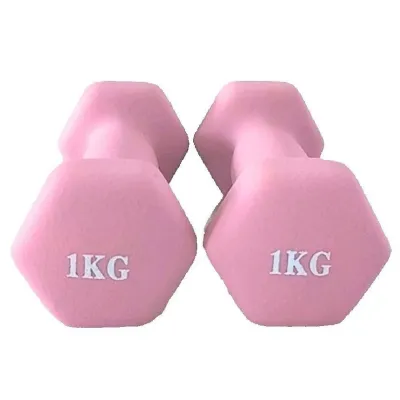
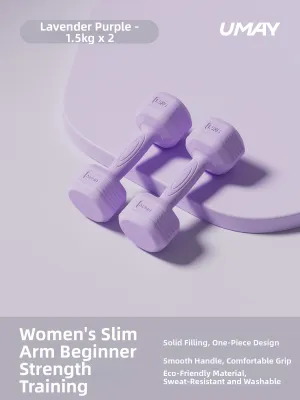
Prices are valid at publication and may change. Please refer to the product page for the latest price.
To test your lower body baseline, perform a set of standard bodyweight squats. If you can complete 15 to 20 controlled squats with your thighs parallel to the floor without losing your balance, your lower body is ready for a moderate starting weight, such as a pair of 4 kg or 5 kg dumbbells. If you struggle to maintain balance or feel significant muscle burning before reaching 10 repetitions, starting with a lighter load or mastering the bodyweight movement first is the safest path.
For your upper body, try performing modified push-ups with your knees on the floor. If you can easily complete 10 to 12 repetitions with controlled form, you possess a solid baseline of upper body pressing strength, meaning you can likely start with 3 kg dumbbells for pressing exercises. If completing five repetitions feels highly challenging, your shoulders and arms will benefit from a lighter starting range of 1.5 kg to 2 kg.
Your daily lifestyle also provides valuable clues. If your routine involves carrying heavy grocery bags or lifting young children, your body has already adapted to handling external resistance. Conversely, if you spend most of your day at a desk and rarely lift heavy objects, your tendons and ligaments will require a gentler, lighter introduction to resistance training to avoid overuse injuries.
Match Dumbbell Weights to Exercise Types
A common misconception is that a single pair of dumbbells can be used for every exercise in a home workout routine. In reality, different muscle groups possess vastly different sizes and mechanical advantages, meaning a weight that is perfect for your legs will be far too heavy for your shoulders.

Upper body isolation exercises target smaller, delicate muscle groups. Movements like lateral raises, bicep curls, and tricep extensions rely on smaller muscles that cannot leverage the rest of the body for help. For these exercises, a starting weight of 1.5 kg to 3 kg is usually appropriate for beginners. Attempting to use a heavier weight often forces other muscles, like the upper traps or lower back, to compensate, which reduces the effectiveness of the exercise and increases injury risk.
In contrast, lower body and compound movements engage your largest muscle groups working in unison. Exercises like goblet squats, lunges, and Romanian deadlifts utilize the glutes, hamstrings, and quadriceps, which are naturally built to support your entire body weight. To stimulate these muscles, you need a heavier load. Starting with 4 kg to 6 kg, or even 8 kg for some beginners, ensures that your lower body receives enough resistance to trigger strength gains and bone density improvements.
To accommodate these differences, the most practical strategy for home workouts is to build a “light, medium, and heavy” trio of weights. For example, a beginner might select a 2 kg pair for shoulders and arms, a 4 kg pair for chest presses and rows, and a 6 kg or 8 kg single dumbbell or pair for squats and lunges. This progressive setup ensures you always have the right tool for each exercise, maximizing your workout efficiency and safety.
Test and Adjust: Signs Your Weight is Right or Wrong
Once you begin your home workouts, you must actively monitor how your body responds to the weights you have chosen. Your body provides clear physical feedback during and after each set, allowing you to verify if the resistance is appropriate or if you need to make adjustments.
The gold standard for verifying your weight selection is the “last two reps” rule. If your workout plan calls for a set of 10 repetitions, reps 9 and 10 should feel highly challenging. You should feel a deep muscle burn and need to exert significant effort to complete them. Crucially, however, your form on these final repetitions must look identical to your very first repetition. If you can maintain strict control while feeling this level of difficulty, you have found your ideal working weight.
There are unmistakable signs that a dumbbell is too heavy for your current level. If you find yourself swinging your torso to build momentum, arching your lower back, or shrugging your shoulders to complete a lift, the weight is excessive. Other warning signs include joint pain in your elbows, wrists, or knees, or the inability to complete the minimum number of target repetitions in your set. When these signs appear, lower the weight immediately to protect your joints and keep the focus on the target muscle.
Conversely, a weight that is too light will fail to produce the physical adaptations you desire. If you finish a set of 12 repetitions and feel as though you could easily complete another 10 without stopping, the resistance is insufficient for building strength. While light weights are excellent for warming up or practicing a new movement pattern, your working sets must challenge your muscles to create a meaningful fitness stimulus.
Choosing the Right Dumbbell Setup for Your Home
Setting up a home gym requires balancing your fitness goals with the practical realities of your living space. In Singapore, where residential spaces like HDB flats and condominiums often require smart storage solutions, the physical footprint of your workout gear is a major consideration.
Adjustable dumbbells are an exceptionally popular choice for compact homes. These systems allow you to change the weight of a single handle using a dial, pin, or selector plate, effectively replacing an entire rack of individual dumbbells. This space-saving design keeps your living area clutter-free while providing a wide range of weight options that allow you to practice progressive overload as you grow stronger. While they require a higher initial investment, they save space and offer long-term value as you progress.
Fixed dumbbells, on the other hand, offer unmatched durability and simplicity. Because they have no moving parts, they can withstand accidental drops and require zero setup time between exercises. This makes them ideal for fast-paced circuit workouts where you need to switch weights instantly. However, as you get stronger, storing multiple pairs of fixed dumbbells will require dedicated floor space or a storage rack.
When selecting dumbbells, pay close attention to materials and grip. In Singapore’s warm and humid climate, sweaty hands can easily lose grip on smooth metal handles, posing a safety hazard. Look for dumbbells with textured metal knurling or a non-slip neoprene or rubber coating. Additionally, rubber or neoprene-coated ends are highly recommended for home use; they protect delicate vinyl, laminate, or tile floors from scratches and significantly dampen the noise if a weight is set down firmly on the floor.
Frequently Asked Questions (FAQ)
Can I just use water bottles instead of buying dumbbells?
Using plastic water bottles filled with water or sand is an accessible, cost-free way to begin your fitness journey. A standard 1-liter bottle filled with water weighs approximately 1 kg, which is an excellent starting point for learning basic movement patterns and building initial joint stability. However, water bottles have significant limitations. Their bulky shape makes them awkward to grip securely, especially during dynamic movements or when your hands become sweaty. Furthermore, progressing beyond 1 kg to 2 kg using household items becomes highly impractical, making a transition to properly engineered dumbbells necessary for continued strength gains and hand safety.
How quickly should I increase my dumbbell weight?
The rate at which you increase your dumbbell weight depends entirely on your individual recovery, consistency, and the specific exercises you perform. As a general rule, you should only consider increasing the weight when you can complete all scheduled sets and repetitions of an exercise with perfect, controlled form, and feel that the final repetitions no longer challenge you. Progression naturally occurs much faster in large compound movements like squats, where you might increase the weight every few weeks. For smaller, isolated movements like lateral raises, you may stay at the same weight for several months, as these smaller shoulder muscles adapt at a much slower pace.
Community discussion
Share your experience or ask a question. Comments are reviewed before publication.