
Choosing the right dumbbell and barbell set for a home gym in Singapore requires balancing your training goals with the realities of high-density living. Space constraints, floor protection, and noise mitigation are just as crucial as weight capacity. By selecting a versatile home gym equipment set tailored to your fitness level, you can build an efficient strength-training setup that respects both your budget and your neighbors.
Assess Your Space, Budget, and Fitness Goals
Singapore’s housing landscape is dominated by Housing & Development Board (HDB) flats and condominiums where floor space is at a premium. Before purchasing any heavy gear, measure your designated workout area. A standard utility bench requires about 1.2 to 1.5 meters of length, and you need at least 1 meter of clear space on all sides to perform exercises safely. For barbell work, a standard Olympic bar is 2.2 meters long, meaning your training room needs at least 2.4 to 2.6 meters of usable width to allow for loading and unloading plates without striking walls or furniture. Ceiling height is another critical factor; overhead presses require sufficient clearance so that the plates do not damage light fixtures or ceiling fans.
Financial planning goes beyond the price tag of the weights themselves. When setting a budget in SGD, allocate funds for structural support and safety accessories. A basic budget of S$300 to S$500 can secure a solid set of adjustable dumbbells, but a complete barbell setup with a rack, bench, and plates typically ranges from S$800 to over S$2,500. Do not forget to budget S$100 to S$300 for high-density rubber floor mats, secure barbell collars, and a dedicated storage rack to keep your space organized and safe.
Products mentioned in this guide
![[BULKY] Pure Steel Dumbbell Set Adjustable Exercise Weight Plates Dumbbell Barbell Convertible Gym Set](https://img.lazcdn.com/g/p/89d6083b2bdfcd92bcc80722bf1208b9.jpg_400x400q80.jpg_.webp)
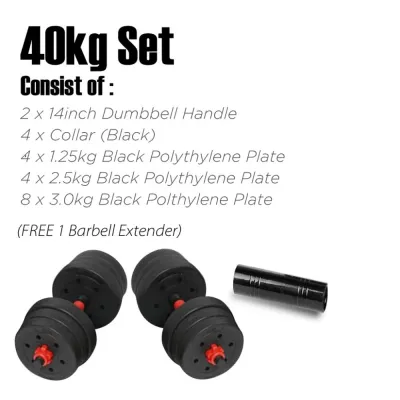
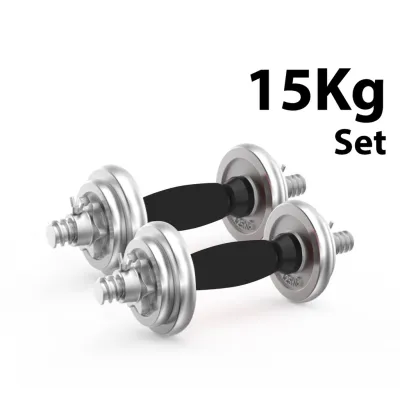
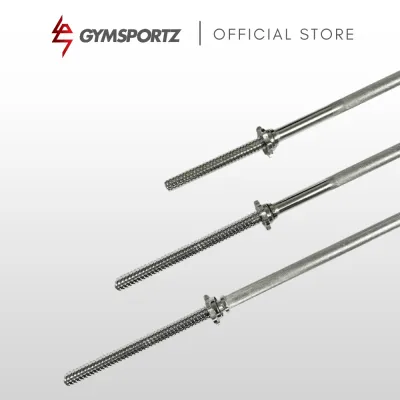
![[BULKY] Chrome Dumbbell/Barbell Connection Set/Home Gym](https://img.lazcdn.com/g/p/3a8a1f281e337a0388b6aa45852b711f.jpg_400x400q80.jpg_.webp)
Prices are valid at publication and may change. Please refer to the product page for the latest price.
Your equipment must align with your current fitness level and long-term progression. Beginners focusing on isolation movements or high-repetition endurance training will find greater utility in lightweight, highly adjustable dumbbell sets. Advanced lifters aiming for progressive overload and explosive power development will eventually require heavy barbell setups. Assess whether your routine prioritizes metabolic conditioning, hypertrophy, or maximal strength, as this dictates the total weight capacity and durability you need to purchase today.
Dumbbells vs. Barbells: Which Do You Need?
Dumbbells are the gold standard for unilateral training, allowing you to work each side of your body independently. This independence is vital for identifying and correcting muscle imbalances, as a stronger dominant side cannot compensate for a weaker one. Furthermore, dumbbells offer a greater range of motion and allow your wrists and elbows to rotate naturally during presses and rows. This natural path of motion can reduce joint stress, making dumbbells an excellent choice for injury prevention, rehabilitation, and targeted muscle hypertrophy.

Barbells excel at moving maximum loads. Because you hold a single bar with both hands, your nervous system can stabilize the load more efficiently, allowing you to lift significantly heavier weights. This makes the barbell the ultimate tool for heavy compound exercises such as back squats, conventional deadlifts, overhead presses, and bench presses. If your primary objective is building raw power, systemic bone density, and rapid progressive overload, a barbell is irreplaceable.
To help you prioritize your first purchase, consider this decision checklist:
- Choose Dumbbells First If: Your workout area is smaller than 2×2 meters; your budget is under S$500; your primary goals are general fitness, toning, and joint-friendly hypertrophy; or you live in an upper-floor apartment where dropping weights is absolutely prohibited.
- Choose a Barbell First If: You have space for a dedicated power rack or squat stand (at least 2.5×2.5 meters of clear space); your budget exceeds S$1,000; your training revolves around powerlifting, weightlifting, or low-rep strength; and you have reinforced flooring.
Types of Dumbbells for Home Gyms
Understanding the structural categories of dumbbells is essential for making an informed investment. Fixed-weight dumbbells are single, solid units with a set weight welded or molded to the handle. Adjustable dumbbells utilize a mechanical dial, pin-lock, or selector system to change weights instantly within a single handle unit. Loadable dumbbells feature threaded or smooth sleeves, resembling miniature barbells, onto which you manually slide and secure individual weight plates.
The material of your weights directly affects your home environment. Cast iron is the traditional choice; it is highly durable and has a classic feel, but it is loud, prone to rusting in Singapore’s humid climate, and can easily crack floor tiles if dropped. Rubber-coated dumbbells feature a protective layer that dampens noise and cushions minor impacts, though they can emit a strong chemical odor initially. Urethane dumbbells represent the premium tier; they are virtually odorless, highly resistant to tearing, chipping, and moisture, and provide superior floor protection, making them ideal for air-conditioned home gyms.
Pay close attention to grip ergonomics. Dumbbell handles are either straight or contoured (ergo-shaped), with diameters typically ranging from 25mm to 35mm. Contoured handles fit the natural curve of your palm, reducing grip fatigue during heavy pulling movements. Knurling—the cross-hatched pattern cut into the metal handle—provides the friction necessary to prevent slipping when your hands sweat. A medium, passive knurling pattern is ideal for home use, offering a secure grip without tearing calluses during high-repetition sets.
Fixed vs. Adjustable Dumbbells
Fixed dumbbells are incredibly robust; with no moving parts, they are virtually indestructible and require zero setup time between exercises. However, building a full progression set requires purchasing multiple pairs, which incurs a massive cumulative financial cost and demands a large multi-tier storage rack that dominates your floor space.
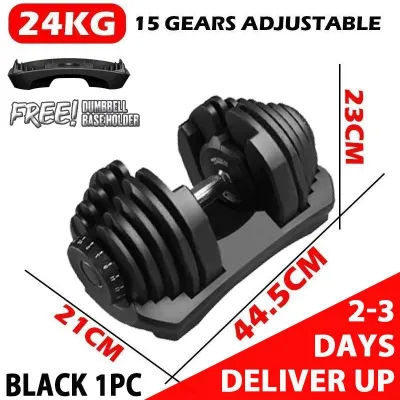
Adjustable dumbbells pack an entire rack of weights into a single pair, saving immense amounts of square footage. They are highly cost-effective per kilogram of weight. The trade-off lies in their complexity: the internal dial and gear mechanisms are fragile and can break if dropped, and the physical footprint of the handle remains bulky even when set to lighter weights, which can interfere with certain close-body movements.
Let’s compare these two options across key dimensions:
| Dimension | Fixed Dumbbells | Adjustable Dumbbells |
|---|---|---|
| Space Required | High (requires multi-tier rack) | Low (fits in a small corner) |
| Relative Cost Range | High (expensive to buy multiple pairs) | Moderate to High (single upfront investment) |
| Maintenance Needs | Low (wipe down to prevent rust) | Moderate (keep mechanism clean, avoid dropping) |
| Best User Profile | Dedicated lifters with large spaces | HDB/Condo residents, general fitness enthusiasts |
Choosing the Right Barbell and Weight Plates
Selecting a barbell requires understanding the division between Standard and Olympic specifications. Standard bars feature a 1-inch (approx. 25mm) diameter sleeve throughout the entire length and are designed for lighter loads. Olympic bars feature 2-inch (approx. 50mm) diameter rotating sleeves at the ends, which accommodate Olympic weight plates. For any lifter planning to progress past basic fitness, the Olympic standard is the safer, more durable, and more versatile choice.
When evaluating an Olympic barbell, analyze its technical specifications. “Whip” refers to the bar’s capacity to bend and flex under load and spring back, which is crucial for dynamic Olympic lifts but less desirable for stable powerlifting movements. Tensile strength, measured in pounds per square inch (PSI), indicates the bar’s resistance to permanent bending; look for a rating of at least 150,000 PSI for general home use, and over 190,000 PSI for heavy powerlifting. Sleeve rotation is facilitated by either bushings (bronze or composite sleeves that provide smooth, controlled rotation for power lifts) or bearings (needle bearings that spin rapidly, reducing wrist strain during clean-and-jerk or snatch movements). Knurling marks indicate standard hand placement for powerlifting or Olympic lifting, helping you maintain consistent form.
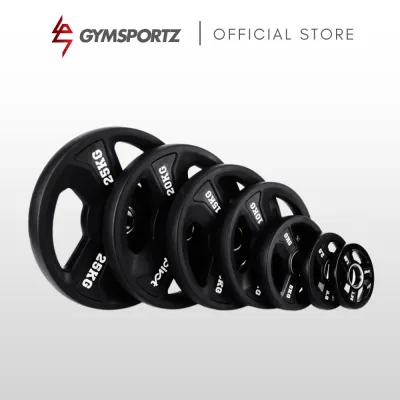
Weight plates come in three primary styles. Cast iron plates are thin, allowing you to fit more weight on the bar, but they clank loudly and offer zero impact absorption. Rubber-coated plates reduce noise slightly but still feature an iron core that can damage floors. Bumper plates are made of high-density solid rubber with a steel inner ring; they are designed to absorb shock and bounce slightly when dropped, protecting both the barbell and your floor. However, bumper plates are much thicker, meaning you will fit less total weight on the barbell sleeve.
Standard vs. Olympic Barbells
Standard barbells are typically lightweight (often weighing 5kg to 10kg), have a low maximum weight capacity (often capped around 100kg to 120kg), and feature static, non-rotating sleeves. Because the sleeves do not rotate, the rotational inertia of the spinning weight plates is transferred directly to your wrists and elbows, increasing the risk of joint strain during dynamic movements.
Olympic barbells are precision-engineered tools. A standard men’s Olympic bar weighs exactly 20kg, measures 2.2 meters, and has a 28mm to 29mm shaft diameter, while a women’s bar weighs 15kg, measures 2.01 meters, and has a 25mm shaft diameter. They boast massive weight capacities (often exceeding 450kg) and feature rotating sleeves that isolate the spin of the plates from the shaft, protecting your joints during heavy lifts.
If your budget is tight and you only intend to perform light, high-rep conditioning or rehabilitation work, a standard bar kit may suffice. However, if you plan to perform squats, deadlifts, or bench presses, investing directly in an Olympic setup prevents the need to buy entirely new plates, bars, and racks when you inevitably outgrow standard equipment.
Space-Saving and Budget-Friendly Setups
You do not need a massive commercial footprint to build an effective home gym. A highly efficient starter configuration consists of a single pair of dial-adjustable dumbbells paired with a multi-angle utility bench that folds flat or stands vertically for storage. This setup requires less than one square meter of storage space when not in use, yet it allows you to perform hundreds of exercises, including incline presses, seated rows, step-ups, and core work.
To maximize your budget, consider loadable dumbbell handles. These handles feature 2-inch Olympic sleeves, allowing you to use the exact same weight plates on both your barbell and your dumbbells. This eliminates the need to buy separate weight sets for different exercises, saving hundreds of dollars and drastically reducing the physical volume of equipment cluttering your home.
Living in a multi-story building in Singapore requires strict floor protection and noise mitigation. Prioritize high-density rubber flooring. Standard yoga mats or cheap, soft foam tiles are insufficient; they compress completely under heavy loads, offering no protection to the underlying concrete or tiles. Invest in professional-grade, interlocking rubber mats with a thickness of at least 15mm to 20mm. These mats absorb the localized impact of heavy equipment, prevent the weights from sliding, and dampen the structural vibrations that travel through walls and floors to your neighbors’ apartments. Always check the manufacturer instructions of both your flooring and your gym equipment to ensure proper installation and compatibility.
Frequently Asked Questions (FAQ)
Can I use a barbell in an HDB flat without disturbing neighbors?
Yes, but you must adapt your training style and protective gear. Dropping a loaded barbell from overhead or even waist height on a standard HDB concrete floor will cause severe structural vibrations and loud noise, leading to complaints. To train peacefully, use thick rubber bumper plates, lay down heavy-duty 20mm rubber gym tiles, and practice strictly controlled lowering of every repetition. Avoid dropping weights entirely, and consider using crash pads (thick foam drop pads) if you must perform explosive lifts.
How much weight should a beginner buy for a home gym?
For dumbbells, a beginner should look for an adjustable set that ranges from approximately 2kg to 20kg or 24kg per hand. This provides plenty of room to grow on isolation exercises. For a barbell setup, a standard starting plate set of 100kg (including a 20kg bar) is ideal. Strength on compound lifts like deadlifts and squats progresses rapidly, so having a modular plate system allows you to add weight in small increments as your body adapts.
Are cheap spin-lock dumbbells worth it for home workouts?
Spin-lock dumbbells are highly durable, cost-effective, and safe because the threaded collars mechanically lock the plates in place. However, they require you to manually unscrew the collar, swap plates, and screw the collar back on for every weight adjustment. If your training consists of straight sets with long rest periods, they are an excellent budget choice. If you prefer fast-paced supersets, drop sets, or circuit training, the slow adjustment time may disrupt your workout flow.
Community discussion
Share your experience or ask a question. Comments are reviewed before publication.