
To choose the right electronic whistle for sports emergencies, you must match the device’s acoustic output, environmental sealing, and power configuration to the specific venue and weather conditions of your activity. Unlike traditional whistles, electronic models rely on battery power and speaker components, making careful verification of manufacturer specifications essential for safety and reliability.
Quick Guide: Core Criteria for Electronic Whistles
Emergency signaling in sports requires immediate, high-volume sound that can cut through wind, crowd noise, or water splash. In high-stress scenarios, a whistle serves as a critical communication tool to halt play, alert medical personnel, or signal for rescue. Because electronic whistles rely on electronic components rather than human lung power, they offer a consistent volume level that does not degrade when the user is fatigued or injured.
Selecting the right device rests on three primary decision pillars: acoustic reach, environmental resilience, and operational reliability. Acoustic reach ensures the sound travels far enough in your specific venue, environmental resilience protects the device from rain, sweat, or water exposure, and operational reliability guarantees the whistle activates instantly when needed. Balancing these factors ensures your signaling device remains functional when a crisis occurs on the field or court.
Products mentioned in this guide
![[SG SELLER] SUPER LOUD ELECTRONIC WITH LANYARD ELECTRIC WHISTLE 3 FREQUENCY TONE OUTDOOR SPORT WHISTLE COACHES REFEREES](https://img.lazcdn.com/g/p/0076afe74cba59286a0ce6de840ba25f.jpg_400x400q80.jpg_.webp)
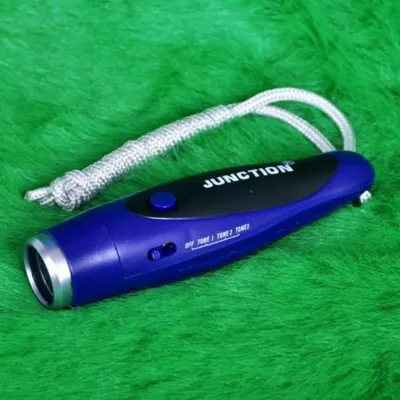
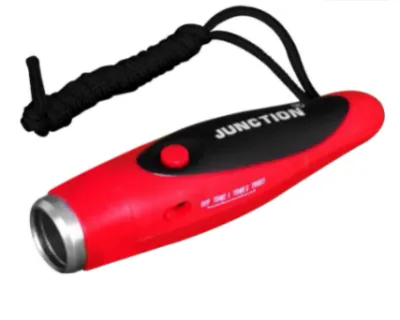
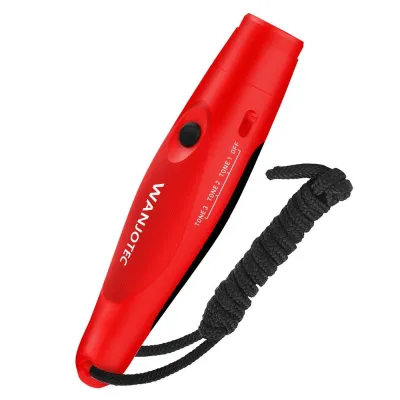
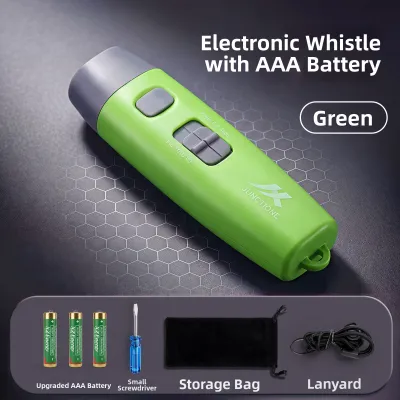
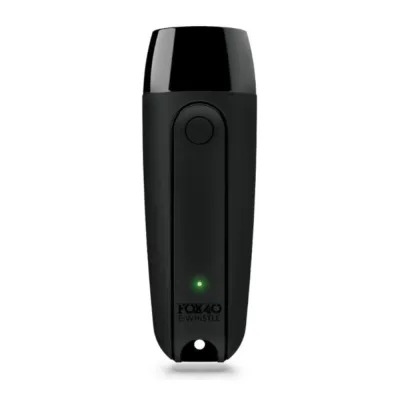
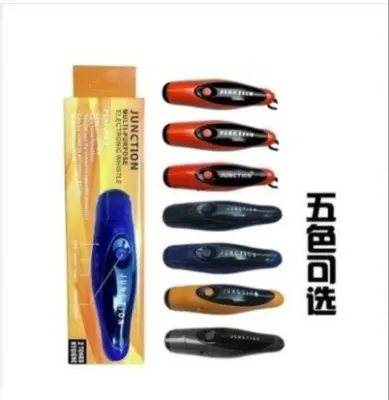
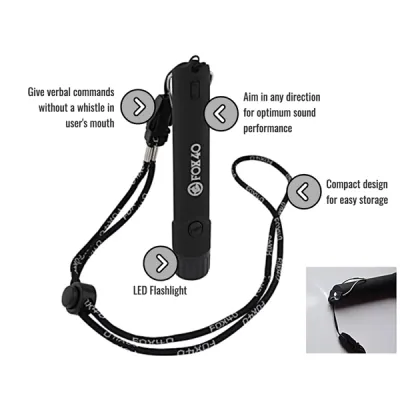
Prices are valid at publication and may change. Please refer to the product page for the latest price.
Because performance can vary widely, you should always verify the exact technical specifications provided by the manufacturer rather than relying on vague marketing promises. Look for certified testing standards, ingress protection ratings, and documented decibel levels on the product packaging or official manuals before adding a device to your sports first aid kit.
Matching Sound Output and Range to Your Venue
The physical environment of your sport dictates the acoustic profile your electronic whistle requires. In enclosed spaces like indoor basketball courts or gymnastics halls, sound waves bounce off hard walls, creating intense echoes that can risk hearing damage if the volume is excessively high. Conversely, open outdoor fields, such as football pitches or athletics tracks, allow sound to dissipate rapidly, requiring a higher volume and a focused directional beam to reach distant ears.

When evaluating a whistle, check the manufacturer-stated decibel (dB) levels and effective range claims on the product label. Keep in mind that decibel measurements are highly dependent on the distance at which they were tested; a whistle rated at 120 dB at close range will sound significantly quieter at fifty meters. Verify if the manufacturer specifies the testing distance to ensure the device meets your venue’s spatial demands.
Sound frequency and pitch also play a critical role in how well a signal cuts through ambient noise. High-pitched, multi-tone frequencies are generally easier to distinguish against low-frequency background noise like roaring crowds, traffic, or heavy wind. Some electronic whistles offer adjustable tone settings, allowing you to switch frequencies depending on whether you are officiating a noisy indoor tournament or managing an outdoor trail run.
To help guide your selection, consider this comparison framework for acoustic needs:
- Indoor Courts: Moderate decibel levels (typically 100 to 110 dB), multi-directional sound dispersion, and lower pitch options to minimize echo and protect hearing in enclosed spaces.
- Outdoor Fields: High decibel levels (120 dB or higher), directional sound projection, and high-frequency tones to cut through wind and cover long distances.
- Water and Marine Environments: Maximum decibel output, high-pitched tones that penetrate splash noise, and directional signaling to reach shorelines or safety boats.
Evaluating Durability and Weather Resistance
Sports environments expose electronic equipment to harsh conditions, from torrential tropical downpours to intense humidity and sweat. To ensure your whistle does not fail when wet, you must verify its Ingress Protection (IP) rating. For water-based sports like kayaking, sailing, or swimming, look for a high rating such as IP56 or IP67, which indicates resistance to powerful water jets or temporary submersion.
Physical impact resistance is another critical factor, especially in high-movement sports where the whistle might be dropped on concrete, turf, or rocky trails. Look for housings made from impact-resistant plastics like ABS or those featuring rubberized bumpers. A sturdy casing prevents the internal speaker and battery compartment from cracking or shifting during a fall.
Temperature tolerance is vital if you plan to store the whistle in an outdoor gear bag, a car glove box, or expose it to direct sunlight during long tournament days. High heat can degrade battery life and damage internal circuitry, while extreme cold can cause rapid power loss. Check the manufacturer’s operating and storage temperature ranges to ensure the device matches your local climate.
Always consult the product manual for exact submersion limits, cleaning instructions, and warranty conditions. Some water-resistant whistles require immediate rinsing with fresh water after exposure to saltwater or chlorinated pool water to prevent corrosion of the speaker grill and battery contacts.
Power, Portability, and Emergency Readiness
Electronic whistles generally use either replaceable button-cell batteries or rechargeable lithium-ion batteries. Replaceable batteries are highly reliable for occasional use because they can sit in a kit for months without losing charge, provided you carry spares. Rechargeable models are more cost-effective for daily coaching or officiating but require a disciplined charging routine to avoid a dead battery during an emergency.
The activation mechanism must be easy to operate under intense stress, physical exhaustion, or while wearing thick gloves. Push-button designs are common, but you should verify that the button is raised, tactile, and requires enough pressure to prevent accidental activation in your pocket while remaining easy to press with cold or wet hands.
Portability and attachment options determine how quickly you can access the whistle in a crisis. Look for lightweight, compact designs that can be securely attached to a lanyard, wrist strap, or clipped directly to a life jacket or backpack harness. The whistle should remain close to your chest or hand so you do not waste precious seconds searching for it.
To prevent unexpected power failure, choose a model equipped with a clear battery life indicator, such as a multi-colored LED light. Regularly check this indicator before heading onto the field, and follow the manufacturer’s storage guidelines, such as removing replaceable batteries during long periods of inactivity to prevent damaging leaks.
Integrating Electronic Whistles into First Aid Kits
An electronic whistle is a valuable addition to any sports first aid kit, but it requires careful storage to remain functional. Store the whistle in a dedicated, padded compartment away from liquid medical supplies, heavy tools, or items that could press against the activation button and drain the battery. Keeping it in a clear, labeled waterproof pouch within the kit ensures it is dry and instantly visible to any responder.
Establish a routine inspection checklist for your first aid kit maintenance, ideally performed at the start of every sports season or on a monthly basis. This inspection should include testing the whistle’s sound output, checking the battery contacts for signs of corrosion, and verifying that rechargeable models are fully powered.
Even the most reliable electronic device can experience battery failure or electronic malfunction. For absolute safety and redundancy, always pack a traditional, pealess manual whistle alongside your electronic whistle in the first aid kit. This ensures you have a fail-safe signaling method that requires no power and works under any conditions.
Frequently Asked Questions (FAQ)
Can an electronic whistle completely replace a traditional pealess whistle?
While electronic whistles offer excellent hygiene benefits and consistent volume without physical exertion, they cannot completely replace traditional pealess whistles in emergency planning. Electronic devices are vulnerable to battery depletion, circuit failure, and extreme water damage. For robust emergency preparedness in sports, it is highly recommended to use the electronic whistle as your primary signaling tool while keeping a traditional pealess whistle as a reliable, zero-power backup.
How should I maintain the battery of an electronic whistle during long-term storage?
To maintain battery health during long-term storage, remove replaceable batteries from the chamber to prevent chemical leaks and corrosion on the metal contacts. For rechargeable lithium-ion whistles, store the device at approximately 50% charge in a cool, dry place, and avoid letting the battery drain completely to zero. Test the device and top up the charge every three to six months to ensure it remains ready for immediate emergency use.
Community discussion
Share your experience or ask a question. Comments are reviewed before publication.