
Finding the right elite basketball bag comes down to matching your daily gear volume with a carrying system that protects your equipment and supports your body during transit. A standard school or work backpack often falls short when tasked with housing bulky high-top sneakers, a full-sized basketball, and sweaty post-game apparel. An elite bag solves these challenges by offering dedicated, ventilated compartments and robust materials designed to withstand rough court surfaces and unpredictable weather. By systematically evaluating your storage needs, transit habits, and ergonomic requirements, you can select a high-performance bag that keeps your gear organized and ready for action.
Assess Your Gear Volume and Capacity Requirements
To choose the correct bag size, start by laying out every item you bring to the court. A standard training kit typically includes a size 7 basketball, a pair of basketball shoes, a change of clothes, a microfiber towel, and a large water bottle. If you play on both indoor hardwood and outdoor concrete, you might carry two pairs of shoes with different outsole compounds to preserve your grip. This dual-shoe setup significantly increases the required volume and demands a bag with flexible internal dividers or dual footwear compartments.
Beyond the core gear, consider the bulk of your protective and supportive accessories. Ankle braces, knee sleeves, and shooting sleeves take up considerable space and should not be crammed into tight corners where they can lose their shape or snag on velcro closures. If you travel with electronics, such as a tablet for reviewing game film or a massage gun for post-game recovery, you will need dedicated, padded compartments that isolate these delicate items from heavy, hard gear.
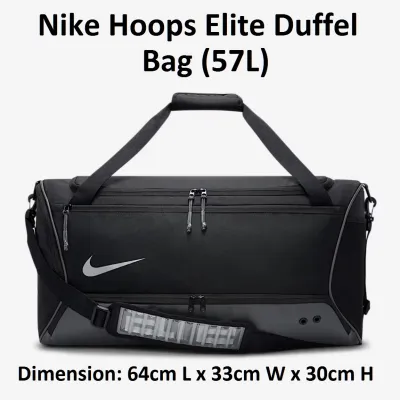
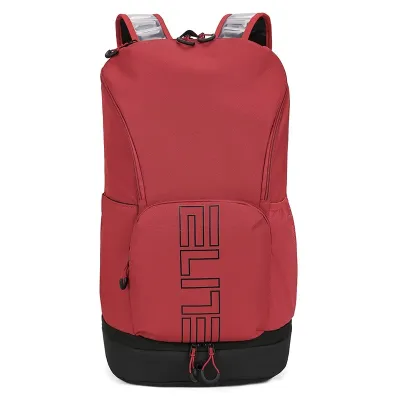
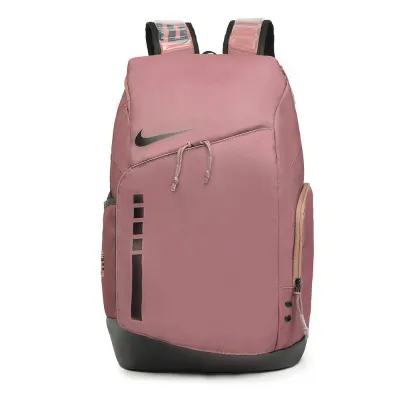
Products mentioned in this guide
![Nike Mens Utility Elite Backpack (37L) - Mineral Slate [FN4173-382]](https://img.lazcdn.com/g/ff/kf/S938979d07a86404a8c7a9a39306753dap.jpg_400x400q80.jpg_.webp)
![Nike Utility Elite Backpack (37L) - Light Orewood Brown [FN4173-104]](https://img.lazcdn.com/g/ff/kf/S1f48d60fd15d4044872b20e93e379018b.jpg_400x400q80.jpg_.webp)
![Nike Utility Elite Backpack (37L) - Black [FN4173-010]](https://img.lazcdn.com/g/ff/kf/S311776b4c20545e88e79a0d166490cb5c.jpg_400x400q80.jpg_.webp)
![Nike Varsity Elite Basketball Shoe Bag (14L) - Black [HM9970-010]](https://img.lazcdn.com/g/ff/kf/S36054f9951c54a85befdcf43711bab1eE.jpg_400x400q80.jpg_.webp)
Prices are valid at publication and may change. Please refer to the product page for the latest price.
Map your total gear volume to general capacity tiers rather than relying solely on manufacturer-stated liter measurements, which can be misleading due to varying pocket layouts. A compact day-trip bag is ideal if you travel light, carrying only your shoes, a water bottle, and a change of clothes while carrying your basketball in hand or using an external net. Conversely, a full tournament loadout bag is necessary if you need to pack multiple uniforms, warm-up gear, recovery tools, and nutrition for an all-day event. Ensuring your bag has a slight surplus of space prevents zipper strain and maintains the bag’s structural integrity over time.
Key Features to Look for in an Elite Basketball Bag
The defining characteristic of an elite bag is its specialized compartmentalization, starting with footwear isolation. Dedicated shoe compartments must feature mesh screens, metal grommets, or breathable fabrics to facilitate continuous airflow. This ventilation is critical for drying out sweat-soaked shoes and preventing odor-causing bacteria from migrating to your clean jerseys and towels. Look for compartments that expand inward or outward without compressing the main storage area, allowing you to slide in high-top shoes easily.

Ball storage design is another critical factor that influences both convenience and bag balance. External mesh nets or expandable front pockets keep the basketball separated from your clean gear and are easy to deploy, but they can leave the ball exposed to rain and shift the bag’s center of gravity outward. Internal dedicated ball sleeves or bottom compartments offer superior protection and keep the weight centered close to your back, though they do consume internal volume that would otherwise be used for clothing or accessories.
The base of the bag requires heavy-duty reinforcement because it frequently contacts wet grass, dusty concrete, or damp locker room floors. Inspect the bottom panel for thick, water-resistant materials such as tarpaulin, ballistic nylon, or reinforced polyurethane coatings. These materials prevent moisture from seeping upward into your dry gear and allow you to easily wipe away dirt, mud, and court dust with a damp cloth.
Load management features determine how comfortable the bag remains when fully loaded with heavy gear. Look for wide, contoured shoulder straps lined with high-density foam or pressurized air pockets to distribute weight evenly across your shoulders. An adjustable sternum strap is essential for stabilizing the load during movement, preventing the bag from swaying or slipping off your shoulders. Additionally, a molded back panel with deep ventilation channels promotes airflow, keeping your back cool during warm commutes.
Matching the Bag to Your Commute and Court Environment
Your daily transit method dictates the ideal shape and profile of your basketball bag. If you rely on public buses or trains, a streamlined, vertically oriented backpack with a slim profile is highly advantageous. This design prevents you from bumping into other passengers in crowded spaces and fits easily under seats or in overhead racks. For active commutes, such as cycling or walking to the court, prioritize a bag with excellent ergonomic stability, secure compression straps, and a high-riding position that keeps the load close to your center of gravity.
Weather resistance is a vital consideration, particularly in regions prone to sudden downpours or high humidity. Verify that the bag’s exterior fabric features a durable water-repellent coating and that the zippers on sensitive compartments are sealed or covered by fabric storm flaps. These features protect your spare clothes, dry socks, and electronics from water damage during your commute.
The primary court surface you play on should influence your choice of bottom panel materials. Outdoor concrete and asphalt courts are highly abrasive and will quickly wear through standard polyester fabrics. If you primarily play outdoors, select a bag with an ultra-durable, abrasion-resistant base that can handle being dragged across rough ground. For indoor hardwood players, a clean, non-marking base is preferred to avoid leaving scuffs on polished court surfaces.
Security features are crucial when leaving your bag unattended on the sidelines or in public locker rooms. Look for bags that feature hidden, fleece-lined pockets positioned against your back to secure your phone, wallet, and keys. Some elite bags also incorporate lockable zipper pulls on the main compartments, allowing you to attach a small luggage lock for added peace of mind during intense games.
Building Your Elite Bag Shortlist: A Decision Matrix
To make an objective purchasing decision, construct a personalized decision matrix based on your specific playing habits and transit needs. Begin by defining your core evaluation axes: Gear Capacity, Shoe Compartment Design, Material Durability, and Ergonomic Support. Assign a weight to each axis based on what matters most to you; for example, a player who commutes long distances on foot might weight ergonomic support higher, while a tournament player might prioritize maximum gear capacity. While high-end elite bags can range from S$80 to over S$150, evaluating them based on structural features rather than brand prestige ensures you get the best value for your investment.
Use the following blank decision matrix template to compare candidate bags using specifications sourced directly from manufacturer product pages:
| Candidate Bag | Gear Capacity (Score 1-5) | Shoe Compartment (Score 1-5) | Material Durability (Score 1-5) | Ergonomic Support (Score 1-5) | Total Weighted Score |
|---|---|---|---|---|---|
| Bag Option A | |||||
| Bag Option B | |||||
| Bag Option C |
When researching candidates, actively look for red flags that indicate poor long-term durability. Avoid bags that utilize single-stitch construction at high-stress areas, such as the connection points where the shoulder straps meet the main body. Instead, look for reinforced box-stitching or bar-tack stitches. Non-replaceable proprietary plastic buckles are another risk; if they crack or break, the entire strap system may become unusable. Opt for bags that use standard, heavy-duty hardware that can be easily replaced if damaged.
Pre-Purchase Checks and Fit Verification
Before finalizing your purchase, perform a series of physical checks to ensure the bag fits your body and meets your quality standards. If purchasing in a physical store, cross-reference the bag’s harness system with your torso length. The shoulder straps should wrap smoothly over your shoulders without leaving a gap at the collarbone, and the sternum strap should rest comfortably across your chest. If buying online, measure your torso length and compare it to the manufacturer’s sizing guidelines.
Conduct a simulated load test by packing the bag with your actual gear or equivalent weights. Put the fully loaded bag on and walk around to check its balance; it should not pull backward or sag below your lower back. A poorly balanced bag strains your neck and shoulders, which can lead to fatigue before you even step onto the court.
Inspect the hardware quality closely by opening and closing all zippers multiple times. Heavy-duty zippers should glide smoothly without catching on the lining or fabric teeth. Examine the D-rings and strap adjusters to ensure they are made of thick, impact-resistant polymer or metal. Finally, pull firmly on the shoulder strap anchor points to verify that the stitching is secure and shows no signs of stretching or loose threads.
Lastly, review the manufacturer’s warranty policy to understand what is covered. Elite bags often come with warranties that protect against manufacturing defects, such as premature zipper failure, structural seam tearing, or material peeling. Understanding these terms ensures you are protected if the bag experiences unexpected wear during regular, proper use.
Frequently Asked Questions (FAQ)
Can I use a standard backpack instead of a dedicated basketball bag?
While a standard backpack can carry basic items, it lacks the specialized compartments required for basketball gear. Standard backpacks rarely feature ventilated shoe compartments, meaning dirty, sweaty sneakers must be packed alongside clean clothes, leading to moisture transfer and persistent odors. They also lack dedicated space for a basketball, forcing you to carry the ball separately or cram it inside, which stretches the fabric and strains the zippers. A standard backpack may suffice for a casual shootaround with minimal gear, but regular training and games demand the organization and durability of a dedicated basketball bag.
How do I clean and maintain the shoe compartment?
To maintain hygiene and prolong the life of your bag’s shoe compartment, establish a routine cleaning habit. After every game, remove your shoes and wipe down the interior lining of the compartment with a damp microfiber cloth to remove dirt, sweat, and debris. Allow the compartment to air dry completely in a well-ventilated area before closing it. Always check the manufacturer’s care label before applying any chemical cleaners, deodorizing sprays, or laundry detergents, as harsh chemicals can degrade water-resistant coatings. If you notice the compartment’s lining beginning to peel or crack, stop using liquid cleaners and consult the manufacturer for specific care instructions.
Community discussion
Share your experience or ask a question. Comments are reviewed before publication.