
Selecting the right EVA foam sheet thickness for home gymnastics practice is a critical decision that balances joint protection with physical stability. The ideal thickness depends entirely on the specific movements you perform, your skill level, and your body weight. While a thin sheet might cause discomfort during high-impact landings, an overly thick or soft sheet can compromise your balance and lead to joint strain. Understanding how to evaluate these materials ensures you create a safe, supportive training space at home.
Before purchasing any equipment, it is vital to recognize that home practice gear is designed to support conditioning, flexibility, and basic skill maintenance. It cannot replace the specialized training, professional coaching, and advanced safety systems found in a dedicated gymnastics facility. Always prioritize your safety by practicing only those skills you have fully mastered under professional supervision, and stop immediately if you experience pain, instability, or equipment slippage.
Understanding EVA Foam Properties for Gymnastics
Ethylene-vinyl acetate (EVA) foam is a highly versatile, closed-cell copolymer known for its excellent shock-absorbing characteristics. Because the material is filled with tiny, sealed air bubbles, it compresses under load and quickly recovers its shape once the pressure is released. This elastic recovery is what makes an EVA foam sheet an excellent choice for dampening the impact of jumps, landings, and falls during floor exercises.
Products mentioned in this guide
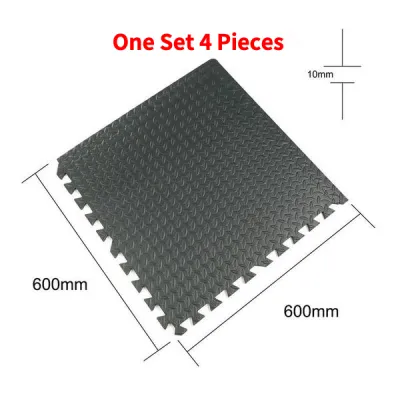
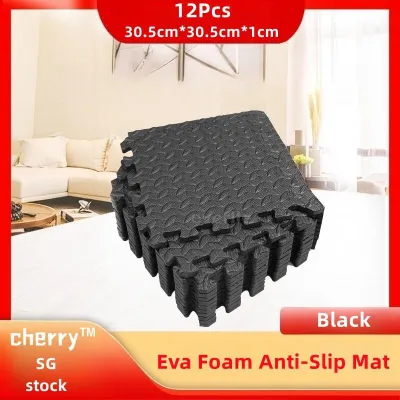
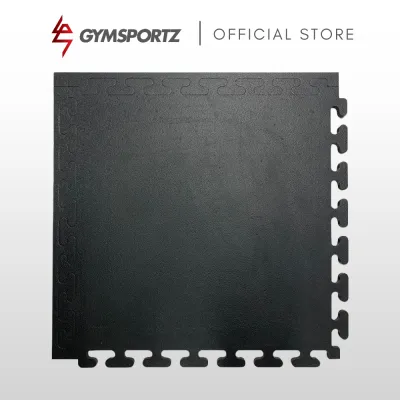
Prices are valid at publication and may change. Please refer to the product page for the latest price.
When evaluating EVA foam sheets, you must distinguish between thickness and density, as these two properties work together to determine performance. Thickness refers to the physical depth of the sheet, which dictates how much space the foam has to compress before bottoming out against the hard floor. Density, on the other hand, refers to how tightly packed the foam material is, which determines the firmness and overall support of the surface. A thick sheet with low density will feel squishy and compress completely under a heavy landing, whereas a high-density sheet of the same thickness will offer firm resistance and prevent your joints from striking the subfloor.
It is important to manage expectations regarding what home-use EVA foam sheets can achieve. While they provide excellent localized cushioning for conditioning and basic routines, they do not possess the complex spring mechanisms or multi-layered construction of professional competition floors. They are intended to soften impacts on hard residential surfaces, such as concrete, tile, or laminate flooring, rather than to facilitate high-flying aerial maneuvers.
Matching Thickness to Your Gymnastics Activities
Aligning the thickness of your EVA foam sheet with the physical demands of your gymnastics routine is essential for both safety and performance. As a general rule, the higher the impact of the activity, the greater the cushioning depth required to absorb the kinetic energy. Conversely, activities that demand precise balance and static control require a thinner, firmer surface to keep your feet and hands stable.

When selecting a sheet, you should always consult the manufacturer’s guidelines regarding impact ratings and recommended uses. Some sheets are specifically engineered for light play or low-impact yoga, while others are rated for high-impact martial arts and gymnastics. Matching the product’s intended use with your specific training regimen prevents premature wear of the foam and reduces the risk of training injuries.
Tumbling and High-Impact Floor Routines
Dynamic movements such as cartwheels, round-offs, and basic tumbling passes exert significant force on your wrists, ankles, and knees. To protect these joints during repetitive landings, you require a deeper compression zone. For these high-impact activities, thicker EVA foam sheets—typically ranging from 20mm to 40mm—are generally recommended to provide sufficient shock absorption.
However, you must avoid using sheets that are excessively soft or low in density, even if they meet the thickness requirements. A soft, pillowy surface allows the foot or hand to sink too deeply and unevenly, which can cause severe ankle rolling or wrist hyperextension upon landing. Look for sheets labeled as high-density or specifically rated for gymnastics and martial arts to ensure the surface remains supportive under dynamic loads.
Balance Practice and Low-Impact Stretching
For activities that focus on static balance, core conditioning, and flexibility, excessive thickness can actually hinder your progress. When practicing handstands, balance beam prep, or yoga-style stretching, your body relies on sensory feedback from a stable, unyielding surface to maintain proper alignment. A sheet that is too thick or soft will wobble under your weight, making it difficult to hold positions and potentially straining stabilizing muscles.
For these low-impact, balance-focused exercises, a thinner EVA foam sheet—typically between 10mm and 15mm—is highly effective. Instead of searching for maximum thickness, focus on finding a high-density specification. A firm, thin surface allows you to maintain solid contact with the ground, ensuring your joints remain properly aligned while still providing a comfortable barrier against a cold, hard floor.
Evaluating Density, Texture, and Safety Features
Beyond choosing the correct dimensions, you must evaluate the physical quality and safety features of the EVA foam sheets. The surface texture of the sheet plays a critical role in preventing slips and falls. Look for patterns such as cross-hatch, tatami, or textured grain, which provide essential traction for bare feet or gymnastics shoes. In warm or humid indoor environments, sweat can quickly make a smooth foam surface dangerously slick, making a pronounced texture even more vital.
Safety also extends to the chemical composition of the material, especially since gymnastics practice involves close, frequent skin contact with the floor. Ensure the EVA foam sheets are certified as non-toxic, formamide-free, and hypoallergenic. Reputable manufacturers will readily display compliance with international safety standards, giving you peace of mind during indoor home training.
Finally, pay close attention to the edge finishing and connection mechanisms of the sheets. If you are using interlocking puzzle tiles, the seams must fit together tightly and lie completely flat. Loose seams or curling edges create immediate tripping hazards during active routines. High-quality interlocking tiles often include detachable border strips to create a clean, bevelled outer edge, reducing the risk of catching your foot during a transition.
Planning Your Home Gym Layout and Sheet Sizing
Before ordering your EVA foam sheets, carefully measure your designated practice area to ensure you have adequate space for safe movement. In addition to the active training footprint, you must calculate a safety clearance margin of at least one to one and a half meters around the entire perimeter. This buffer zone must be completely clear of walls, furniture, sharp corners, and low-hanging light fixtures to prevent accidental collisions if you lose your balance.
When planning your layout, you will need to choose between interlocking tiles and large roll-out sheets. Interlocking tiles offer exceptional modular flexibility, allowing you to customize the shape of your practice area to fit unique room configurations. Roll-out sheets, while heavier and more difficult to store, provide a seamless surface with no joints, which is highly advantageous for continuous tumbling lines.
For those living in compact apartments or shared residential spaces, storage and portability are major considerations. Modular interlocking tiles are highly practical in these settings, as they can be quickly disassembled, stacked, and stored in a closet or under a bed when not in use. If you choose roll-out sheets, ensure you have a dedicated storage space where they can be kept upright or flat without being crushed by other household items.
Step-by-Step Selection and Pre-Purchase Checklist
To simplify your decision-making process, use this structured checklist to verify that your chosen EVA foam sheets meet your specific training needs before finalizing your purchase.
- Step 1: Define Your Primary Activities: Assess whether your routine consists mostly of high-impact tumbling (requiring 20mm to 40mm high-density sheets) or low-impact balance and stretching (requiring 10mm to 15mm firm sheets).
- Step 2: Measure and Map Your Space: Calculate the exact dimensions of your practice area, ensuring you have factored in a one-meter safety clearance buffer away from all household obstacles.
- Step 3: Compare Material Specifications: Check the product details for both thickness and density. Avoid generic "toy" mats, and look for specifications tailored to sports, martial arts, or gymnastics use.
- Step 4: Inspect Surface Texture and Edges: Verify that the sheets feature a non-slip textured pattern and that interlocking seams are designed to lock tightly together without lifting.
- Step 5: Verify Safety Certifications: Confirm that the foam is certified non-toxic and free from harmful chemicals, ensuring a safe indoor environment for daily training.
Frequently Asked Questions (FAQ)
Can I layer multiple thin EVA foam sheets to achieve the thickness needed for tumbling?
Stacking multiple thin, loose EVA foam sheets to create a thicker landing surface is highly discouraged. Without a specialized, manufacturer-approved bonding mechanism, loose layers will slide against one another when subjected to lateral forces. This shifting can cause the surface to buckle or slip out from under you, leading to severe ankle sprains or falls. Always use a single, solid-layer sheet engineered specifically to the target thickness required for your high-impact activities.
How do I clean and maintain EVA foam sheets to preserve their grip and density?
To maintain the slip-resistant texture and structural integrity of your EVA foam sheets, wipe them down regularly with a damp microfiber cloth and a mild, diluted dish soap. Avoid using harsh chemical solvents, bleach, or abrasive scrubbing pads, as these substances can degrade the foam structure and strip away the textured surface. After cleaning, allow the sheets to air-dry completely in a well-ventilated indoor area away from direct sunlight before rolling or stacking them, as trapped moisture can lead to mold growth and unpleasant odors.
Community discussion
Share your experience or ask a question. Comments are reviewed before publication.